
We arrived at the Dinosaur Provincial Park, which is located in Alberta, late in the afternoon on Tuesday, September 24th. A UNESCO World Heritage Site, the park is famous for its abundant fossils, riverside cottonwood groves, and stunning badlands. We explored it all starting with a late afternoon hike through the badlands with its natural caves, sinkholes, and hoodoos. We were instructed to watch out for prairie rattlesnakes, scorpions and black widow spiders. Fortunately there were no such encounters but the otherworldly shapes, caves and deep crevasses were frightening (for Joanne) in and of themselves, particularly at sunset.

The park is located in the Alberta Badlands which are noted for the many people from the American territories to south who sought refuge here. Native Americans (Sioux after the Battle of Big Horn), outlaws such as Butch Cassidy, and formers slaves like John Ware whose cabin is in the park.

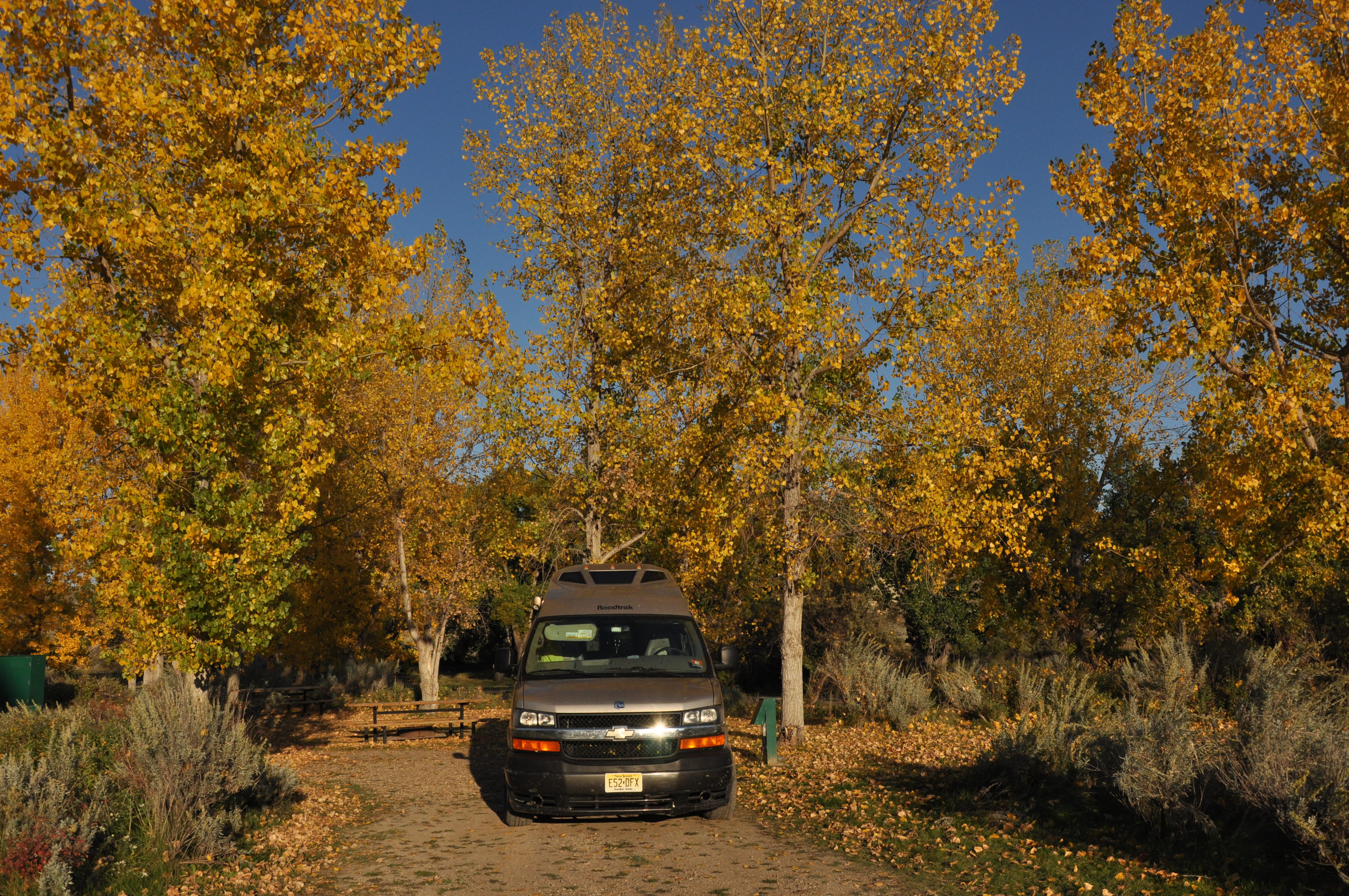
Our campsite was quite lovely and isolated amidst the cottonwoods, and when the stars came out the night sky seemed to be at arms’ reach. We love camping in places like this in our Roadtrek because we are self-sufficient, making our own dinners (including elk which we had last night), sleeping in our own bed, and able to bring Apollo along on the hikes.
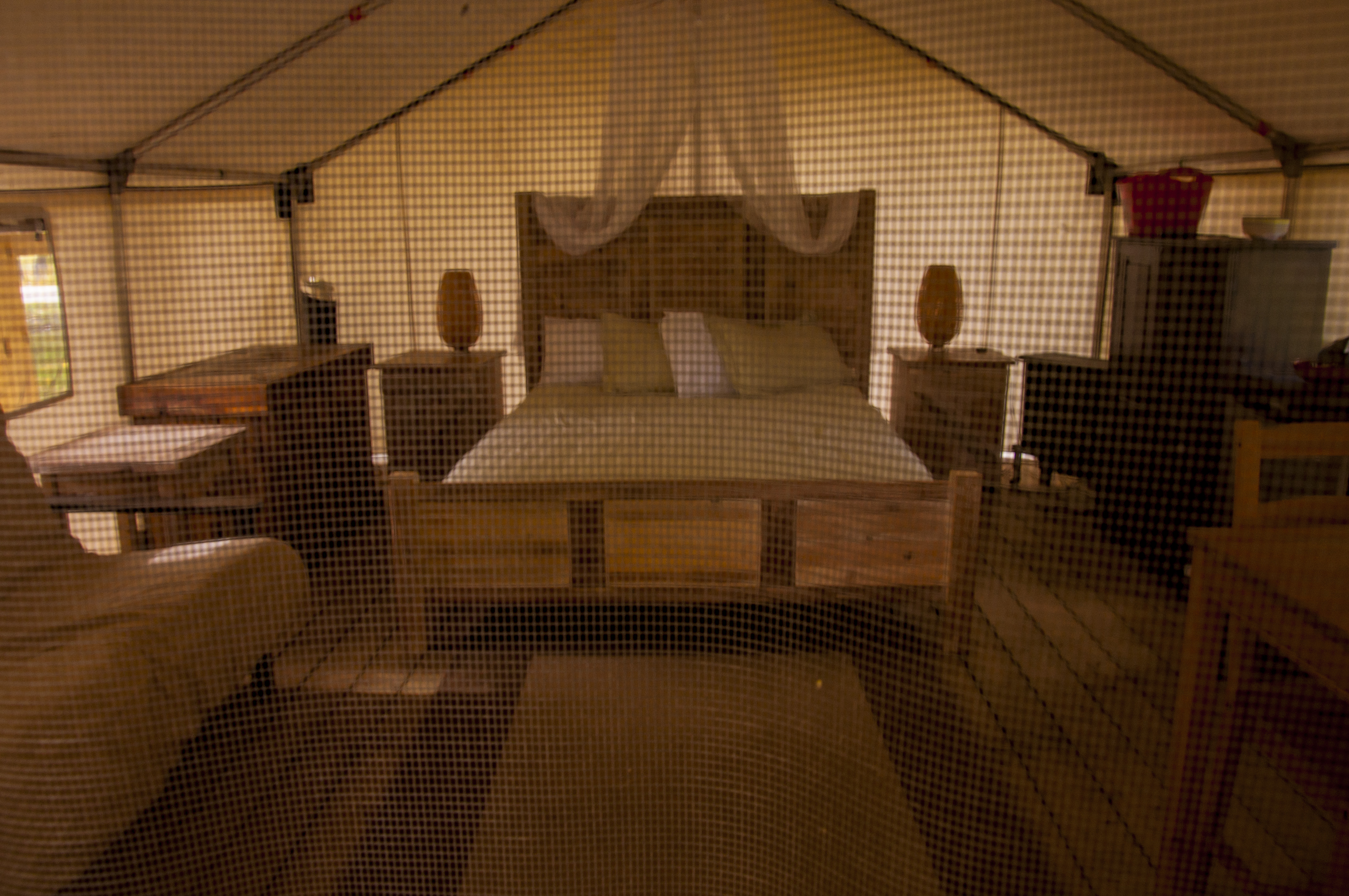
Another interesting option here is “Comfort Camping,” fully furnished large canvass tents sited on platforms… sort of the Hilton of camping. They looked nice.
The next morning we went over to the visitors’ center and “boned up” on dinosaurs. The research and educational program here is very impressive. More than 35 species of dinosaurs have been found here and more are still being discovered as erosion takes place. Over 500 skeletons that have been found at this site are in museums around the world. Two famous paleontologists, Barnum (Bones) Brown from the Museum of Natural History in NYC and Charles Sternberg and sons, hired by the Canadian government, competed with each other in securing the most finds. They started working in a period of time that became known as the Canadian Dinosaur Rush (1910-1917). This area was one of the richest in terms of finding dinosaurs from the Cretaceous Period 75 to 160 million years ago. Most dinosaurs here date from the later part of the period.
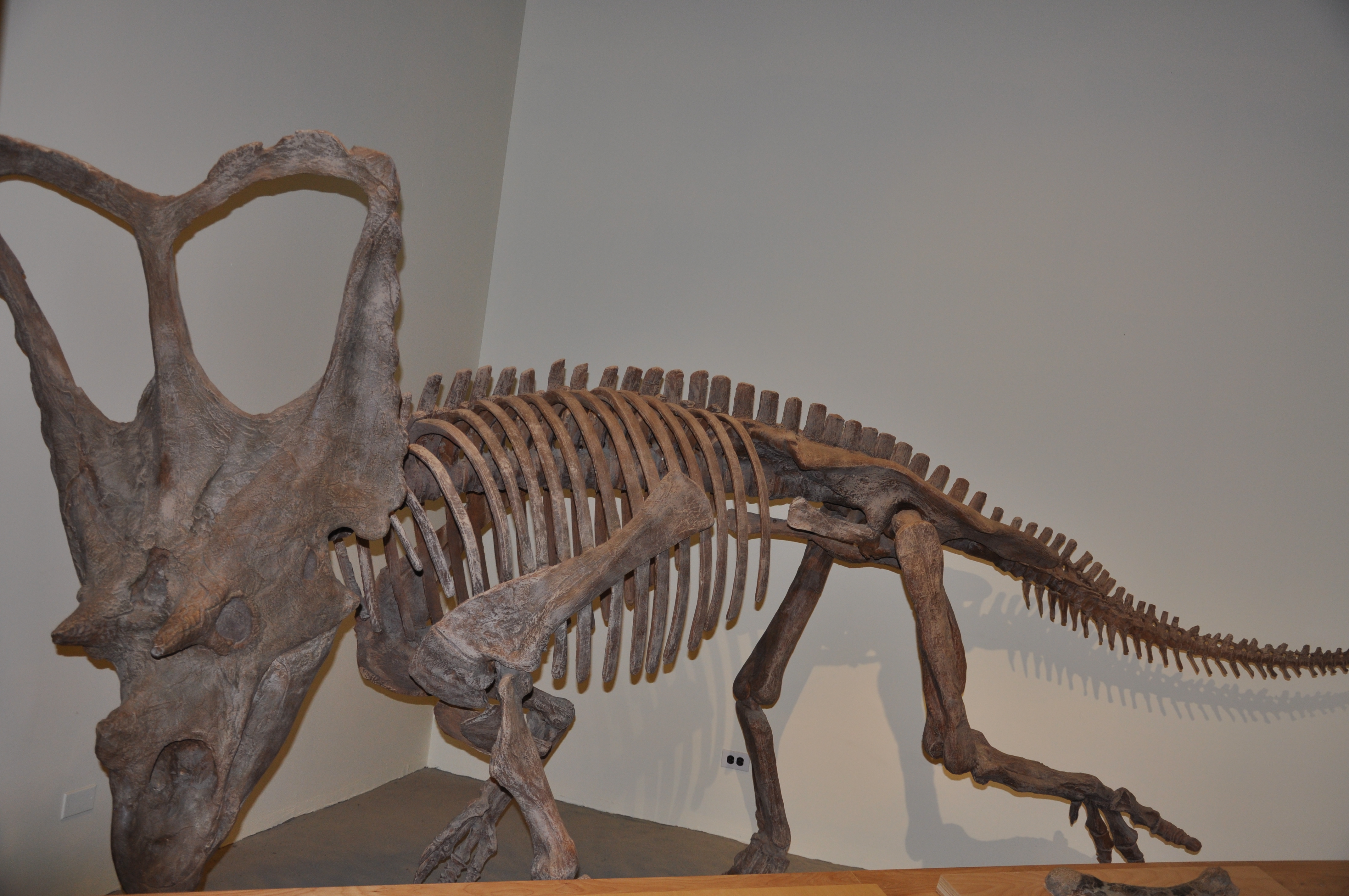
Chasmosauras (Plant Eater)
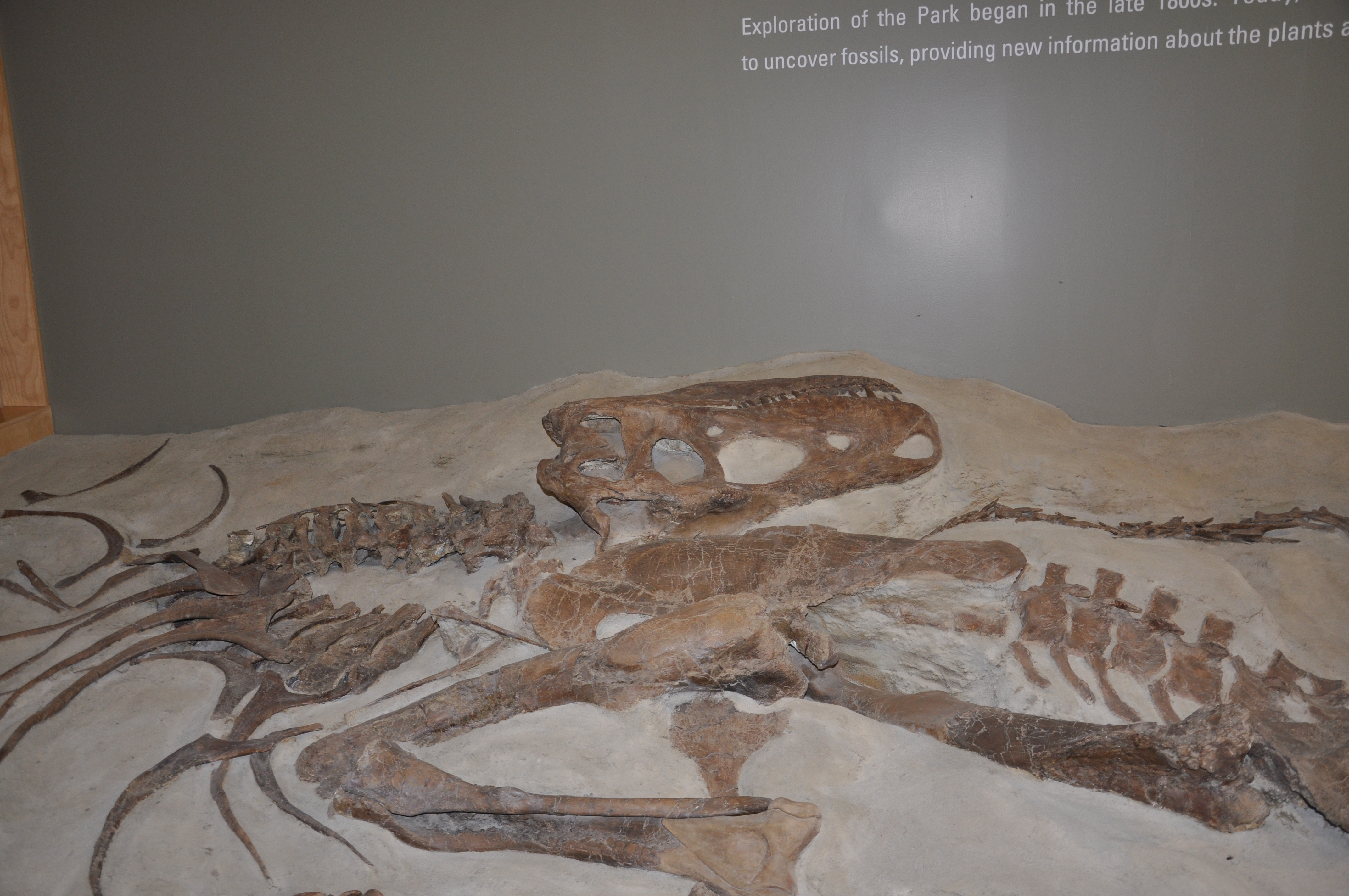
Daspletosauras found in a death pose

Quarry where many fossils were found
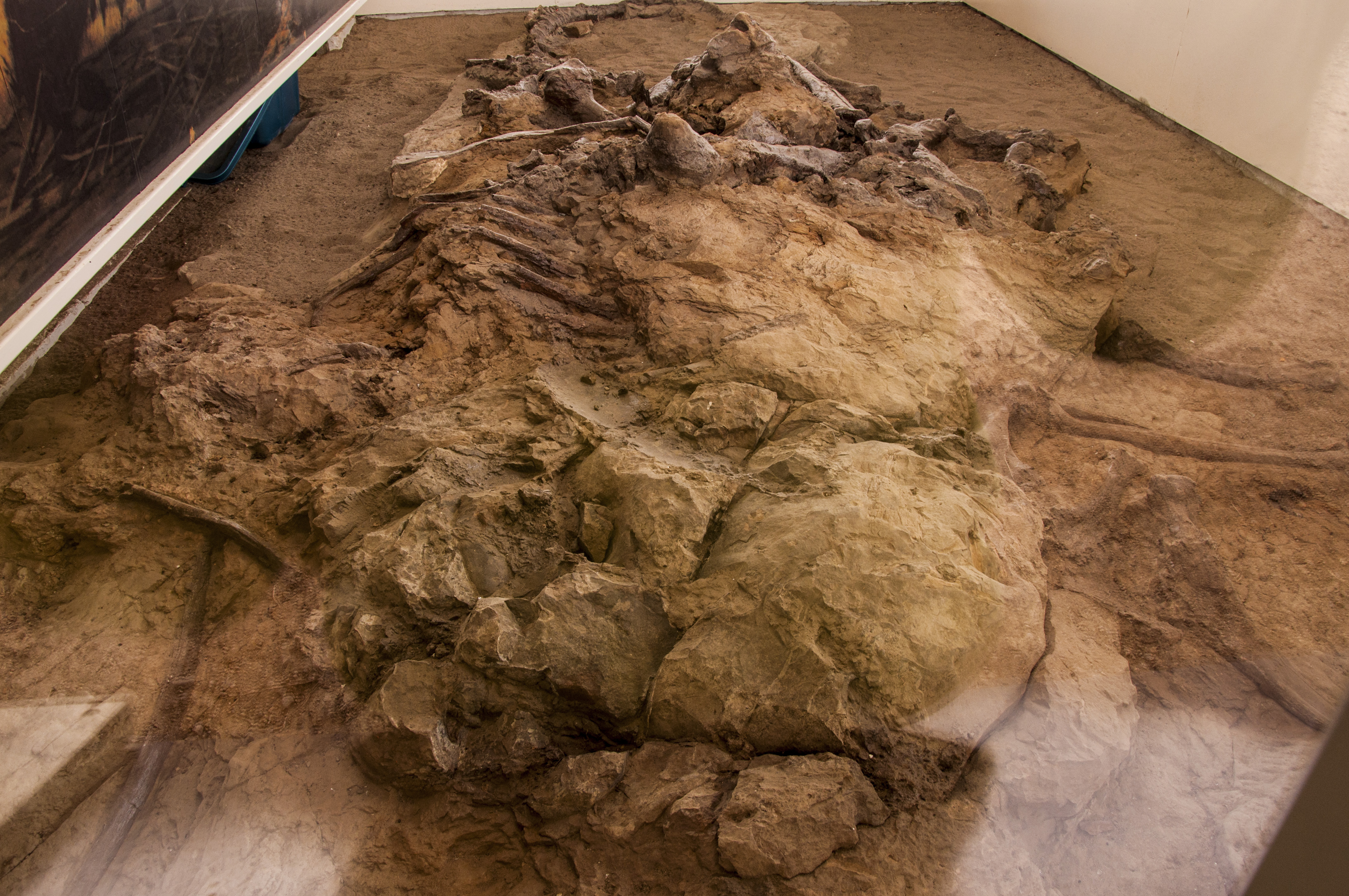
Bones of a headless Hadrosauras (duck-billed), the most common dinosaur found in this area. Bones are lying in the exact spot where it was found.
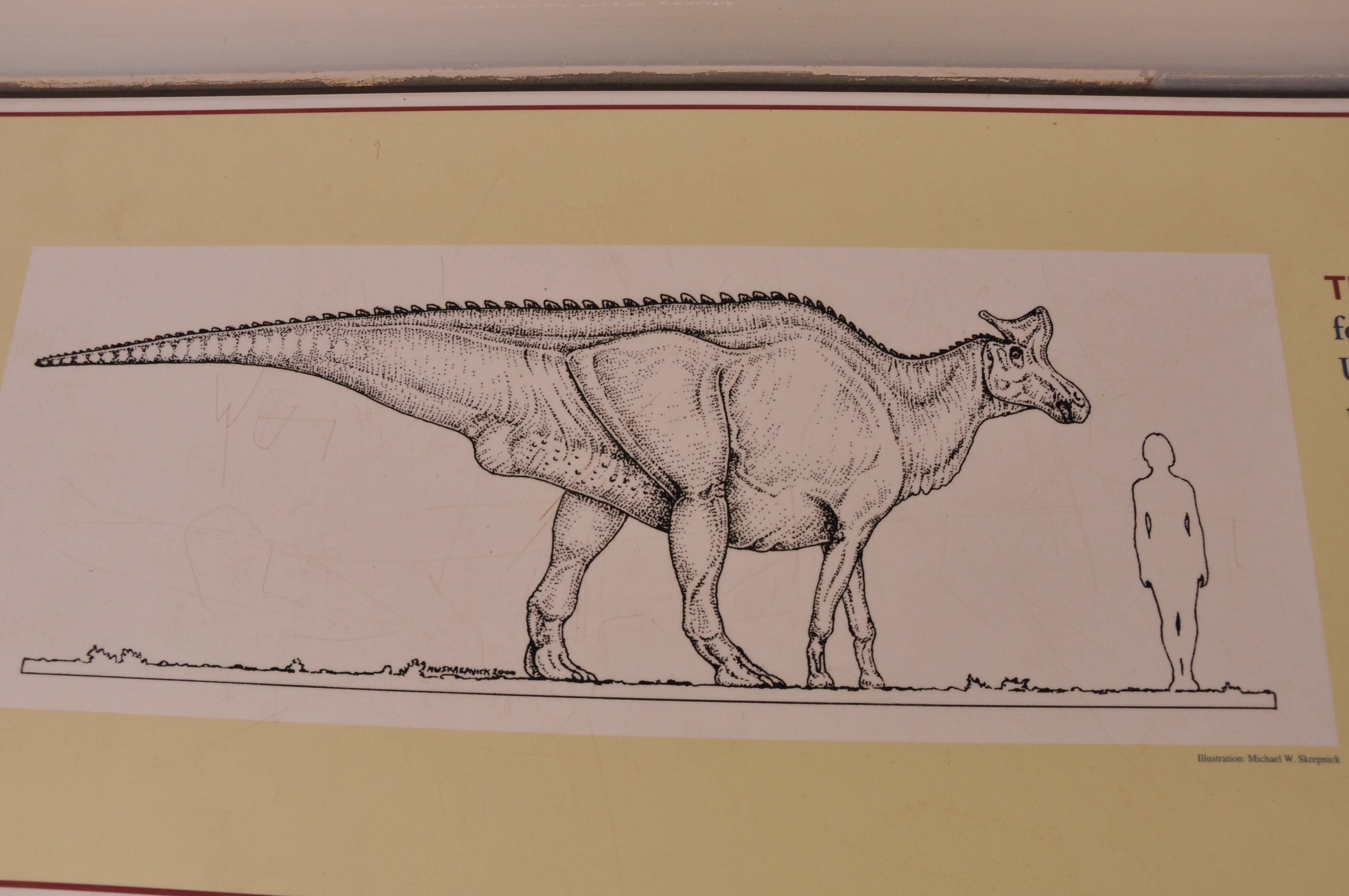
Drawing of a Hadrosauras
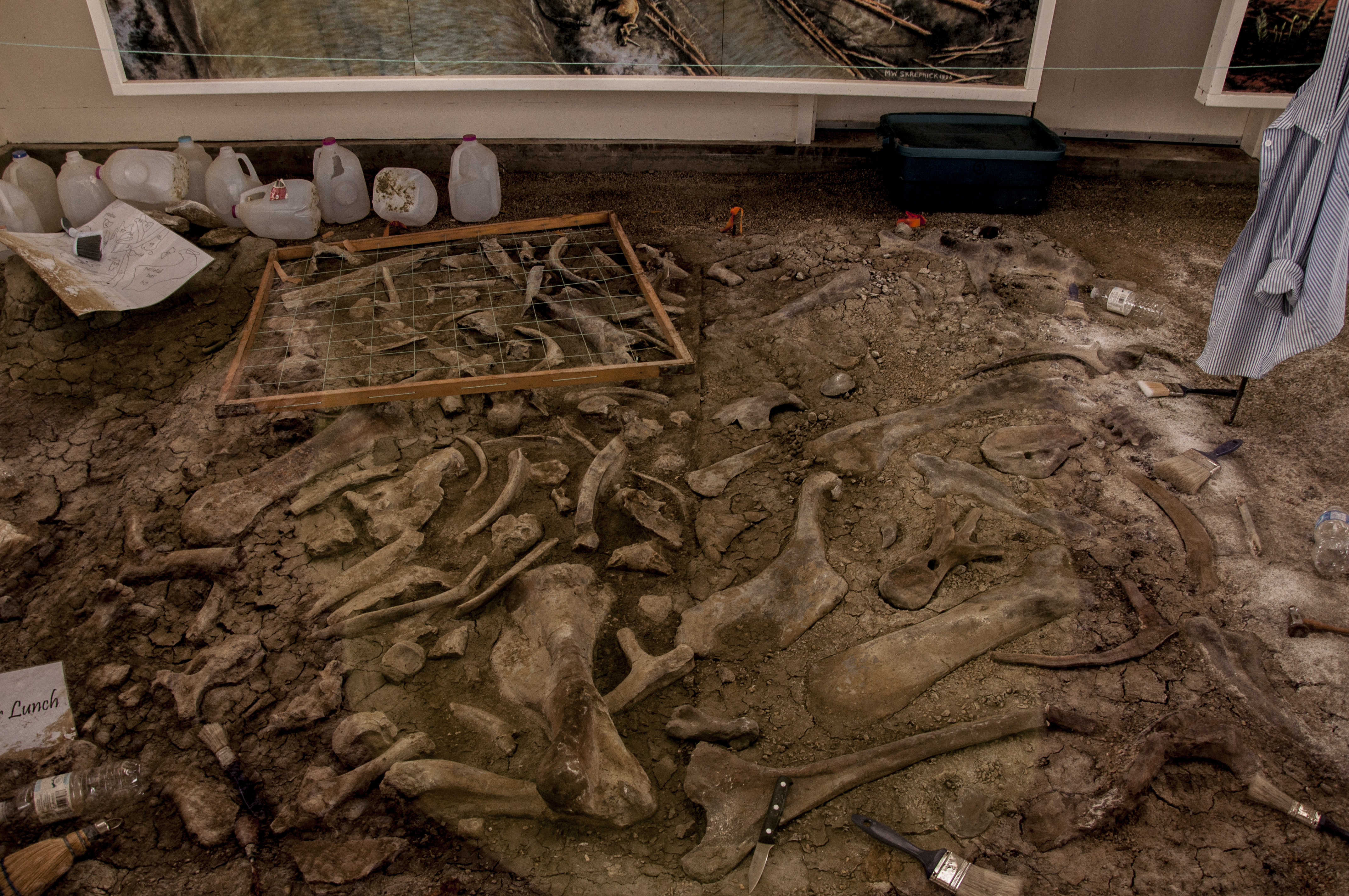
Bones of the carnivorous Centrosauras who traveled in herds and is similar to the modern Rhinoceros. Teeth of its predator, Albertosauras, were found nearby.
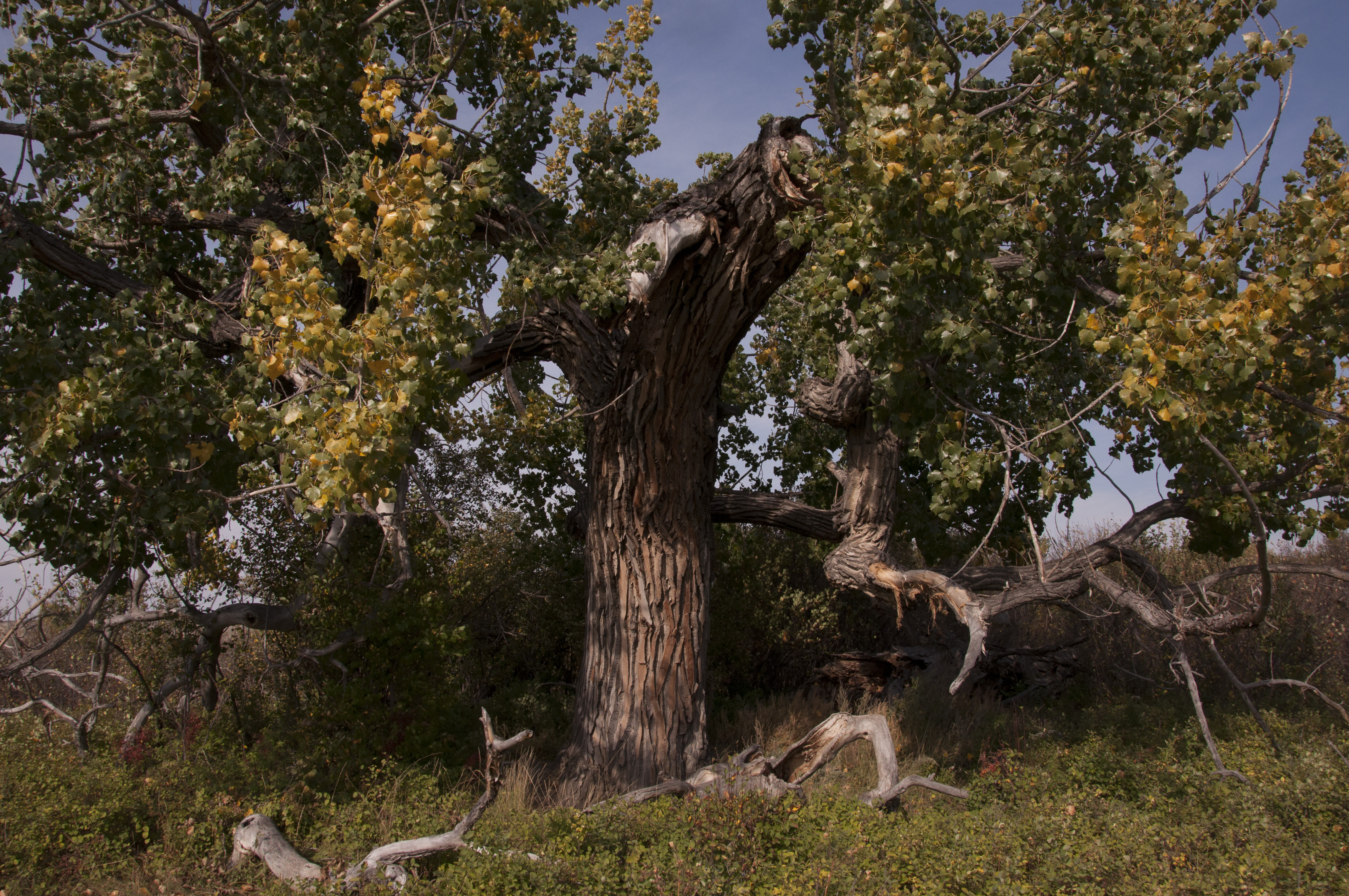
Cottonwood trees are abundant here. This is a very rare one, over 200 years old
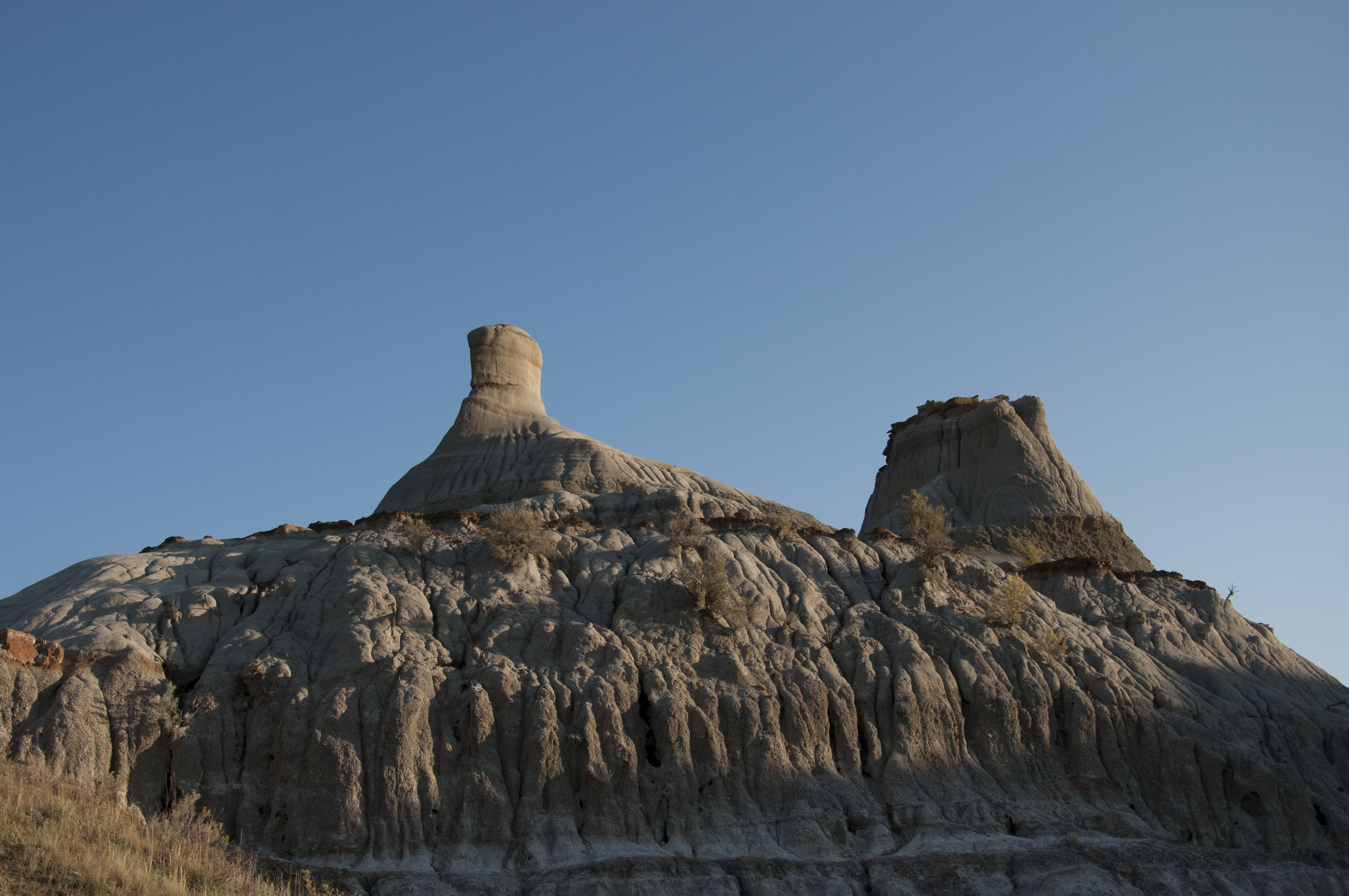
Rugged sandstone landscape. This is an example of the many Hoodoos here.
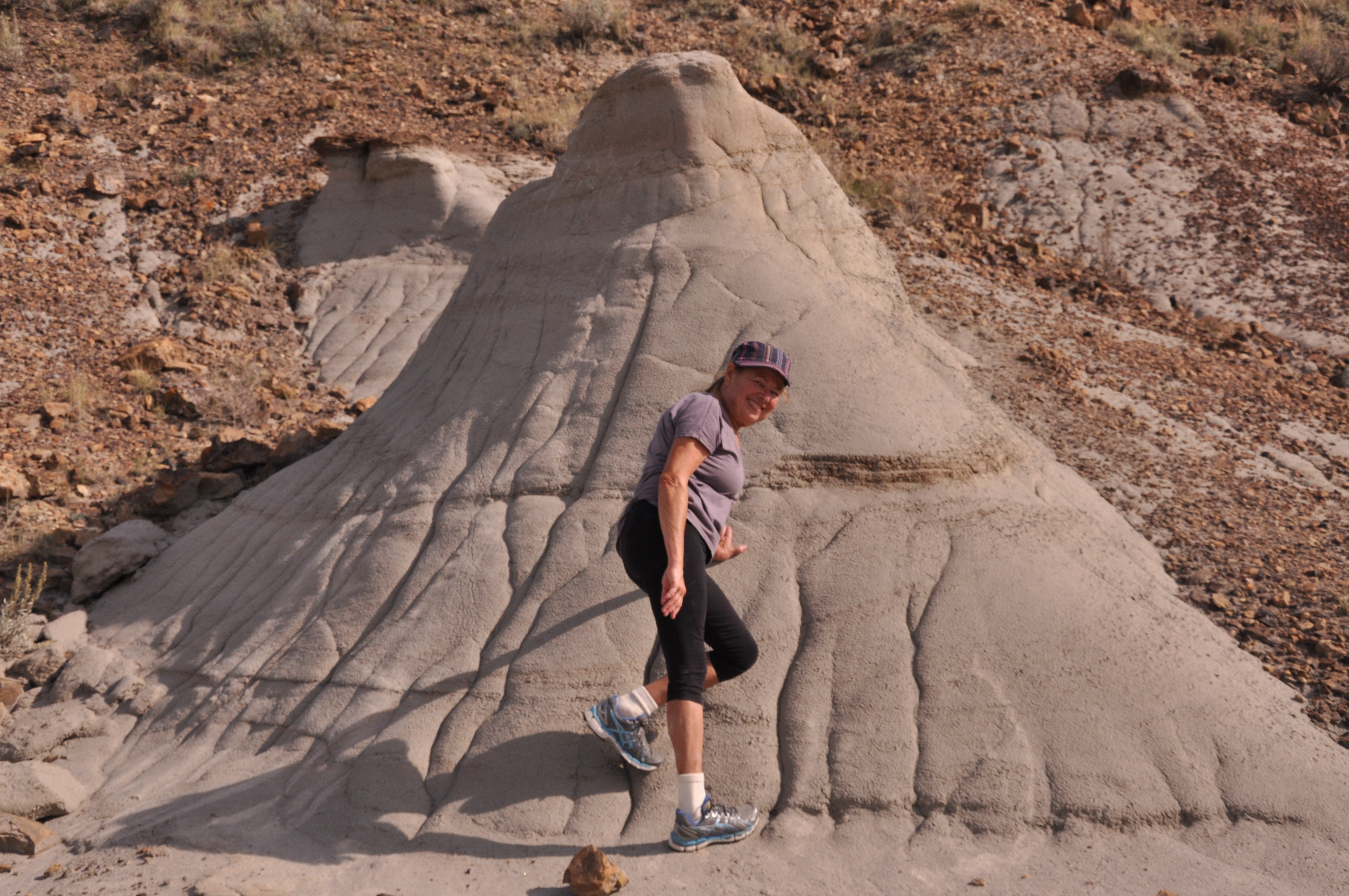
Fossil Hunter
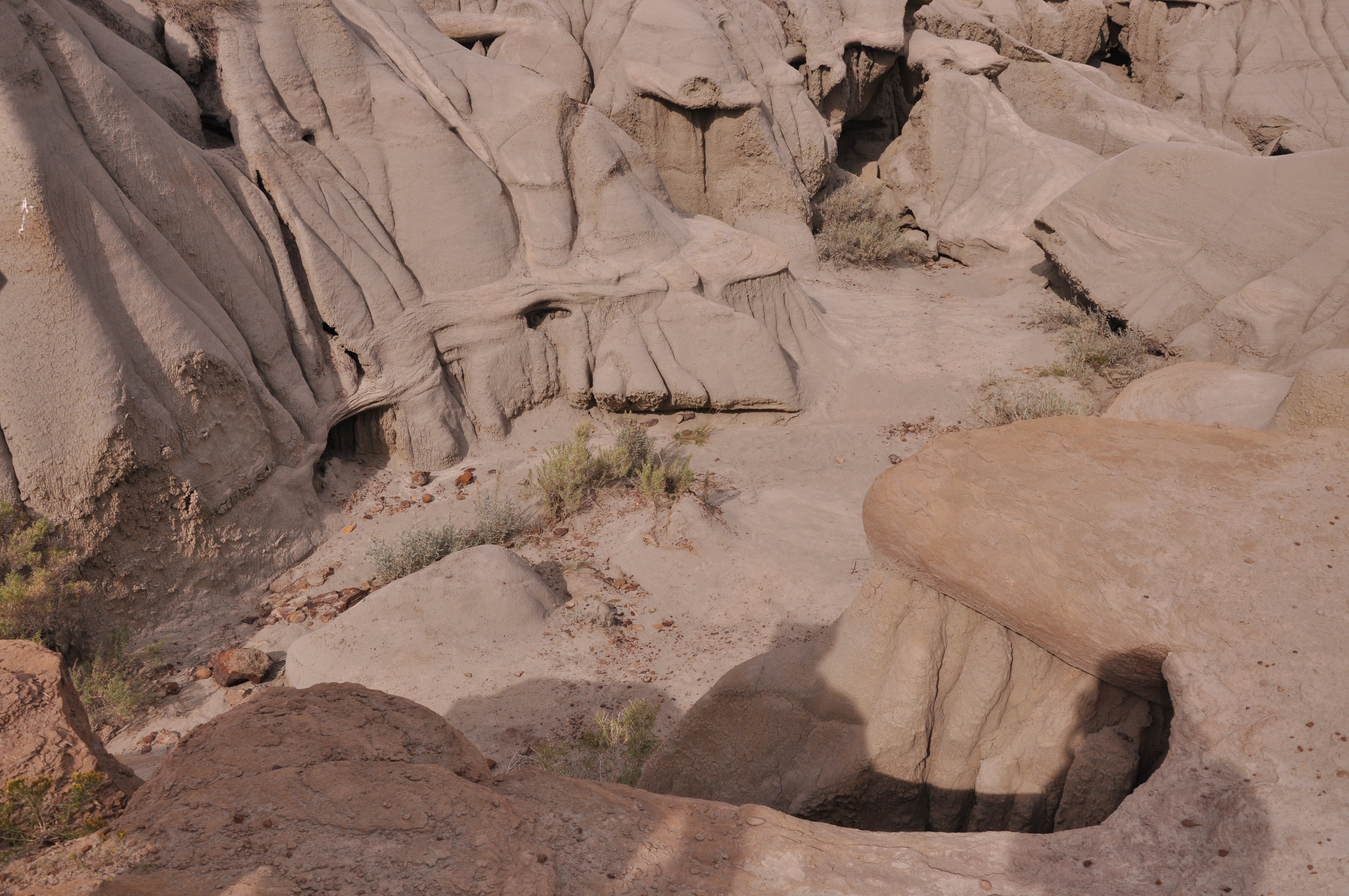
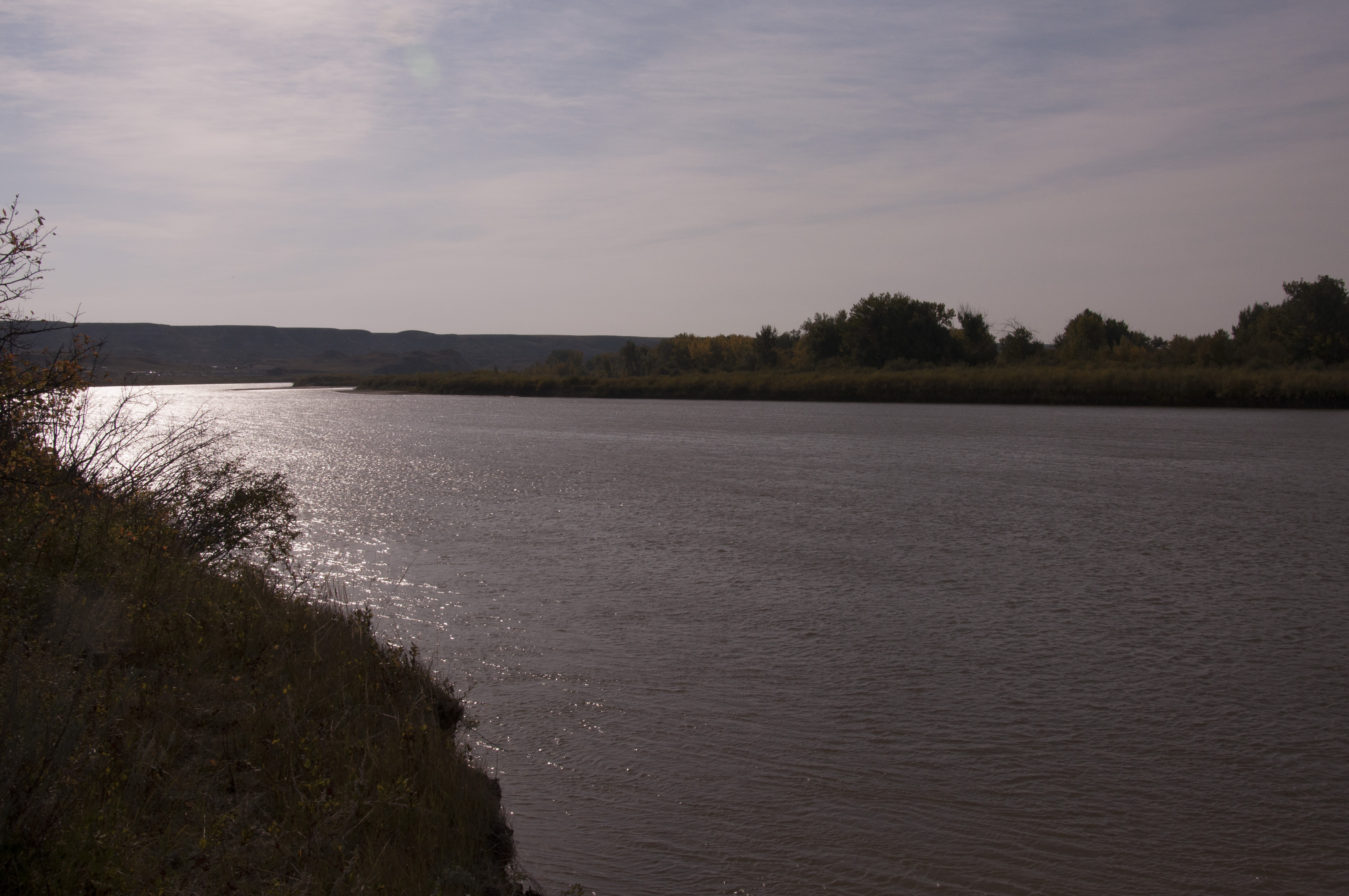
The Red Deer River is the only water source in this arid place. Much different than the lush savannahs of the dinosaur age.
 westwardhowithapollo
I wondered what a Hoodoo was.
Once again your blog is amazing and the pictures help to tell your story beautifully. Enjoy your adventure and have a safe trip.
La Shana Tova! Happy New Year. Thanks for sharing your journey.