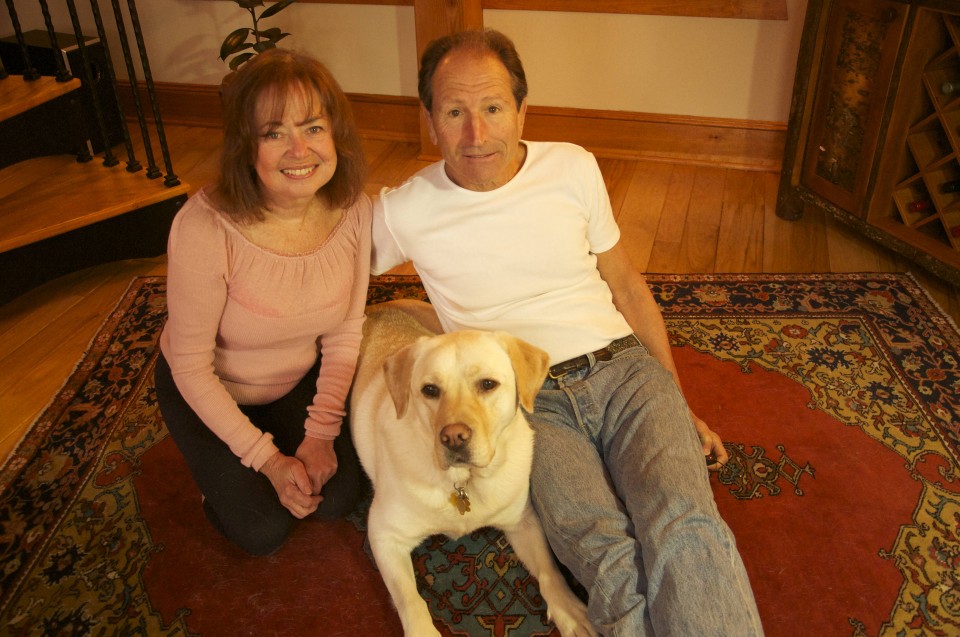
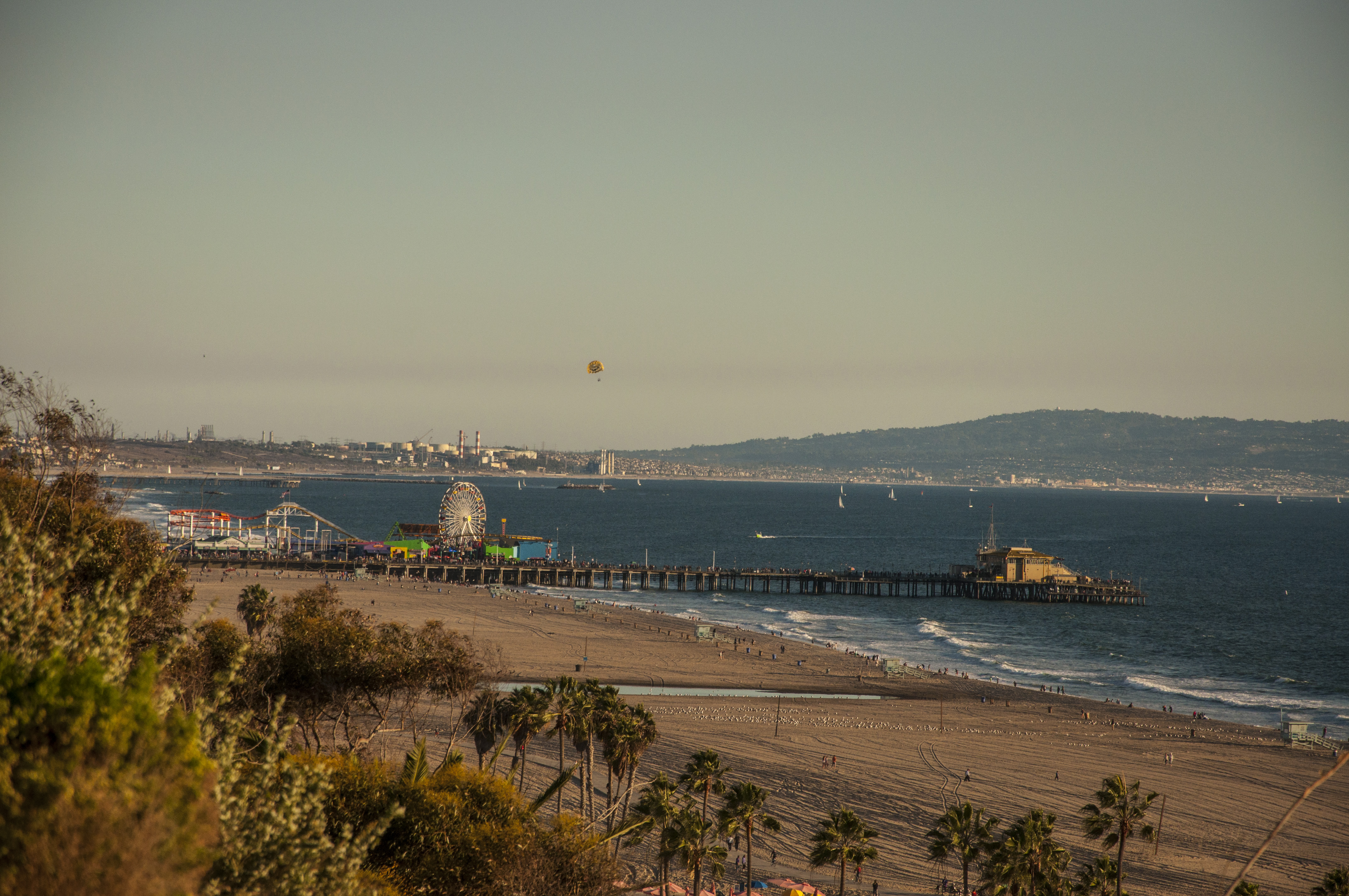
Leaving Joshua Tree’s arid landscape we moved on to lush Santa Monica where we stayed with daughter Kim and her husband Andres. Santa Monica is a lovely city with beautiful homes and a trendy yet low key ambiance. Liberal politics were in full swing getting ready for Tuesday’s election as candidates vied to distinguish themselves from each other. One candidate tried to grab voters’ attention by promising to stand tall against a proposed high rise development pictured as a huge Godzilla on top of an enormous building.
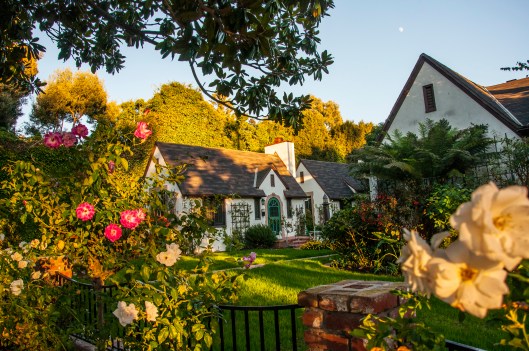
Santa Monica Rose Cottage

Santa Monica’s Waterfront Park
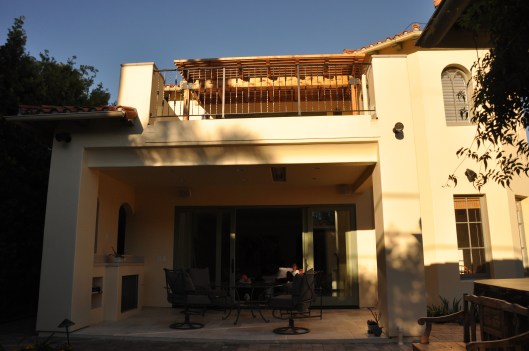
Kim and Andres new house.
On Sunday we attended the La Dia Los Muertos celebration at the El Pueblo Historical Monument on Olivera Street in downtown Los Angeles. This holiday is extremely important to the Mexican people, unique in its focus on remembering the departed. Throngs of people, many in elaborate costumes and with painted faces, filled the Plaza and overflowed the side streets of the Mexican Marketplace.
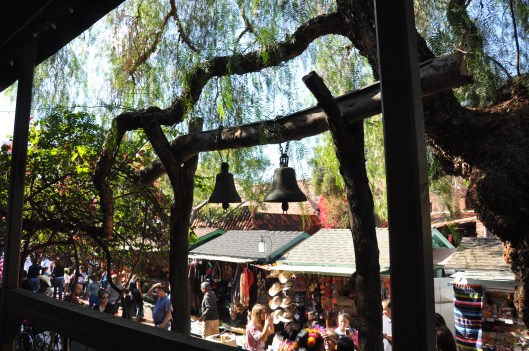
View of Market from oldest house in Los Angeles.
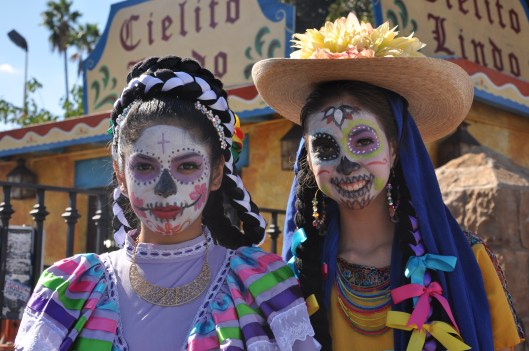
Santa Monica’s Waterfront Park
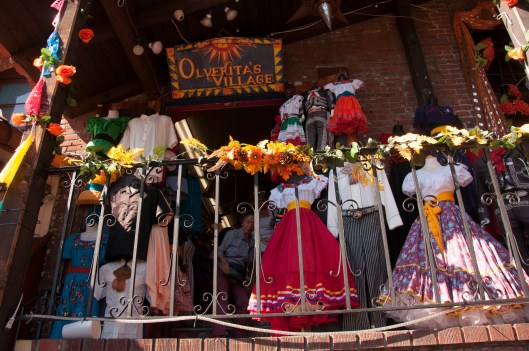
Olveritas Village
Performers entertained the crowds with traditional dance, music and theatrical performance. Hundreds of elaborate shrines dedicated by family and friends to their deceased loved ones lined the park’s walkways and the courtyards of the churches. One would think that the mood would be somber. Far from it. There was a great deal of slapstick and laughter as skeletons danced, sang and spoofed at death.
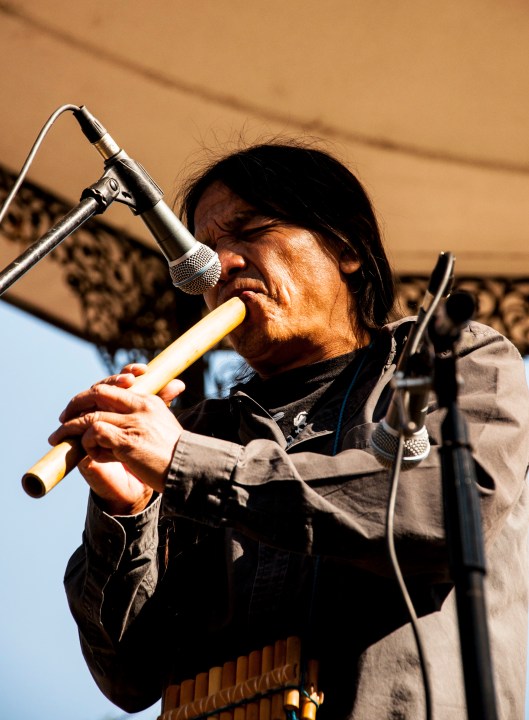
Santa Monica’s Waterfront Park
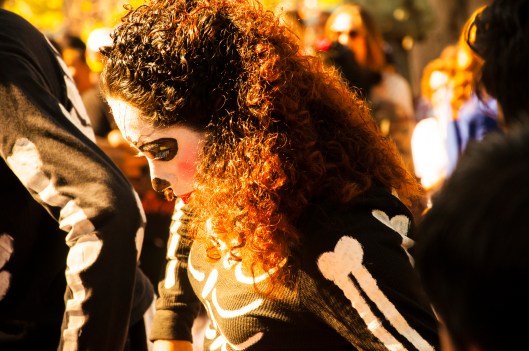
Woman Actor
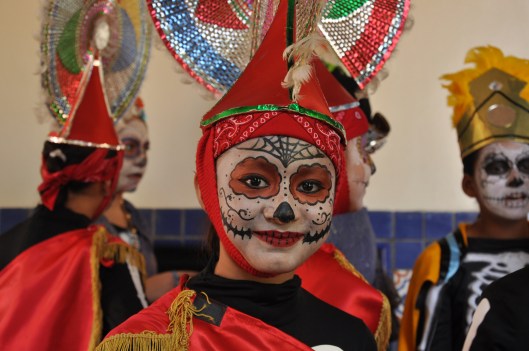
Dancers Prepared for their performance
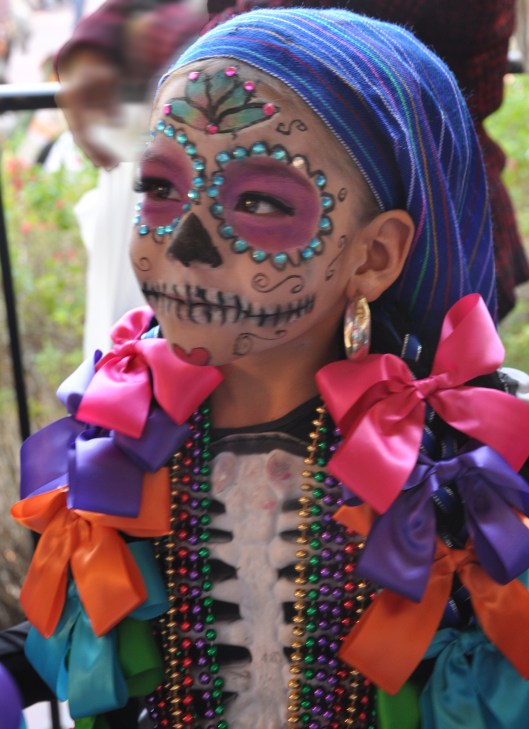
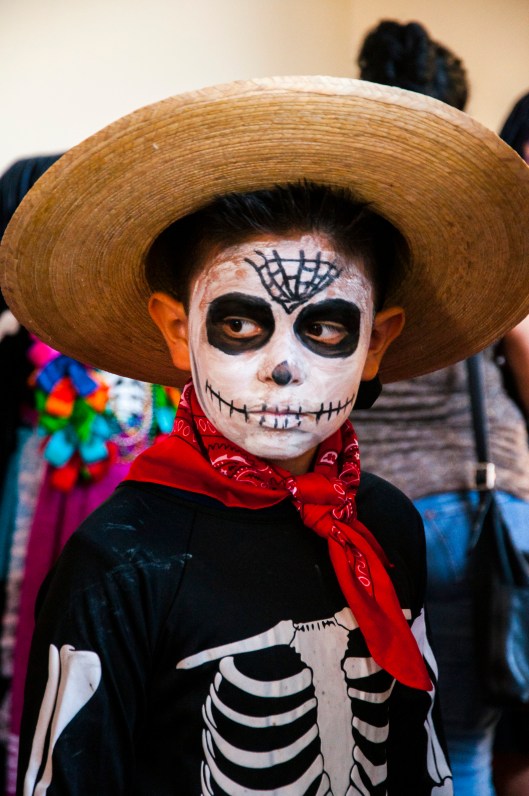
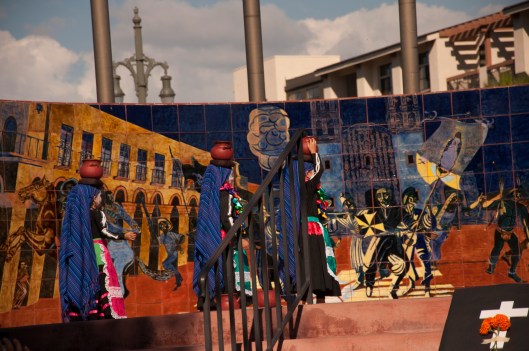

A young disabled woman is brought out on stage in a wheelchair. She stands up and dances. The audience bursts into applause.
To better understand the sentiment of the day here is an explanation that was on a placard at the entrance of the Plaza:
“The Day of the Dead is a tradition of the ancient cultures that developed on the American continent, especially in Mexico and extending to Central America. For the original Mexicans this holiday is an essential part of their identity”.
“Before the Spanish Conquest Day of the Dead was celebrated in August, during the harvest time. After the Conquest of the Catholic celebrations of All Saints and All Souls has mixed with the original native celebrations that has been celebrated for thousands of years. In spite of these changes, the indigenous celebration retain their primordial origin. They set out offerings of food that the person liked during life, things that they used; water for their thirst, salt to conserve the body; and marigolds, known as flower of the dead or Cempasuchel in Nahua.’
“Our ancestors gave us life and don’t want us to forget them.”
“Day of the Dead is a religious tradition that allows us to communicate with those who have gone before us. It is communication with our roots. Our relation to them is an act of memorializing them. While we remember they not die. If we allow them to die we don’t have memory of our origin. Our dead only live because they live in our memory.”
Below are some of the shrines that lined the streets.
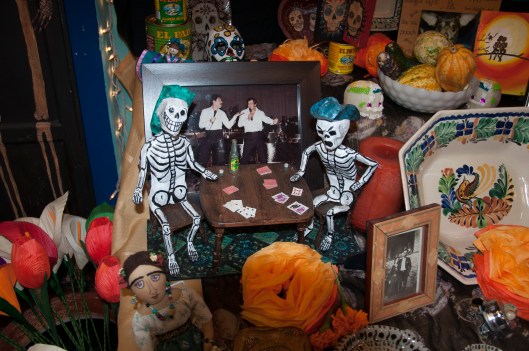
This person liked to gamble.
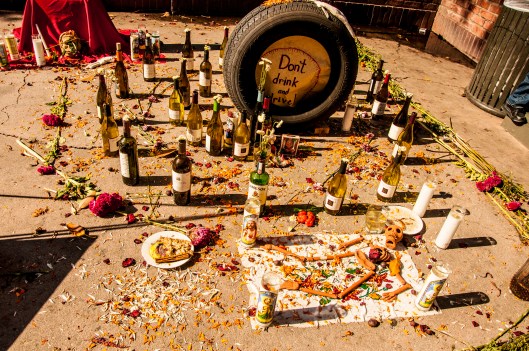
This person died in a DUI.

Shirley didn’t’ like to cook.
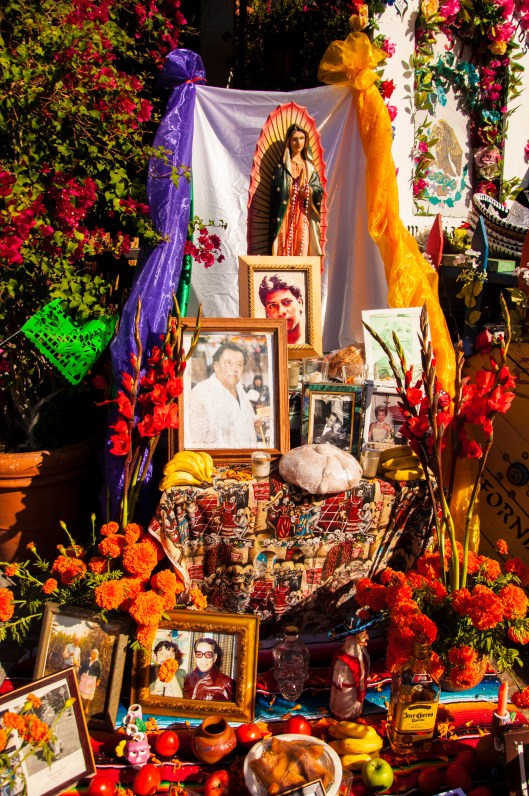
Marigolds
 This demonstration refers to the students that were killed by the government in Mexico.
 westwardhowithapollo
Looks wonderful. Kiss Kim for me
Sent from my iPhone
>
What a beautiful way to celebrate Halloween.