
We got up early Saturday morning and drove to County Meath (about an hour’s drive) to get on line well before 9 AM, which is when the doors to Bru na Boinne’s visitor’s center open. Early bird gets the worm here. Several people were already on line. We were given stickers with a time and told to report back. Every 15 minutes a busload of visitors is taken to the sites where they are met by a guide. It is incredibly well organized and the guides are extremely knowledgable. Large groups of 15 or more must make reservations in advance but smaller groups cannot and must que up on arrival. If you arrive late in the afternoon you will probably be turned away (as we were the day before). There is no direct access to the monuments. The effort is well worth it; the experience is both awe inspiring and humbling. A World Heritage Site, people come from all over the world to visit Bru na Boinne. It is the largest and one of the most important complexes of Megalithic sites in Europe dating to the Neolithic period. At 3500BC to 3200 BC it is older than both Stonehenge and the Egyptian pyramids. Bru na Boinne has three separate sites: Knowth, Newgrange, and Dowth. They are comprised of chamber tombs, standing stones, henges, and other enclosures, built with incredible sophistication and knowledge about engineering, science and astronomy. The complex is situated around a wide bend in the River Boyne, which in and of itself is famous as the site of the Battle of the Boyne, a heated topic in Irish history for that battle in 1690 established Protestant domination in Ireland.
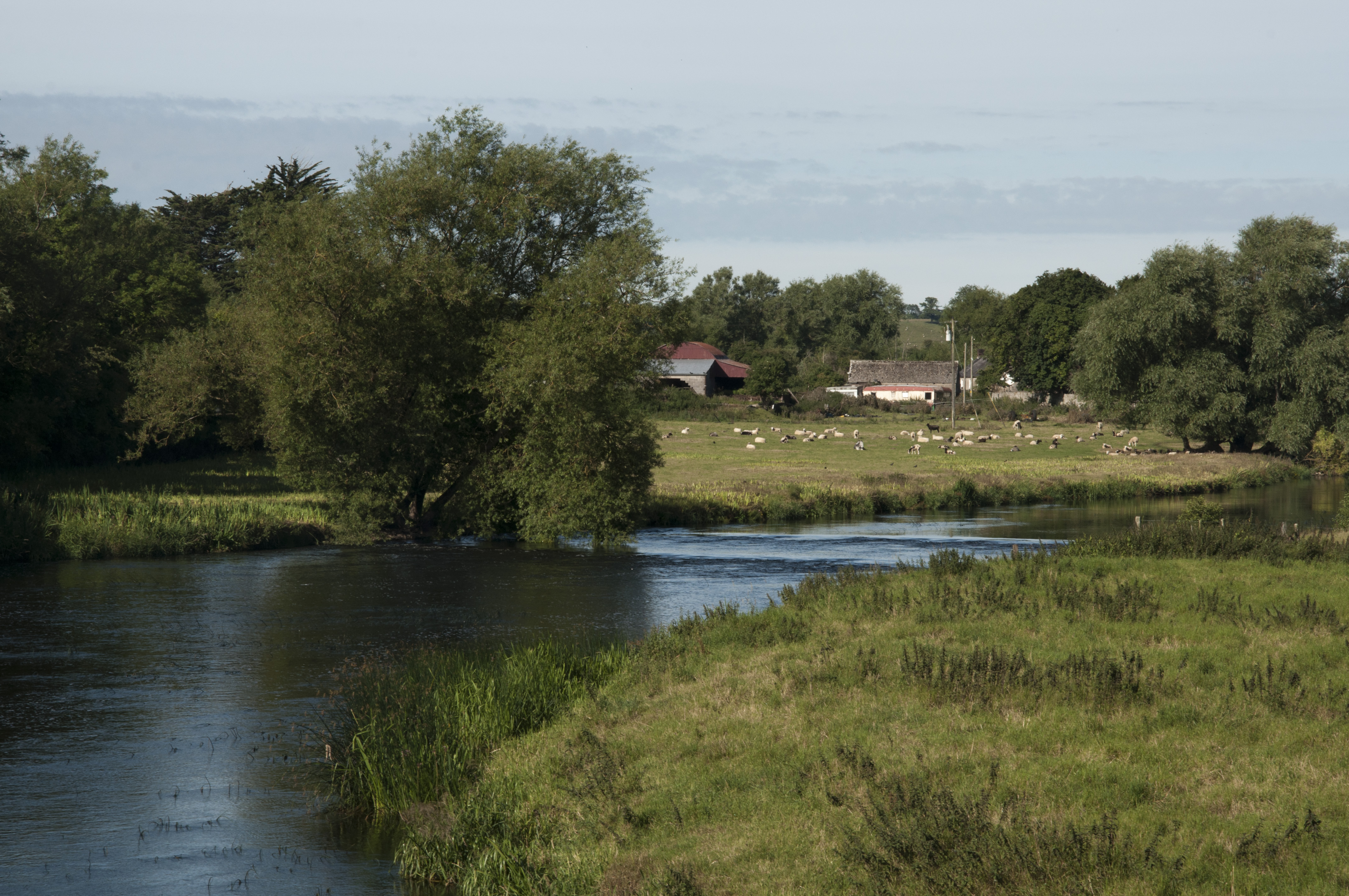
Holy Cow! You can feel the heartbeat of Ireland here and see for yourself how fertile and hospitable the land is. It is no wonder people through the ages have gravitated and set claim here.
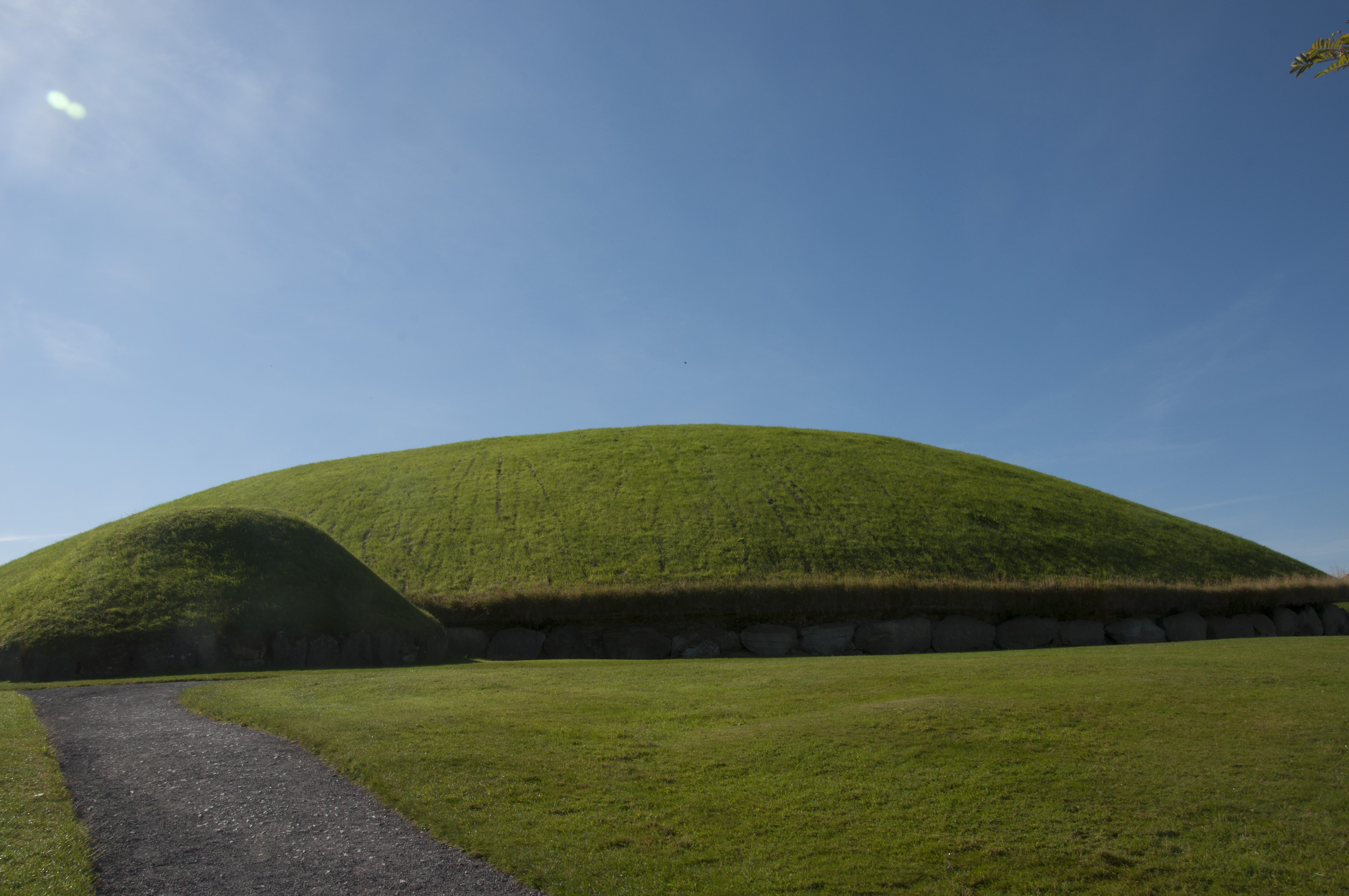
As we approached Knowth with its perfect symmetry against the (sigh) blue sky, we felt we were in an unusual place. Knowth is orientated so that its two passages face east and west, suggesting a possible equinoxial alignment. The mound is also placed in relation to Newgrange so that the two align with one of the moon’s minor standstill’s.

The Knowth mound with engraved kerbstones is in the foreground. A satellite tomb is shown in the distance. The Mound is surrounded at its bottom with 127 kerbstones with engraved decorations. There are also free standing stones at the outside of the tomb entrances which also have examples of Neolithic art. Two large tombs were discovered within this large central mound and 18 satellite tombs were discovered in the surrounding area. These large stones were hauled from a great distance. It is thought that tree trunks were laid to create tracks upon which the boulders could be rolled.


We were led down a passageway into the Mound from which we could see into the original eastern passage at Knowth. Joanne was the only adult who could walk through the passage without bending. The original inhabitants were much shorter in stature than the modern Irishperson.
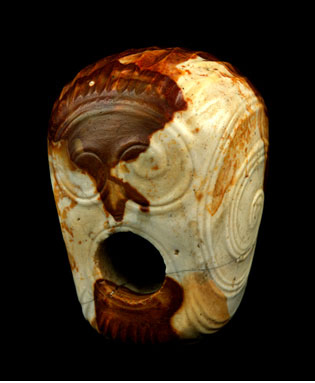
This ceremonial macehead, found beneath the eastern chamber tomb at Knowth, is one of the finest works of art to have survived from Neolithic Europe. The unknown artist took a piece of very hard pale-grey flint, flecked with patches of brown, and carved each of its six surfaces with diamond shapes and swirling spirals. At the front they seem to form a human face, with the shaft hole as a gaping mouth. It is small enough to fit in the palm of your hand. The original can be seen at the Archeological Museum in Dublin.
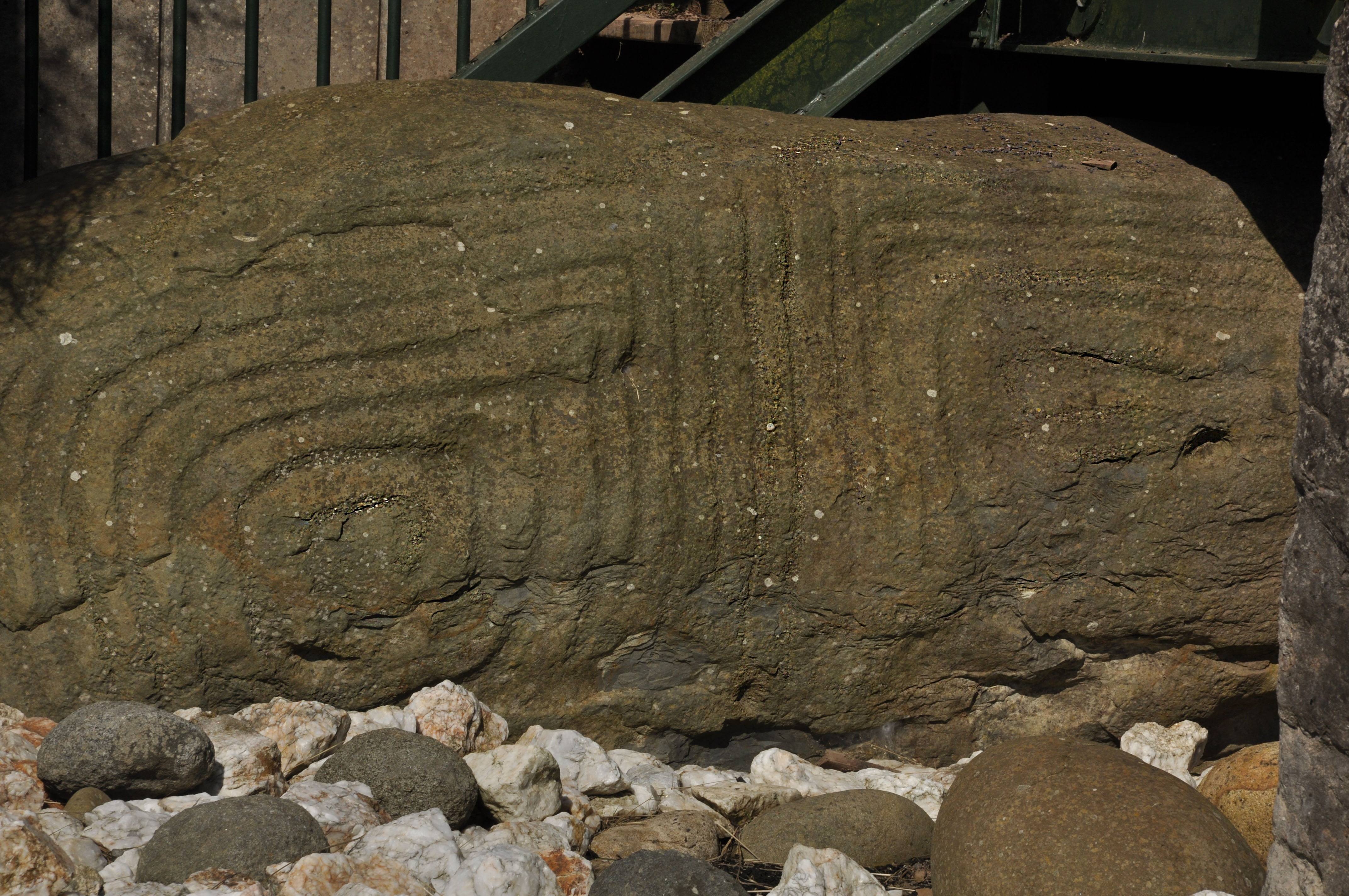
The entrance Stone at Knowth has interesting markings that can be read (says Joanne) as a face or mask that has been flattened out. Since their discovery in the 1960’s there have been many interpretations put forth for these stone carvings.
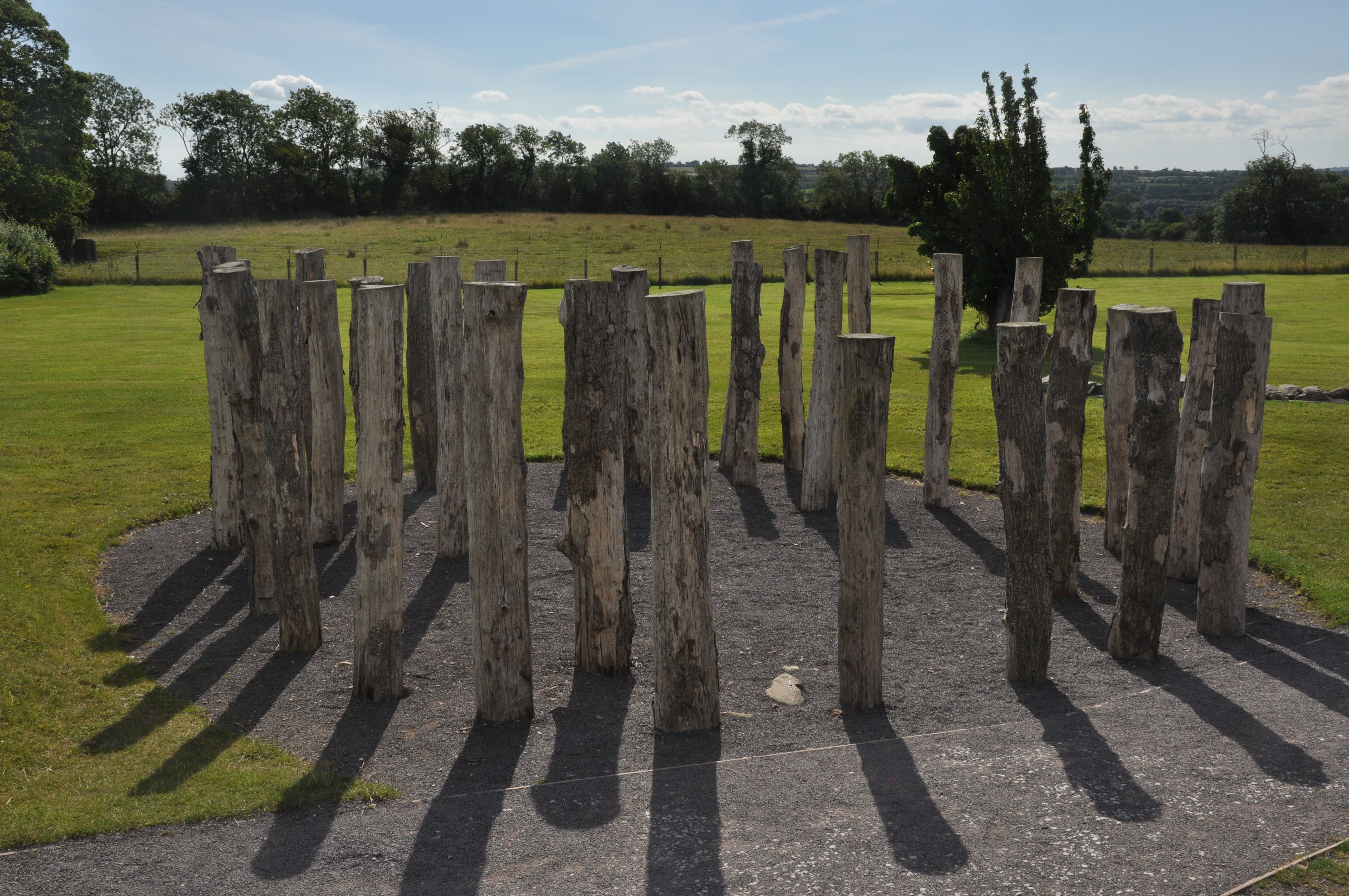
This is a reconstruction of a Timber Circle which is on the eastern side of Knowth. It is is estimated to have been originally built about 2,500 BC. No one knows its use or significance. We could only imagine. A timepiece?
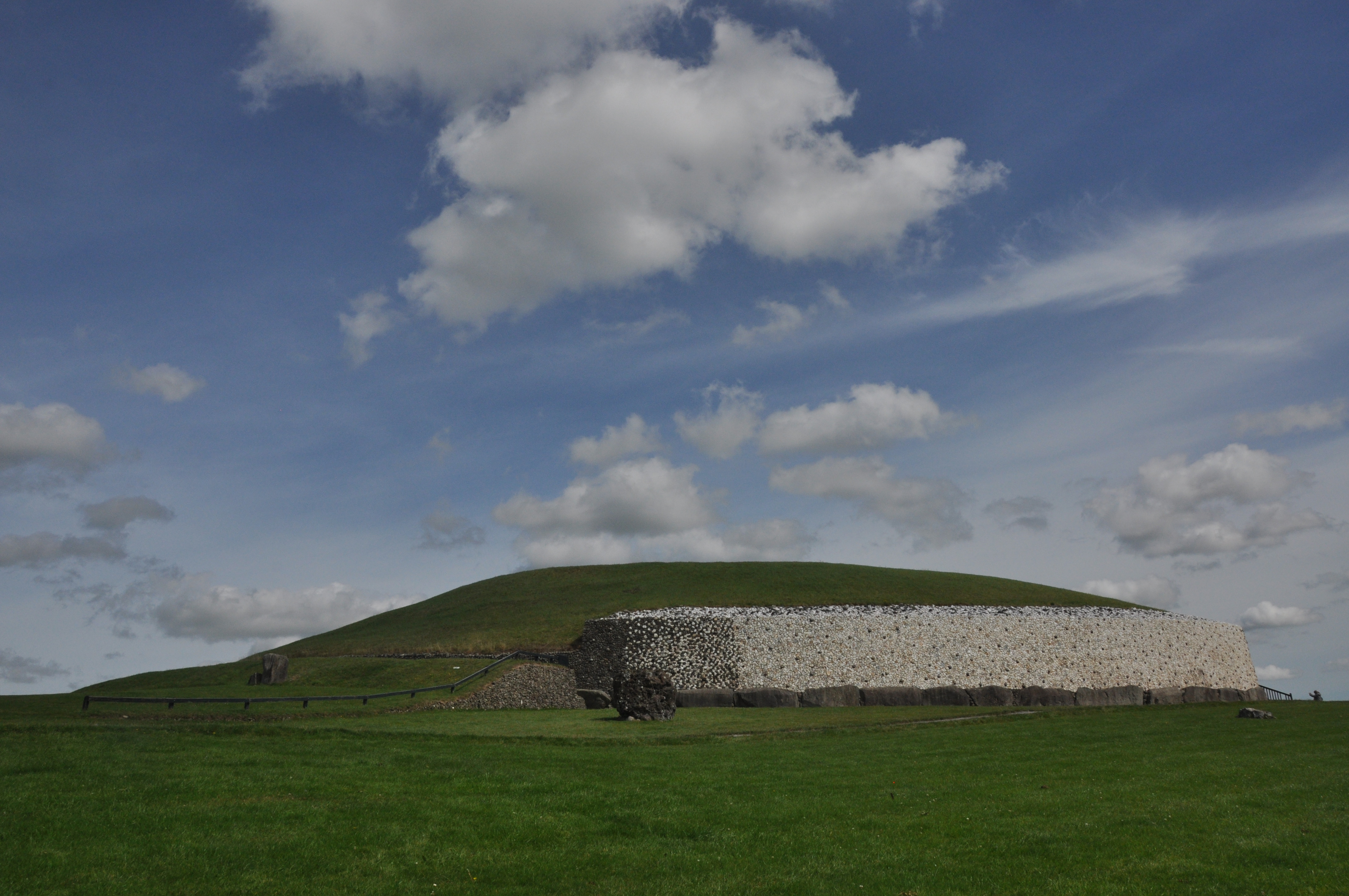
This is a side view of Newgrange, the best known of the tombs.
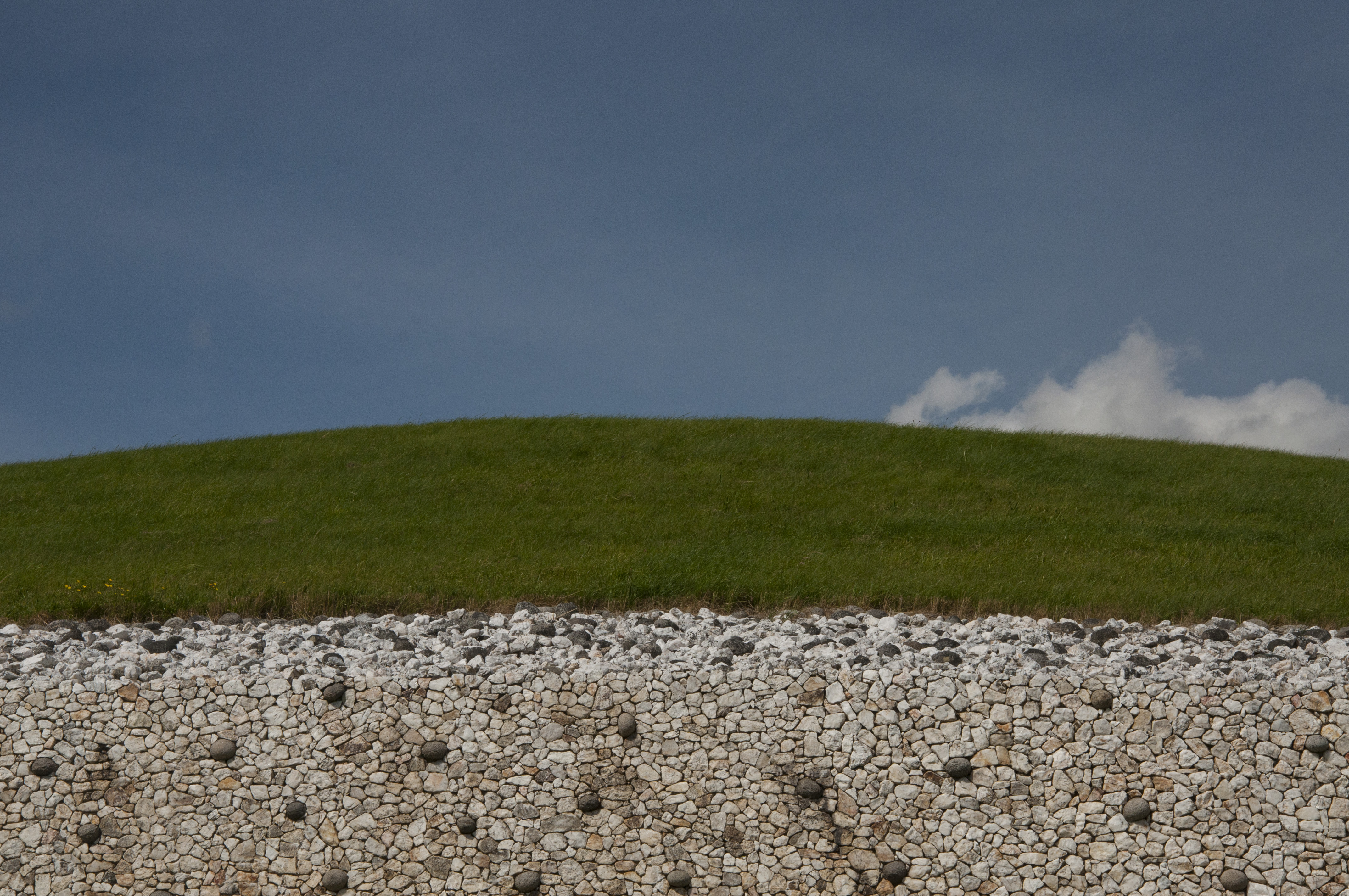
The wall has been reconstructed based on archaeological evidence.

The entrance to Newgrange has a roof box, which is enormously significant. On the Winter Solstice, the light of the rising sun enters the roofbox and penetrates the passage, shining onto the floor of the inner chamber. The sunbeam illuminates the chamber for just 17 minutes. We were given a demonstration of this remarkable phenomenon. We also viewed stone ritual basins that had been set in alcoves off the main chamber. Although we were allowed entrance to Newgrange no photographs were allowed. You will have to go there to experience this for yourself. We heartily recommend it.
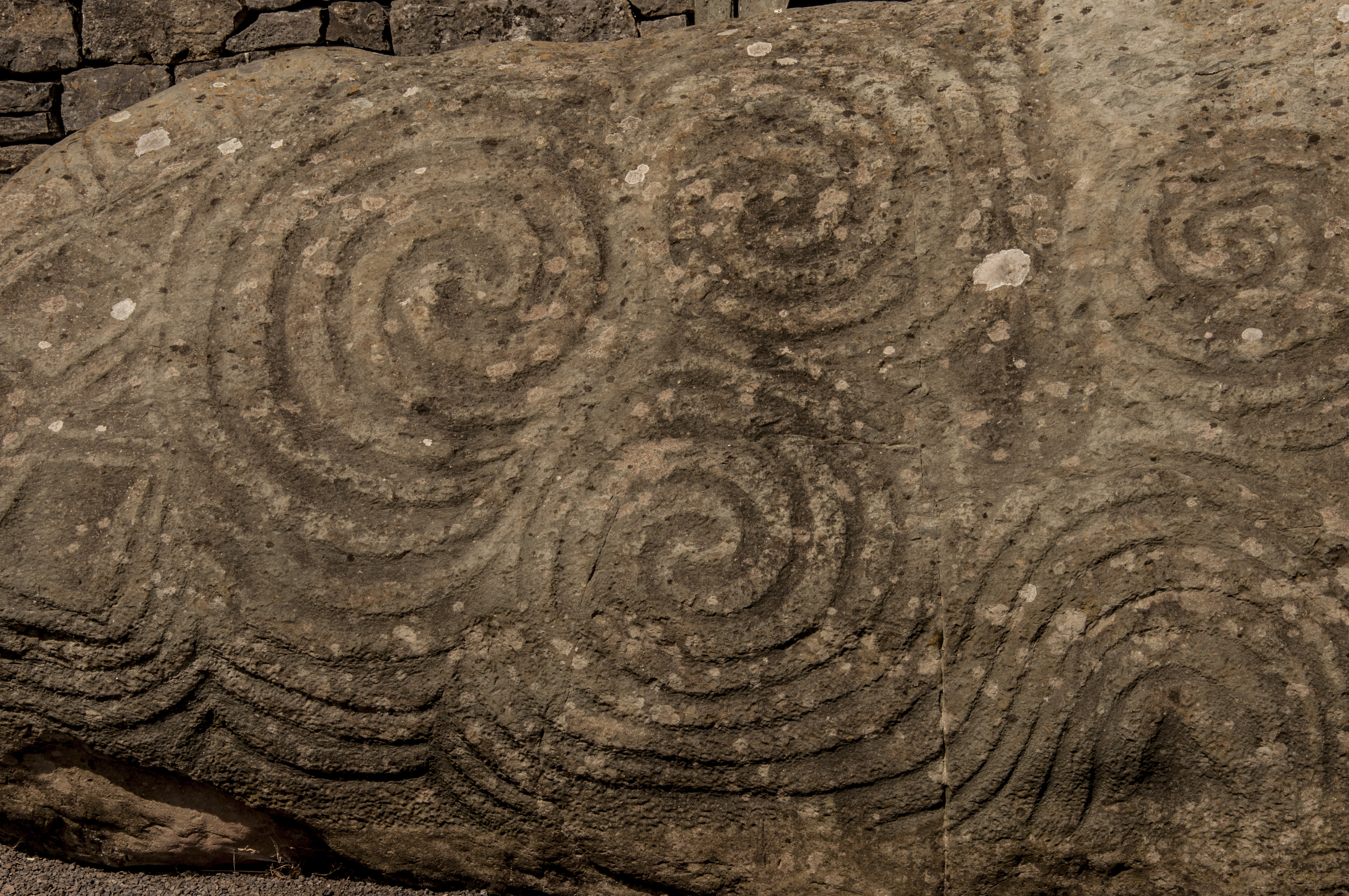
This is the Entrance Stone at Newgrange. Although spirals are seen elsewhere in Paleolithic art, the three interconnected spirals seen here are unique to Newgrange. On the left are lozenge shapes that are seen throughout Bru na Broinne.
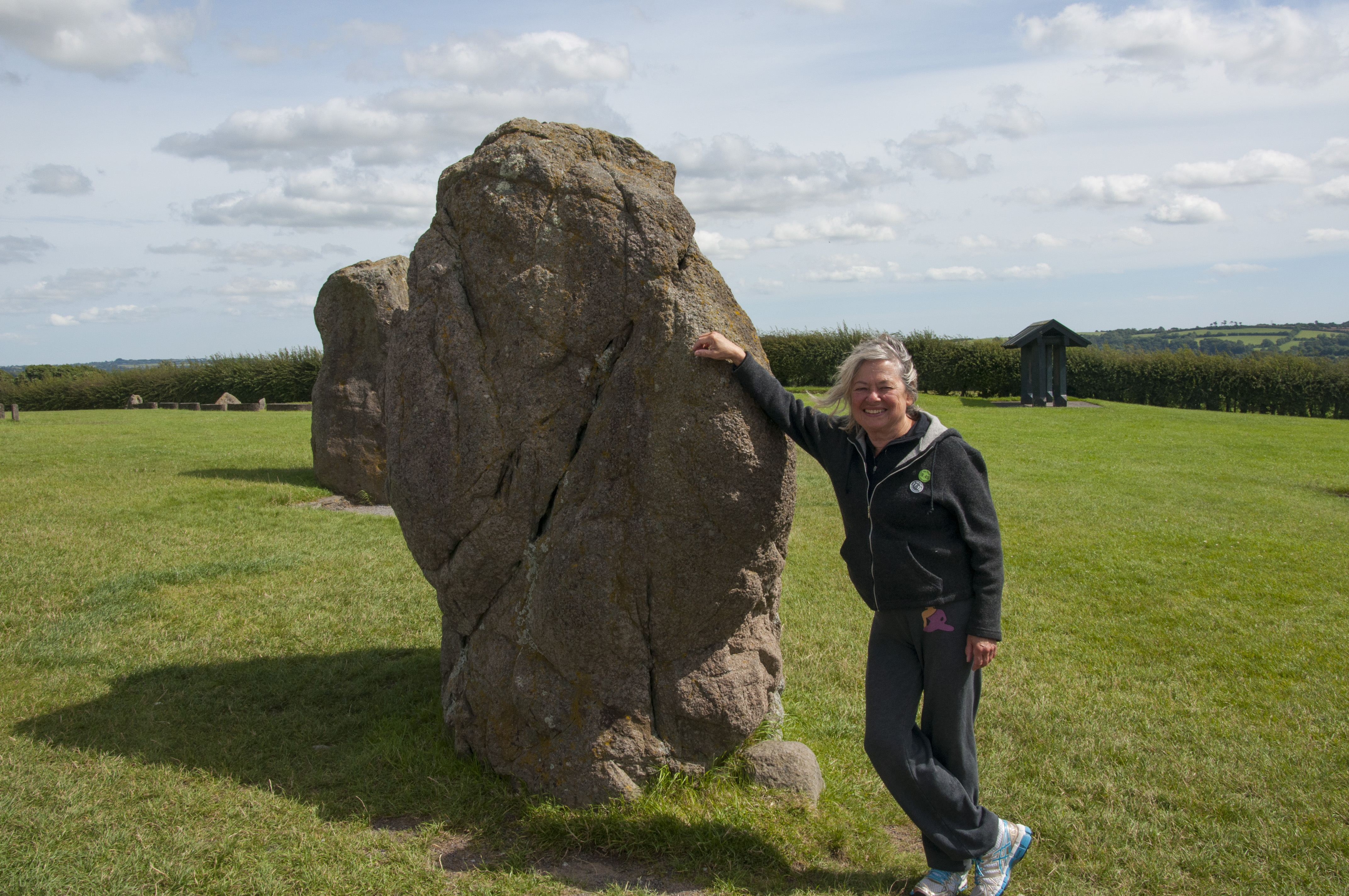
Joanne leans against one of the massive boulders. We feel privileged to have been able to visit and explore this remarkable place in time, space, and history.
 westwardhowithapollo
Joanne, you write the best travel guides. I’m enjoying Ireland through your eyes.
Thanks. Glad you are enjoying it