Native Americans inhabited the Cedar Key Islands for more than 5,000 years. We camped at the Shell Mound County Park ($10 a night for a beautiful site) which is adjacent to the Shell Mound Archeological site. Comprising five acres, this is the largest remaining shell mound in Central Coastal Florida.
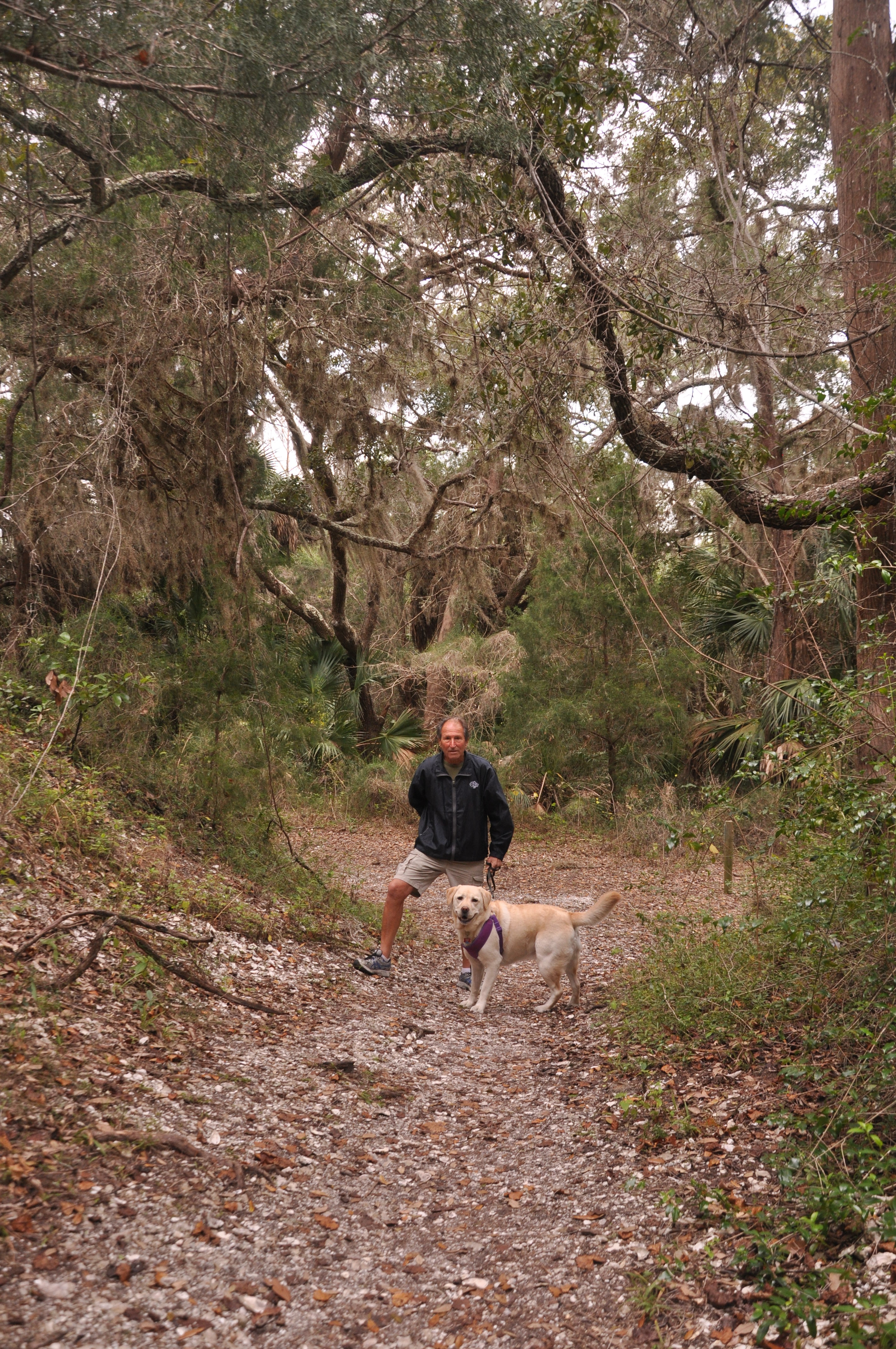
Mitch and Apollo on the shell mound.
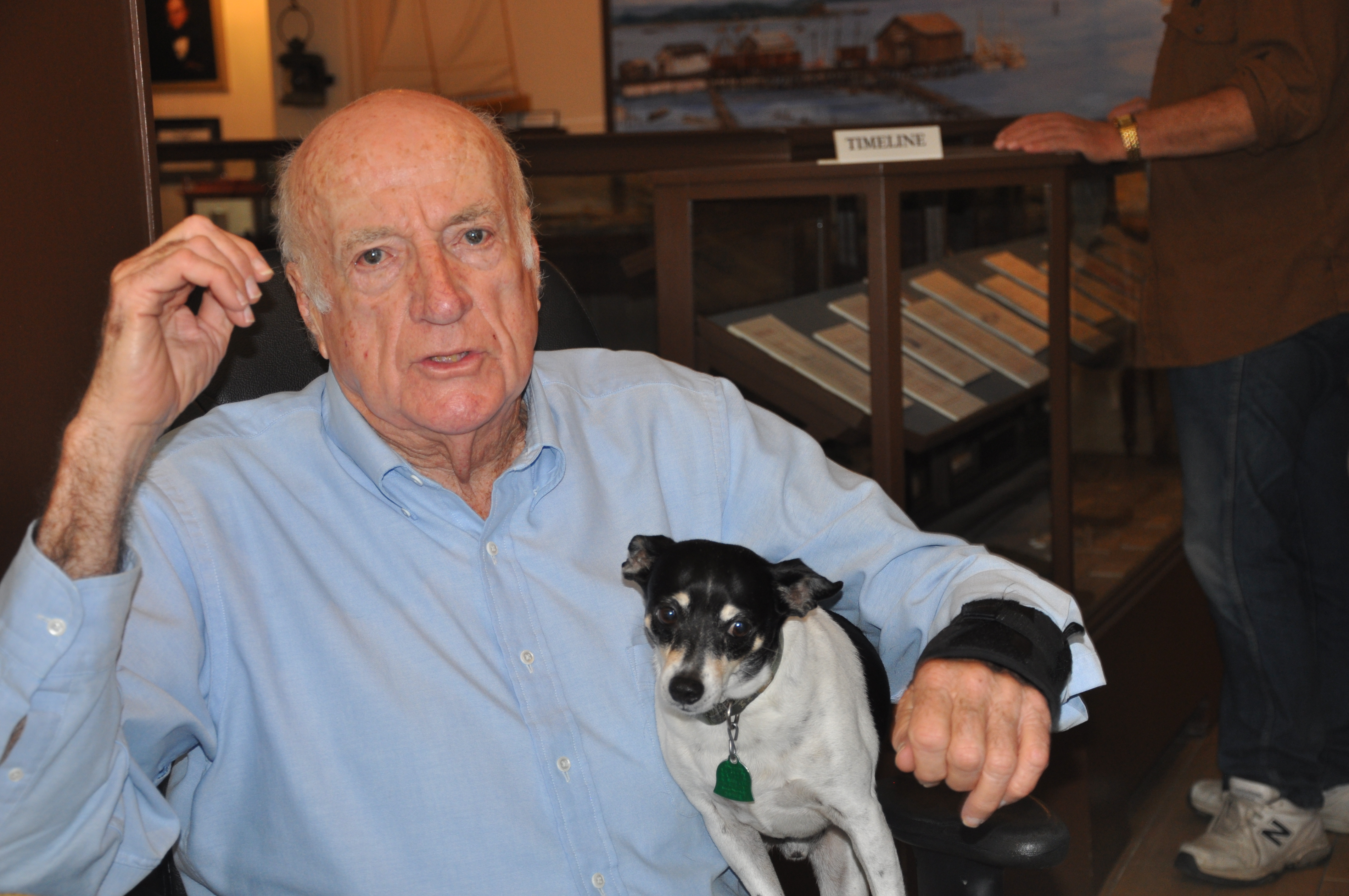
As is often our MO we paid a visit to the local historical museum where we met the director and his little dog, Oreo. Behind him is a miniature replica of the town of Cedar Key as an early railroad center.

What’s left of the Cedar trees for which Cedar Key is named.
In 1817 Andrew Jackson waged war against the Indians in Florida and by 1842 the war against the Seminoles was declared “over” and a containment camp was set up on Seahorse Key. That year saw a disastrous hurricane and the army abandoned the Cedar Keys and auctioned off the remains of the Army buildings. David Levy Yulee, a Jewish U.S. Senator for whom Levy County is named, became the “guardian angel” for all matters of federal policy which affected Cedar Key. His Florida Railroad Company established the first coast to coast train which ran from from Fernandina, FL to Cedar Key in 1861. That year signaled the start of the Civil War. By 1862 Union troops occupied the Cedar Keys. Following the war the town of Cedar Key began to grow. Stores, hotels, steamships, visitors, entertainers, saw mills, fishing, oystering, boat building, shipping, wholesaling, and the production of red cedar slats for pencils all developed. But as the timber resources became depleted businesses started to fail. That, plus a disastrous hurricane in 1896 caused the population to dwindle from 1,887 in 1885 to 700 in 1900. By 1932 the railroad service ended and the tracks were removed. In 2004 the population was 819, following four more hurricanes.

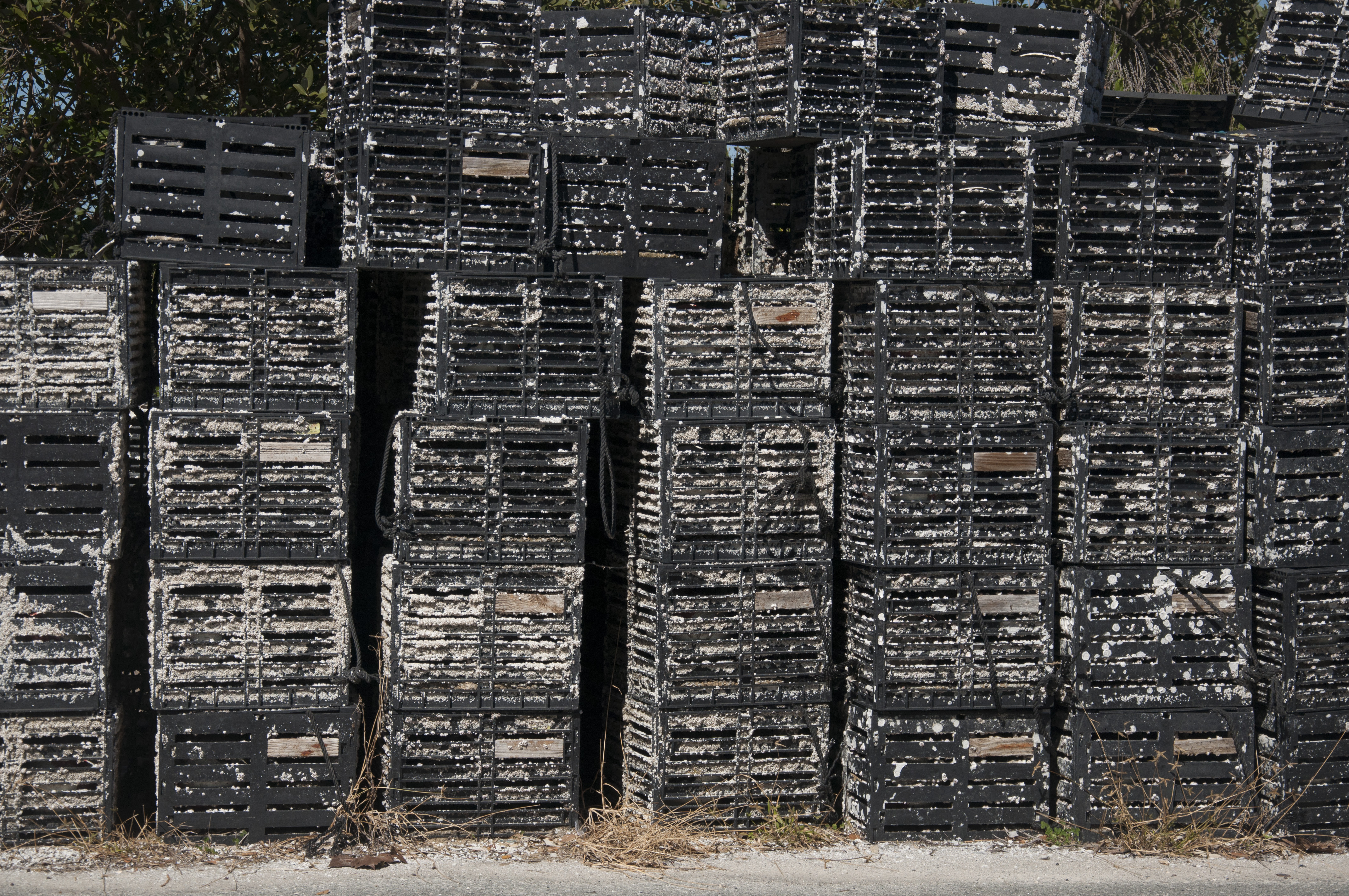
Today Cedar Key is a quaint fishing village. Its hopes are set on tourism, aqua farming of oysters, clamming, and fishing.

We thoroughly enjoyed ourselves there watching the bird life, hiking, and hanging out. The highlight of our visit was a fishing trip with Captain AJ Brown on his boat and eating our catch which included two large red fish and a large sea trout. There were scores of small yellow tail and about 20 red fish which were thrown back.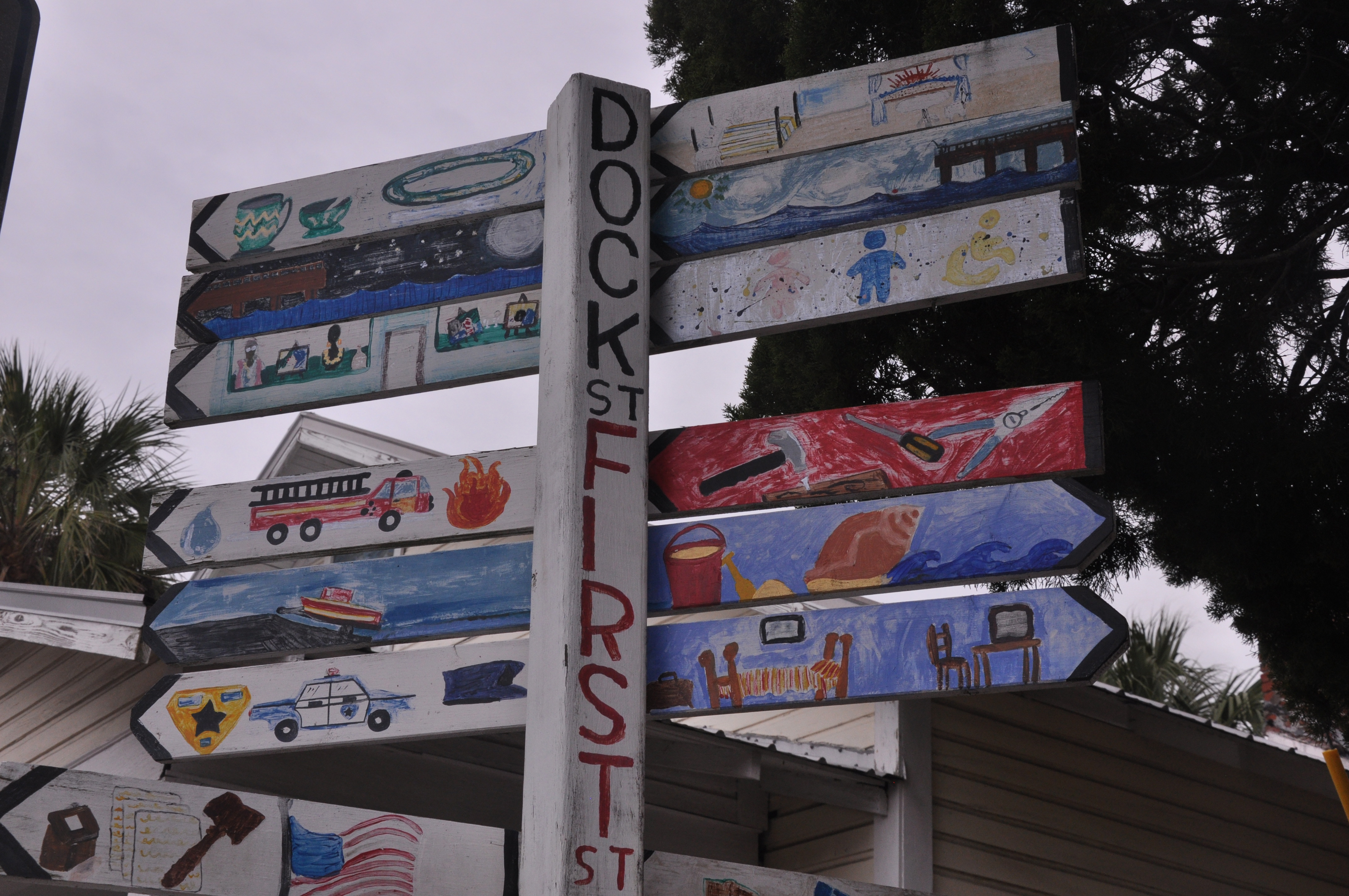
There is a small but vibrant artistic current, surfacing in various places, like street signs and even an electric outlet on the street that serves as a frame for a couple of Ancient Roman sculptures.

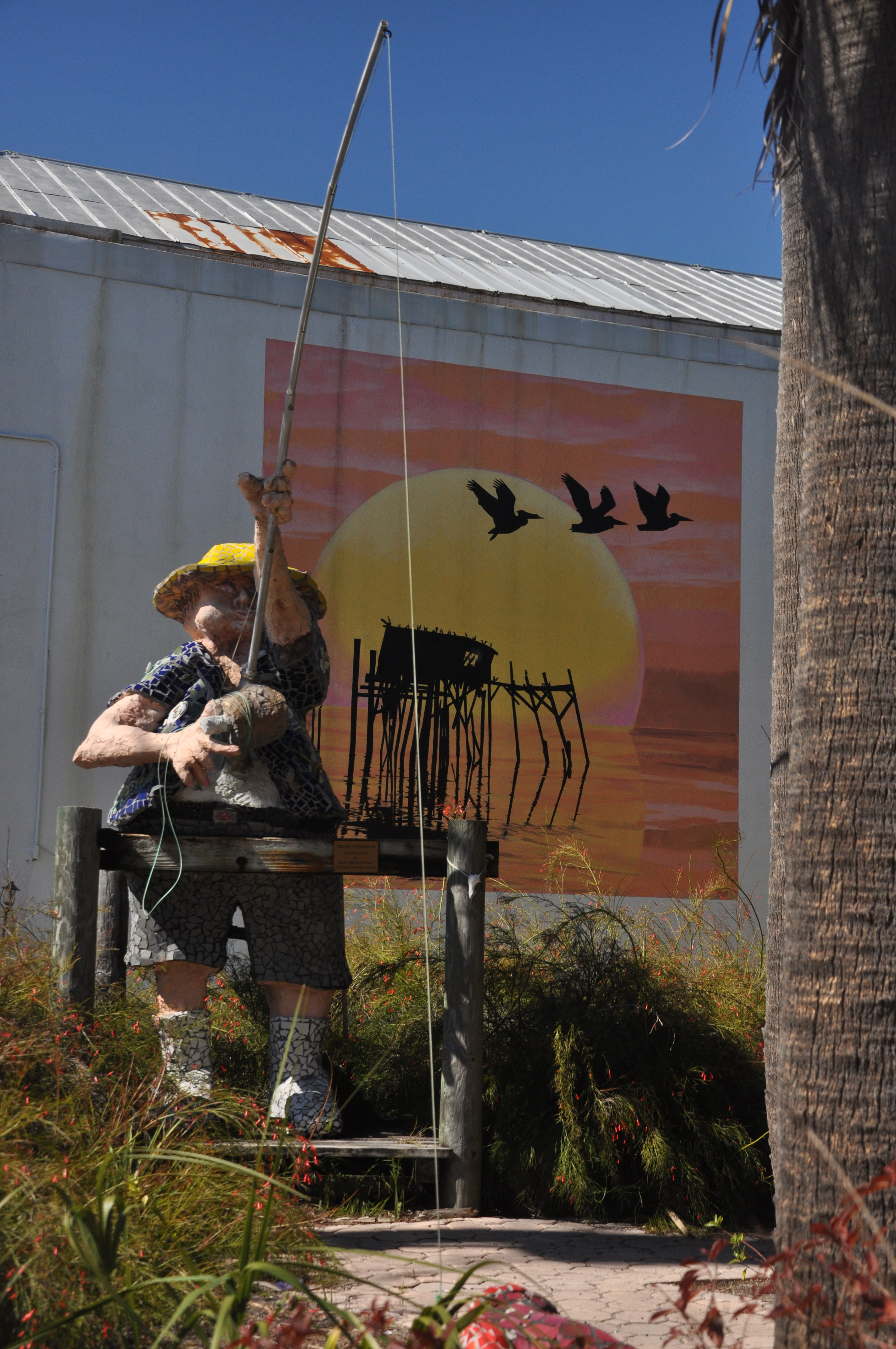
Sculpture of fisherman.
We hiked on the various trails that crisscross through the town and enjoyed watching the antics of the birds.
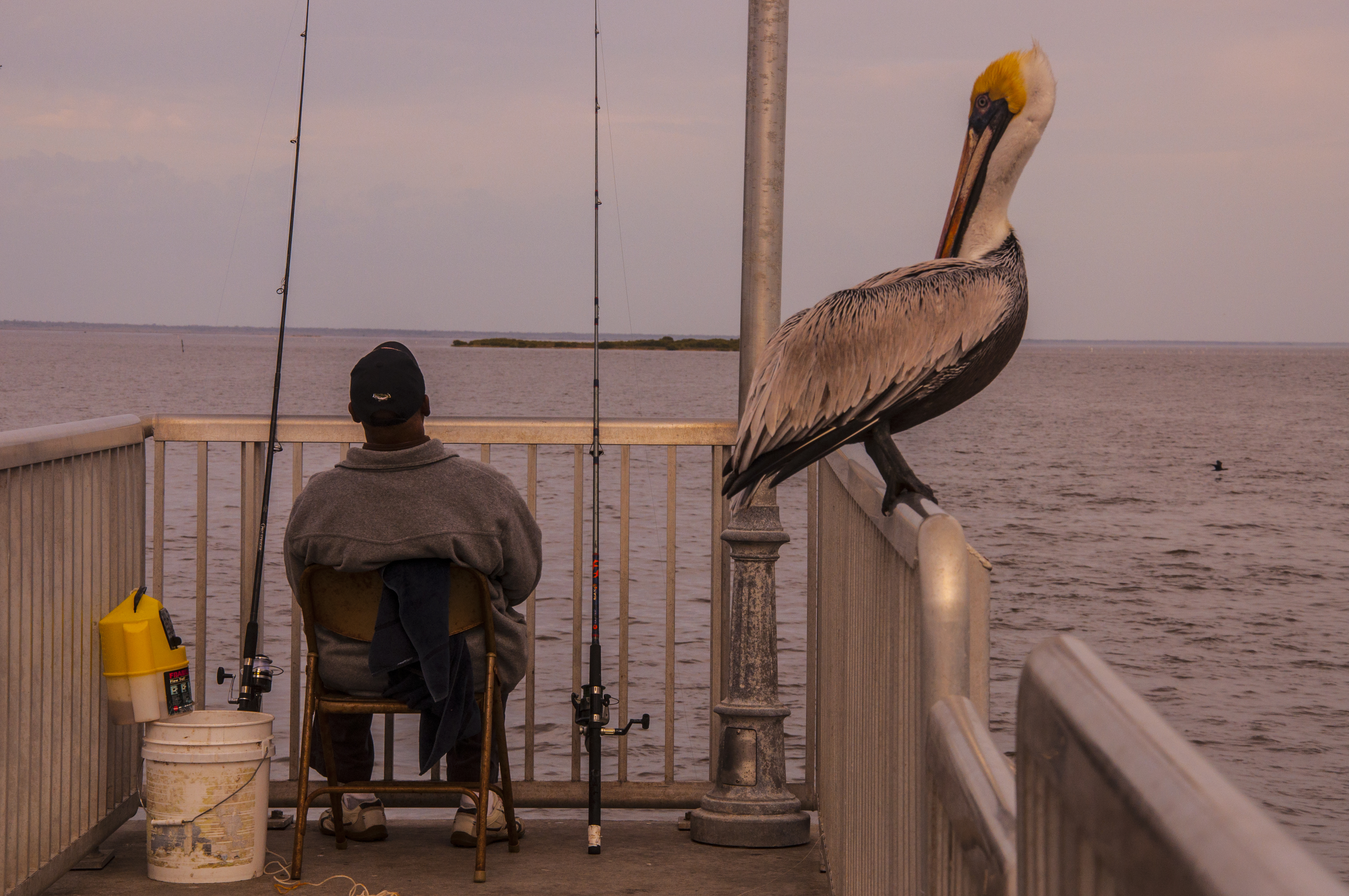
The pelicans were a constant presence wherever a human would throw in a line.
 Sometimes turf fights broke out.
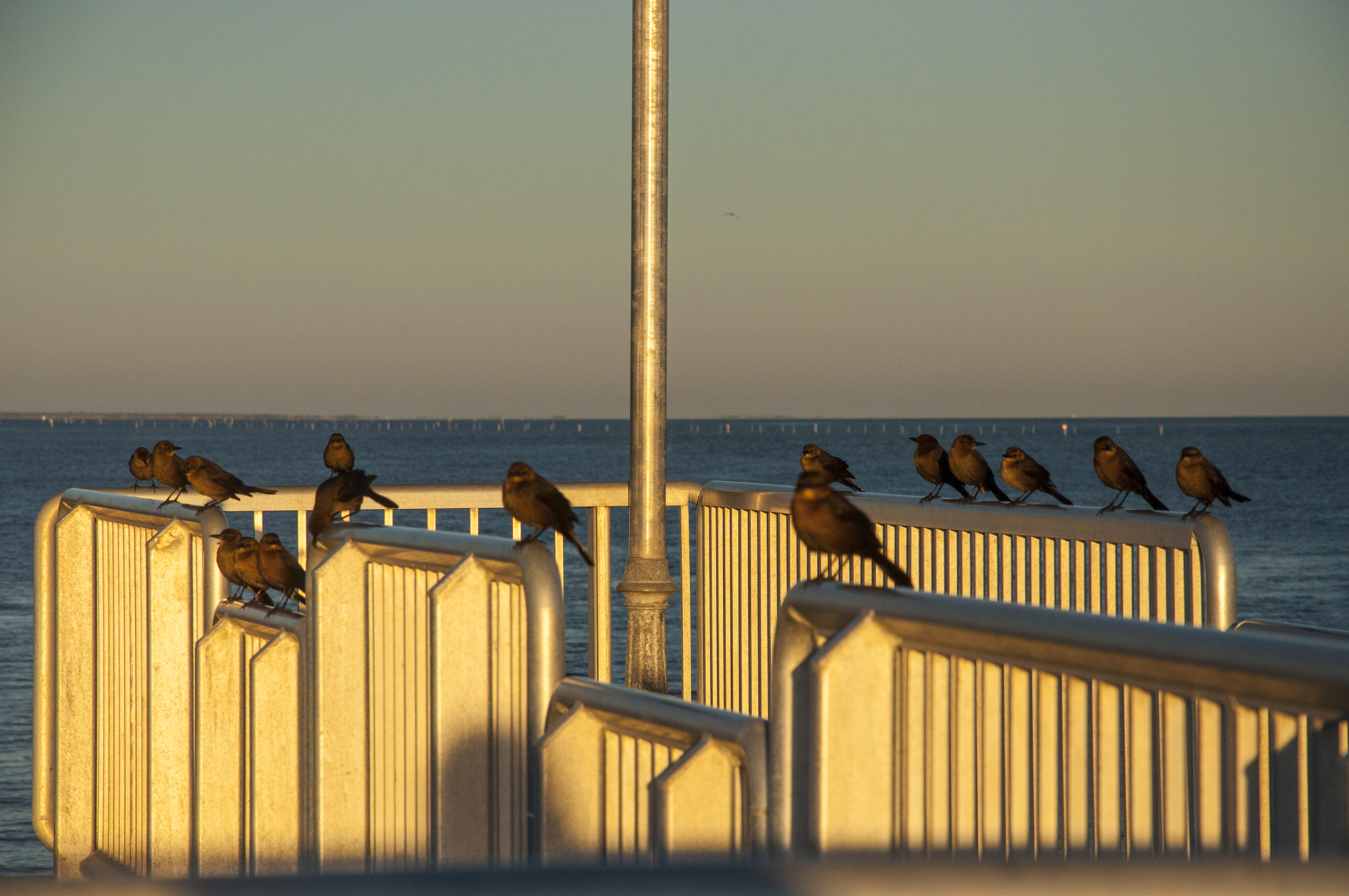
Birds at sunset.
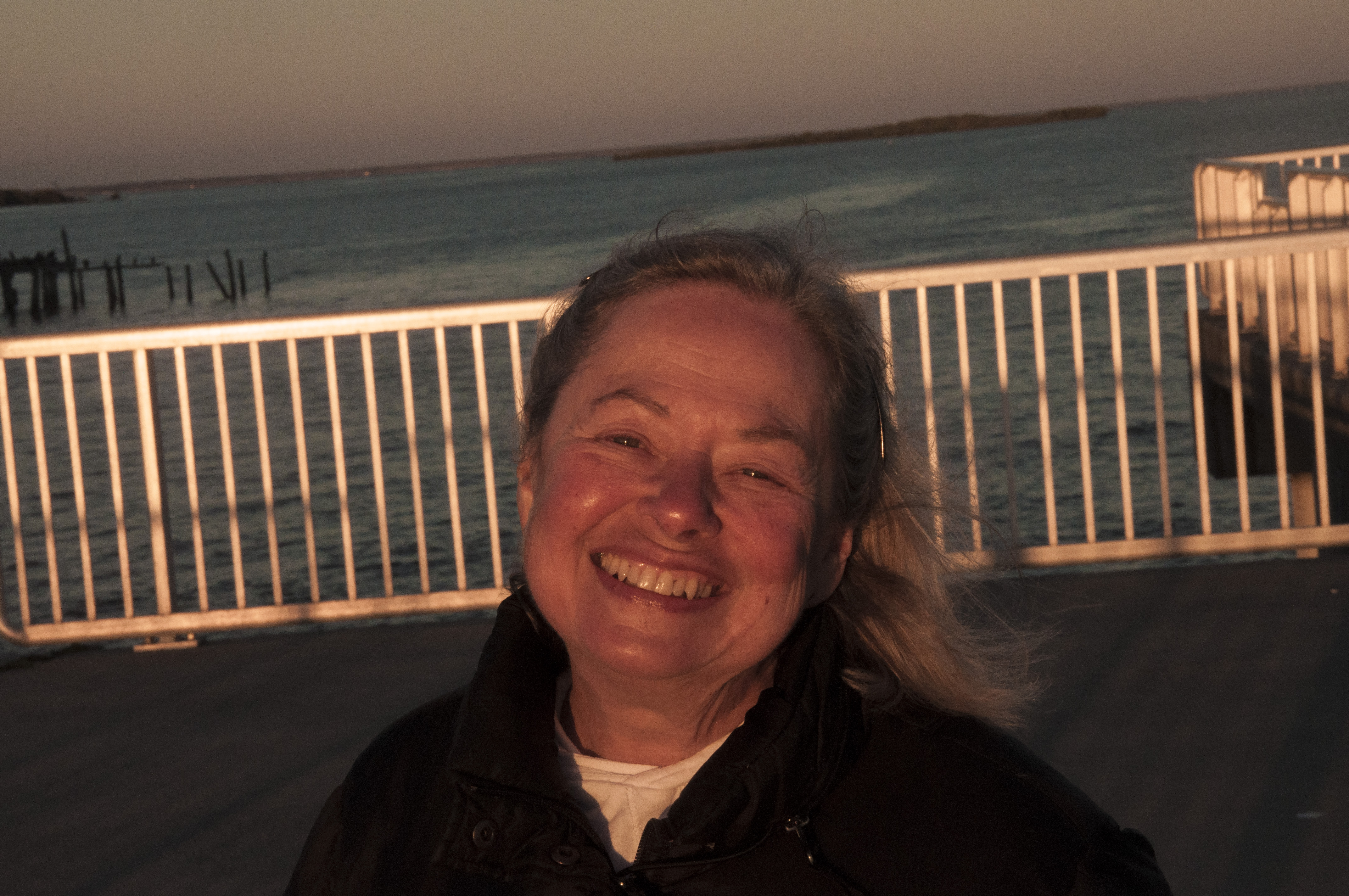
Joanne at sunset.

Cedar Key at sunset.
 westwardhowithapollo
I think you know more about Florida in one visit than we do after 3 years