
In India religion is a way of life. Approximately 80% of Indian people are Hindu and 13% are Muslim. The remainder practice Sikhism, Ayyavazhi, Buddhism and Jainism which are influential offshoots of Hinduism.
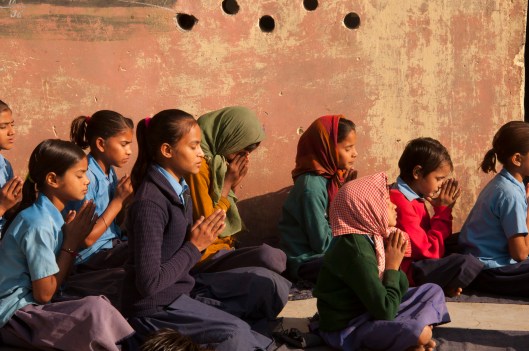
Government school in the village of Ram Singh Pura in Ranthambore. Here Muslim girls are joining in the morning Hindu prayer.
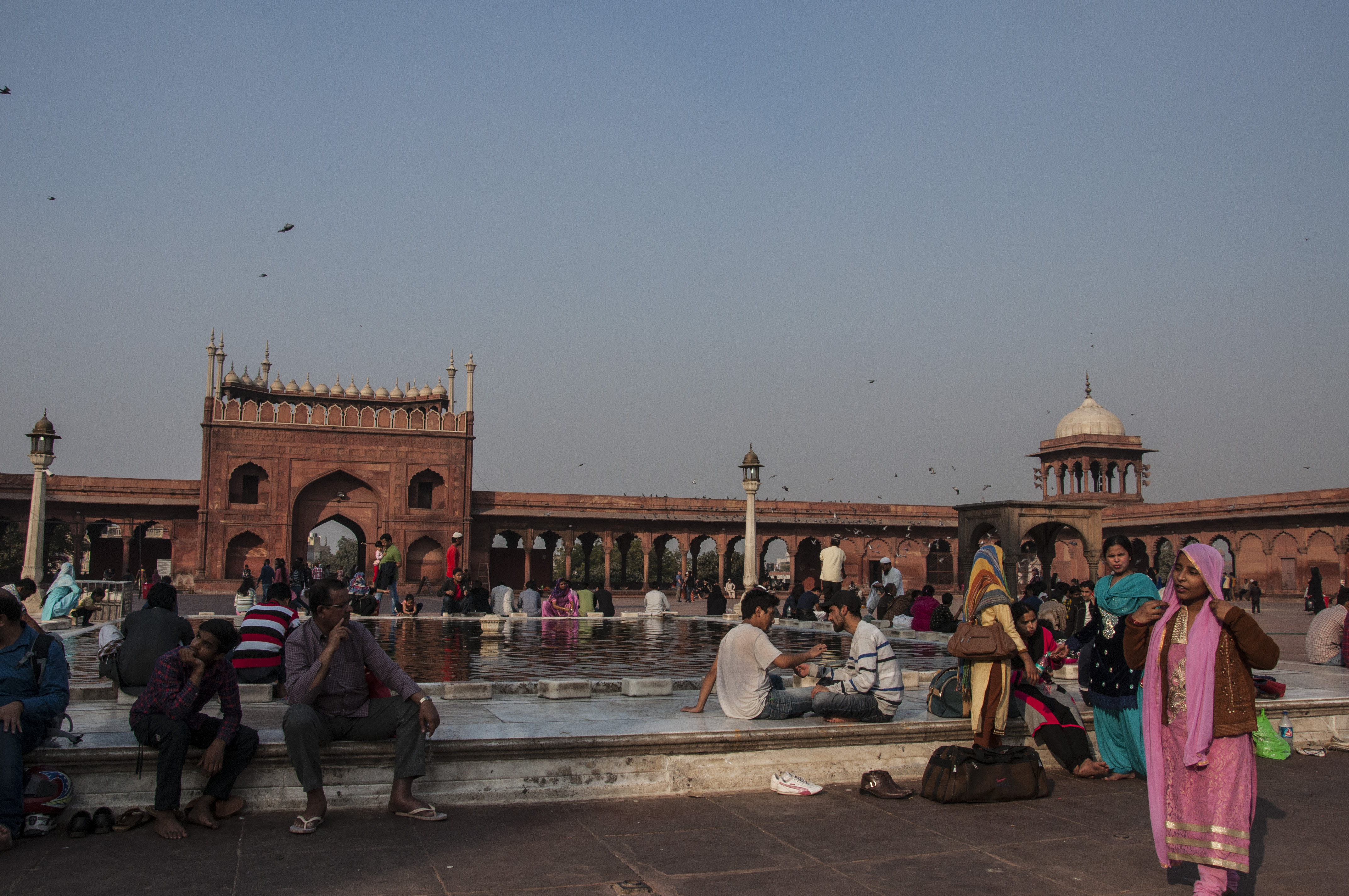
The courtyard at the Jama Masjid Mosque (Delhi), which is one of the largest in India, where congregants gather with family and friends. It was built in 1650 by the Mughal Emperor Shah Jahan, who also built the Taj Mahal in Agra (1630-51).
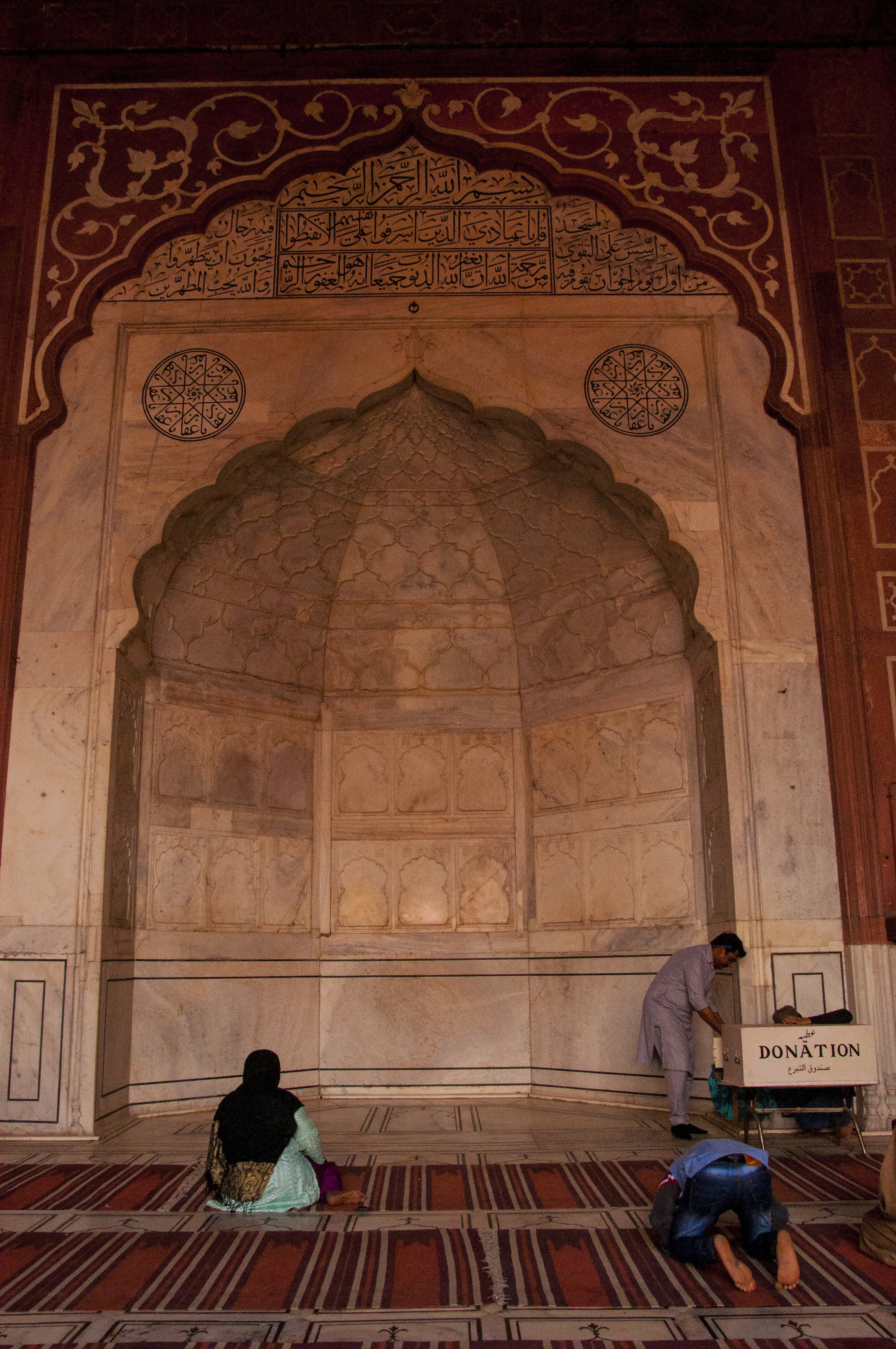
Praying inside the mosque.
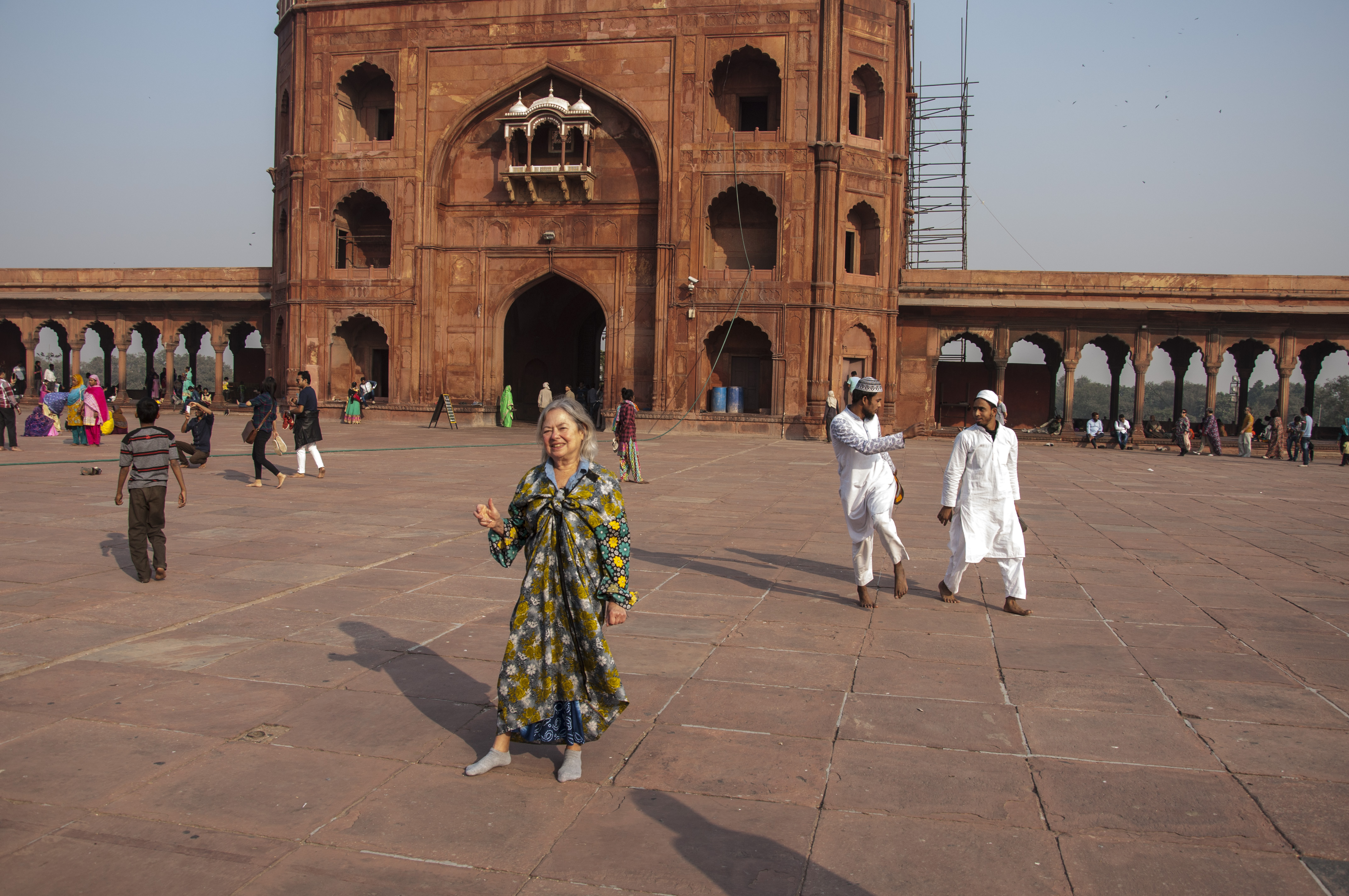
Joanne in the provided appropriate garb.
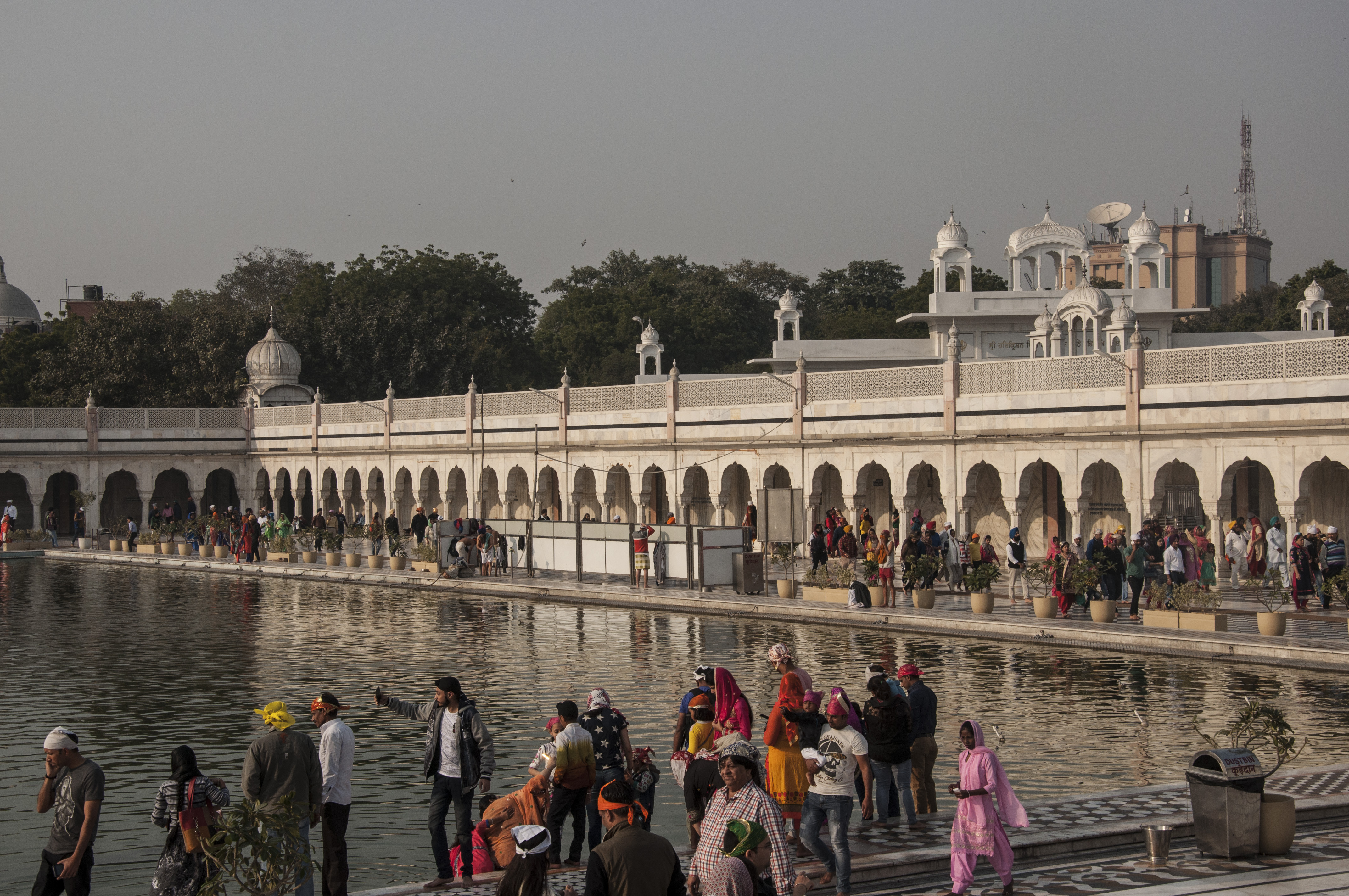
At the Sikh Temple Bangla Sahib Gurudwara in Delhi members of the public are invited every day for a free community meal called Langar. Visitors, regardless of their religion or caste status, partake in the Langar as a symbol of their belief that all humans are equal. Social justice is a core belief in Sikhism. On special days the number of meals served can reach 50,000.
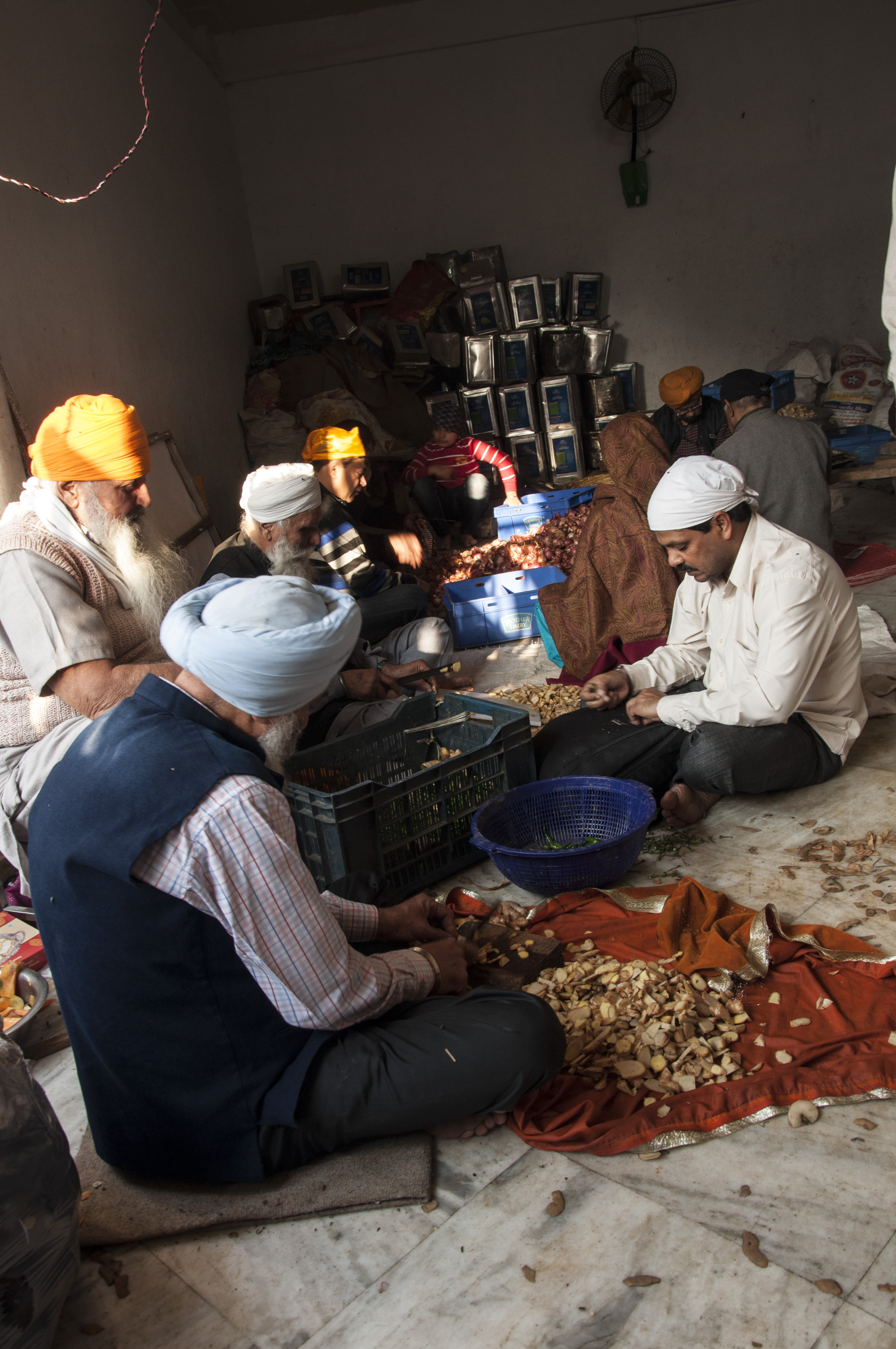
Volunteers peel the potatoes.
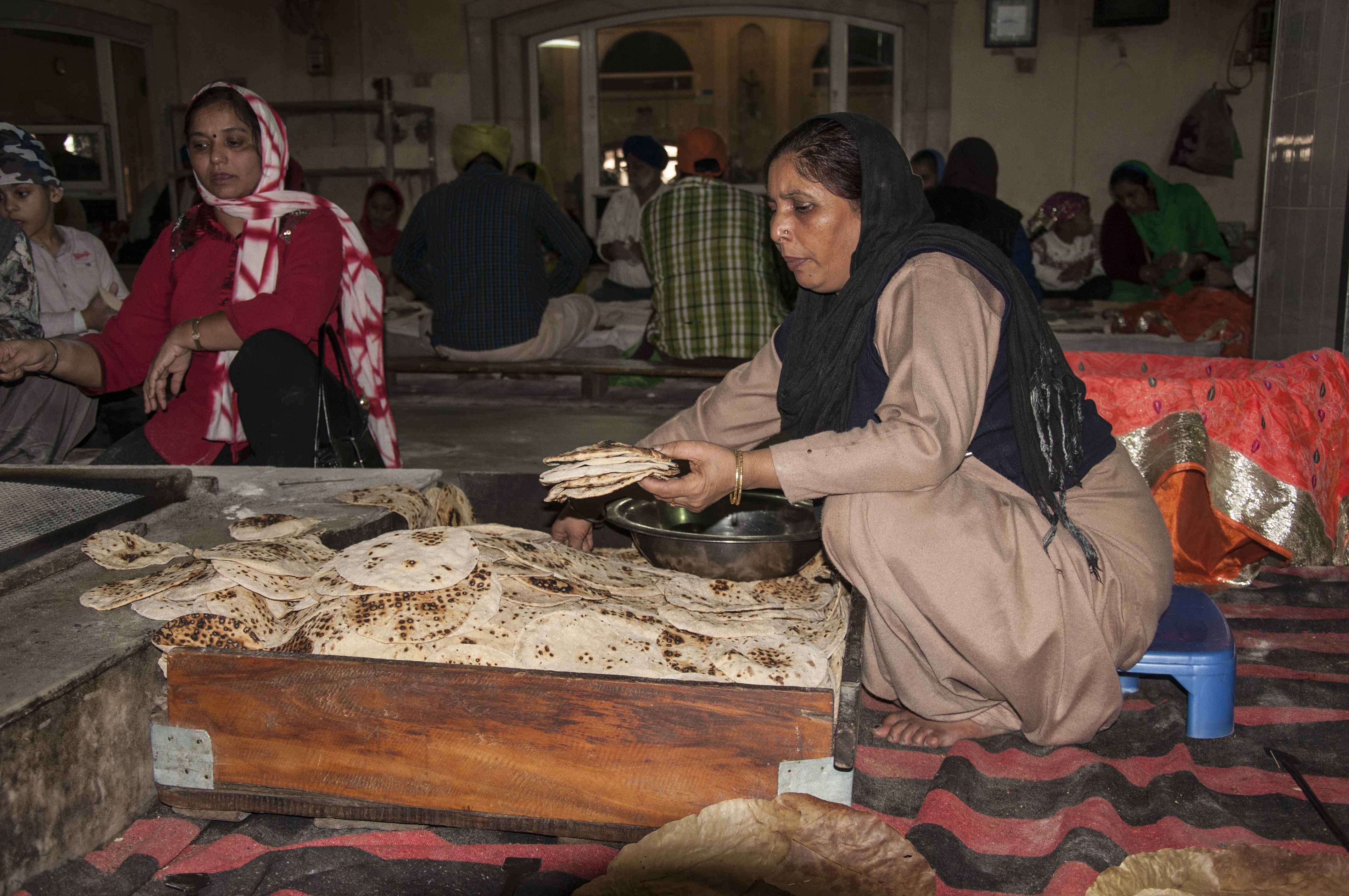
Women making chapati.
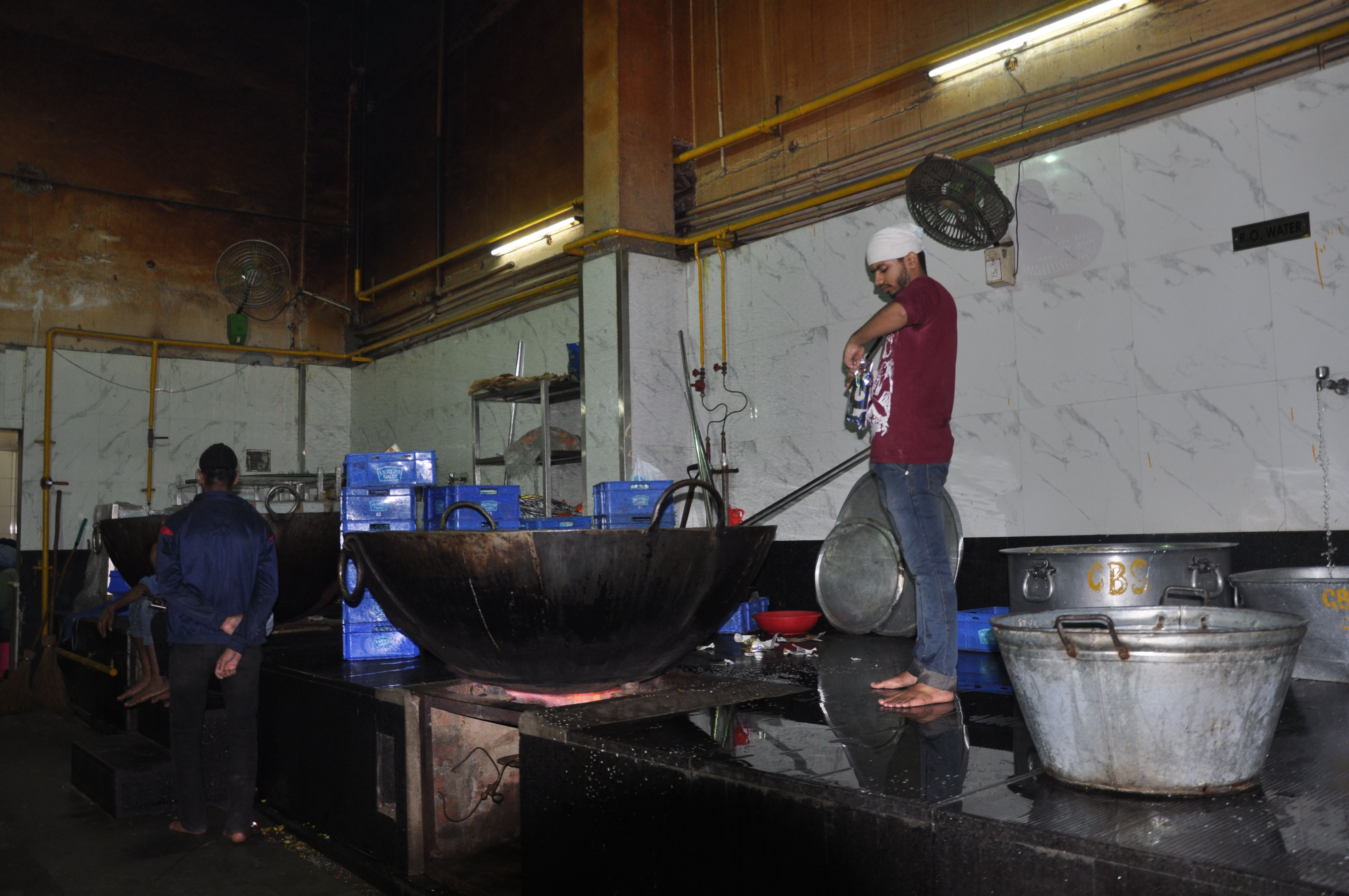
Scores of very large pots are needed.
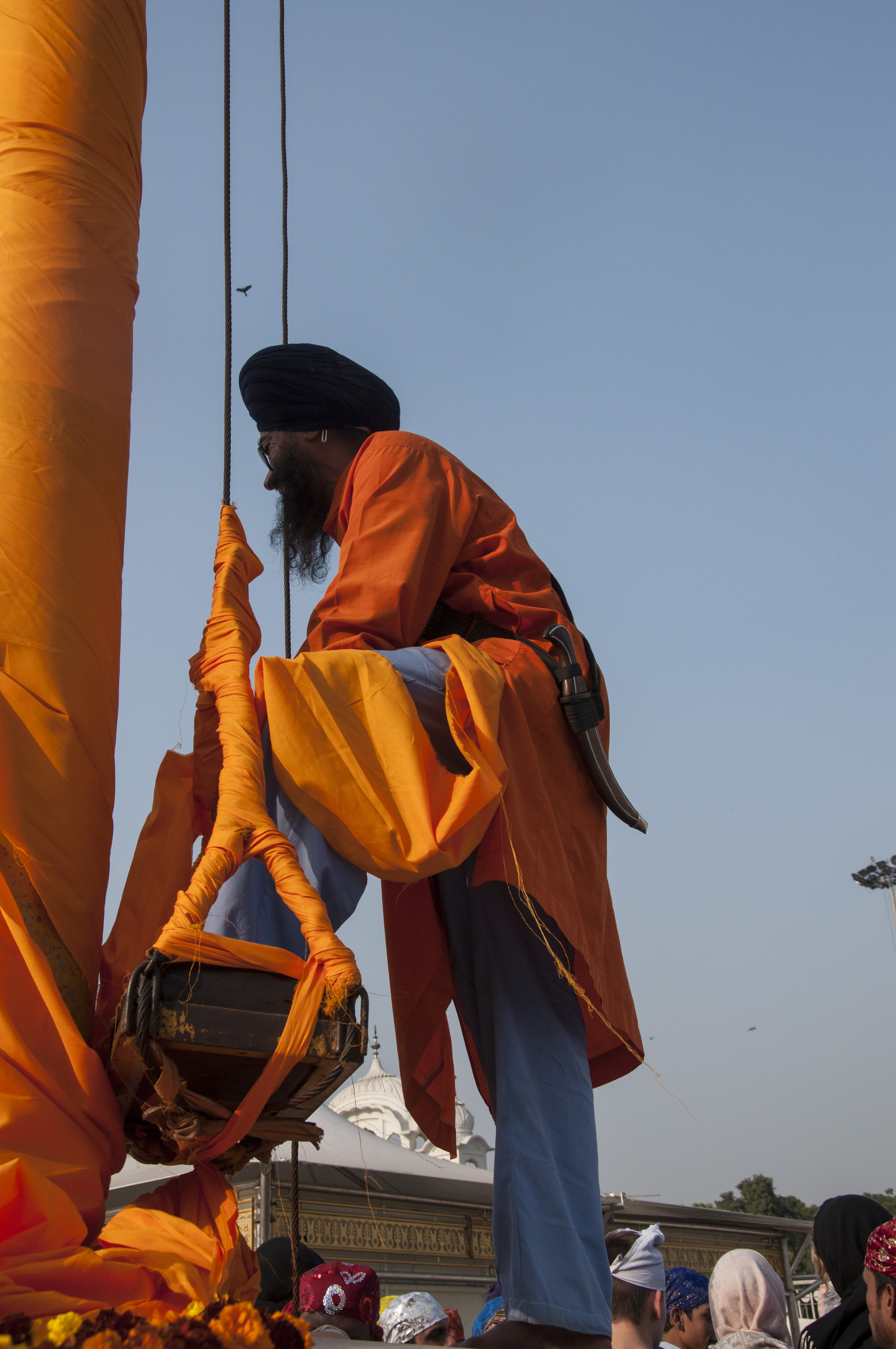
The purpose of the mast, which features an orange cloth wrapping along its entire length and illuminated fibreglass “Khanda” (a double-edged sword) at the top, is to reflect the fundamental concepts of Sikh religion. The colour of the wrap and the “Khanda” ensures that the pole and hence the temple is visible from afar. The mast is lowered annually for the Sikh New Year Ceremony which involves taking off the old cloth, washing the pole with pure milk, cleaning it with water and wrapping it again with a new cloth. Here we see the wrapping process.

Mitch watching the wrapping of the mast.
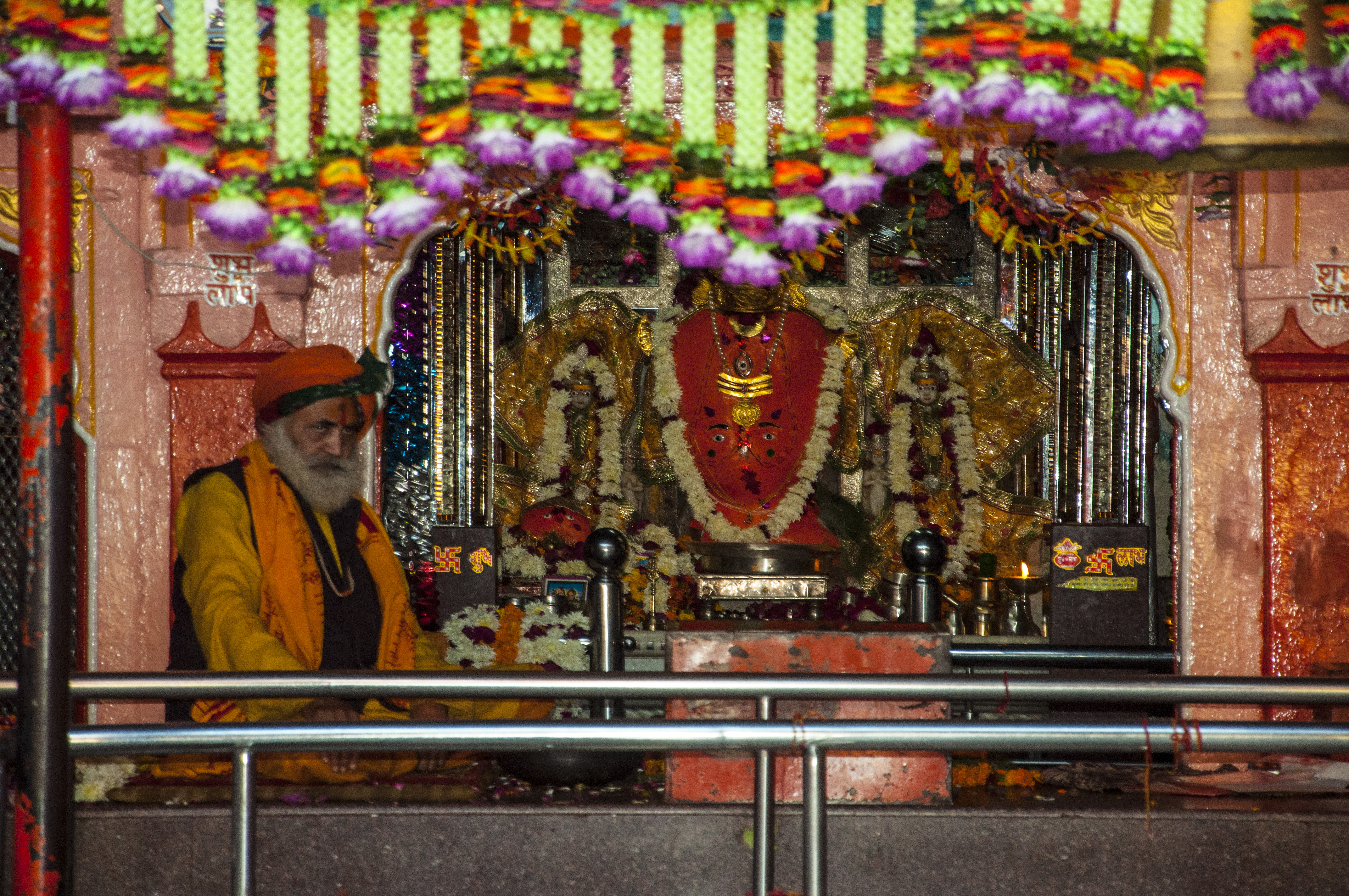
Temple honoring the Hindu Monkey God, Hanuman, in the Ranthambore Fort.
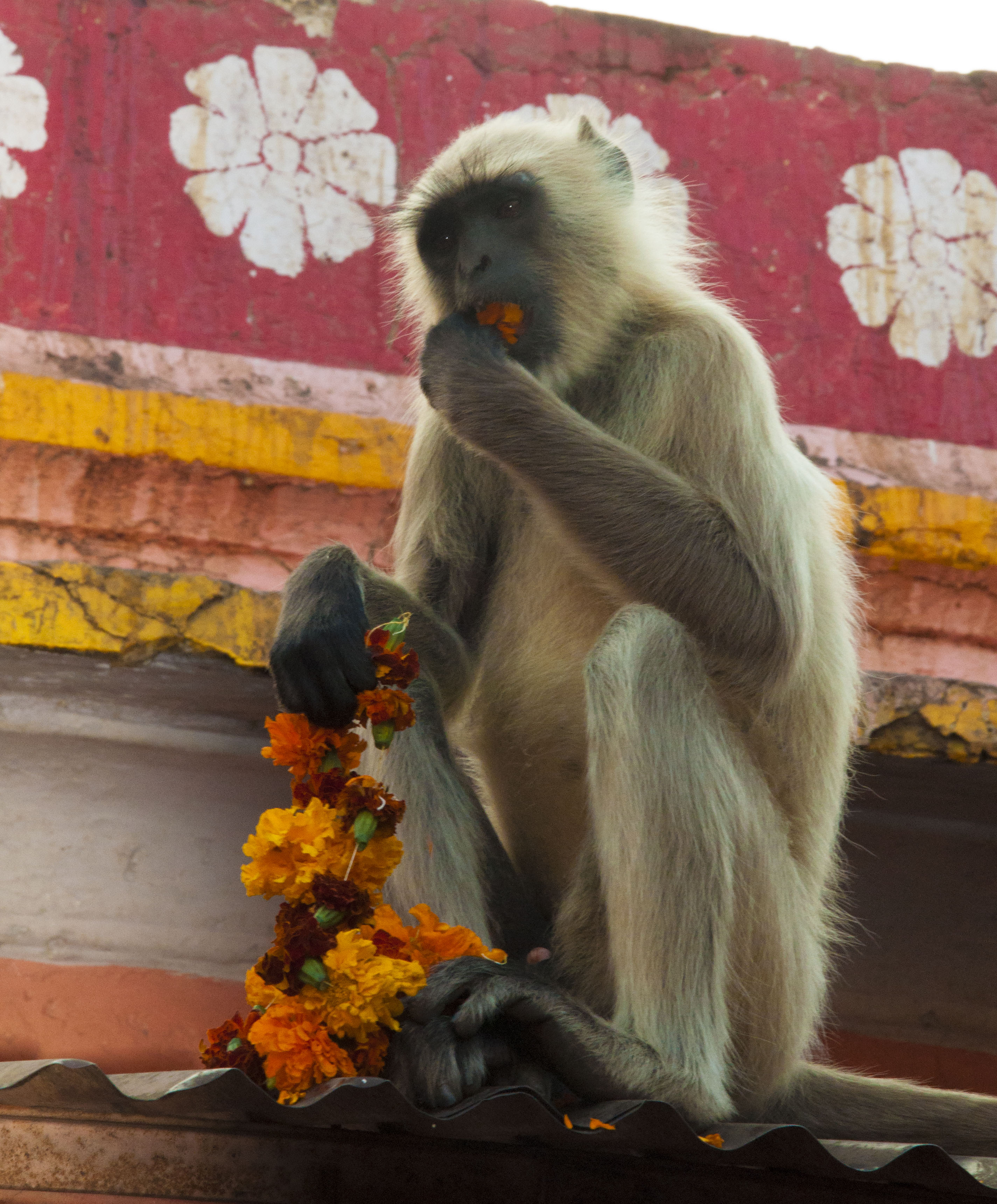
Monkeys take advantage of their privileged status. Here one devours a lei of marigolds he stole from a visitor.
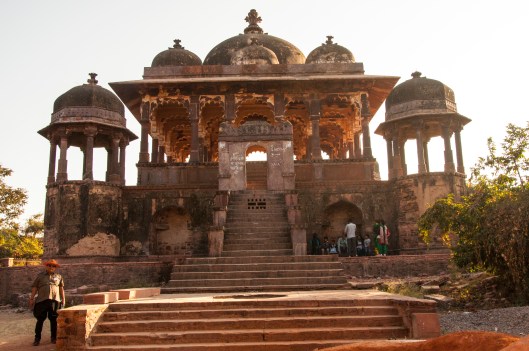
Temple for Ganesha, the elephant headed Hindu God, son of Shiva and Parvati in the Ranthambore Fort.

Stained glass scene featuring Ganesha at the Birla Mandir Hindu Temple in Jaipur
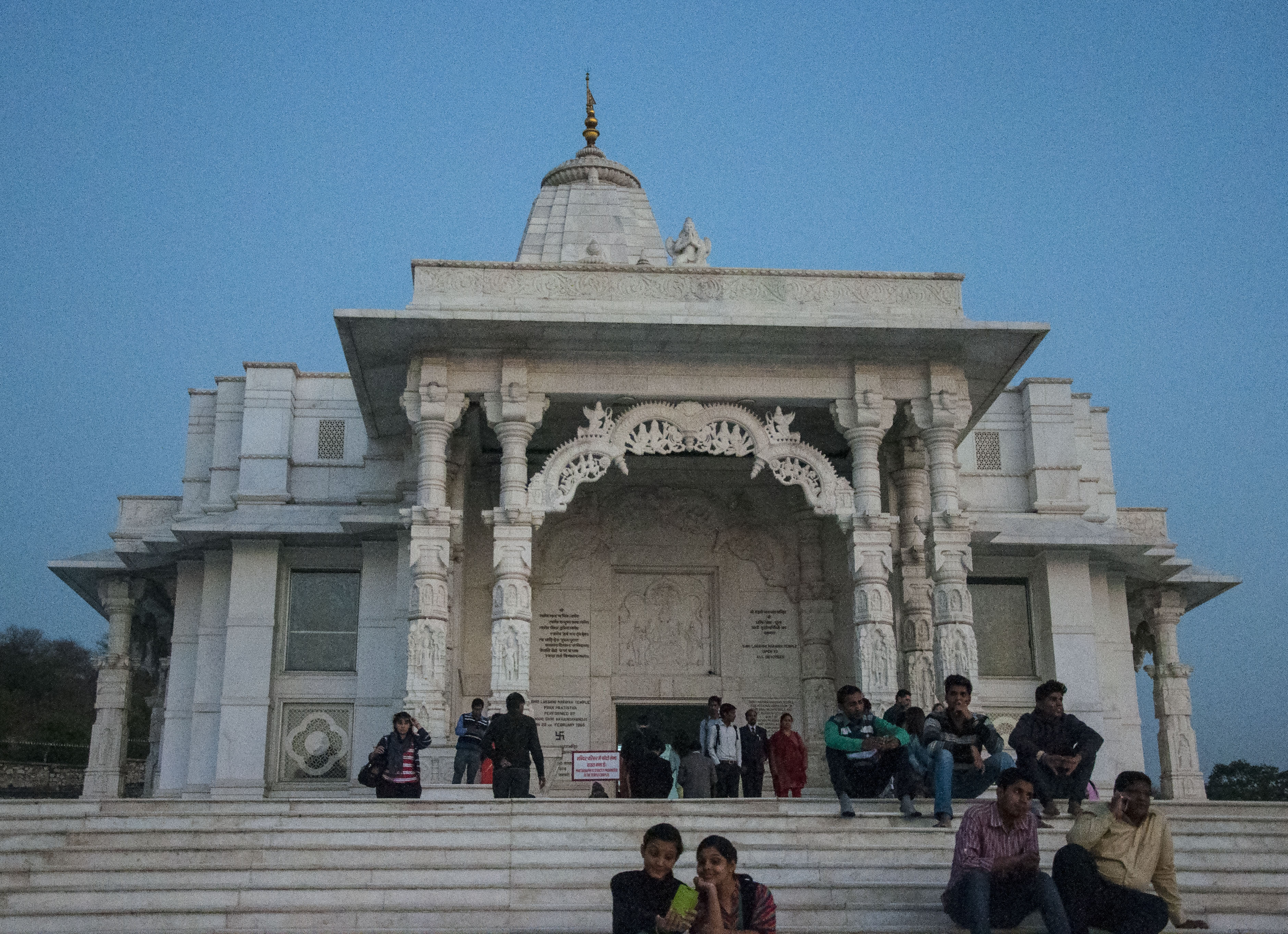
Birla Mandir Hindu Temple, Jaipur, is made of pure white marble.
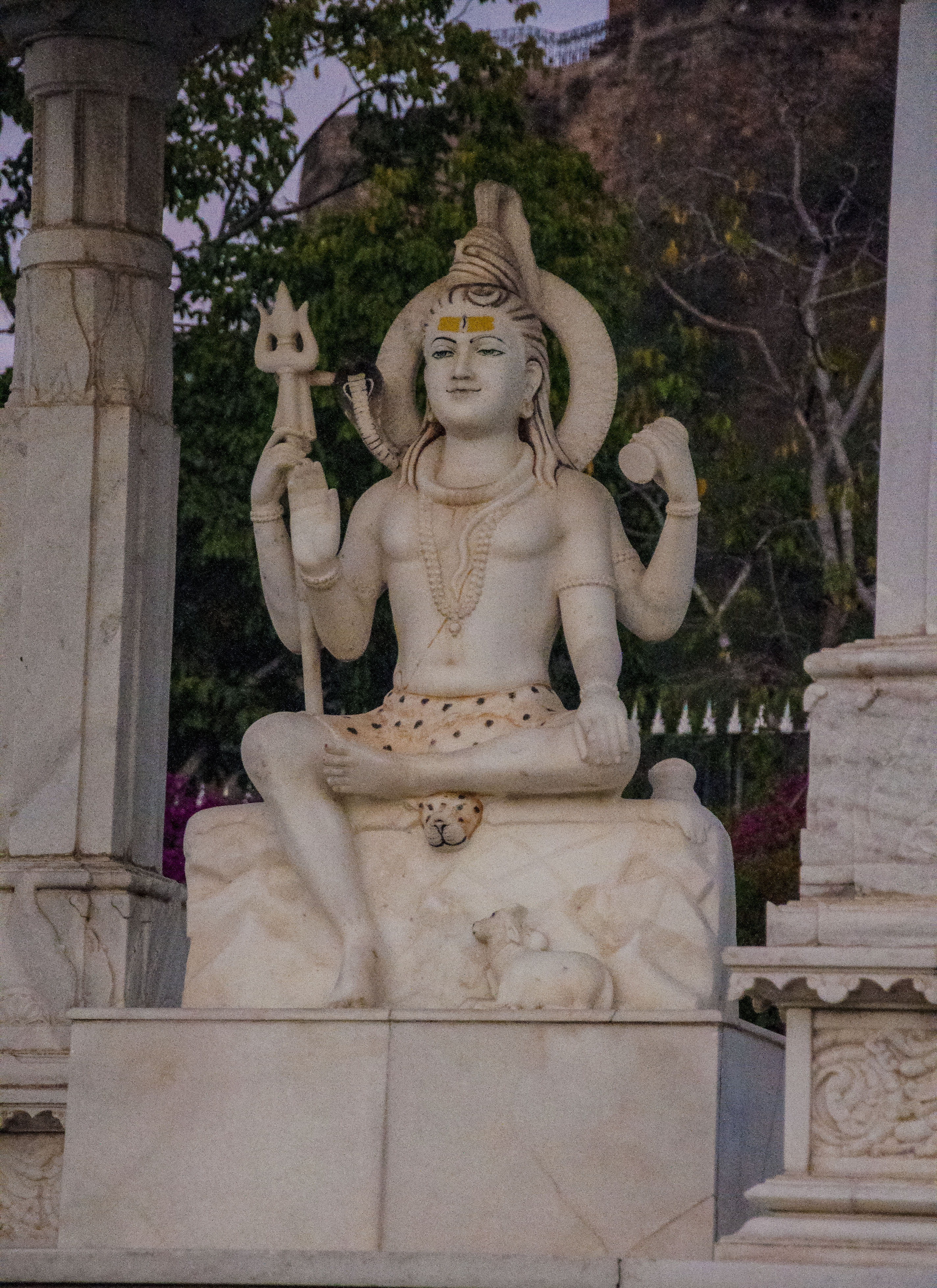
White marble statue of Shiva, Birla Mandir, Jaipur
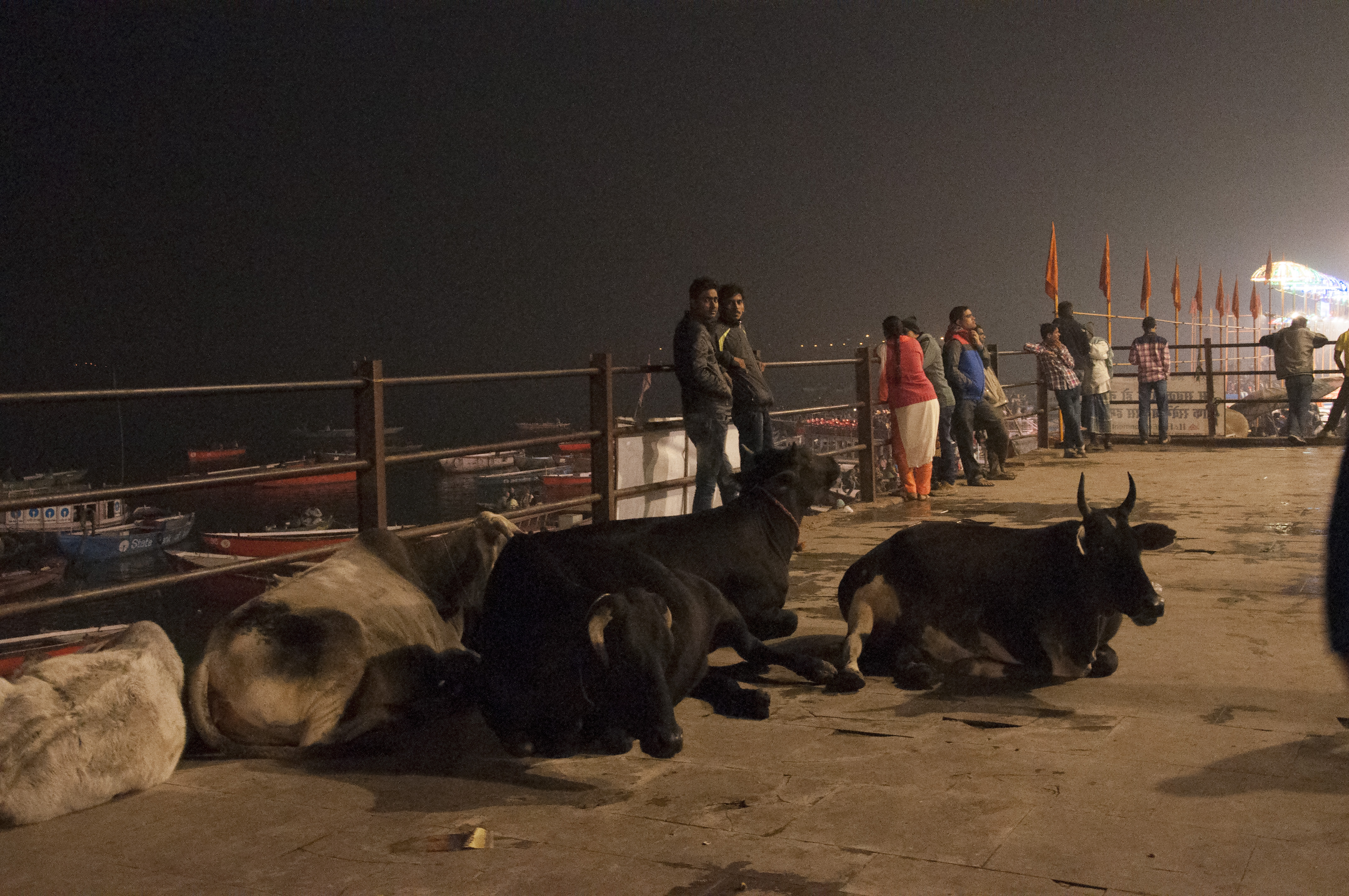
Holy Cow! If one does not quite reach Nirvana and must go through rebirth, coming back as a cow in India is not a bad option. Overlooking the Ganges in Varanasi.
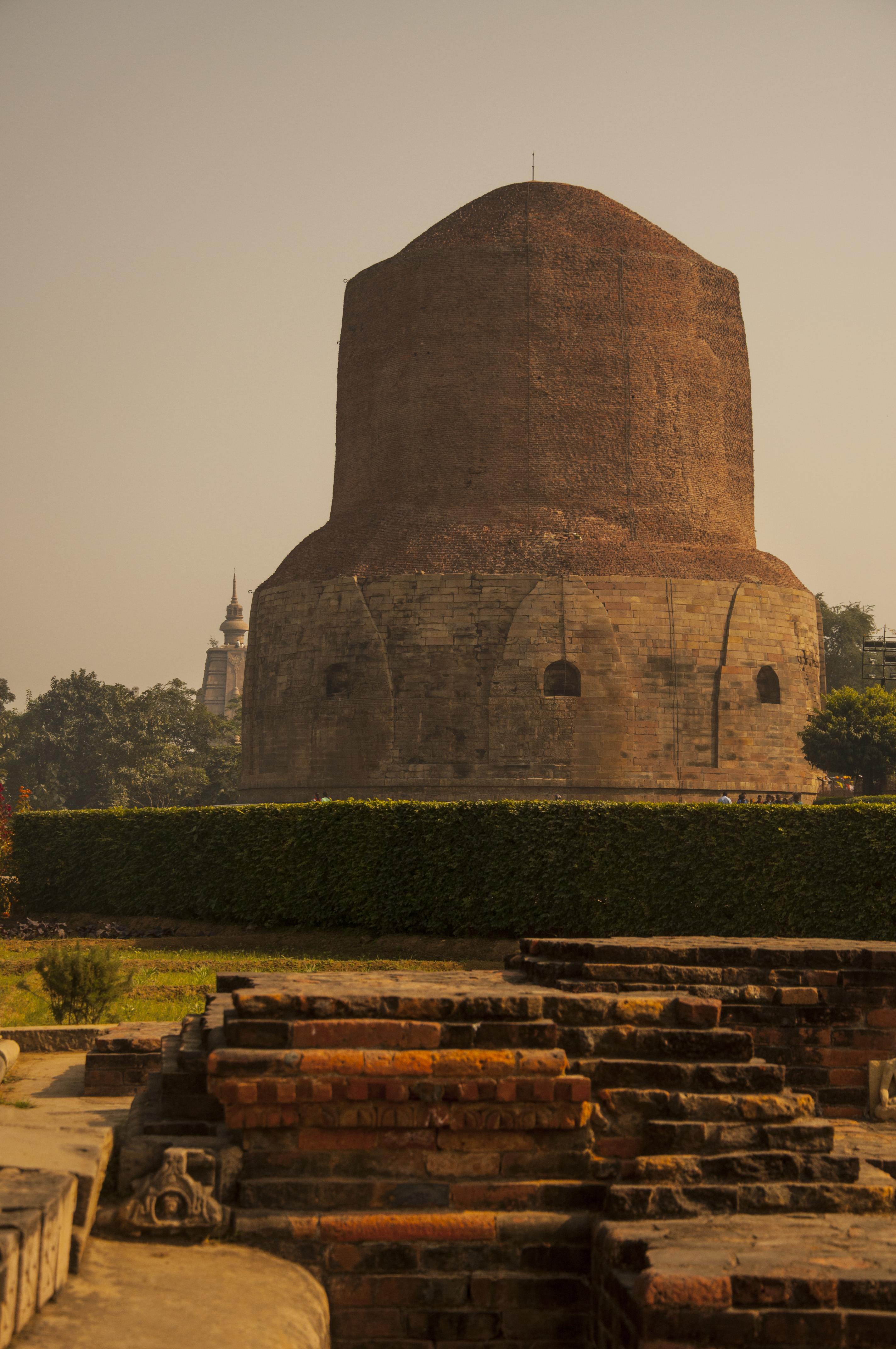
The Dharmarajika stupa was built by the Mauryan emperor Ashoka (304-232 BCE) to enshrine the Buddha’s relics. It is situated at a short distance from where Buddha gave his first sermon in Sarnath. The Dhararajika stupa is one of the holiest structures venerated by Buddhists. A Sri Lankian temple in the left background.

A Jain temple near the Dharmarajika stupa. Jainism teaches non-violence and respect for all human beings.
 westwardhowithapollo
You must be logged in to post a comment.