
In a country where arranged marriage is the norm, many Indians do not see this as a contradiction to the concept of romantic love. In fact, such marriages often blossom into deep loving relationships. None is more famous than the marriage between Mumtaz Mahal and Shah Jahan who were betrothed to each other when they were age 14 and 15, and their intense love affair was legendary throughout the Mughal Empire during the mid-17th Century and beyond. The Mughal Emperor Shah Jahan built the Taj Mahal over a 22 year period (1632-1653) as a tomb for Empress Mumtaz Mahal, who died in 1631 after having given birth to their fourteenth child. The Taj Mahal has become the embodiment of romantic love, and engaged couples, in anticipation of their marriage, flock to gaze upon this fabulous structure. For the last eight years of his life Shah Jahan was imprisoned by his son and successor, Aurangzeb, in a tower in the Red Fort across the river, from which he could view the Taj Mahal. Upon his death in 1666 he was buried next to Mumtaz.

Poster for a popular Bollywood movie about Shah Jahn and Mumtaz Mahal depicting their grand passion.

Couples come to enjoy the sunset and view the Taj Mahal from the Agra Gardens across the Yamuna River. Archaeological excavation of ancient buildings is taking place.

Built upon marble pilings that were driven down below the high water table, the Taj Mahal appears to float in the atmosphere. Much of the time it is shrouded in mist/smog. This was a lucky clear moment.
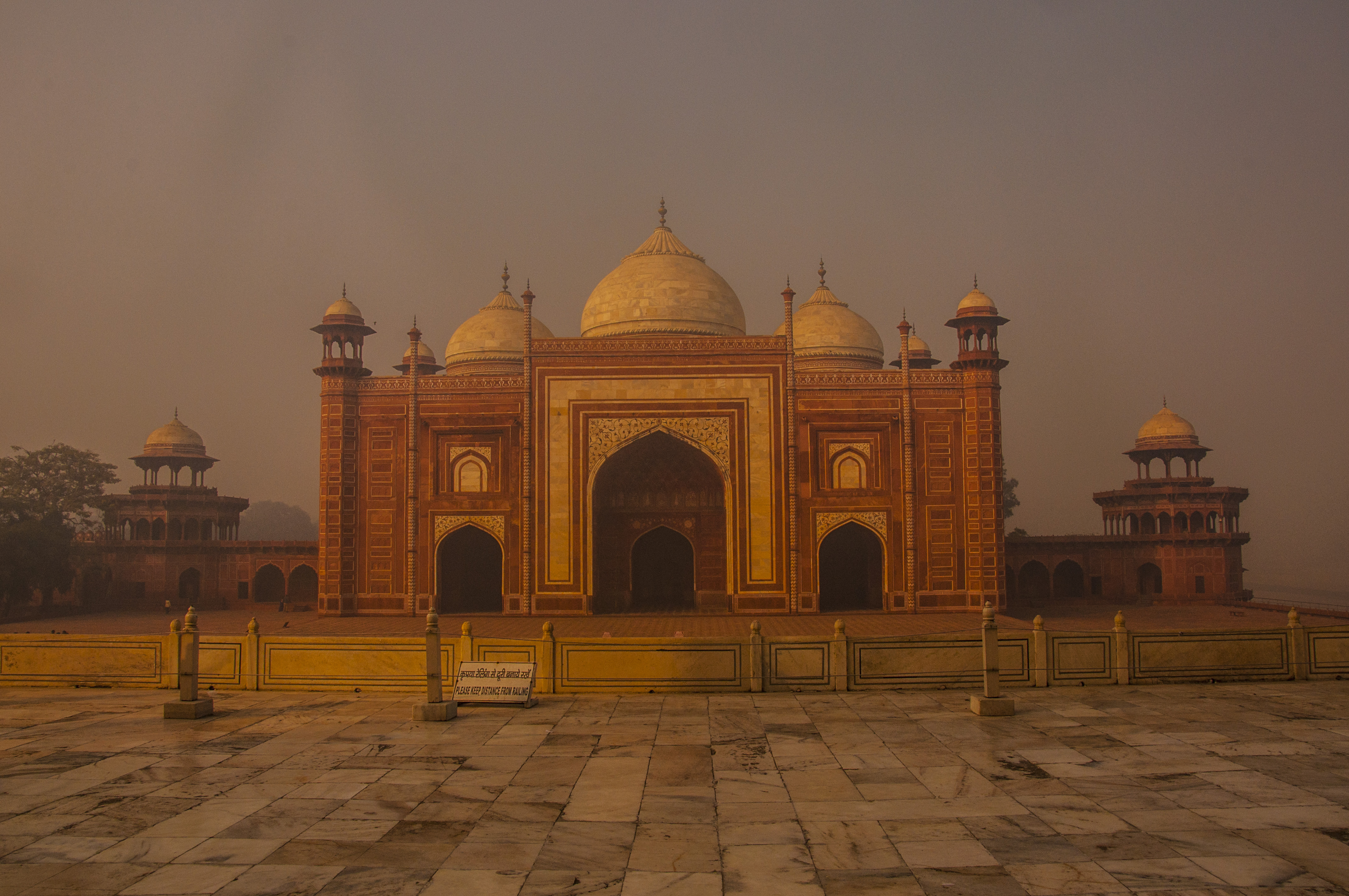
The Taj Mahal is flanked by two identical buildings. This is the mosque. Here too we see interesting atmospheric lighting.
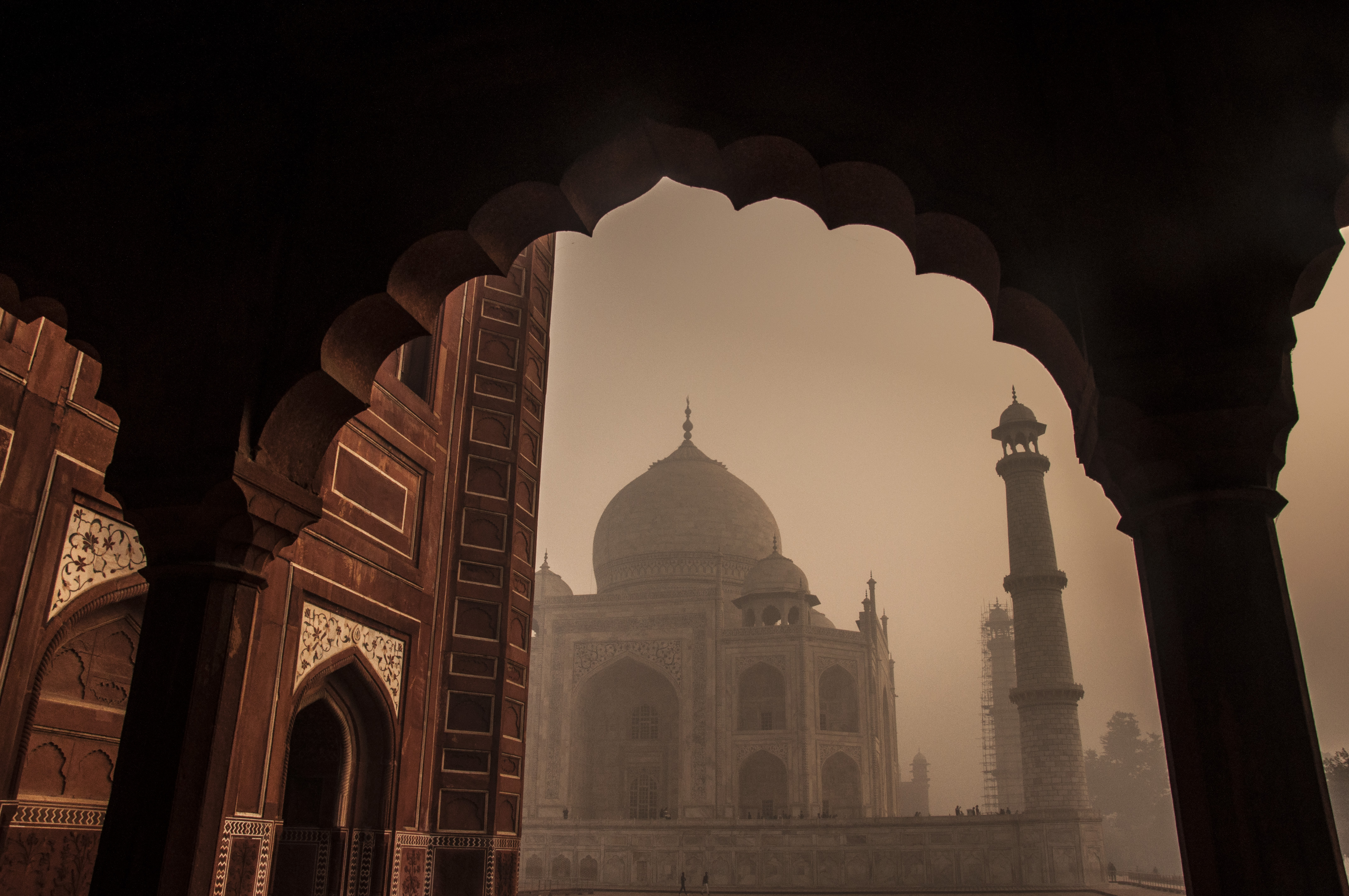
View of the Taj from the mosque archway. The Taj Mahal has survived centuries of warfare, assault, and British plunder. Today’s challenge is pollution.
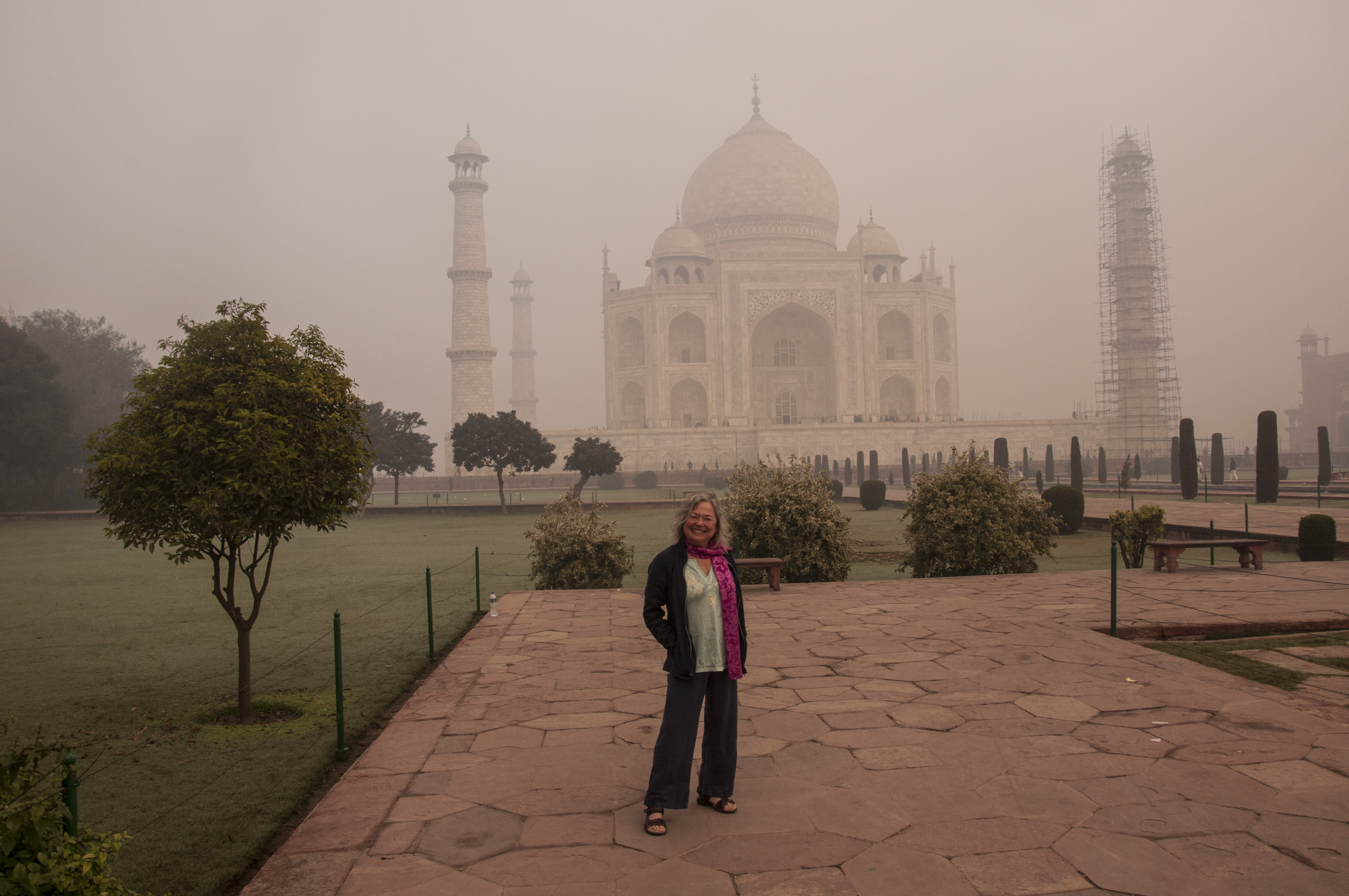
Joanne and the Taj
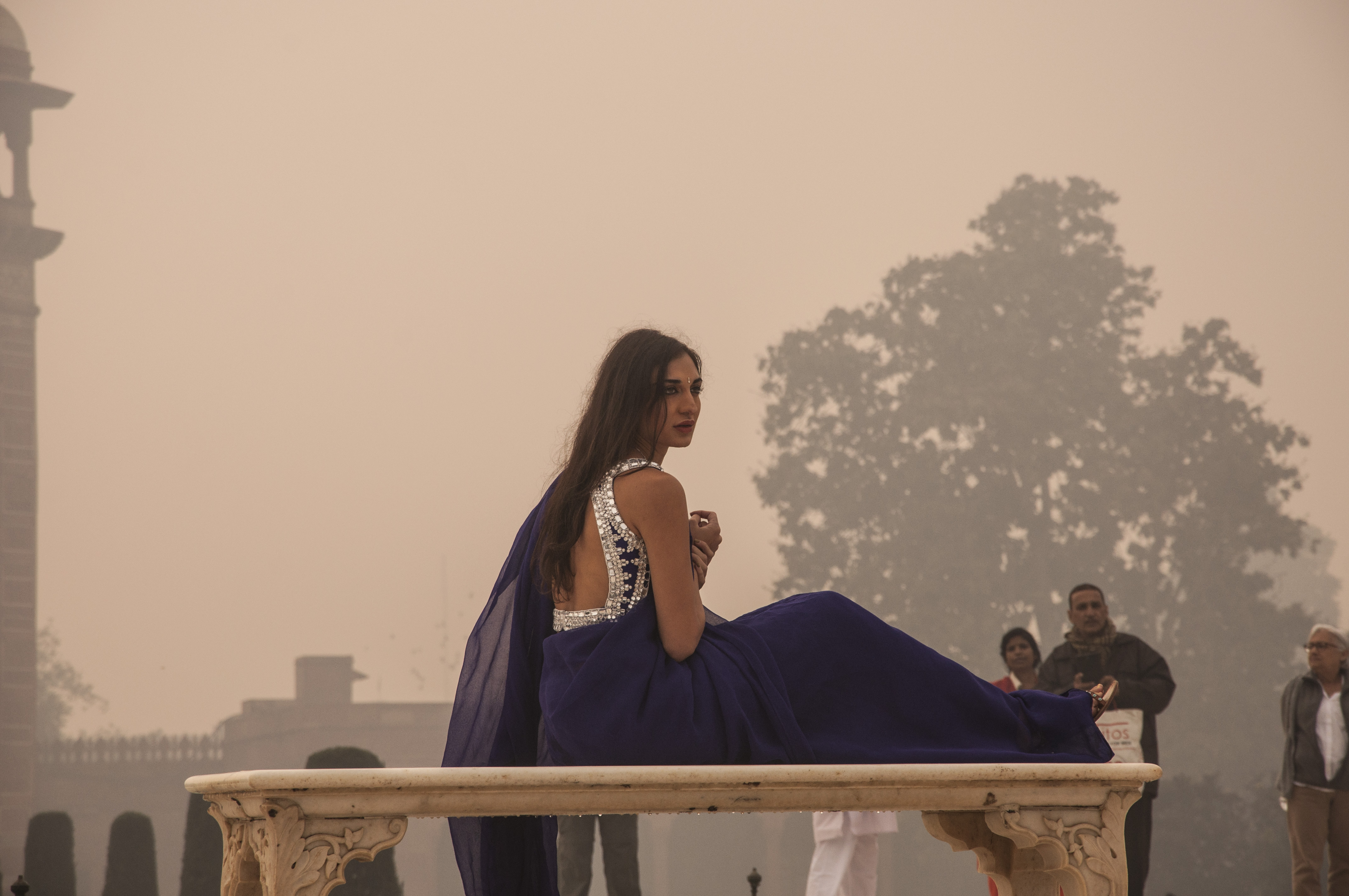
A bride to be posing on bench.
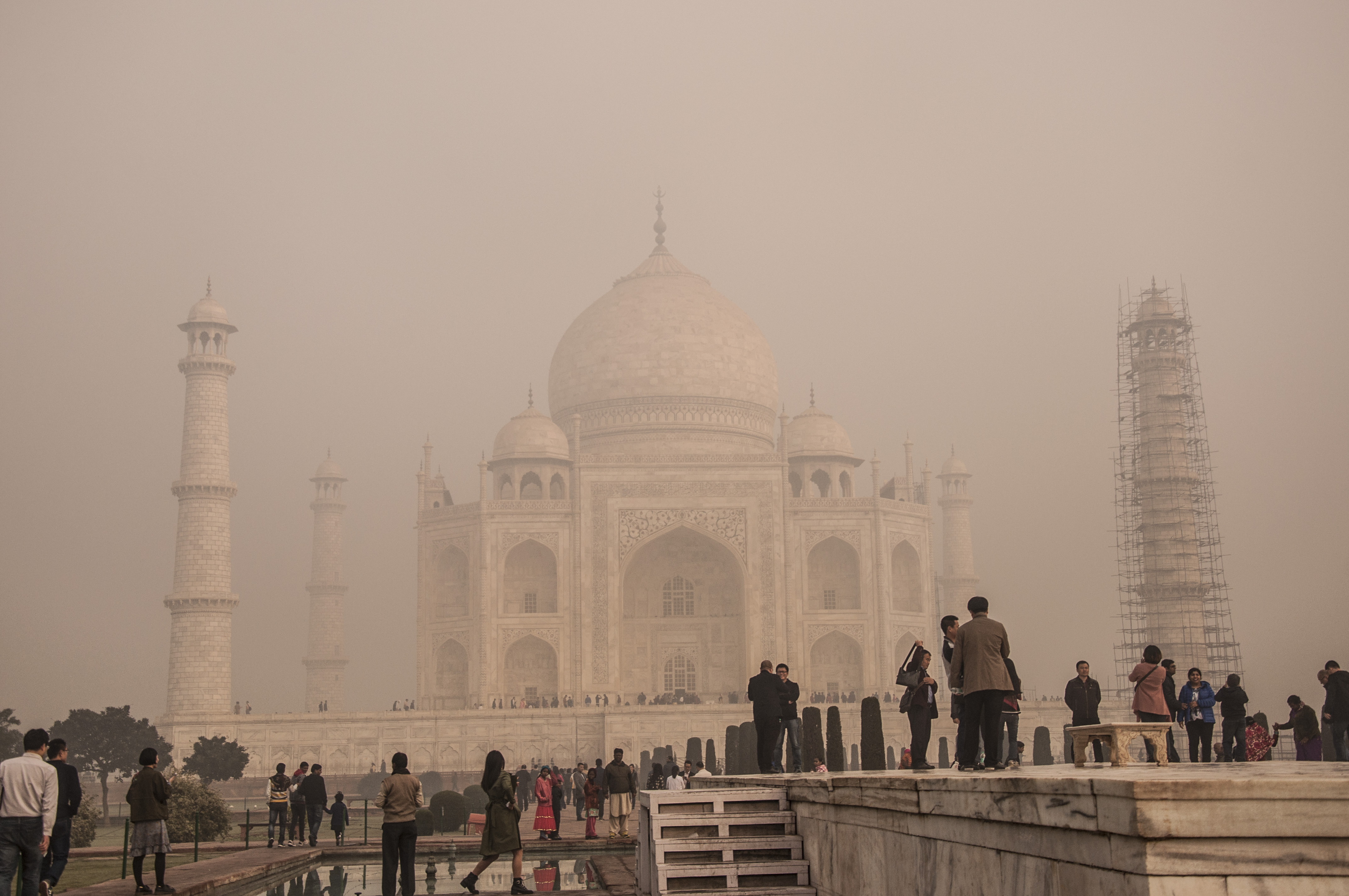
Large crowds gaze at its splendor. Note the scaffolding on the right side minaret which is undergoing cleaning and repair work.
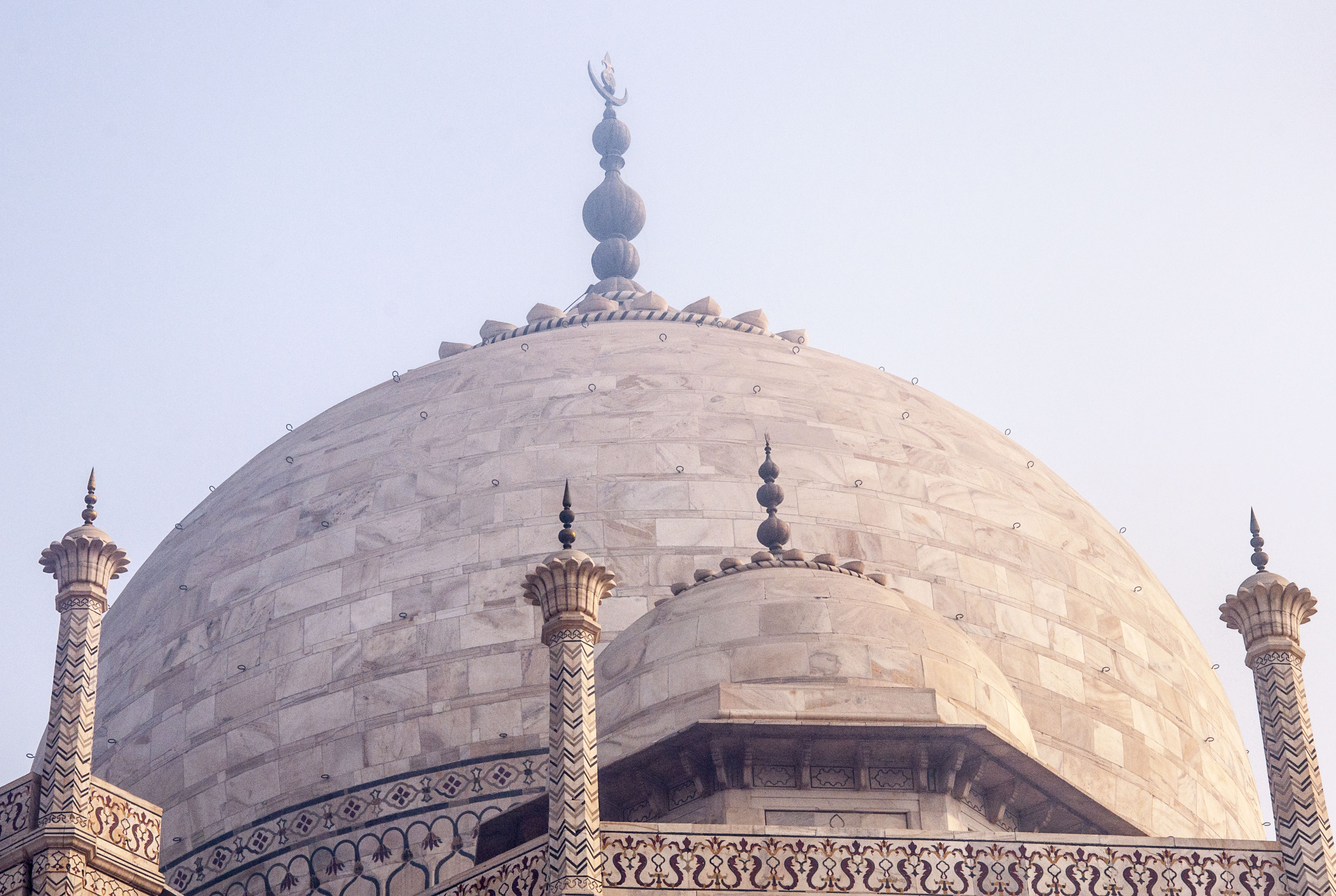
The dome.
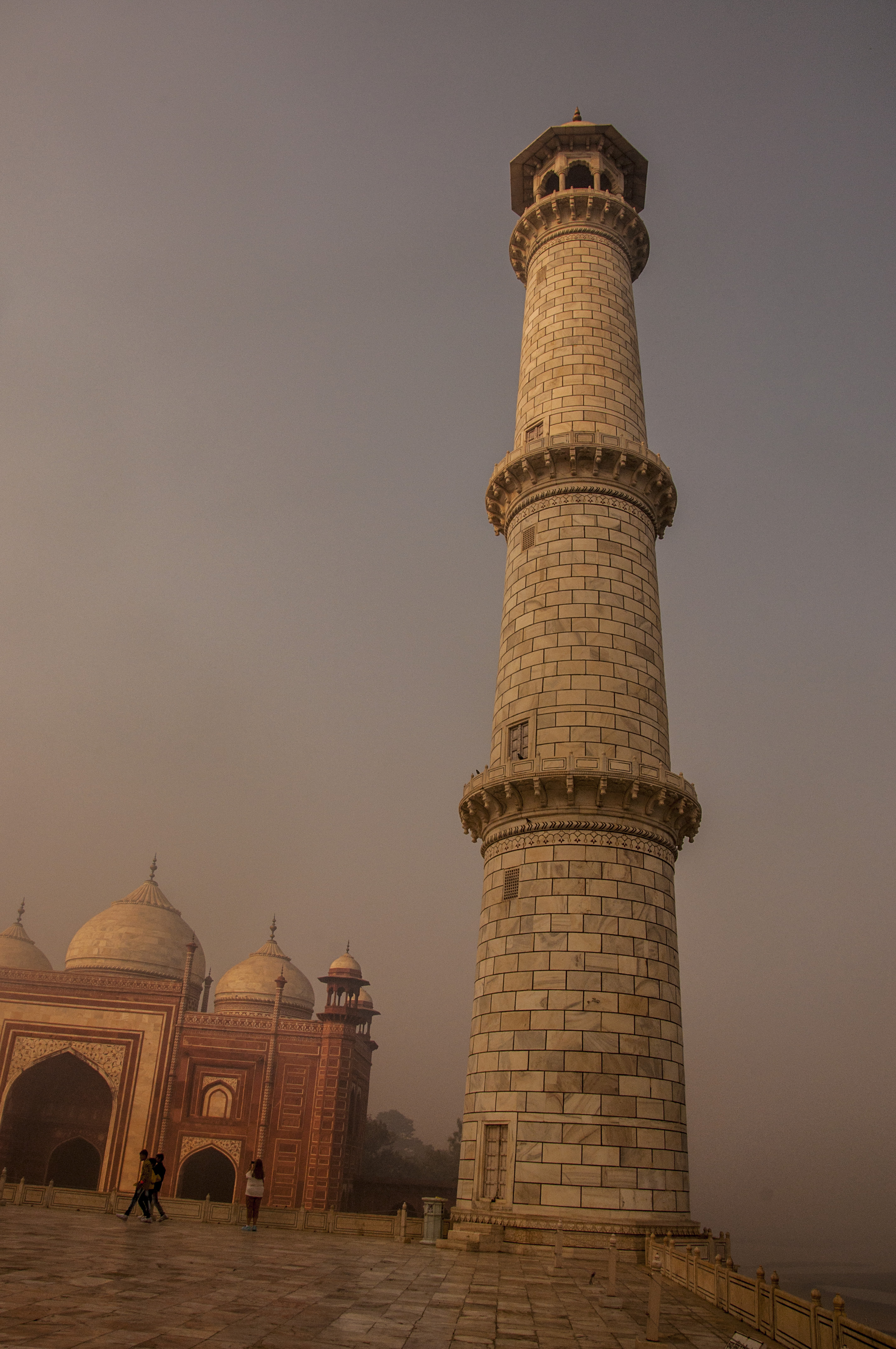
Minaret
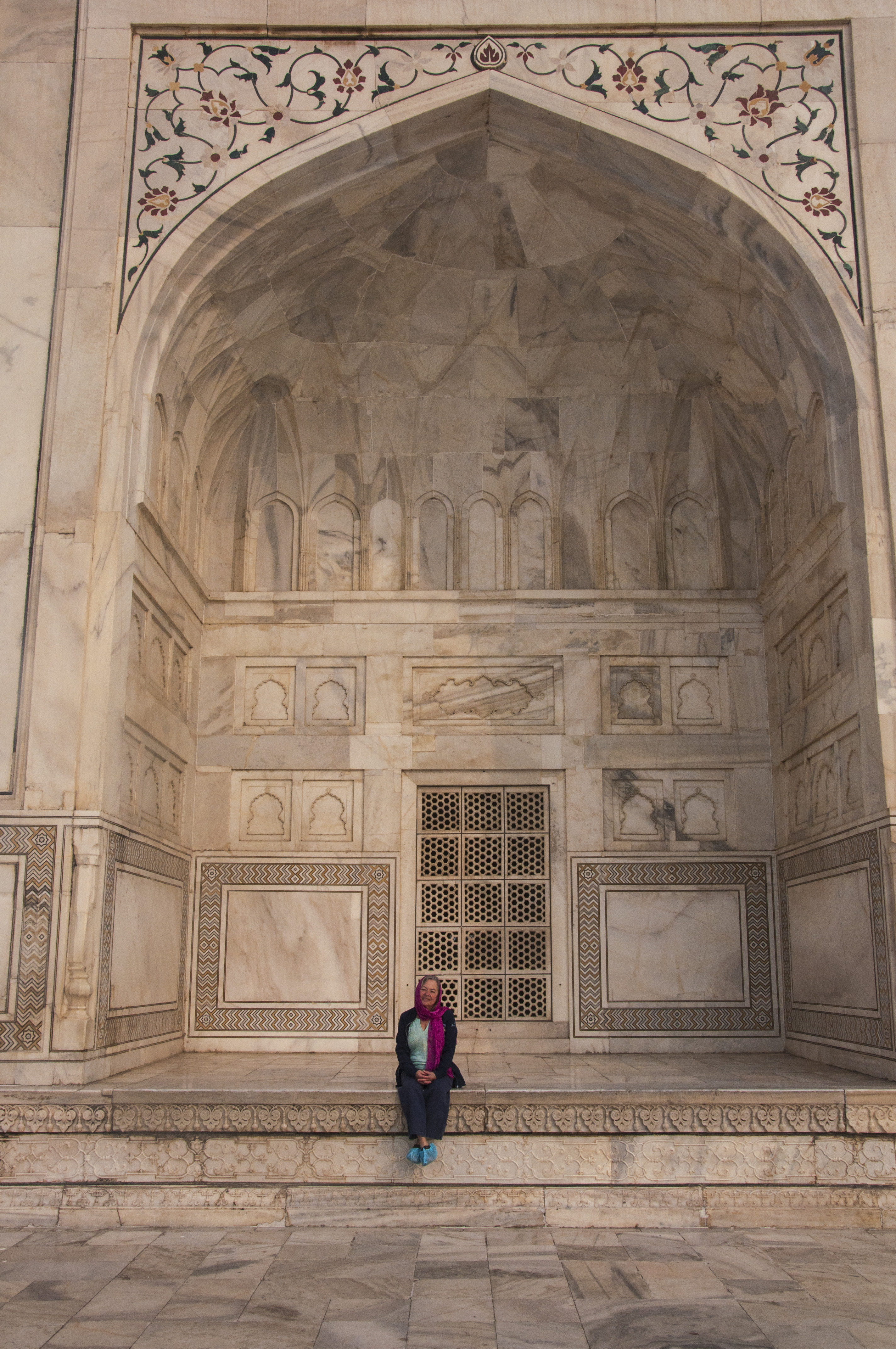
Arch is adorned with pietra dura, the inlay technique originating in Itaiy of using cut and fitted, highly polished colored stones to create images. In this case the stones are semiprecious (e.g. lapis lazuli) and over the years have been subject to plunder. Descendants of the original marble and jewel workers at the Taj Mahal continue to practice this art in contemporary workshops.

Joanne tries lifting the Taj.
 westwardhowithapollo
You must be logged in to post a comment.