
India is notable for several hundred great fortresses located throughout the country. We were able to spend some time in three of them where one gets to see the confluence of Hindu and Muslim architecture and decorative motifs.
The Amber Fort
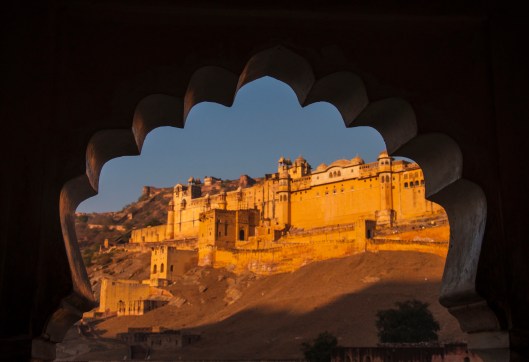
This fort is located in Amer which is about 8 kilometers from Jaipur. The fortress was the center of power of the Rajput Kings of Kachwaha from 1036 to 1727 A.D. The fort as it now stands was built between 1590 and 1727.
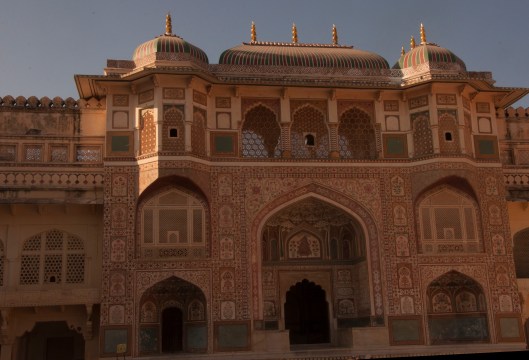
Entrance to the Palace inside the Fort
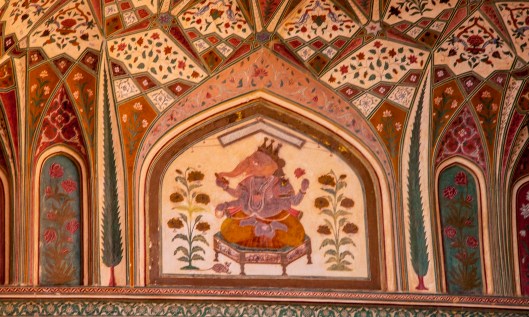
Lord Ganesha the elephant headed god sits on a pillow. He is said to bring good fortune. (Inlaid gems on marble)
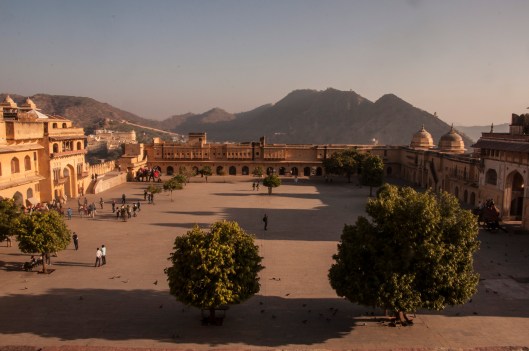
The Courtyard
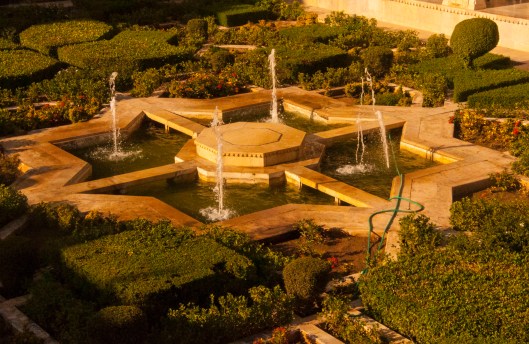
The Garden was built by Mirza Raja Jai Singh (1623–68)
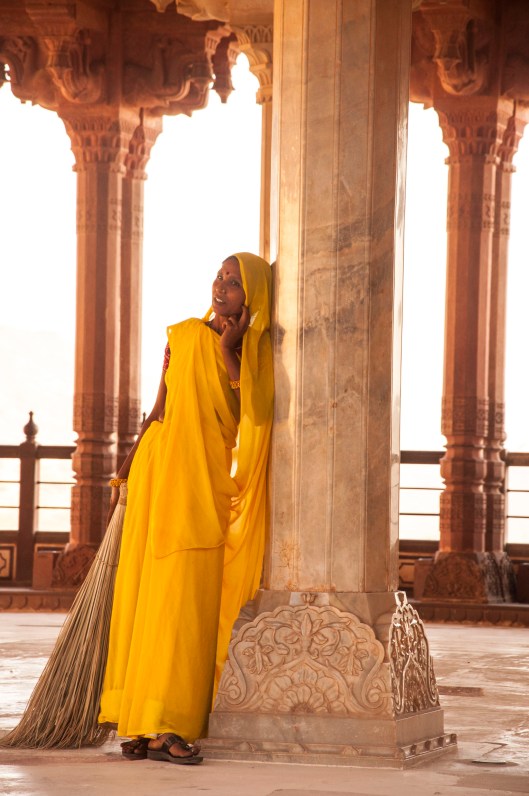
Woman posing at the Baradari Pavilion, Man Singh I Palace Square. She sweeps the marble floors.
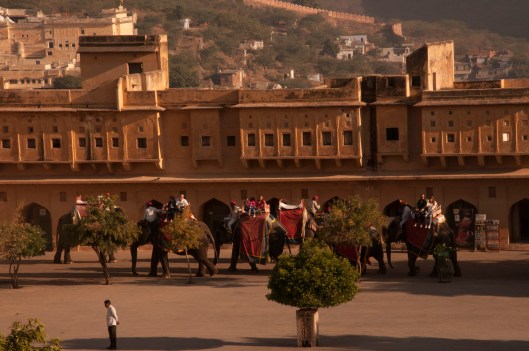
Elephant Brigade in the Courtyard
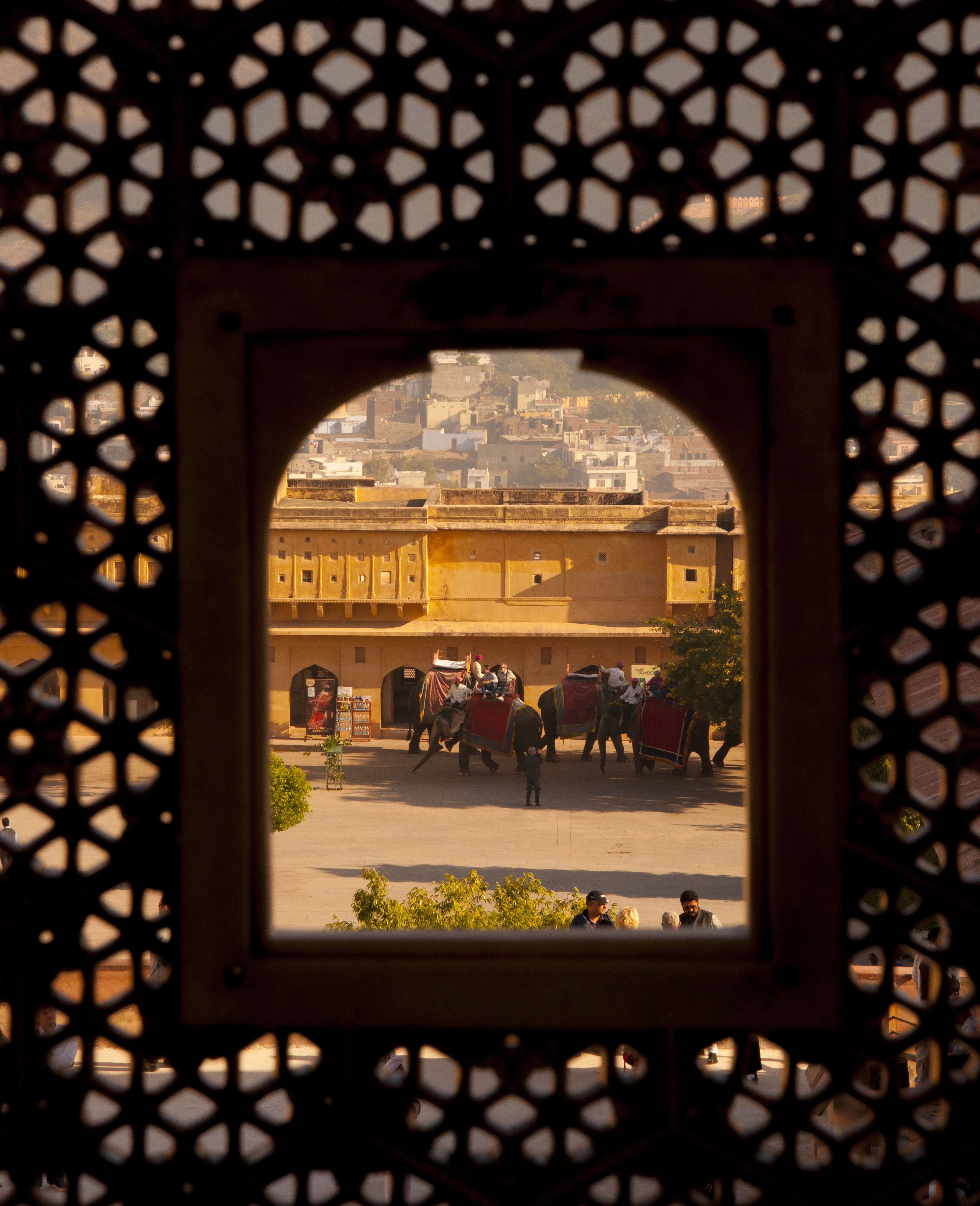
View from the Queen’s apartments. She could see the Emperor’s return from battle but she herself could not be seen.
City Palace – Jaipur
Sawai Jai Singh II, the ruler of Amber, moved the capital of Kachwaha Rajput power from Amer to Jaipur in 1727, and began construction of the City Palace that year. It continued to be the residence of the royal family and its descendants until the present time.
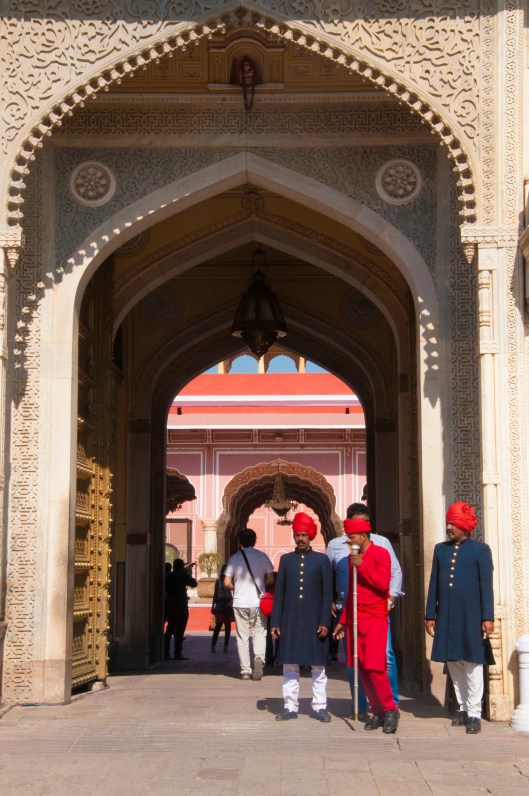
Entrance to the City Palace
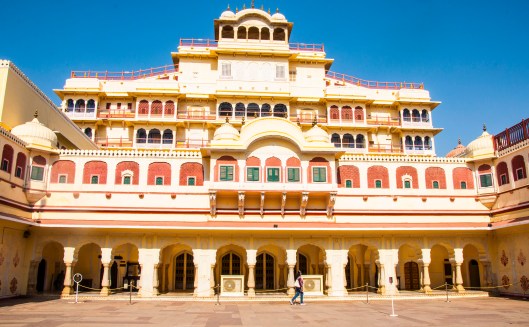
Main Courtyard below the Chandra Mahal
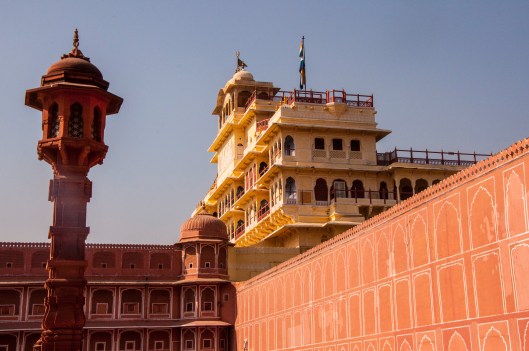
Partial View of the Chandra Mahal, a seven story building where each floor has a separate name. The flag of the royal family stands on top. Descendants of the former rulers still reside in the upper floors.
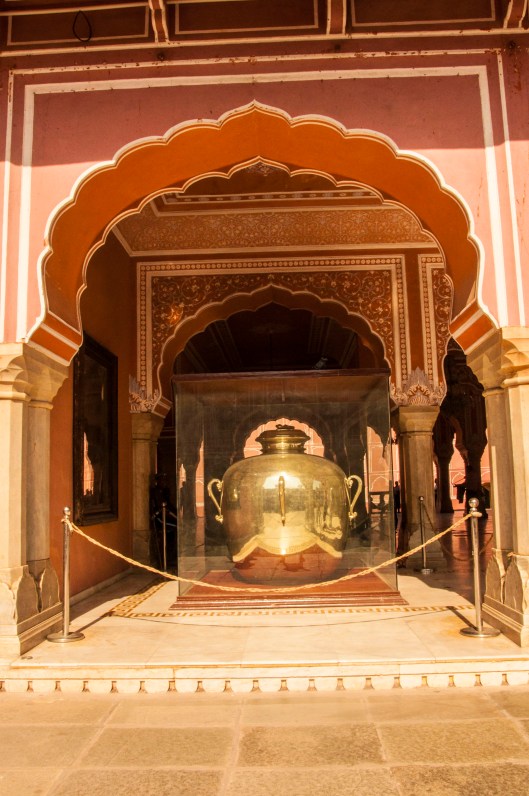
This is one of the two Gangajalis Silver Water Urns in the Palace which were constructed 1894-96 by two Jaipur silversmiths who melted down 14,000 silver coins in the process. The vessels were each filled with 4000 Liters of water from the Ganges River for use in religious ceremonies. They are reputed to be the largest silver artifacts in the world.
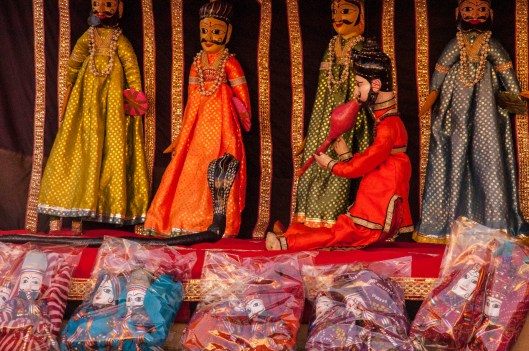
A Puppet Show being held in the Mubarak Mahal courtyard.
Hawa Mahal, Palace of the Winds
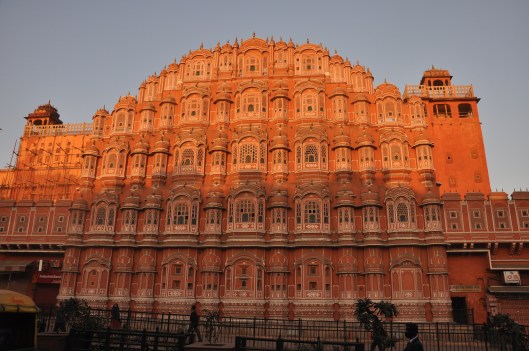
Hawa Mahal was not designed to be a major fortress, but rather an additional Kachwaha Rajput palace in Jaipur. It was built in 1799 by Maharaja Sawai Pratap Singh. This is the refurbished facade of the palace which represents the shape of the crown of the Hindu God Lord Krishna. The palace is in the city center and its 953 windows were designed to provide royal women a way to view everyday life , royal processions, and religious celebrations without appearing in public. It is considered one of the best representations of Rajputana architecture.
The Red Fort of Agra
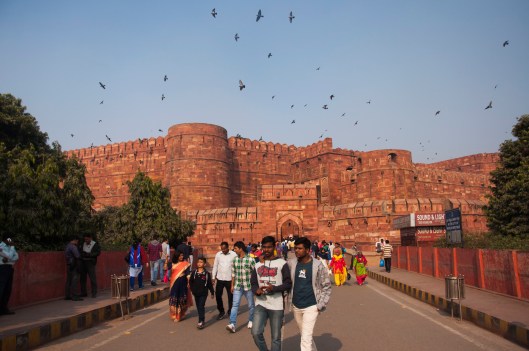
Main Entrance to the Fort
The Red Fort was the center of Mughal power in the 16th and 17th Centuries, and the Hindu Marathas in the 18th Century. The British East India Company gained control of the fort in 1803 and it came under direct British control in 1857 until independence almost 100 years later. The building of the fort as it looks today got its major impetus from Akbar and his grandson Shah Jahan who later built the Taj Mahal nearby.
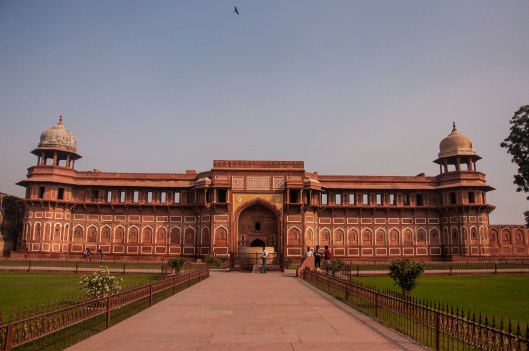
Closeup of the Gate Below

Although looking the same as the Jewish 6-pointed star, the stars depicted above are actually a Hindu symbol that consecrates the union between the Shiva (male) aspect with the Shakti (female) aspect that makes up a whole. The star is made of two triangles that intersect, one triangle denoting the Shiva part and the other, the Shakti part. 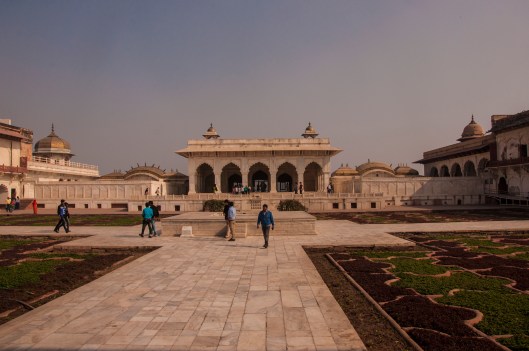
The Khas Mahal Pavillion built in 1636.
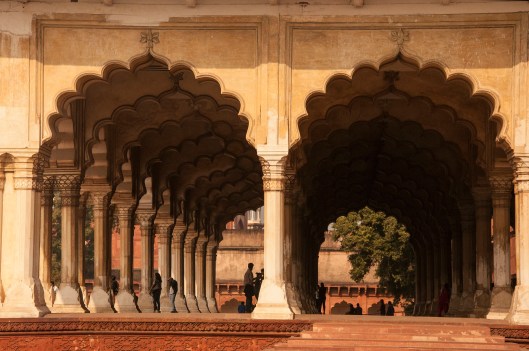
Diwan-I-Am, (Hall of Public Audiences) was where the emperor held meetings with officials and petitioners.

Muasamman Burj
Shah Jahan was deposed in 1558 and placed under house arrest by his son, Aurangzeb.He was confined to Muasamman Burj, a tower with a marble balcony which has a view of the Taj Mahal.
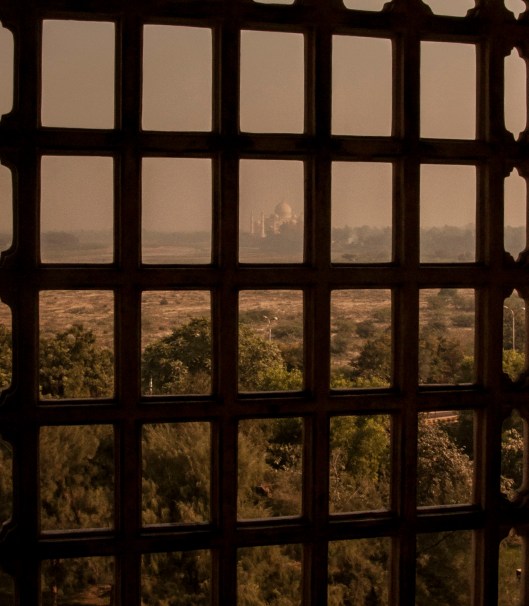
During the final 8 years of his life in the tower Shah Jahan could view his magnificent architectural achievement and the resting place of his great love, Empress Mumtaz Mahal.
 westwardhowithapollo
You must be logged in to post a comment.