Today there are 1,334,974,853 people living in India. To say the least, it is a very crowded place. You really feel the density in a city like Delhi which has a population of 25 million, all living in 573 square miles. Compare that to our home town, Ringwood, which has a population of 12,300 people living in 28 square miles. That’s 15,152 people per square mile vs. Ringwood’s 573 people per square mile. As we noted in previous blogs, India is a complex society with the historic, the traditional, the neo-feudal, the modern industrial and post-industrial all crashing into each other.
Yet we found India, at least the northern parts of India where we visited, pretty copacetic. Everyone seems to get along. (Don’t get us wrong. We read some harrowing stories in the local papers and political conflict is a given). But we never witnessed violence nor did we ever feel threatened. In fact, we found the people to be very kind, generous and friendly. The photographs in this post attempt to capture the range of human experiences that we saw; the people we met, interacted with or simply passed on the street as they went about their daily lives. Some were bizarre, a few remarkable, and others simply ordinary. Nearly all of the people were colorful, making up, in Raj’s words: “the human museum”.
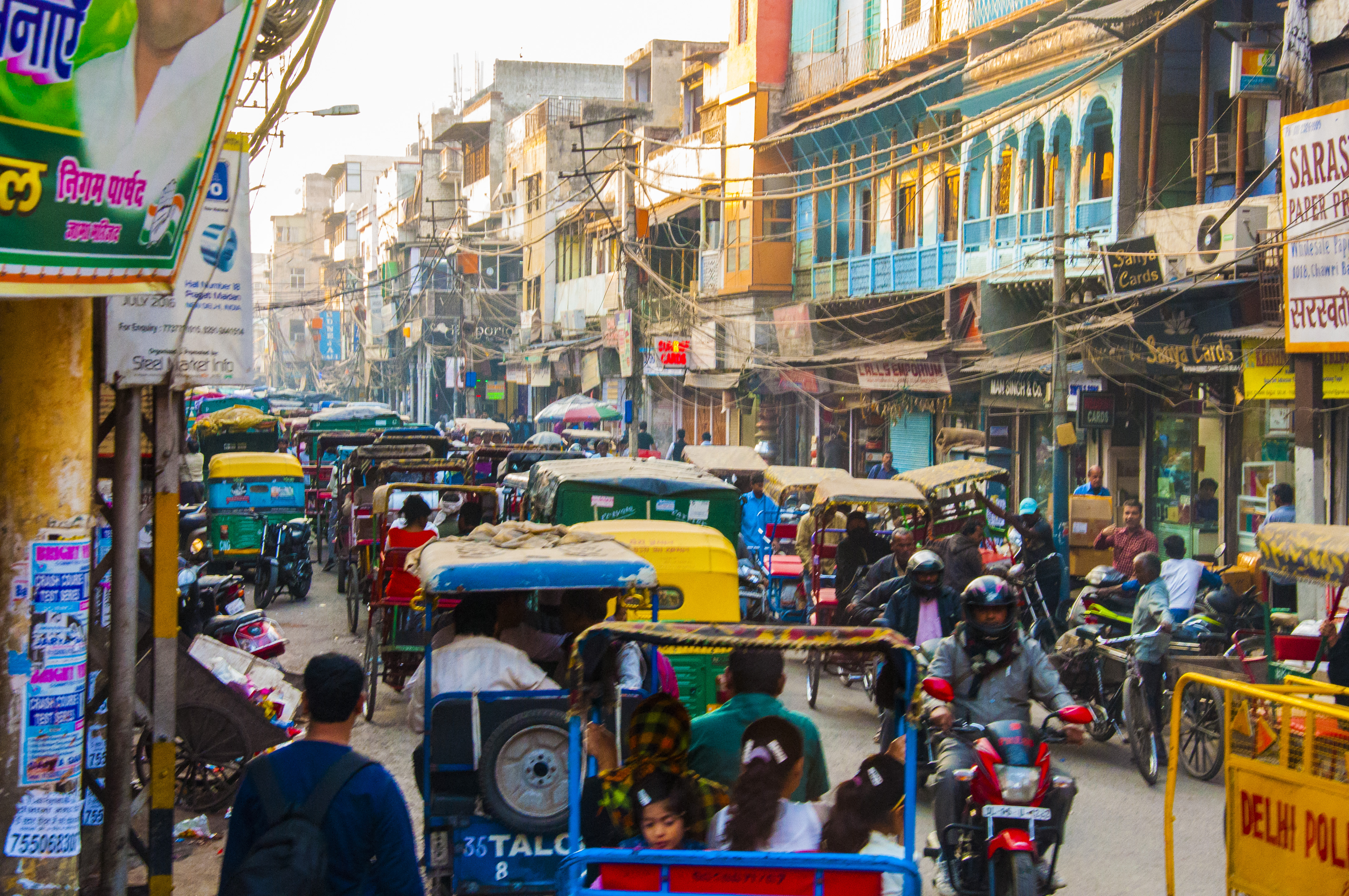 Old Delhi shimmers with colorful vitality.
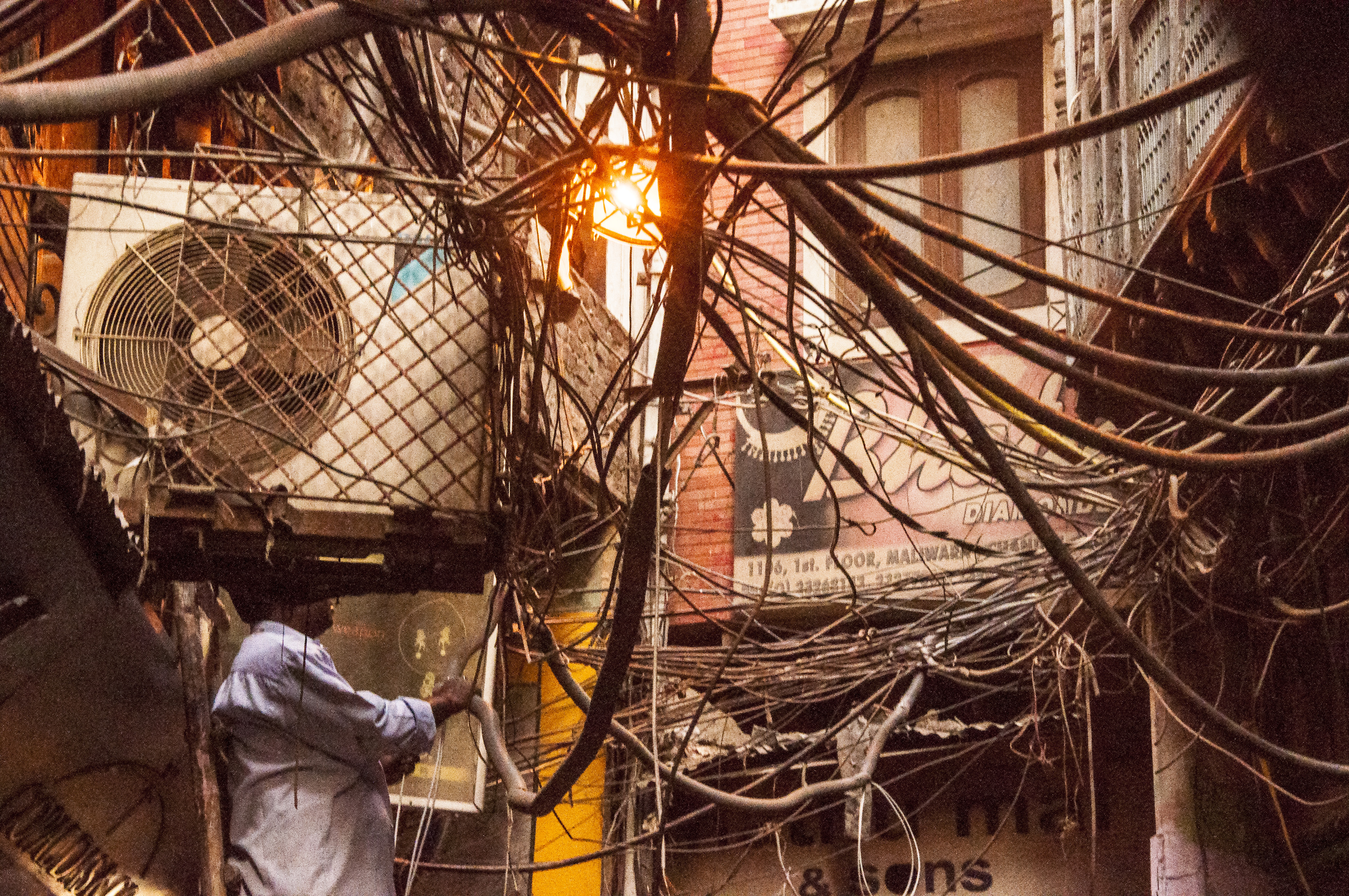
The tangle of electrical wiring in Old Delhi could be a metaphor for India. Hundreds of strands of wires going every which way but somehow the lights stay on most of the time (for the two-thirds of the country that has electricity). And the same is true for the larger society. Things work in spite of the all the obstacles, a testament to the creativity, ingenuity and intelligence of Indian people.
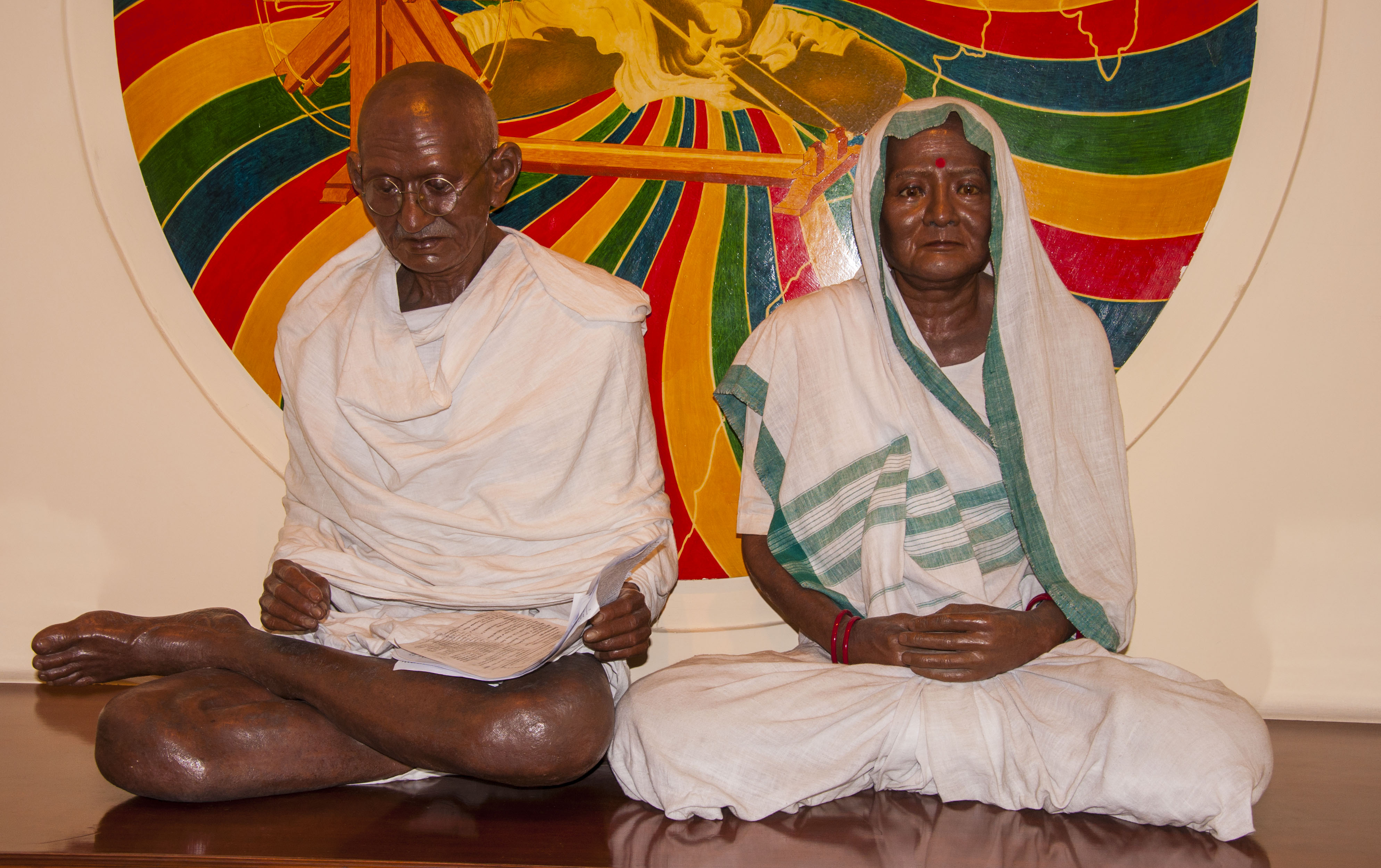
India is not without its problems and one can’t go anywhere without witnessing terrible deprivation and suffering due in great measure to the perpetuation of the thousands year old caste system. Mahatma Gandhi led India to independence and did much to reduce the rigid hold of the caste system on Indian society, but it persists.
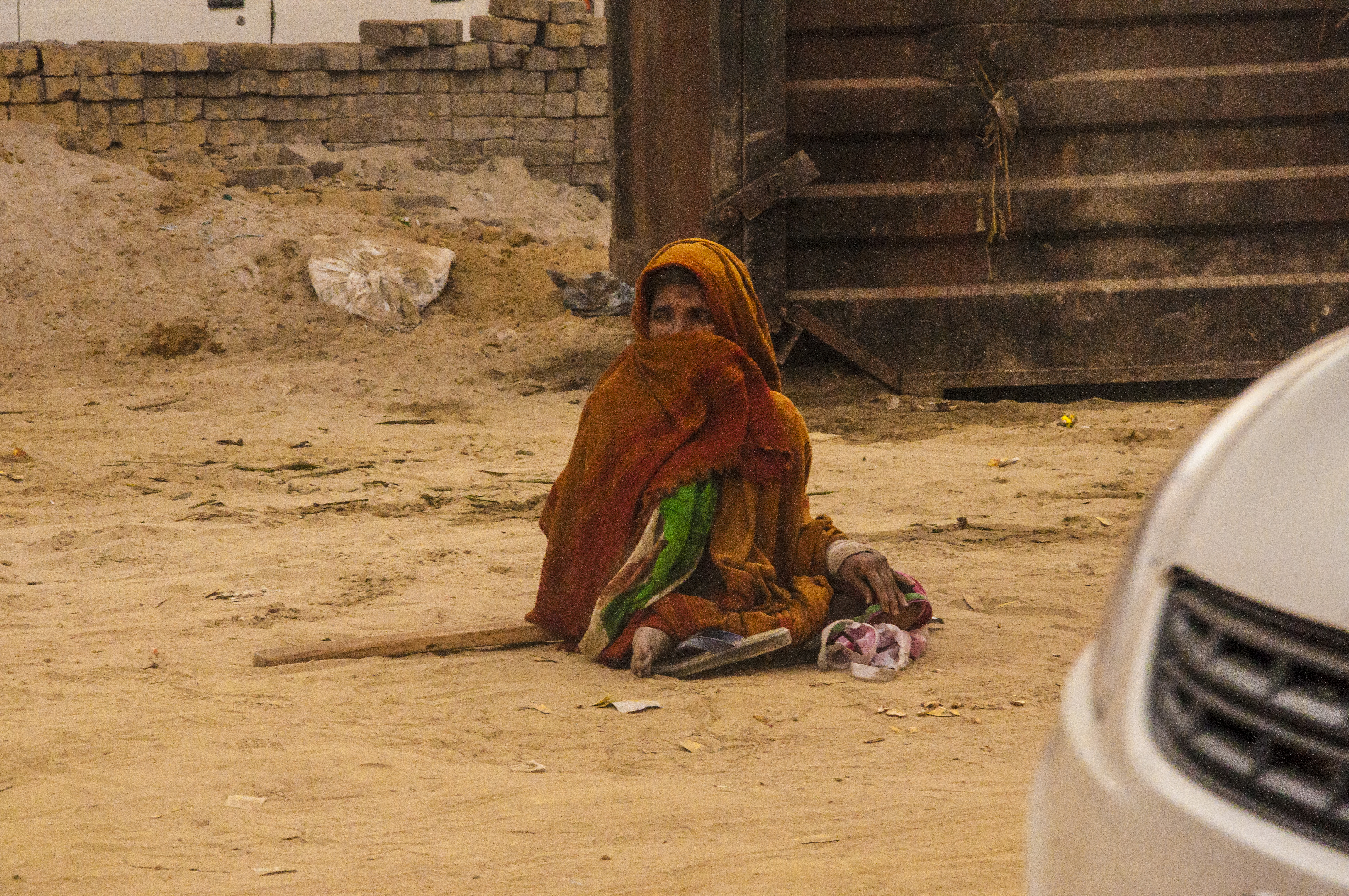
A youngster begging at the side of the road in Varanasi. This unfortunately is not an uncommon sight. Dalits, historically Untouchables and others excluded from the caste or varna system altogether, still find themselves at the socio-economic bottom of Indian society.
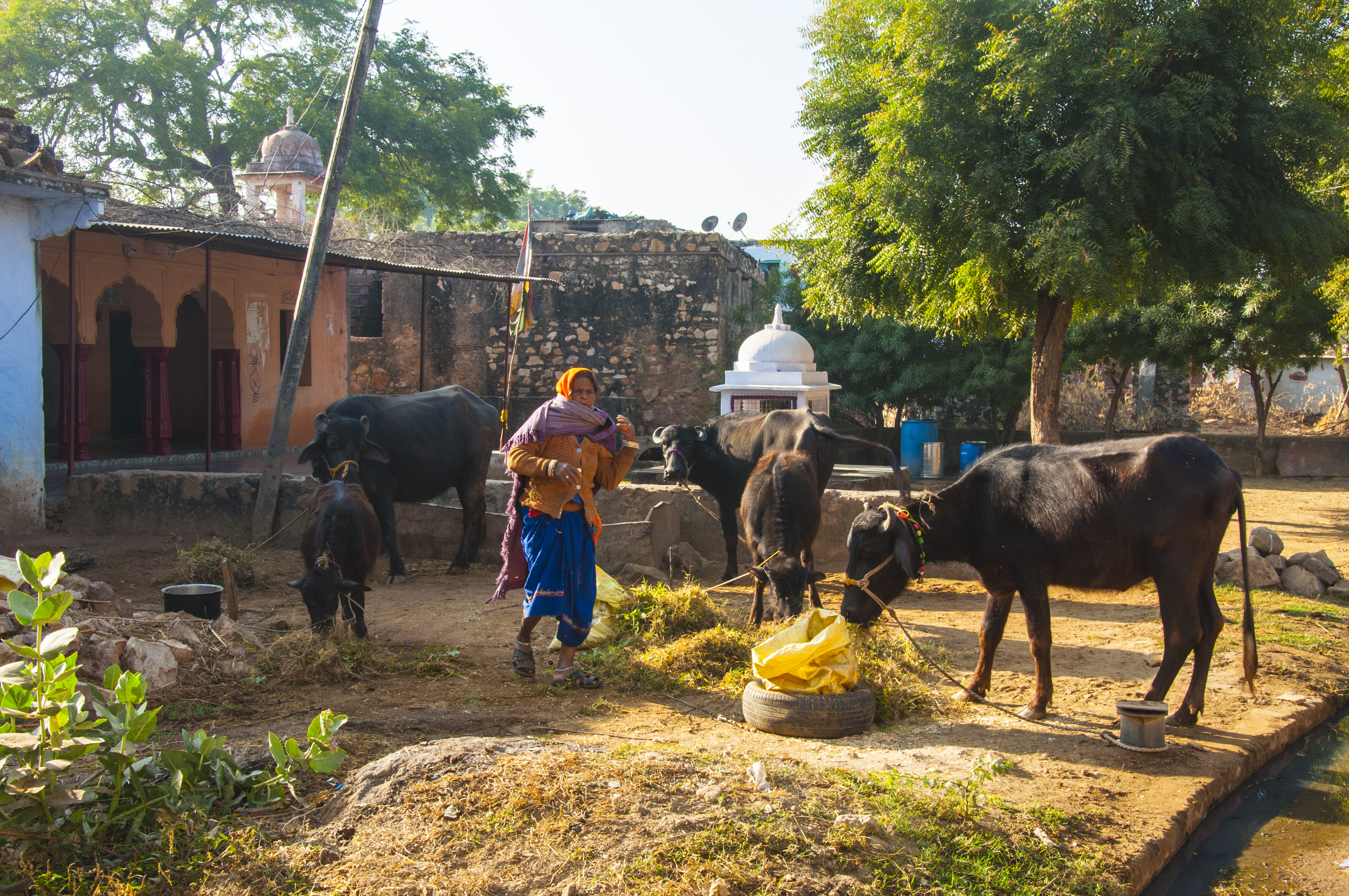
We saw several examples of human/animal partnerships making their way in a difficult and competitive economic environment.
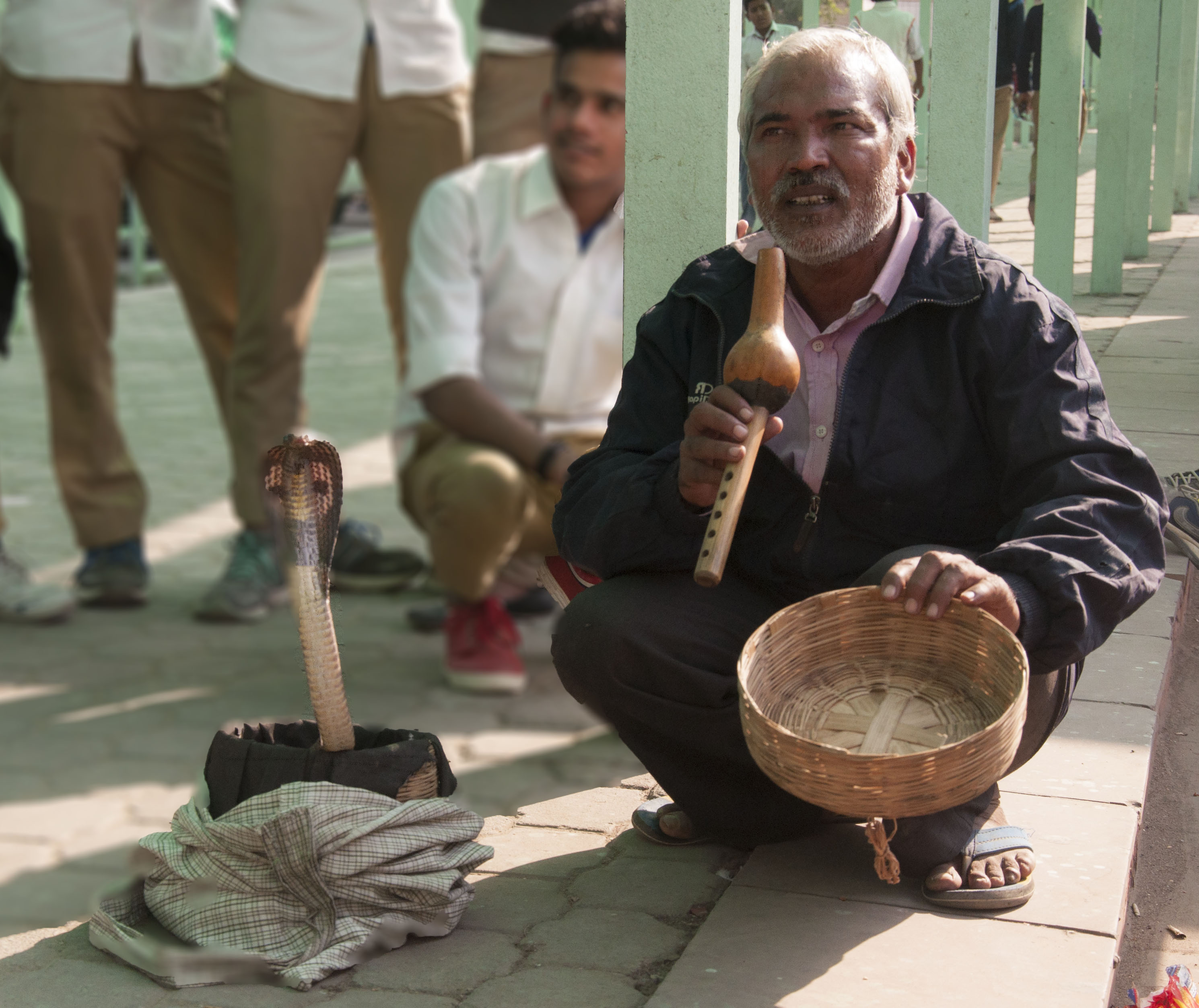 With all of the hustle and bustle, a Snake Charmer and his cobra set up shop in Delhi.
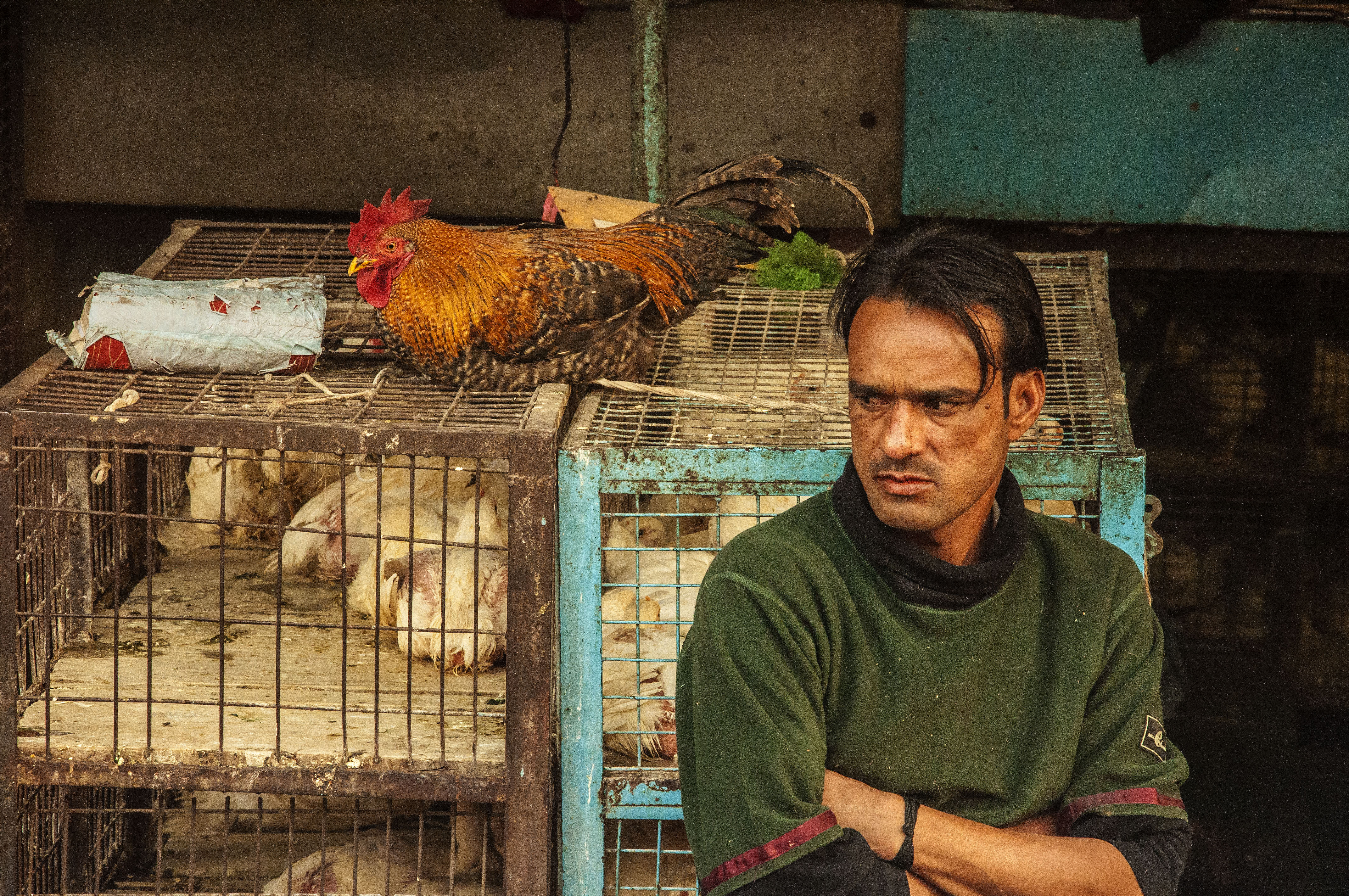
Chicken vendor and his rooster were in sync, Delhi.
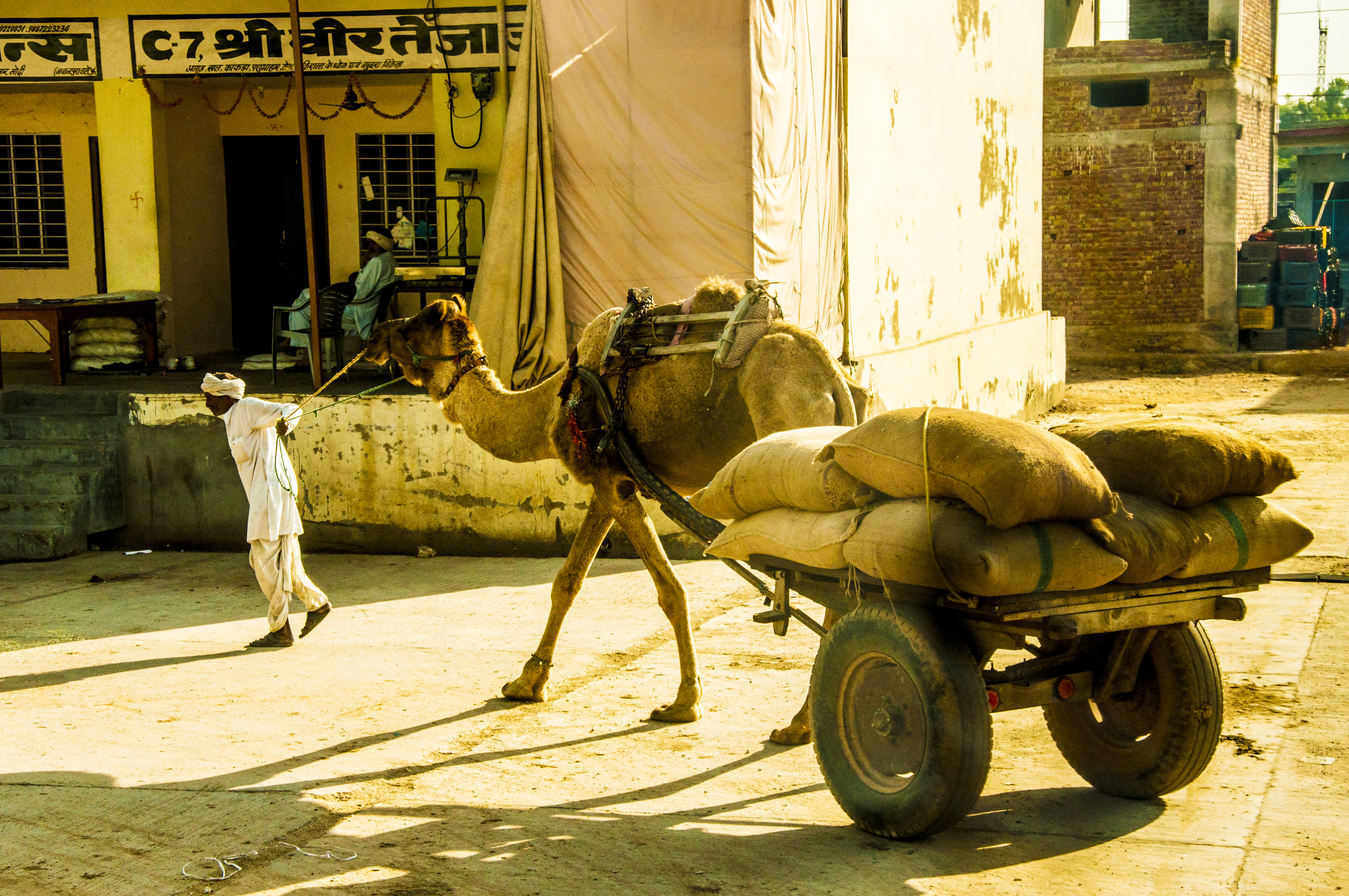
Farmer and his camel, Jaipur
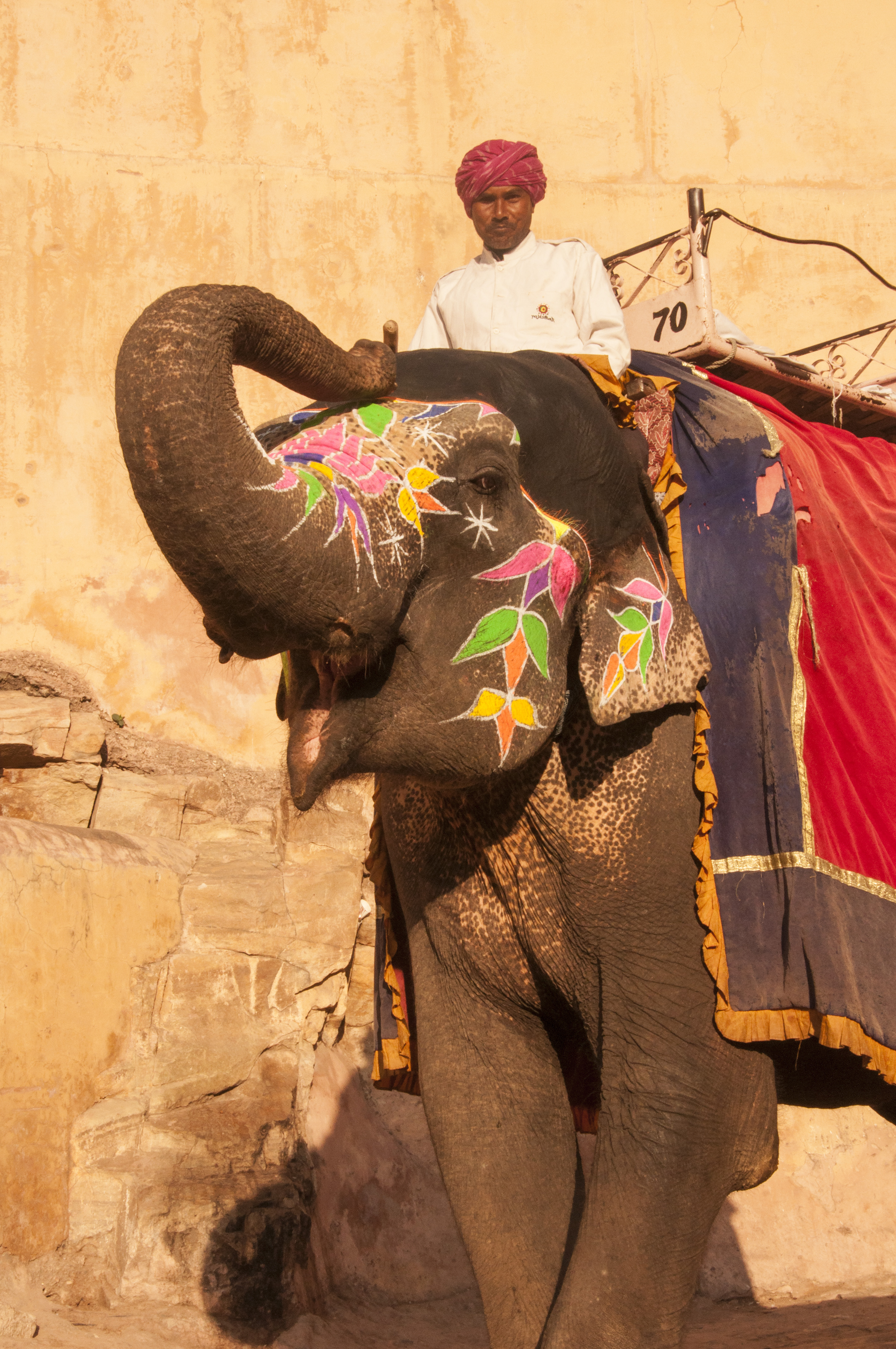
Driver and his elephant. Amber Palace, Amer.
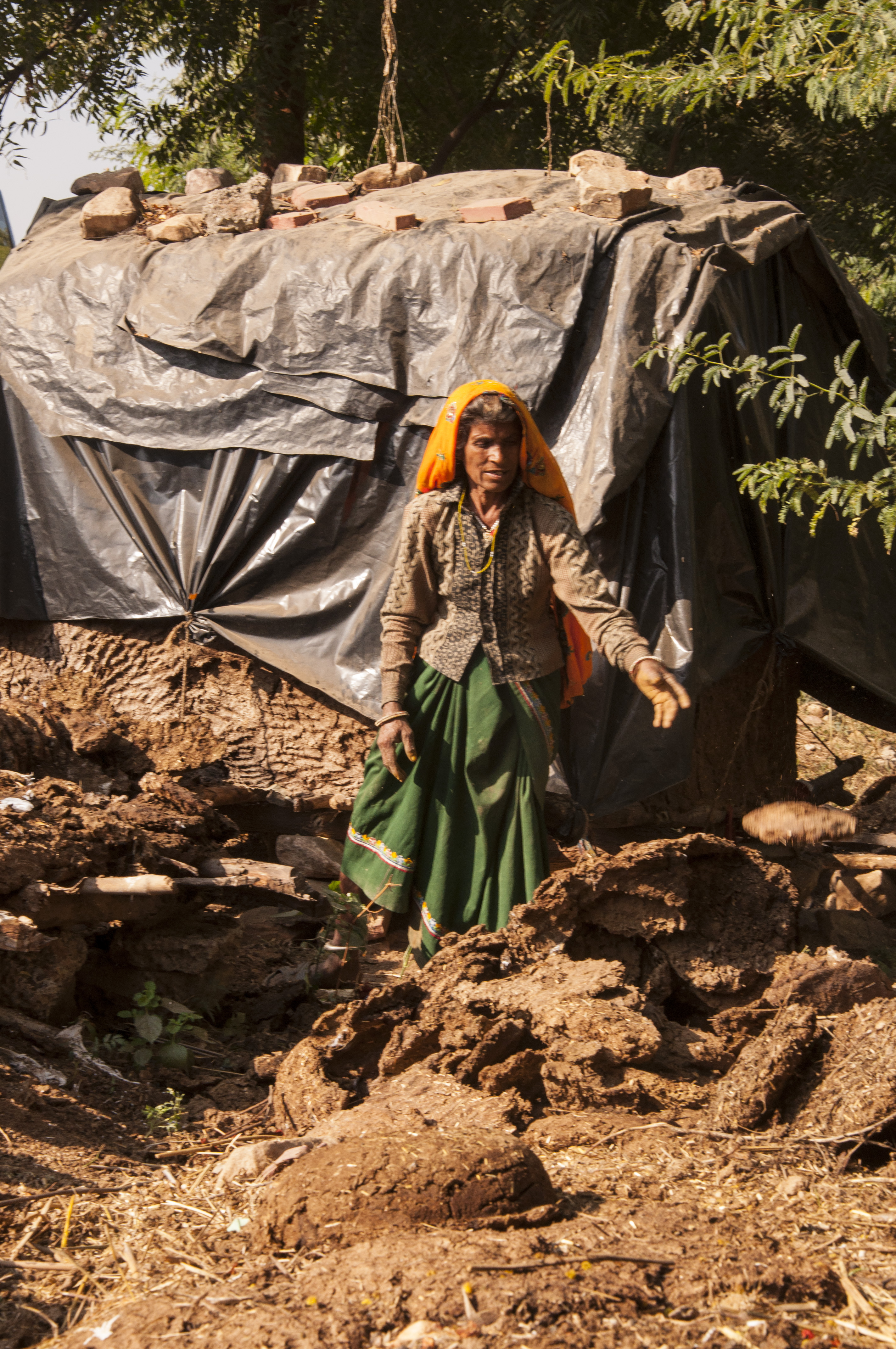
This woman in a rural Rajasthan village makes “cow patties” mixing cow dung with the chaff from the mustard plant, which is then formed and used for fuel and as a building material. Between the milk it provides and the poop it makes, no animal ranks higher than the cow.
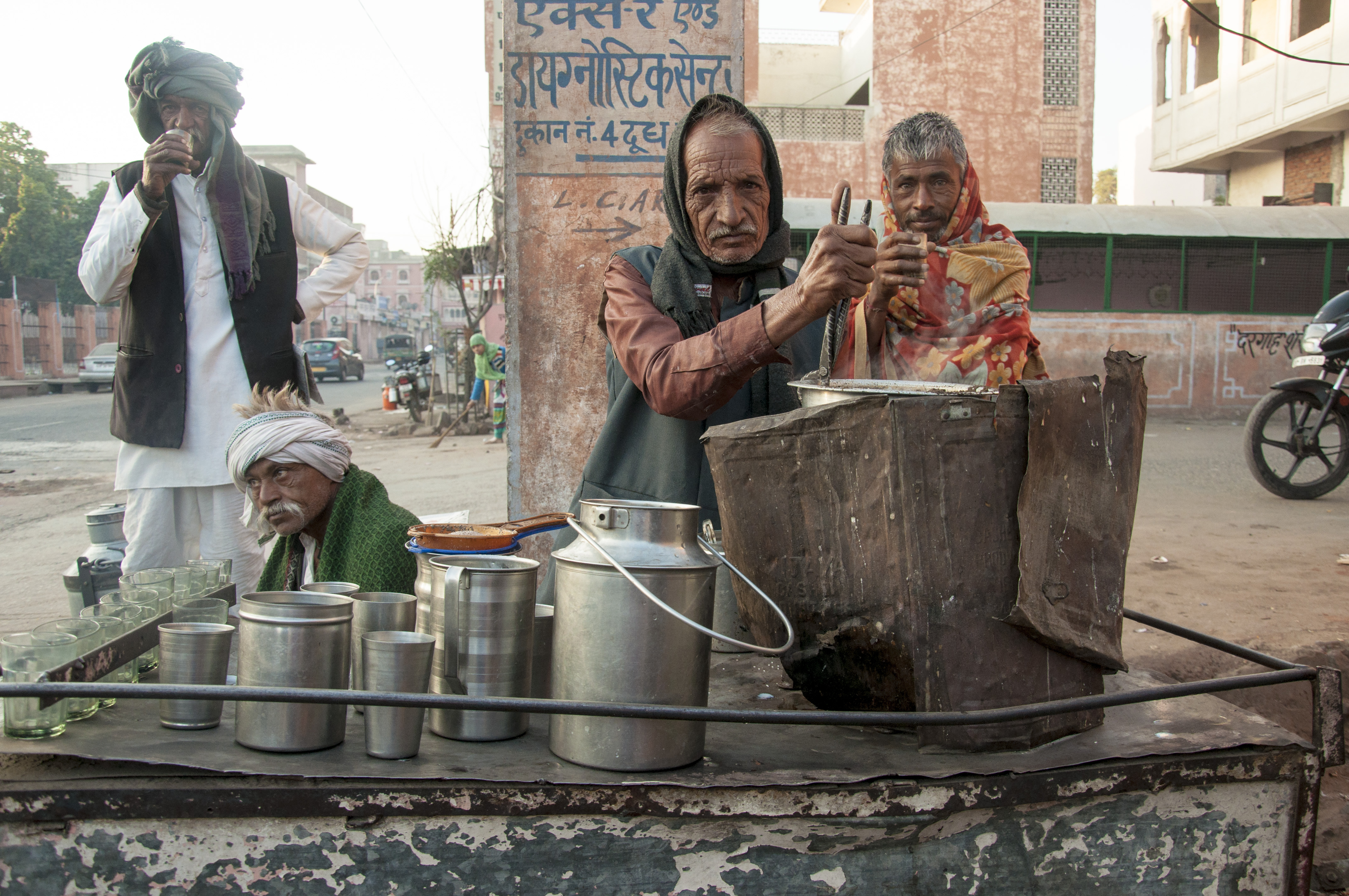
Early morning milk seller in Jaipur.
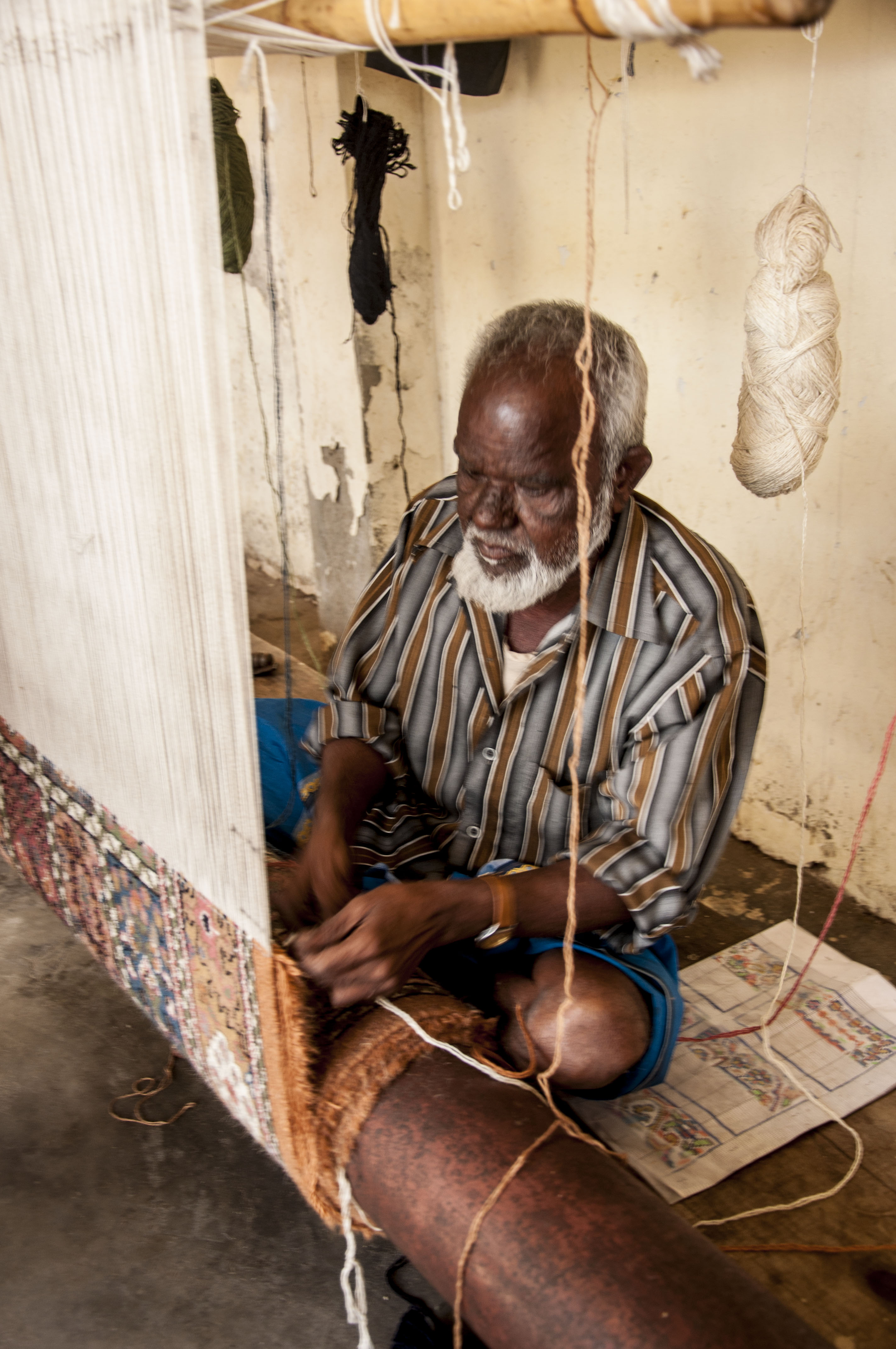
A Carpet weaver applies his craft.
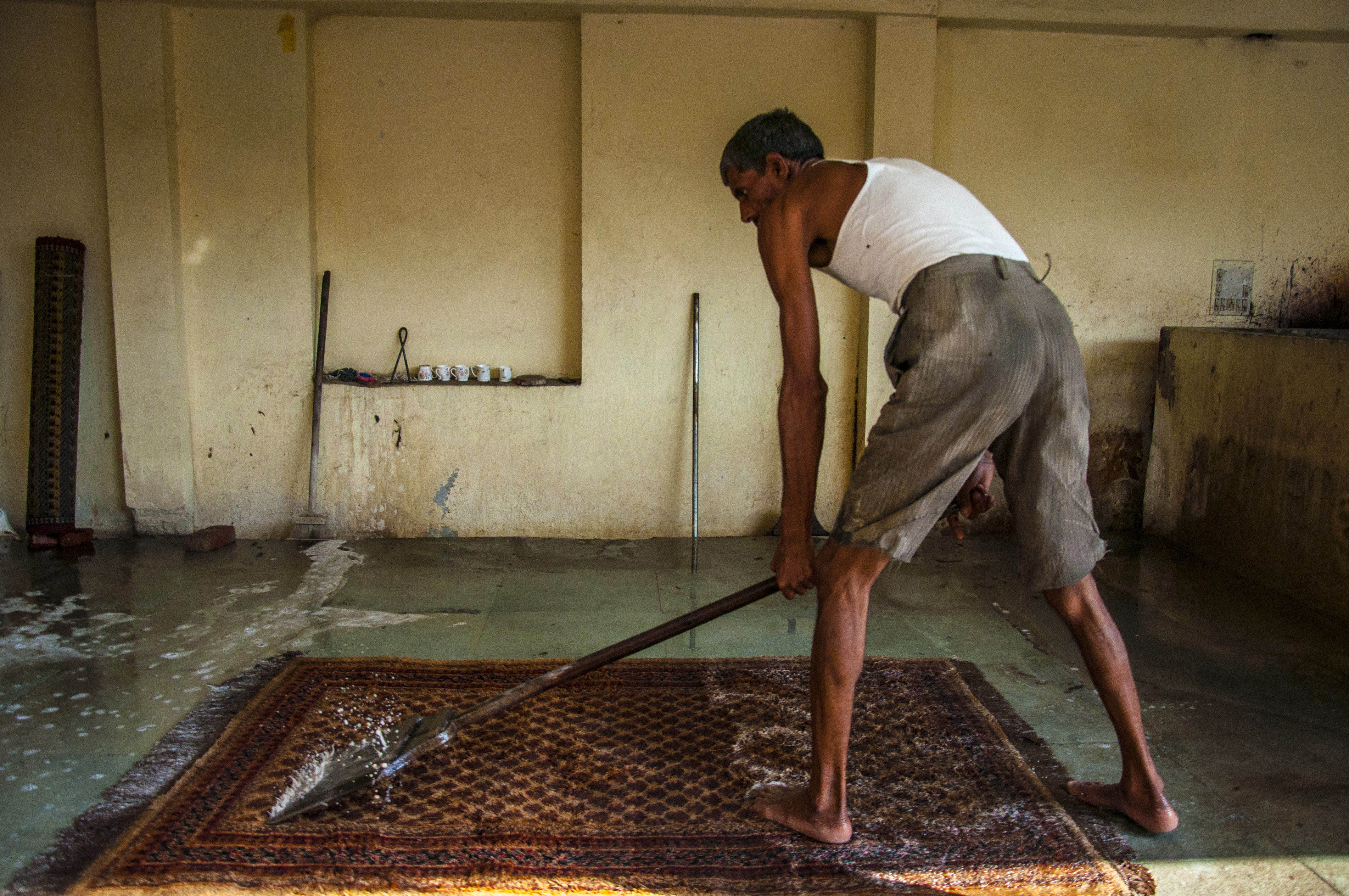
The carpet making process is a dying art with fewer young people willing to do this kind of work. Most production is now done in people’s homes, a cottage industry that supplements family income.
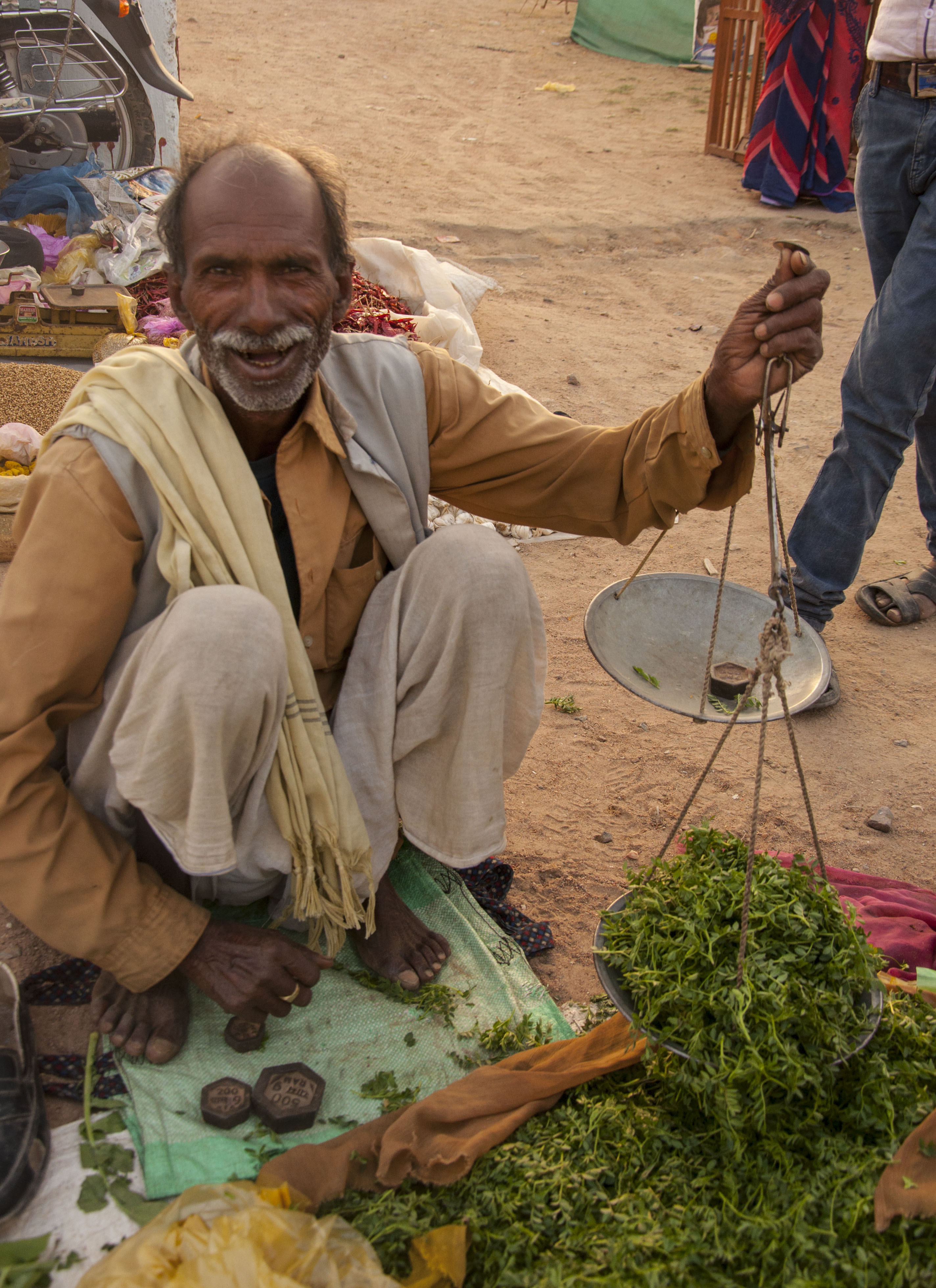
Selling vegetable is a way to get by. Fenugreek shown here is popular in Indian cooking.
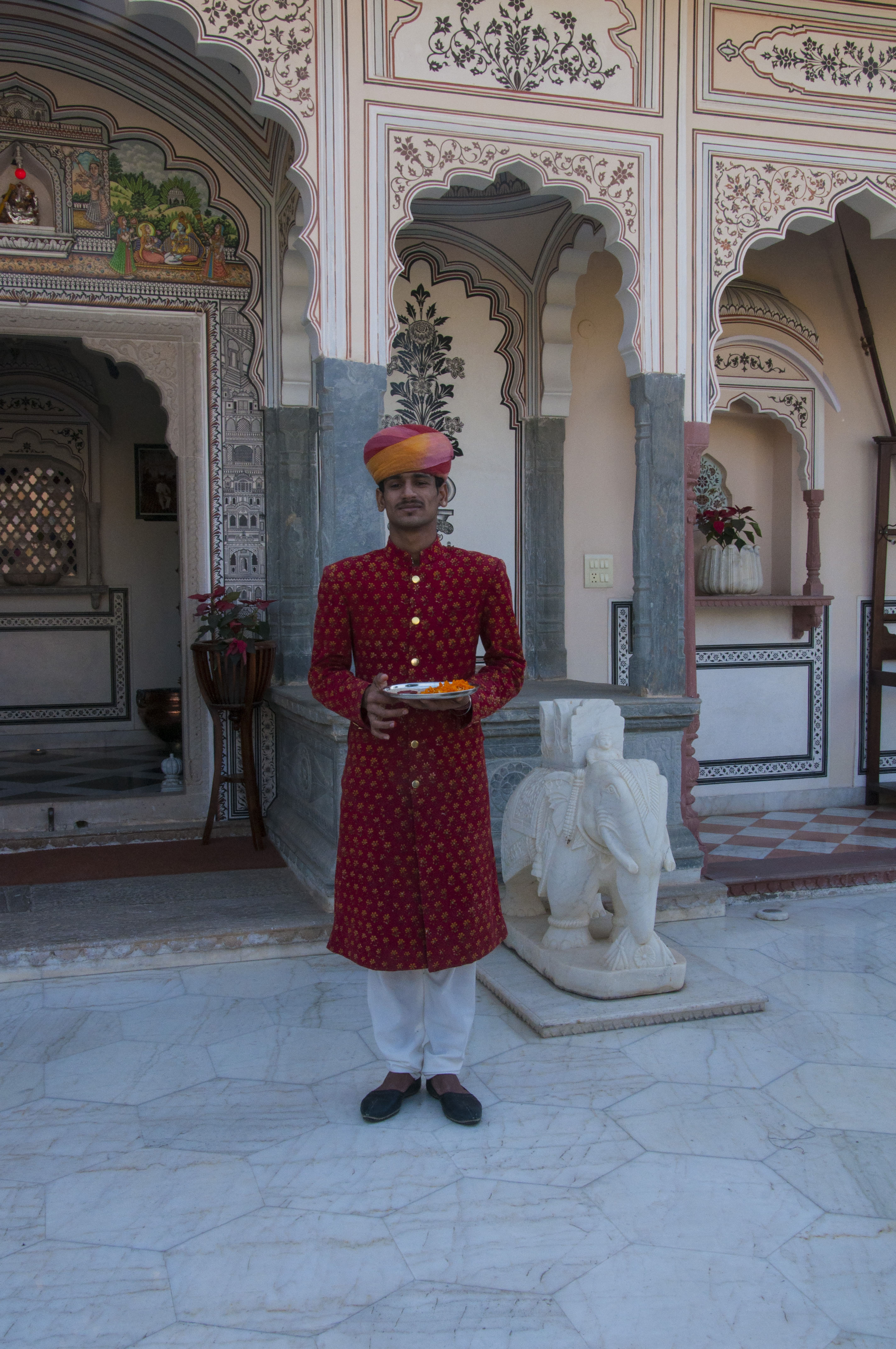
The hospitality business is a growing sector of the Indian economy. At the fort Palace in Shaphura.
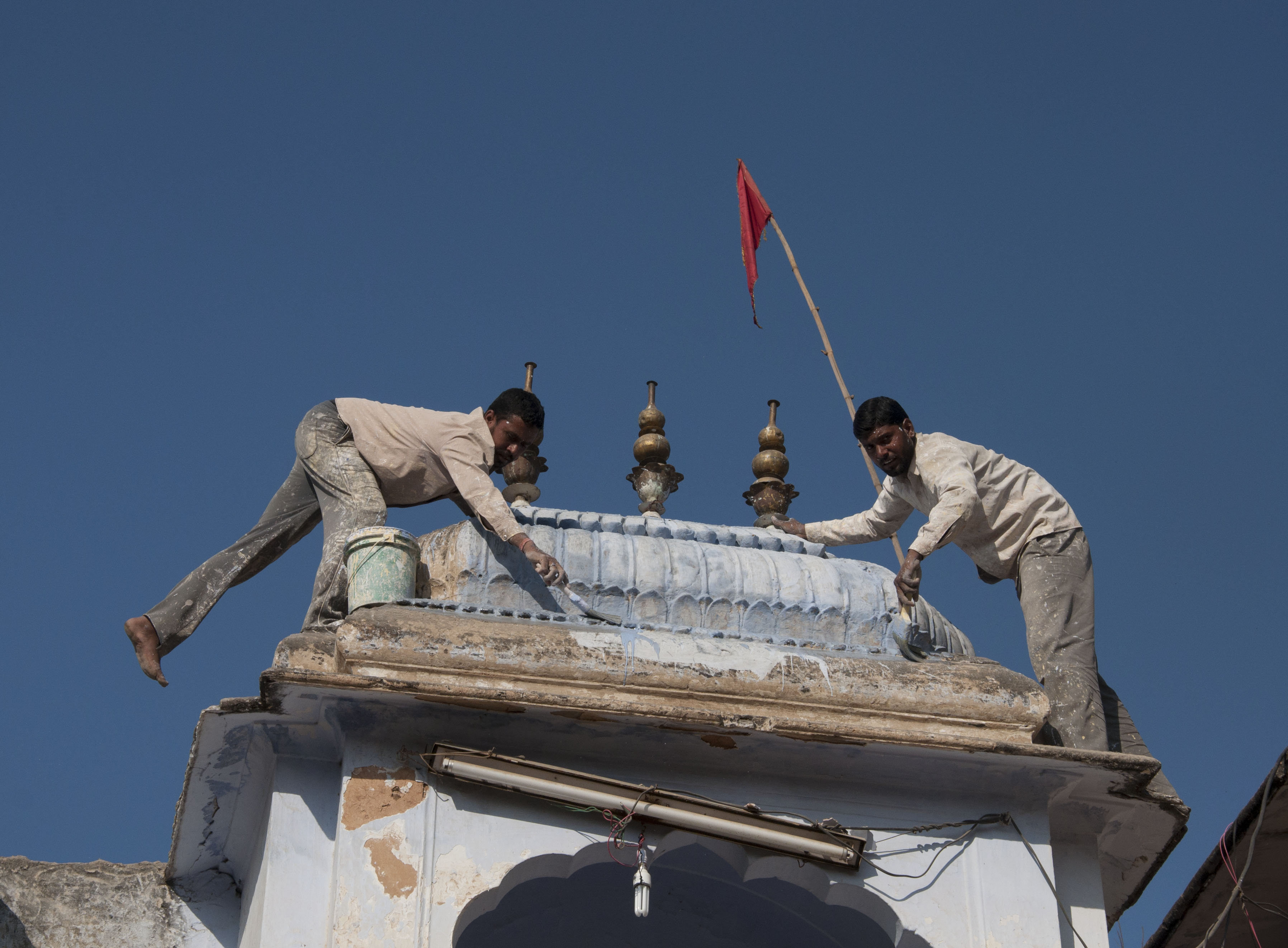
These two young men are painting a tower at the Shaphura Palace complex which offers accommodations and elaborate meals.
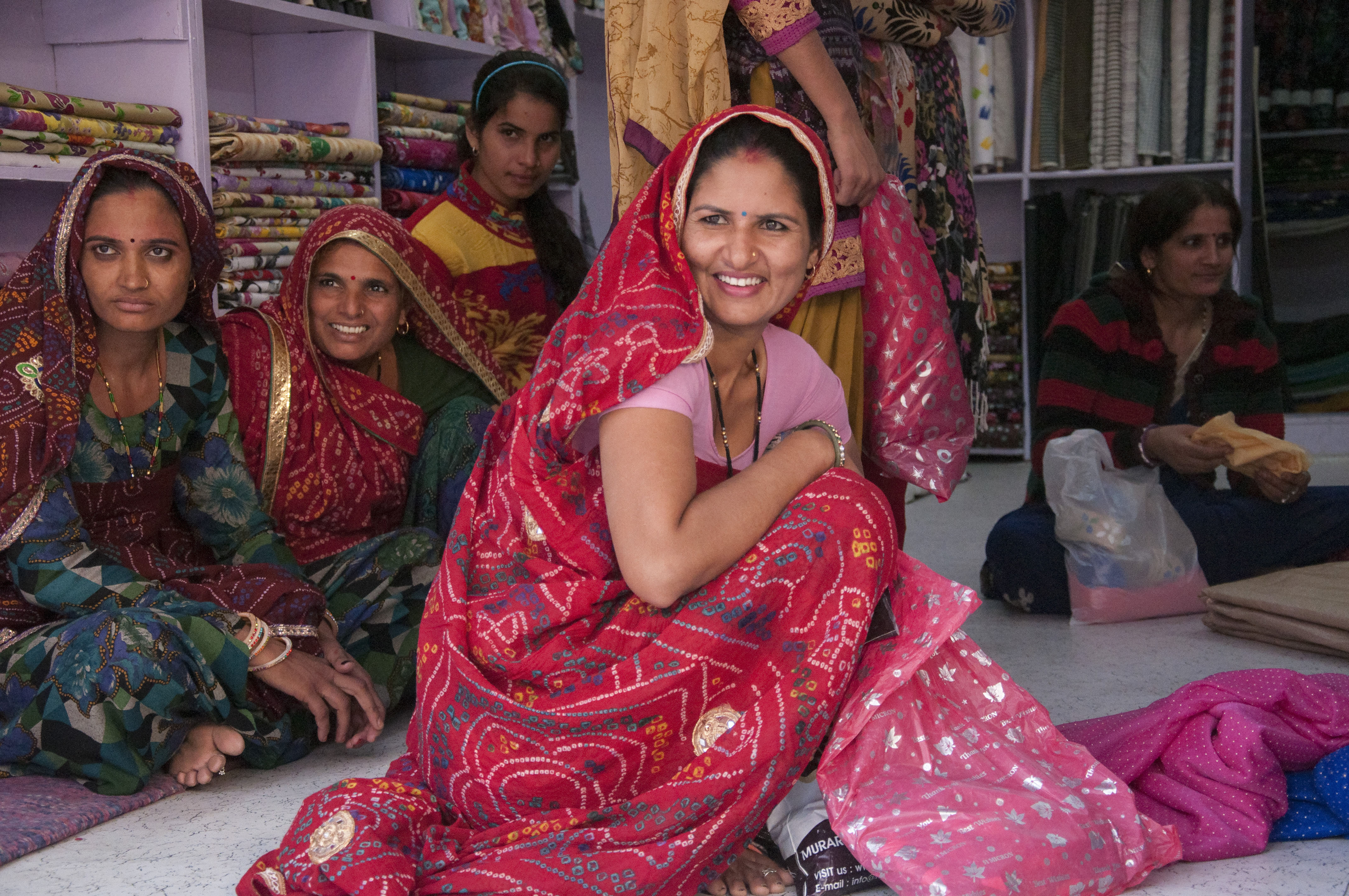
Most women wear the traditional sari. Indian fabric is very beautiful and there is much demand for it internationally and locally.

The women in this Rajput (warrior class, note the arms in the background) family, who entertained us in their home, told us that they always wore their saris. The men went to business in western clothes.
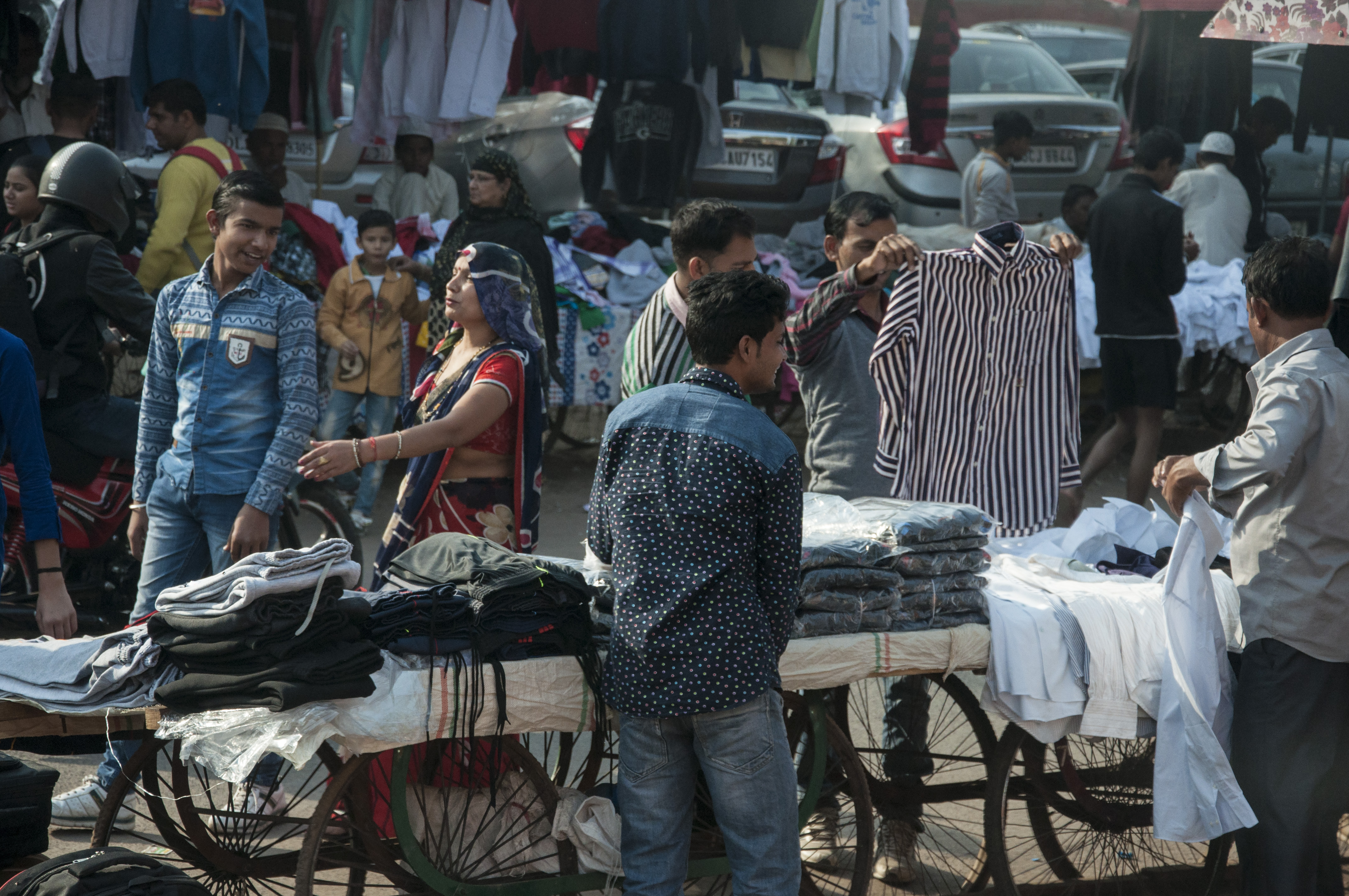
A used clothing market in Delhi sells mostly western style clothes.
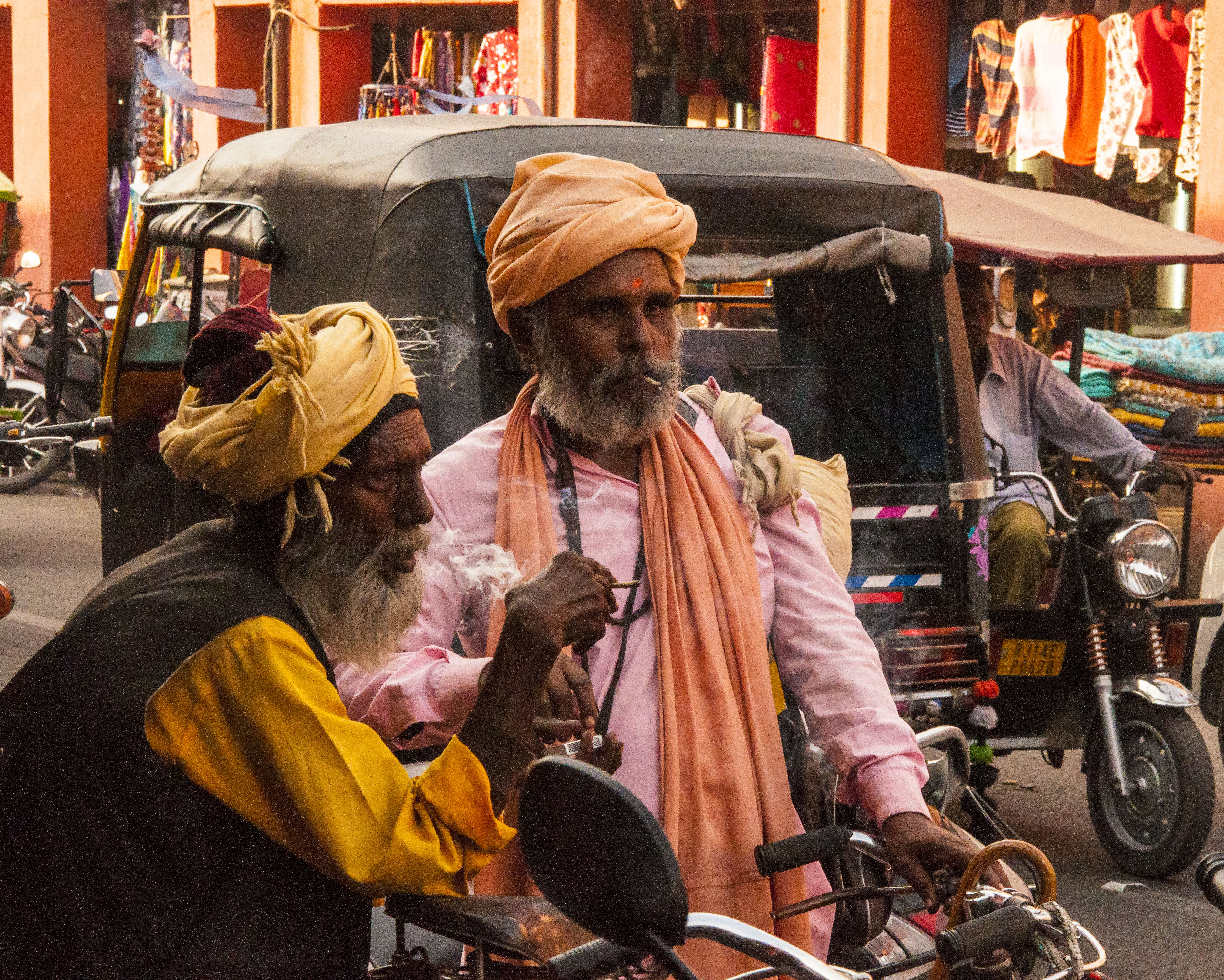
Two men take a break and share a smoke.
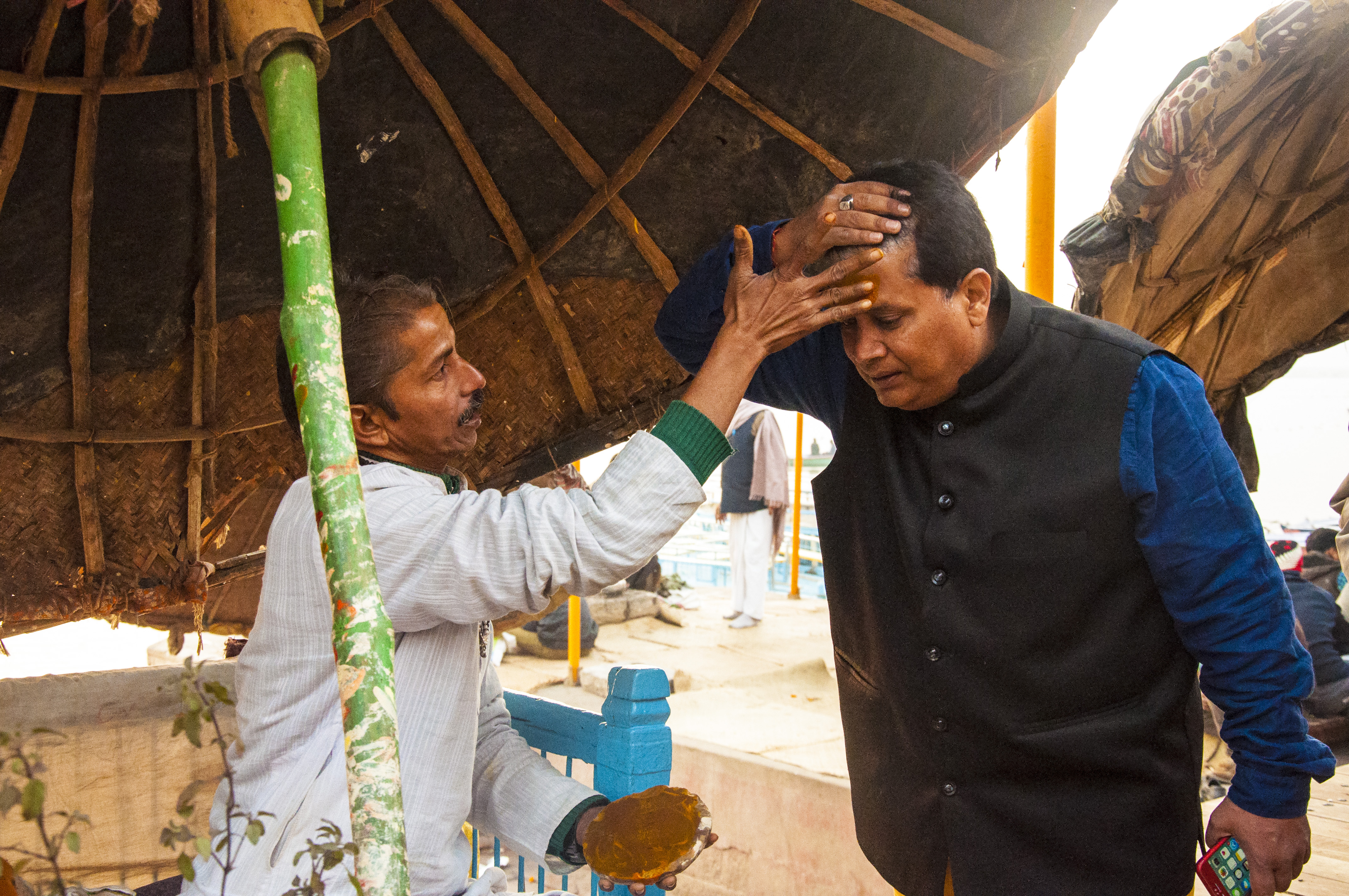
Our Tour Guide Raj receiving the traditional Hindu blessing

Music and dance are integral to Indian life. Here Tarak Nath Mishra plays the sitar.
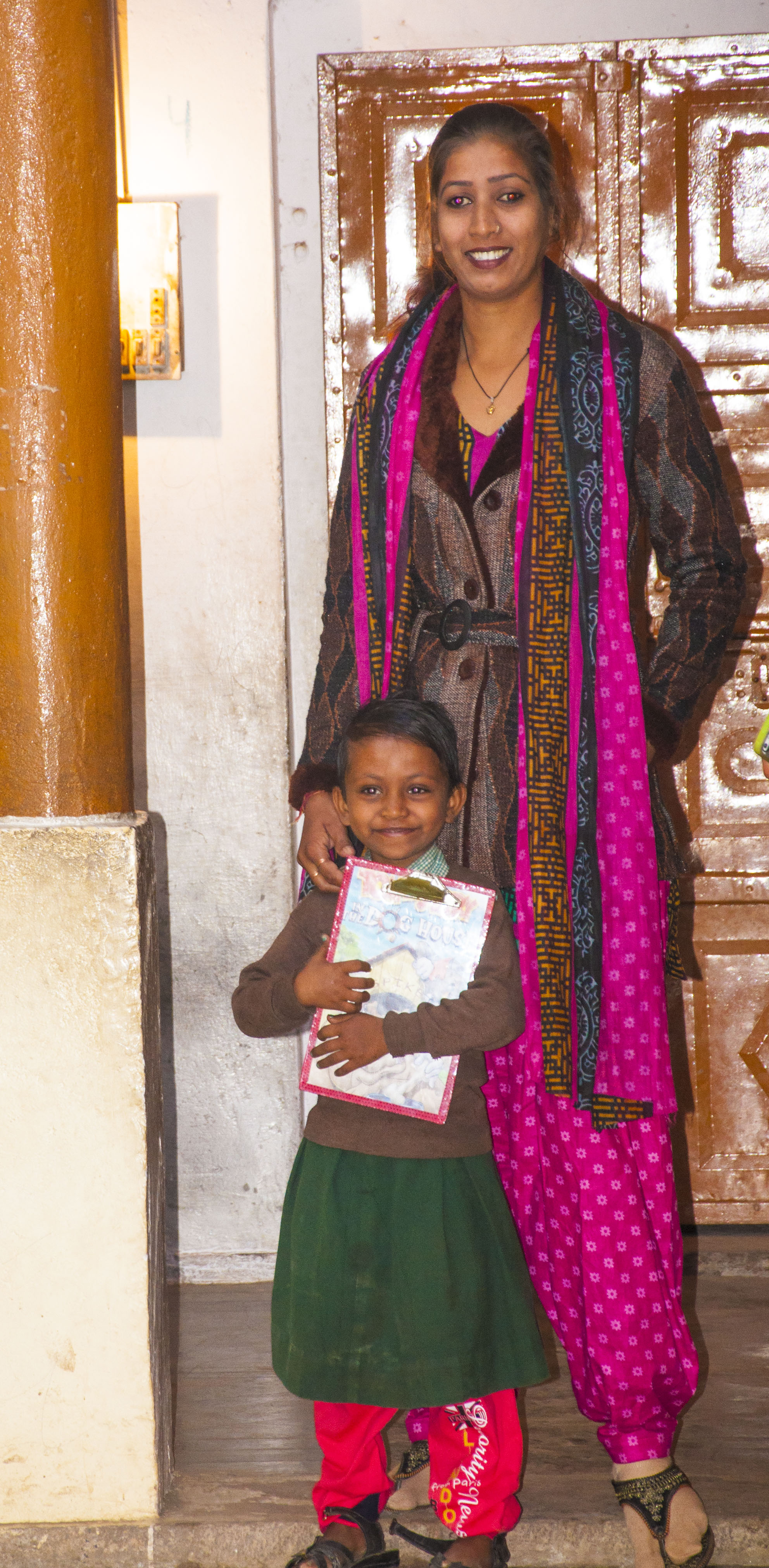
The future of India lies in the education of its children. Here we see a teacher with her star pupil, 4 year old Tina, who sang for us.
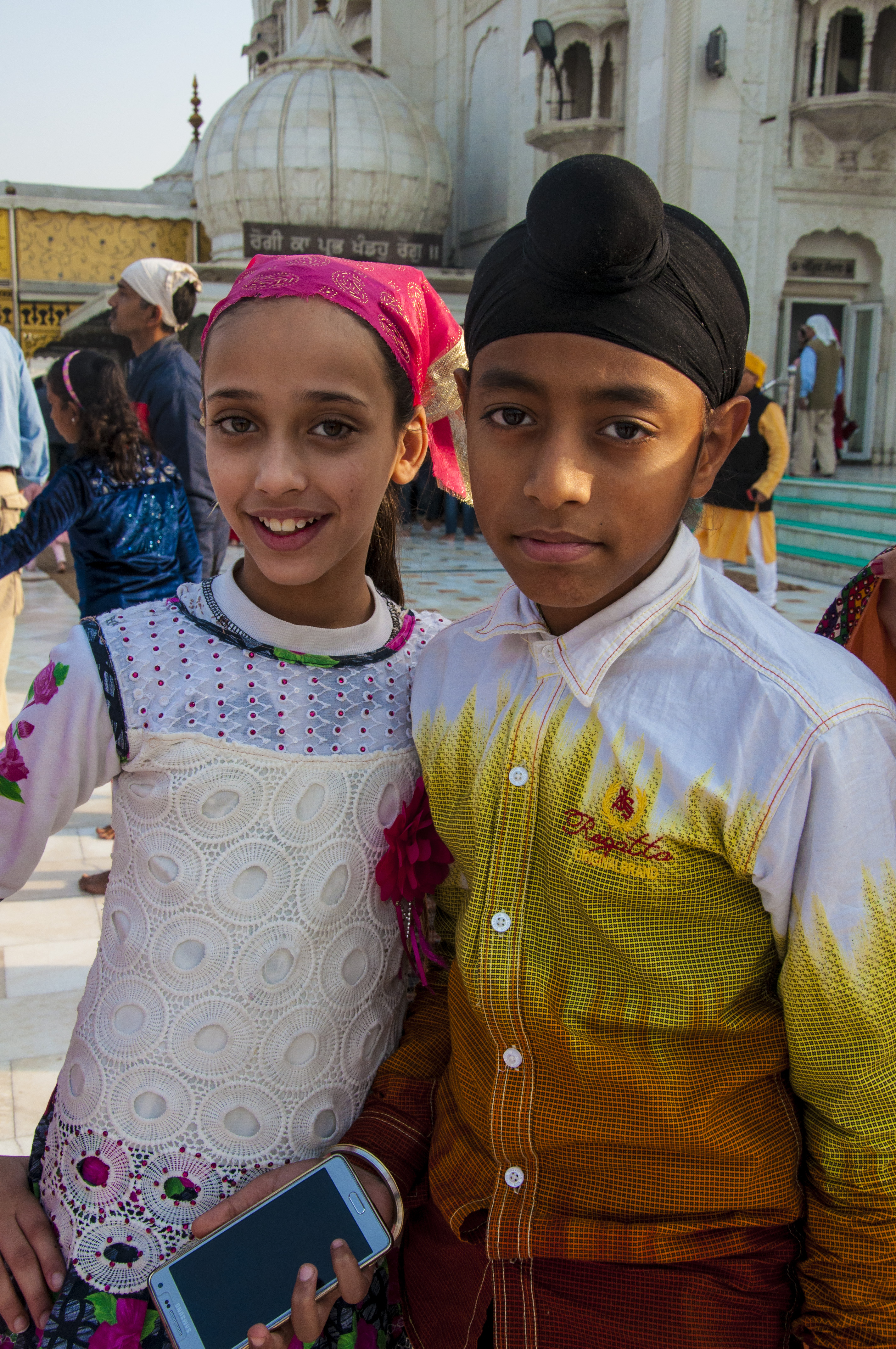
Sikh brother and sister.
 westwardhowithapollo
Great pictures. They tell us a lot about the people and county. One question- what about the modern sector of the cities?
Joanne and Mitch, been following your posts, that am ambitious trip! there is NO place like India. we’re planning a long trip (will be our fourth) beginning in mid Feb., I’ll be dragging my big 8×10 box pinhole camera which always draws welcome attention since it takes often 10-15 minutes to take ONE photo…anyway, wonderful photos! but the experiences, sounds, smells….are incredible! warner
Beautiful pictures. Thanks for sharing