
The Citadel of Machu Picchu was discovered by Hiram Bingham in 1911 after five centuries of abandonment following the Spanish conquest of the Incas. Not easily accessible, it is surrounded on three sides by the gorges of the Urubamba River (also called the Vilcanota River), and tucked between two massive mountain peaks — the Huayna Picchu and the Machu Picchu. It reaches nearly 9,000 feet into the clouds.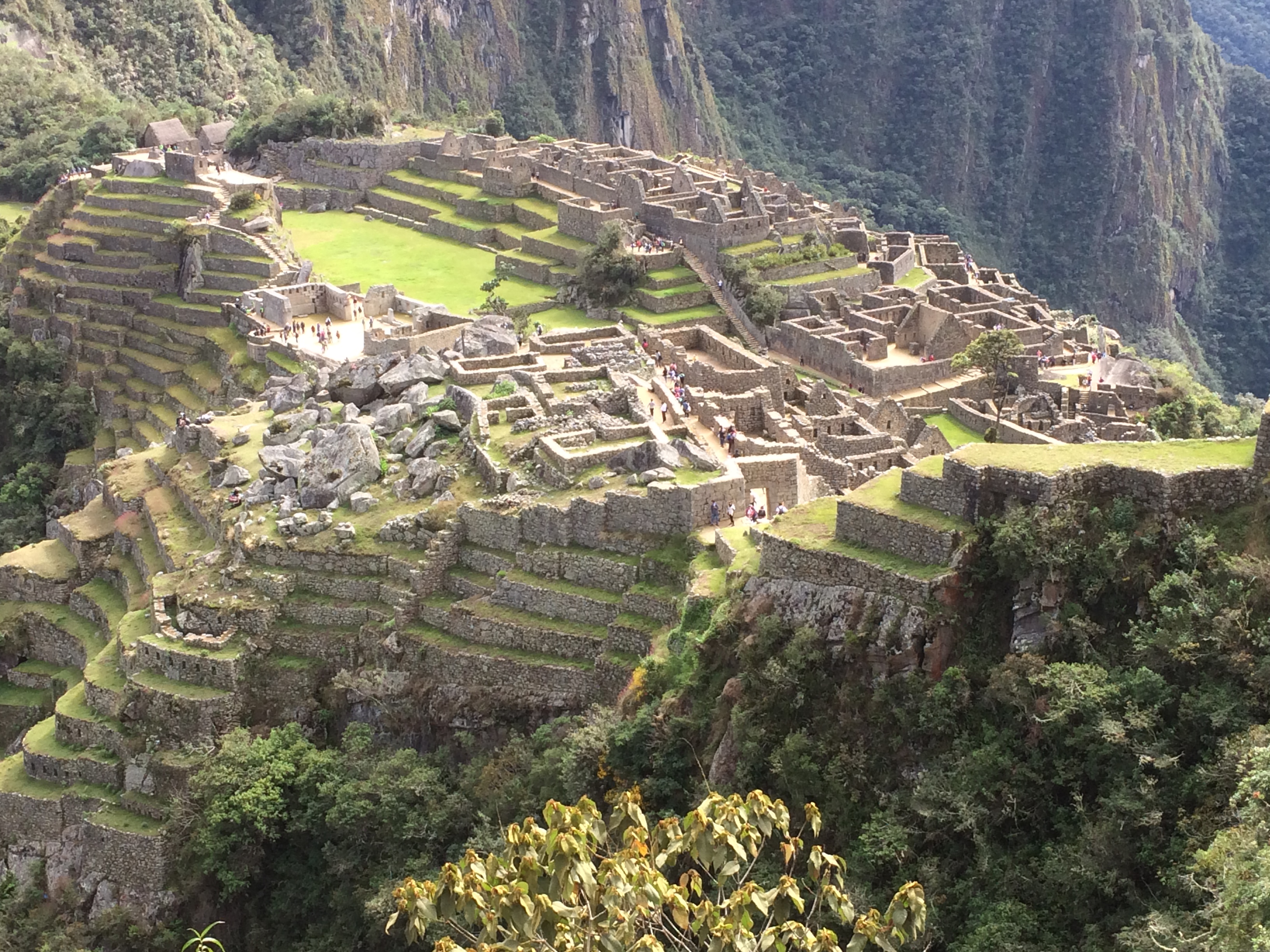 The Citadel Complex
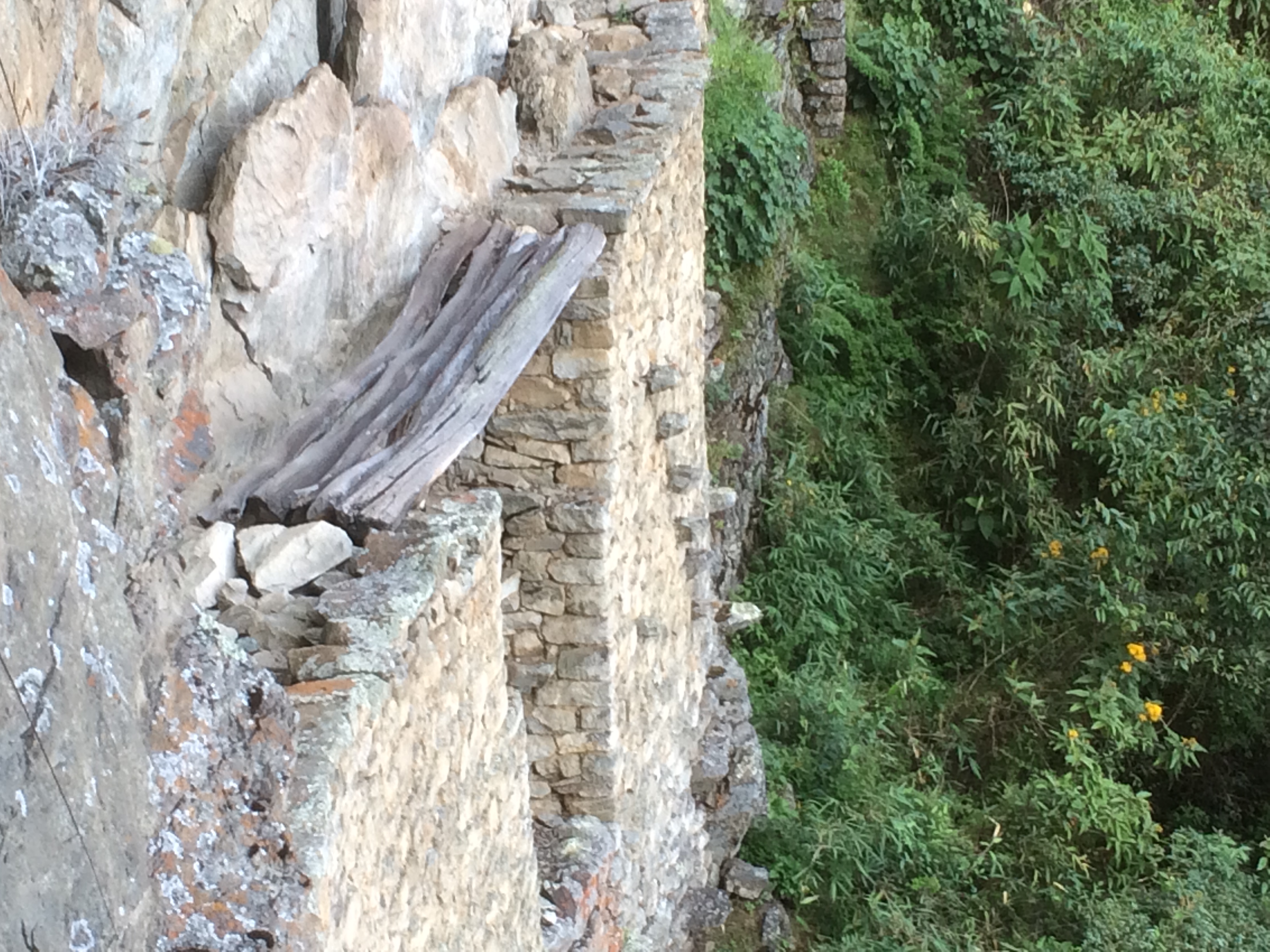 This is the original Inca draw bridge used to protect the western entrance to Machu Picchu. It is a short 30 minute hike from the center of the citadel.
 For those who are not faint of heart, a hike up Huana Picchu provides a bird’s eye view of Machu Picchu.
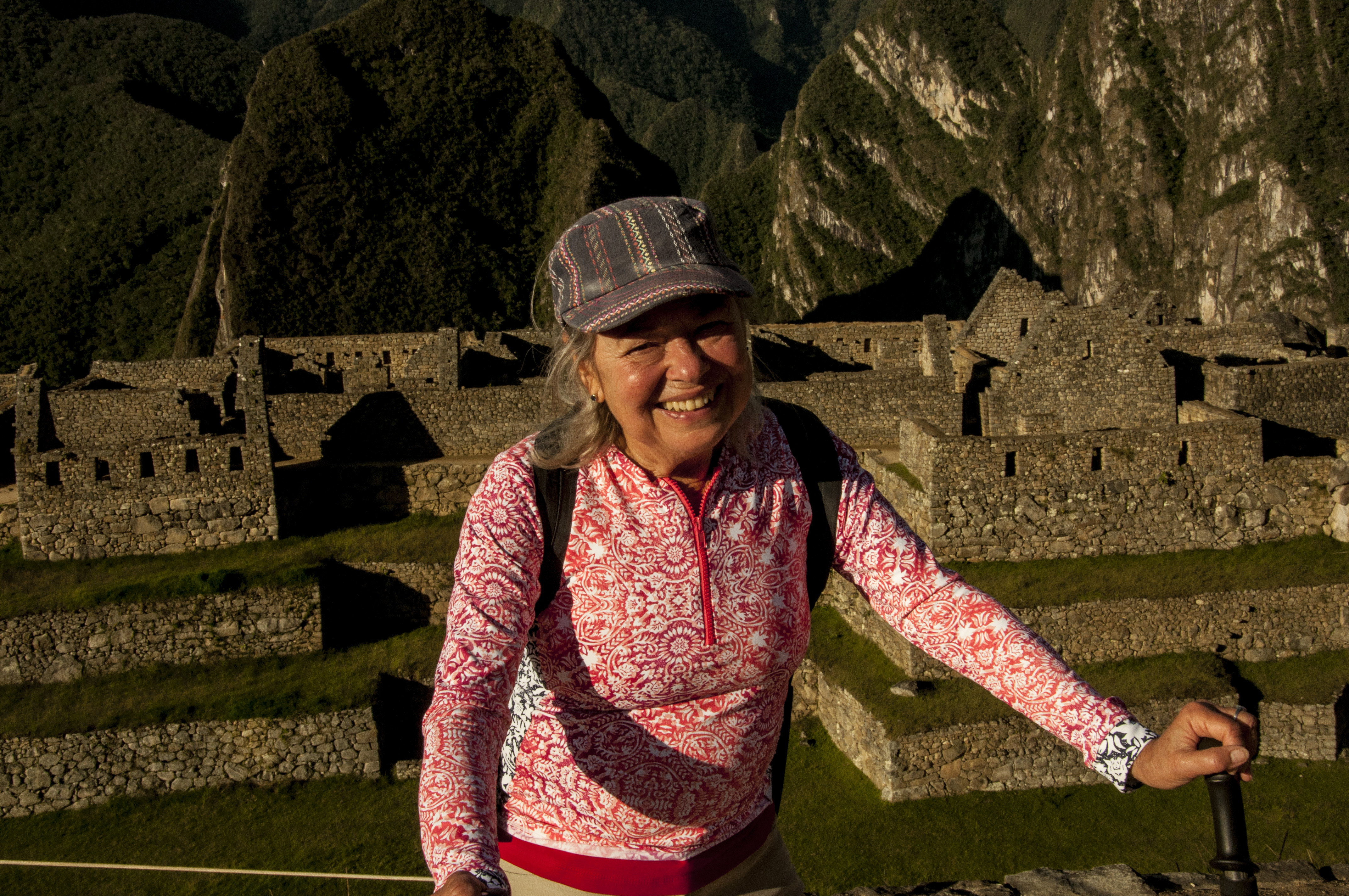 Joanne who is faint of heart did not hike Huana Picchu. She did not even hike the last section of the Inca Trail up to the Sun Gate.
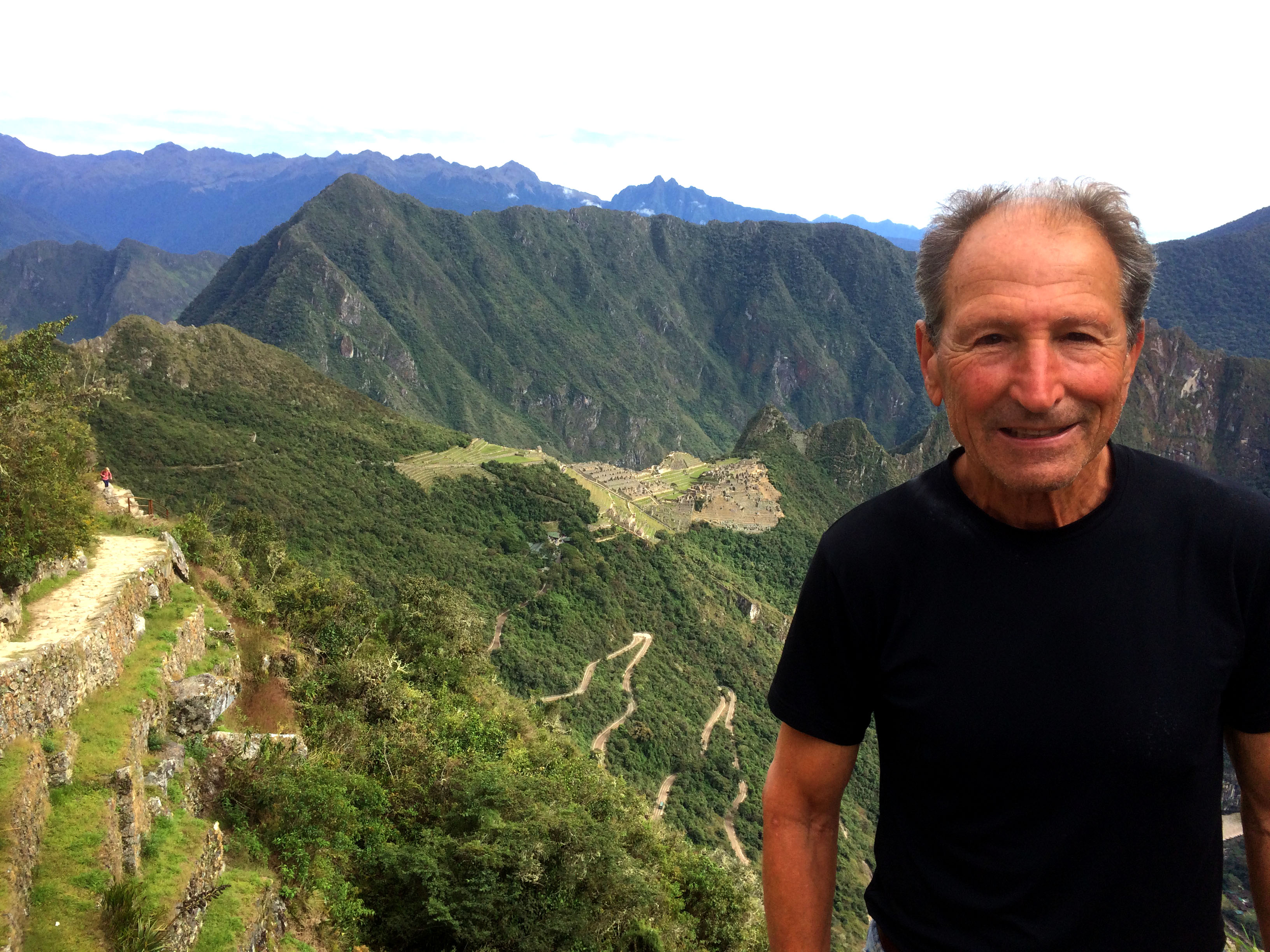 Mitch at the Sun Gate.
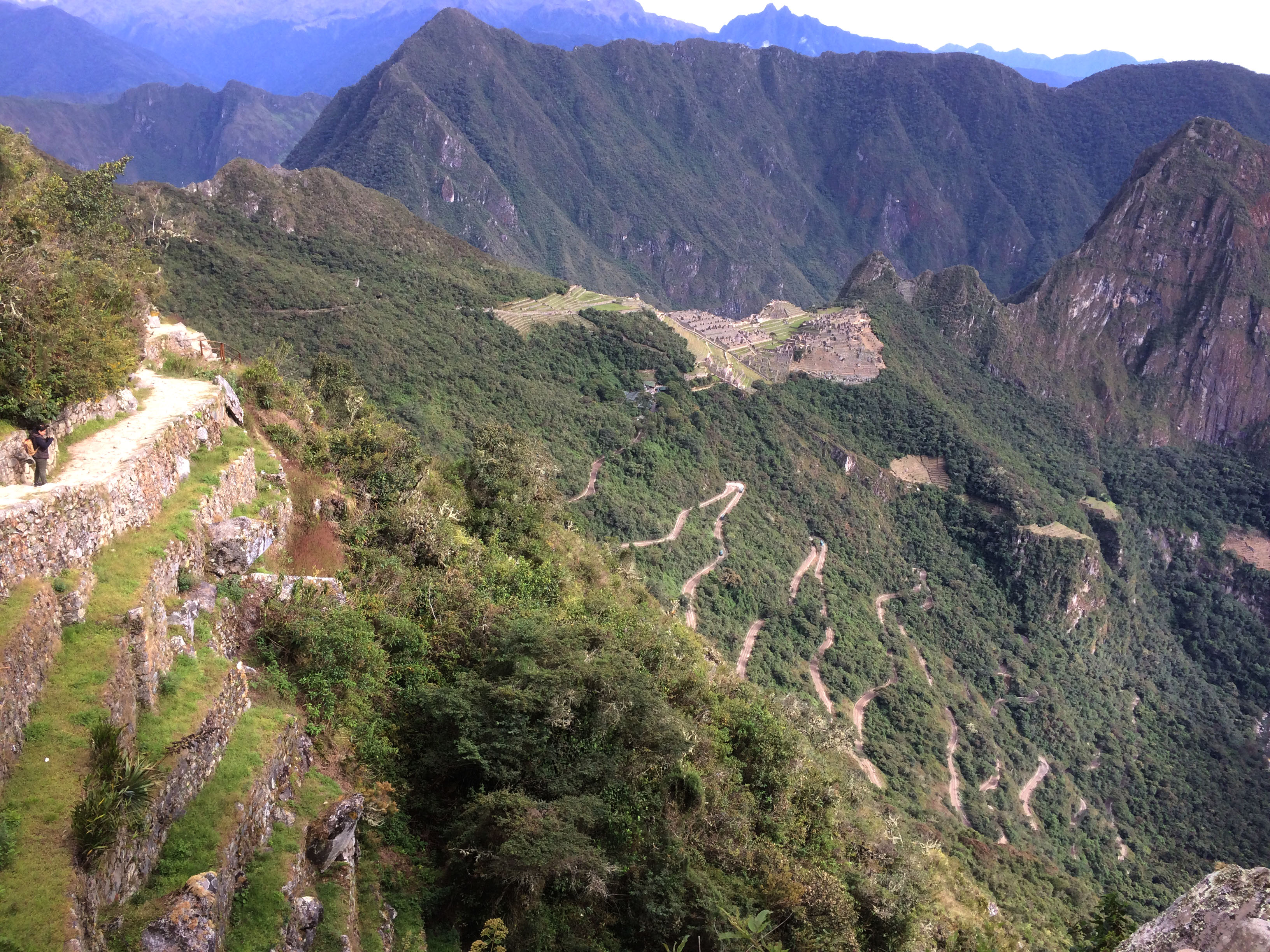 View from the Sun Gate: The Switchback Road to Machu Picchu (in the center of the photo) is pretty scary by bus in and of itself. The last leg of the Inca Trail is on the left.
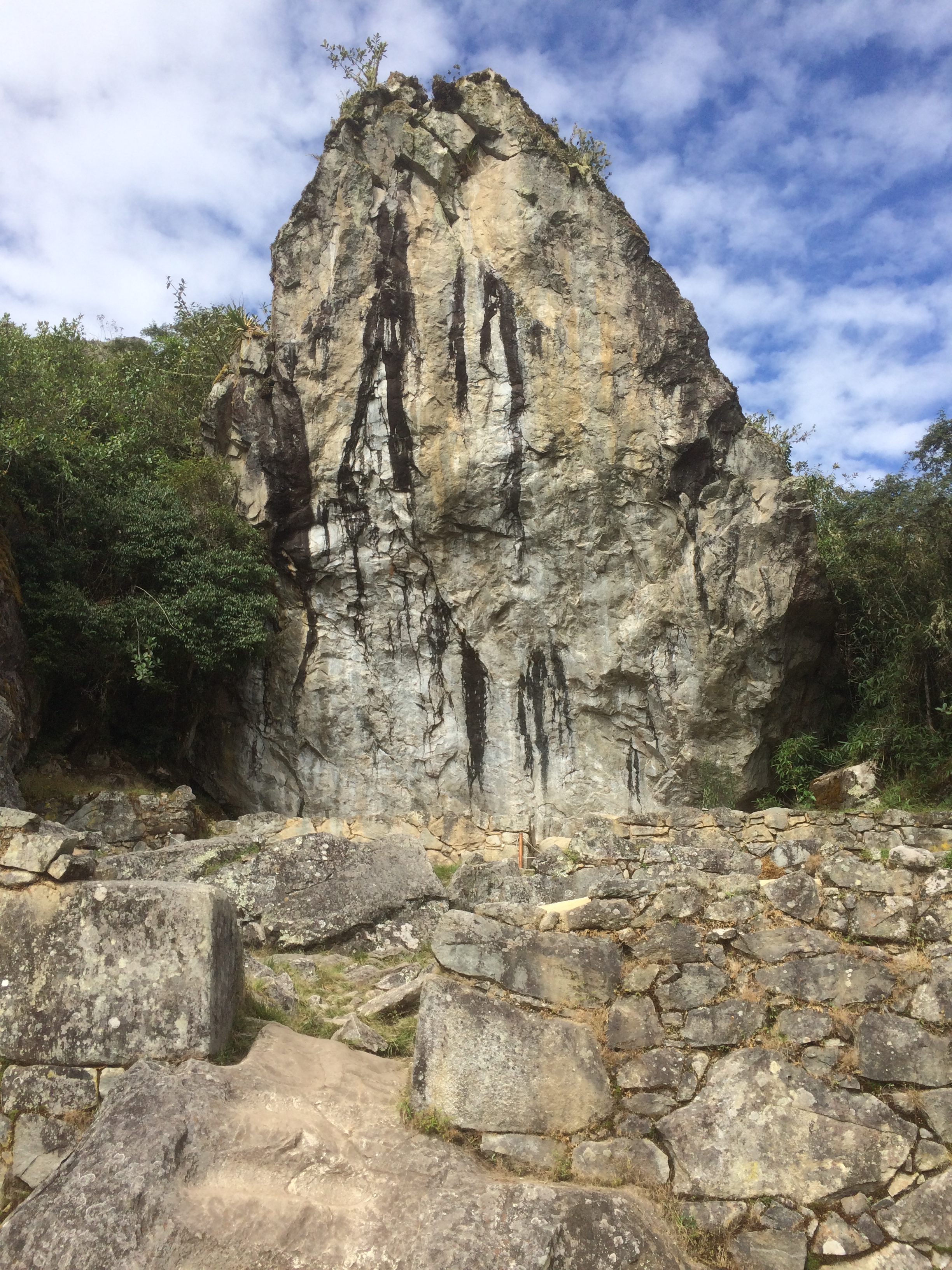 The Sacred Rock is a huge monolith that looks very similar to Huana Picchu and is near its trailhead Visitors place three coca leaves at its base and make a wish.
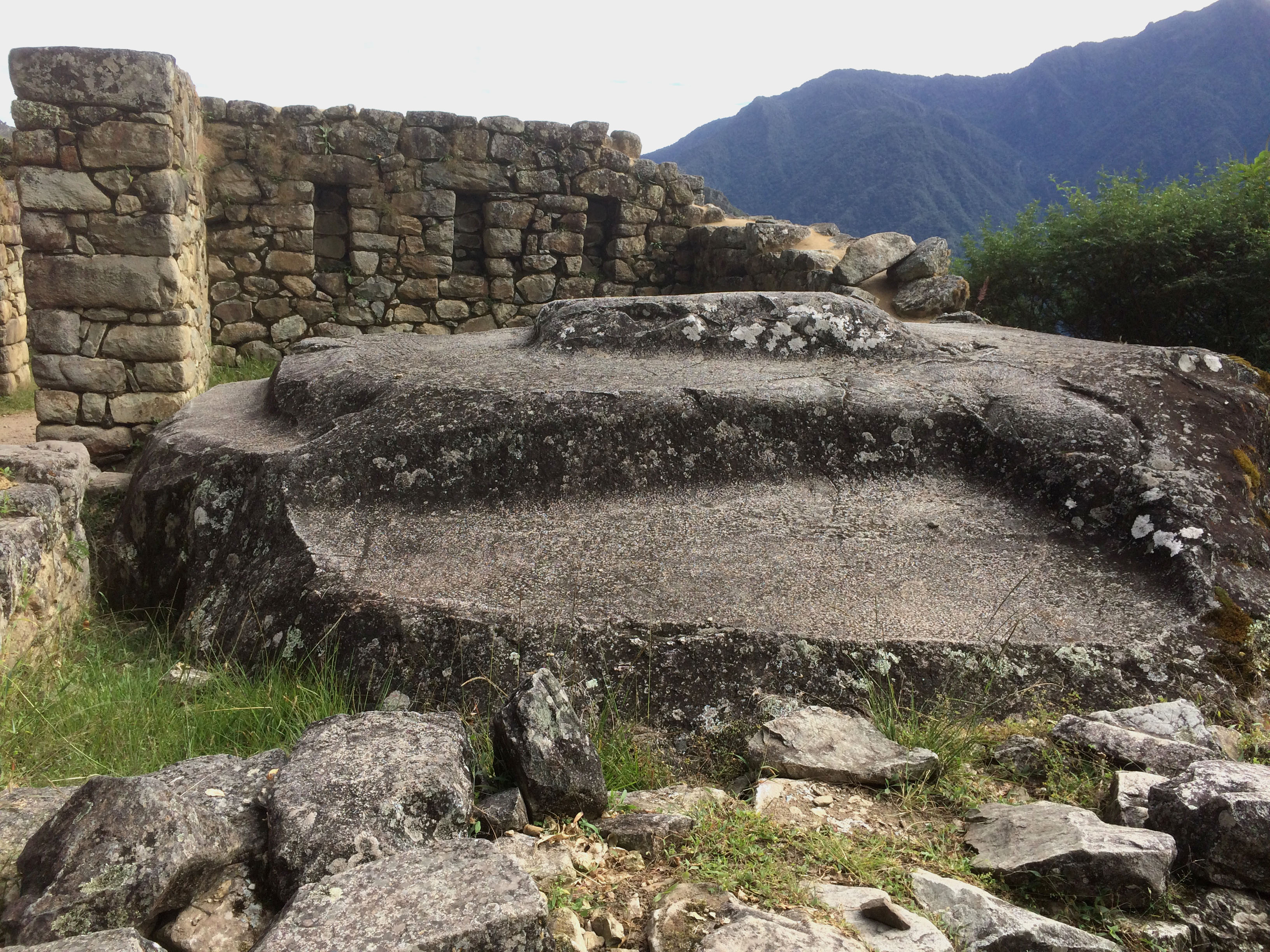
This was a Ceremonial Site. Its true purpose is an enigma, perhaps sacrificial.
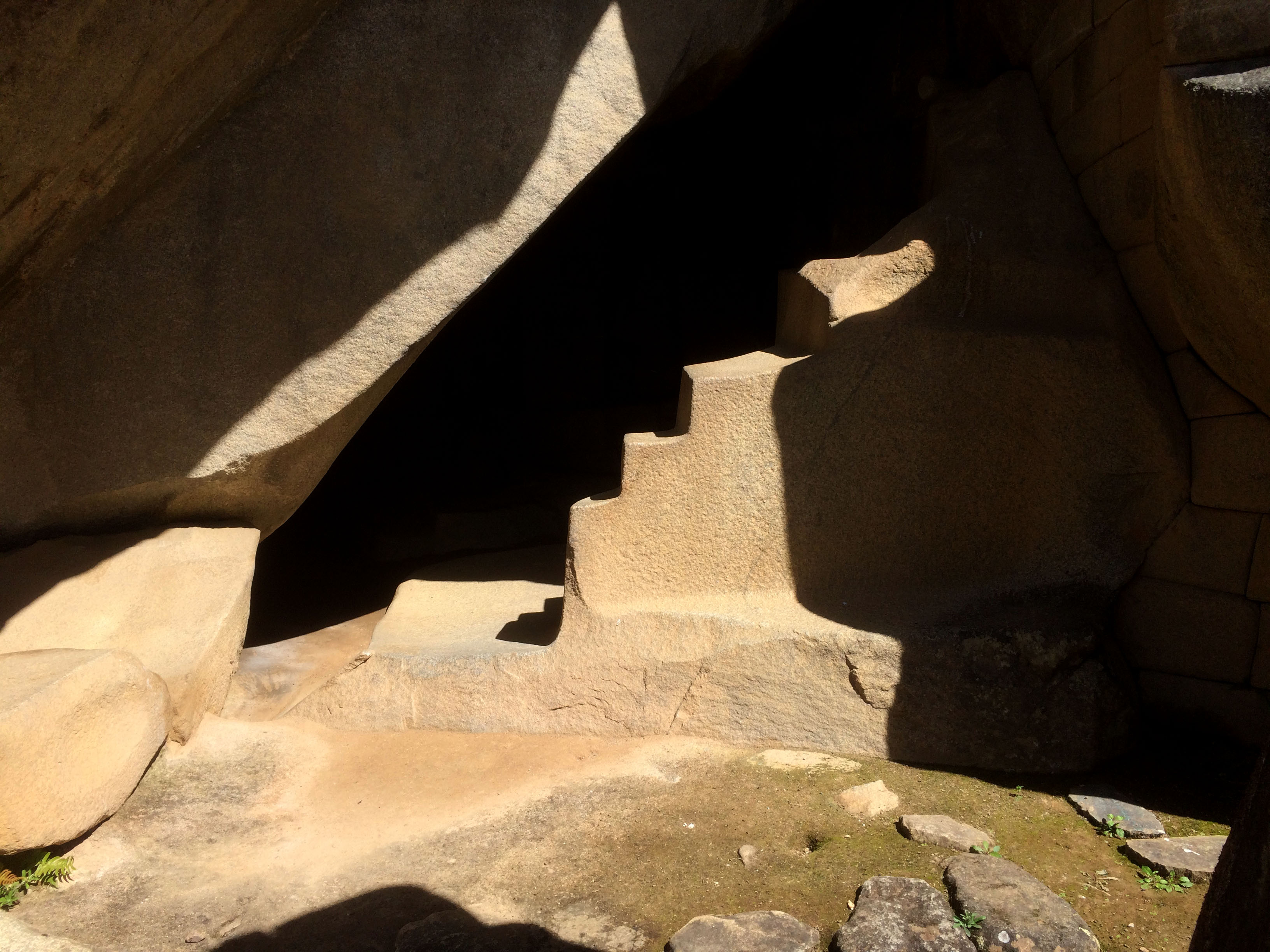
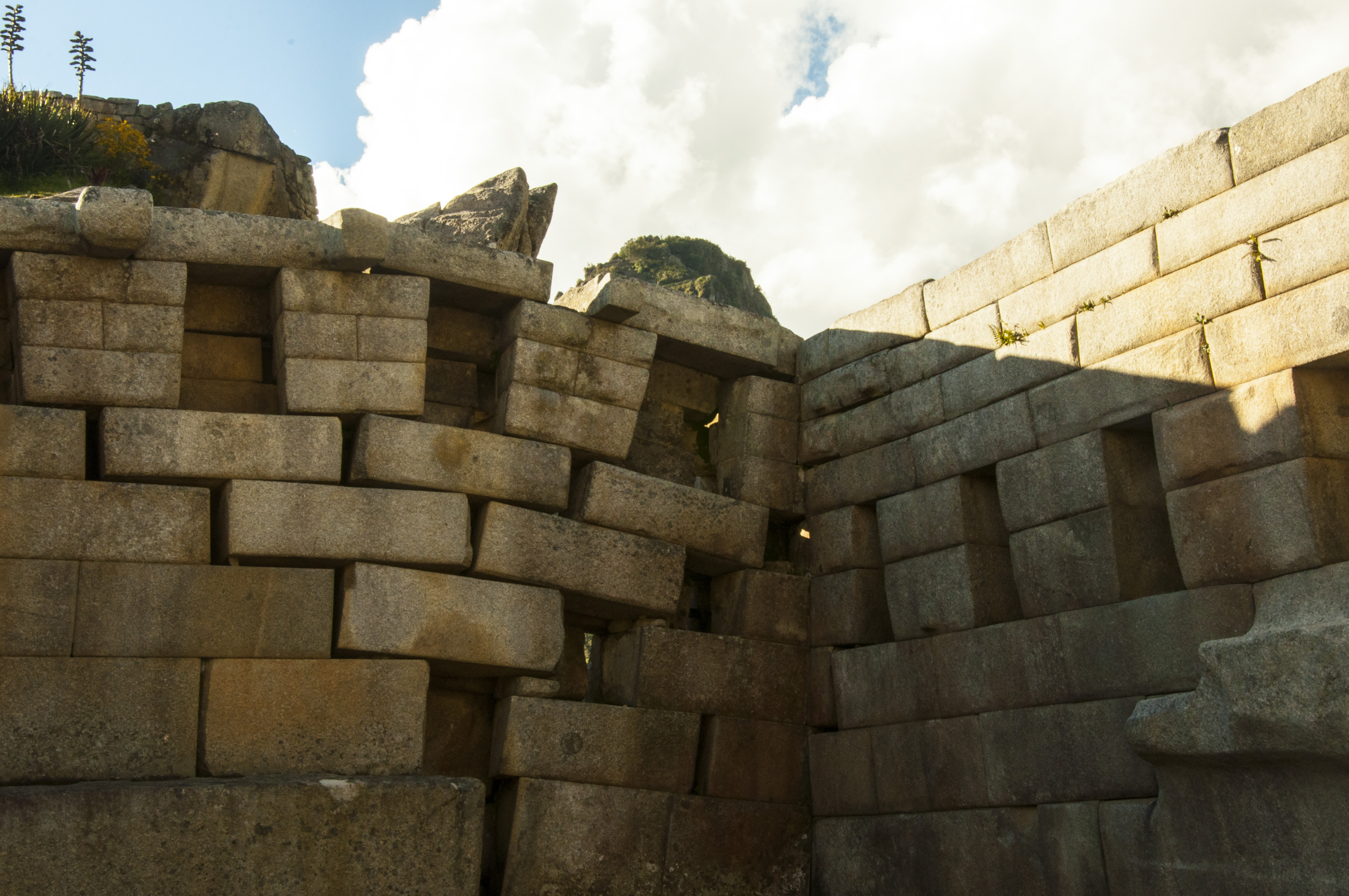 El Templo Mayor of Machu Picchu
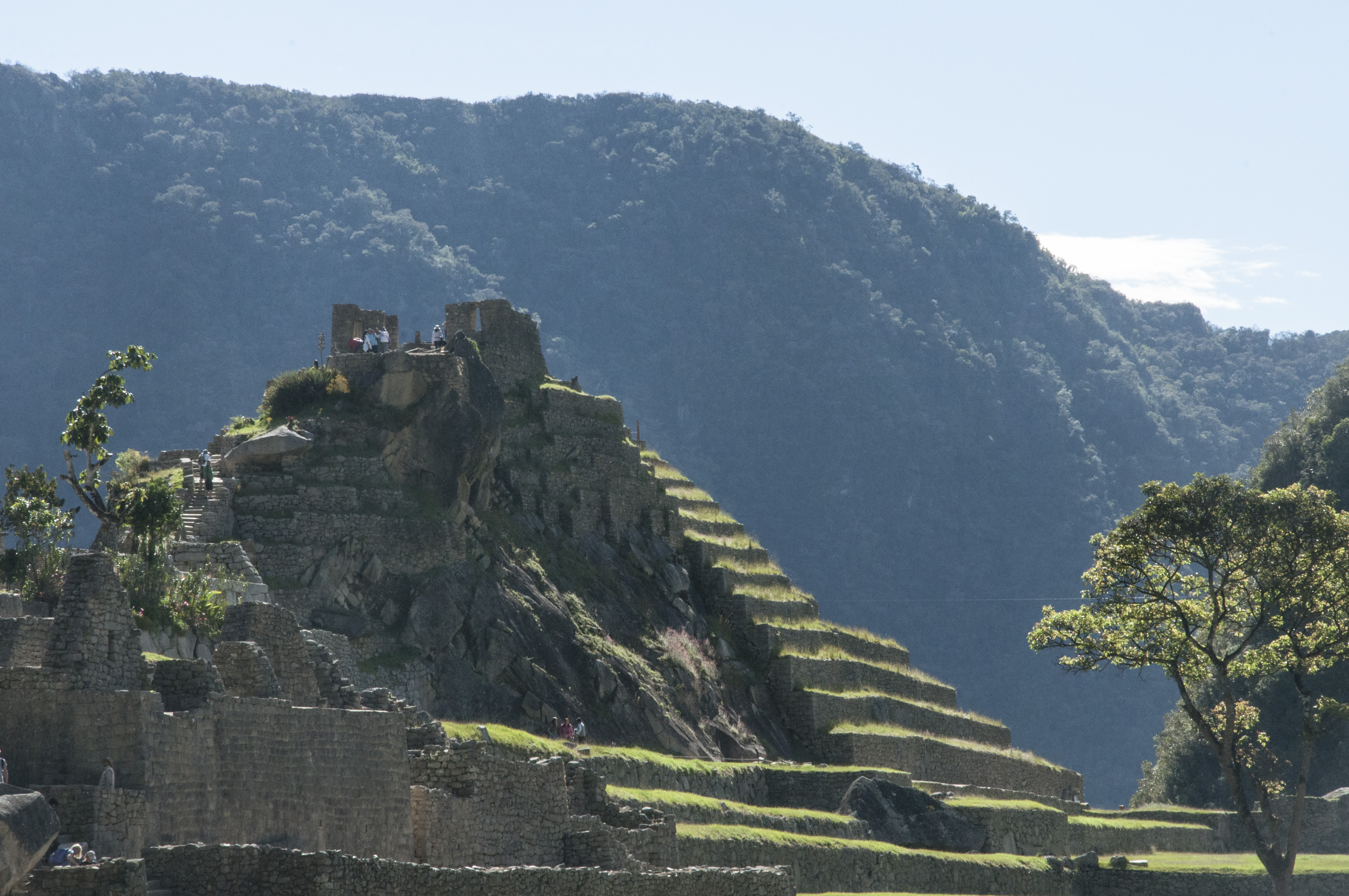 The Sacred Plaza, thought to have been the political center of Machu Picchu.
 Agricultural terraces with a view of the Urubamba River below was created to hold a large number of crop fields. It was well organized over the entire length of the slopes of the Valley.
 Hiram Bingham named this Intihuatana Stone “The Hitching Post of the Sun.” Shamanic legends says that when a sensitive person touches their forehead to the Intihuatana stone it opens their vision to the spirit world. Intihuatana stones were the supremely sacred objects of the Inca people and were systematically searched for and destroyed by the Spaniards. When the Intihuatana stone was broken at an Inca shrine, the Inca believed that the deities of the place died or departed.
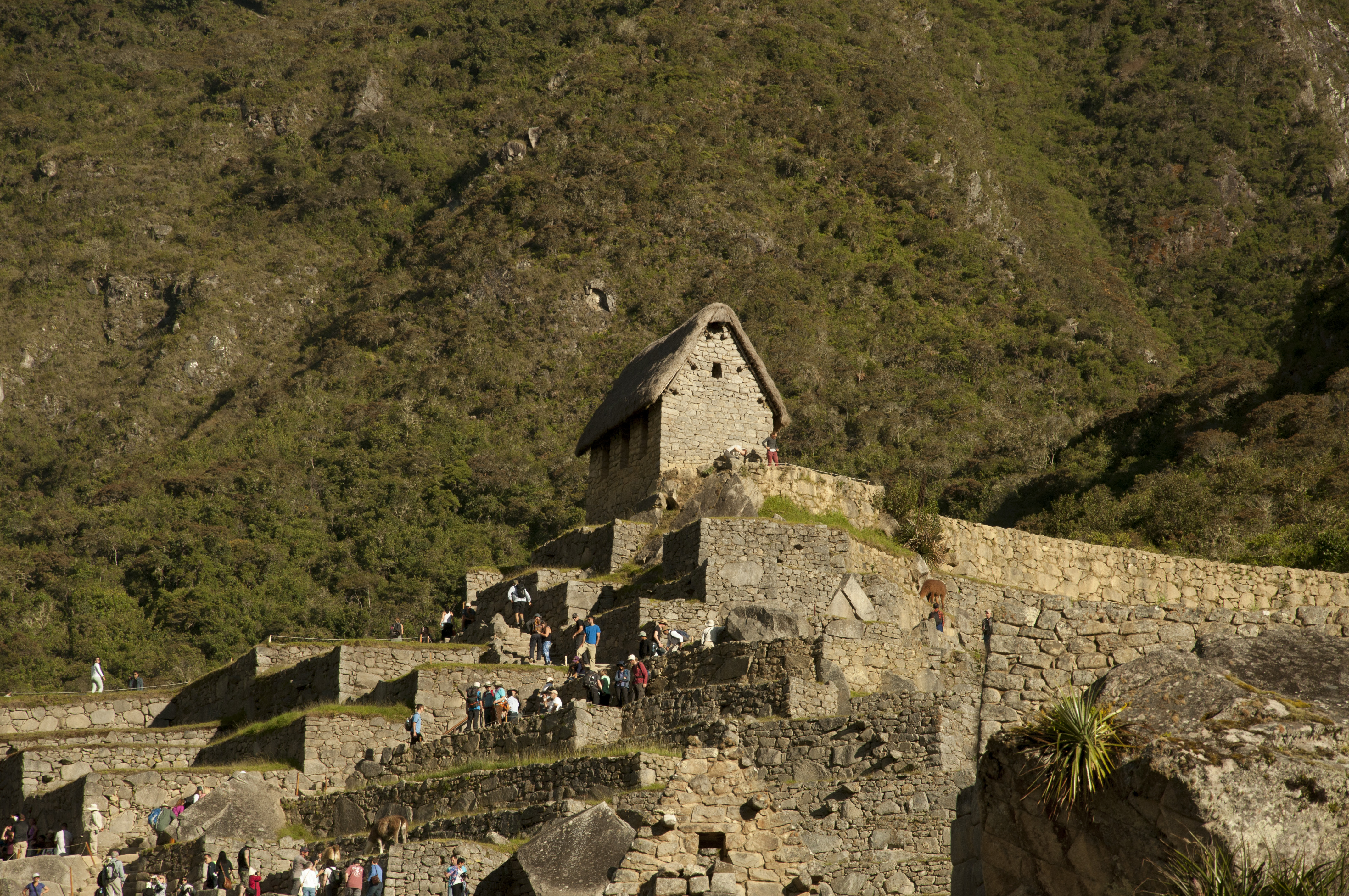 The Hut of the Caretaker of the Funerary Rock.
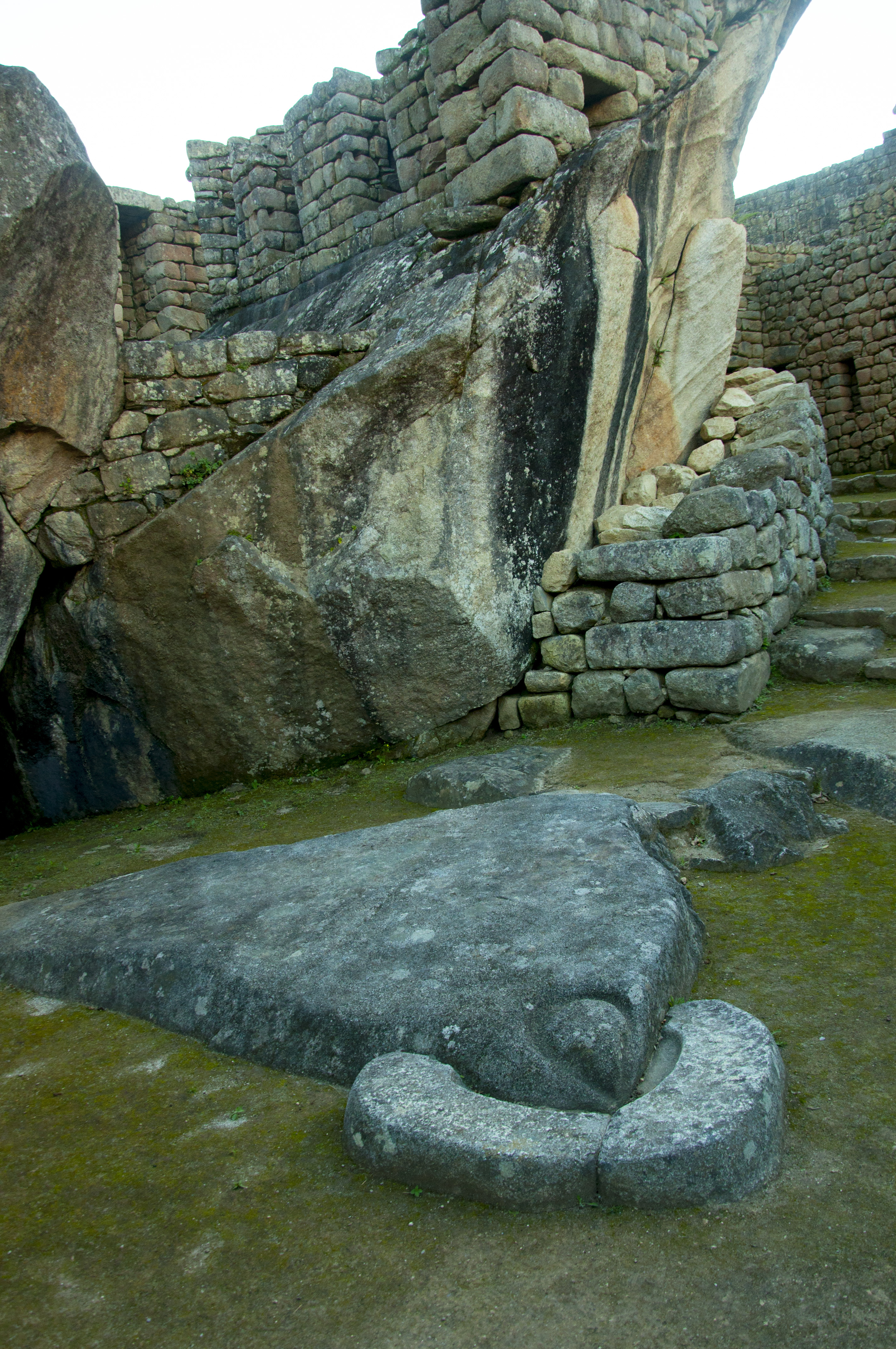 Temple of the Condor. The dungeons of Machu Picchu can be traced in the underground part of this temple.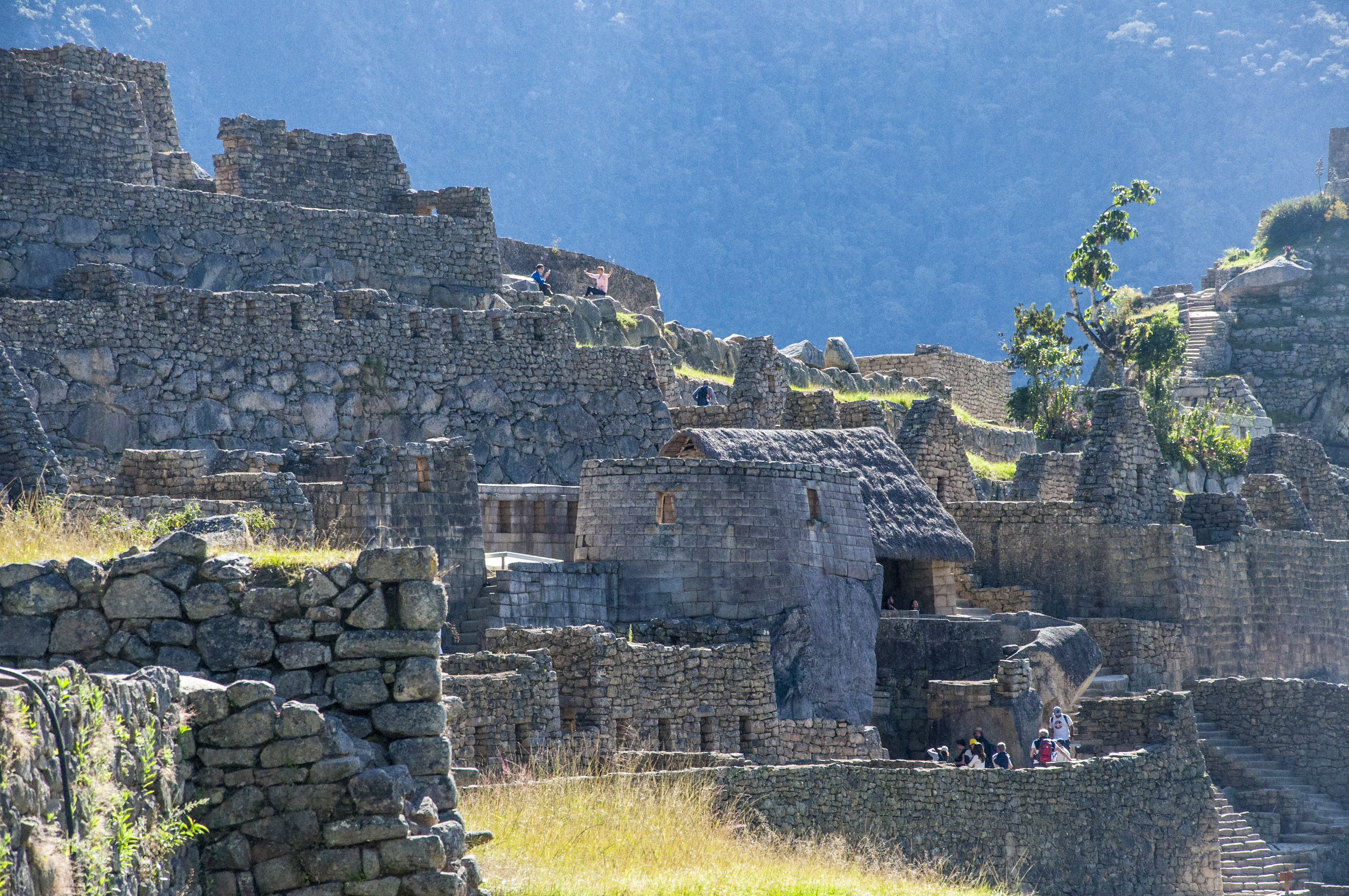
 The Temple of Three Windows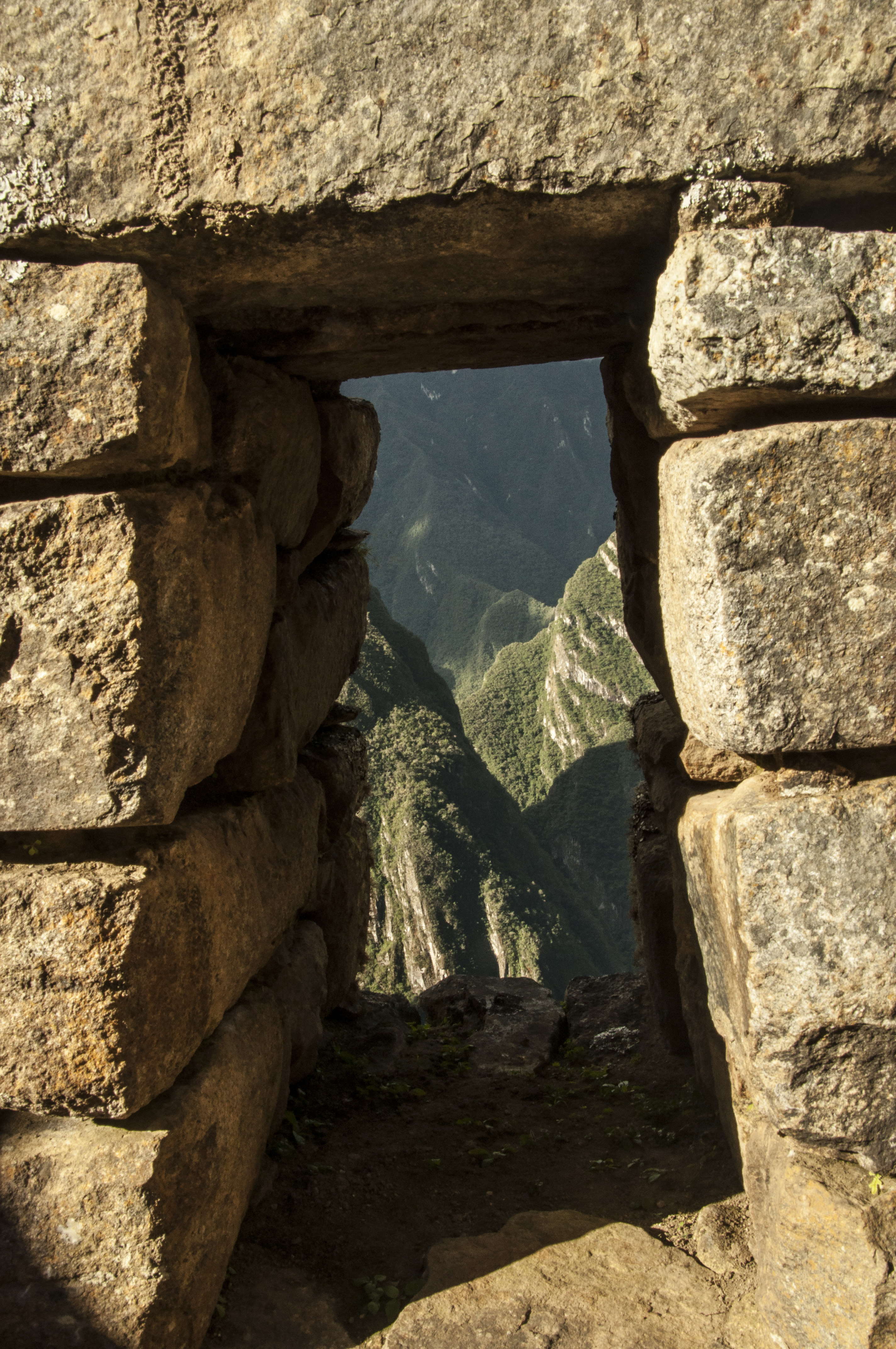
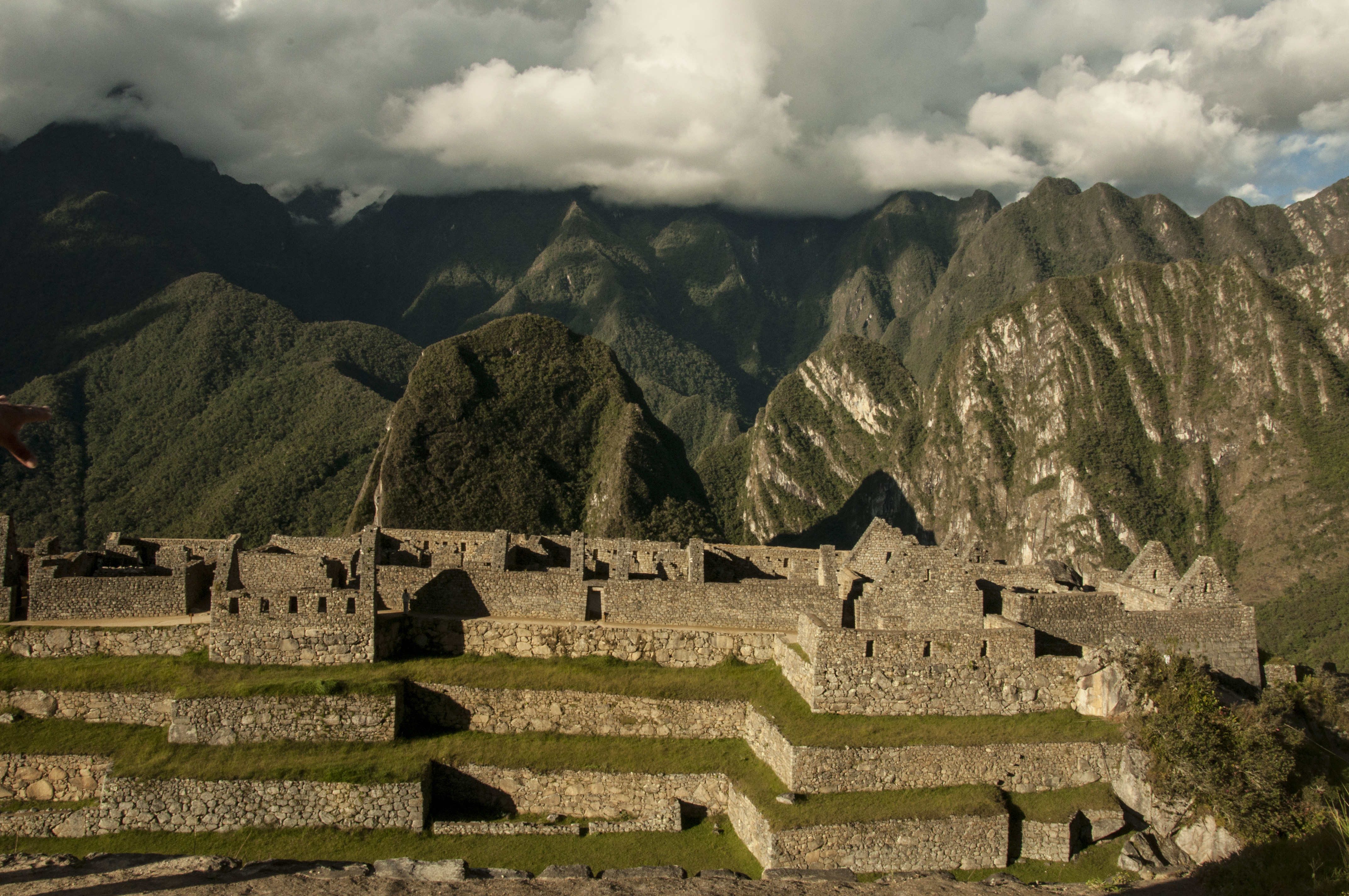 The so-called industrial sector where weaving and pottery took place.
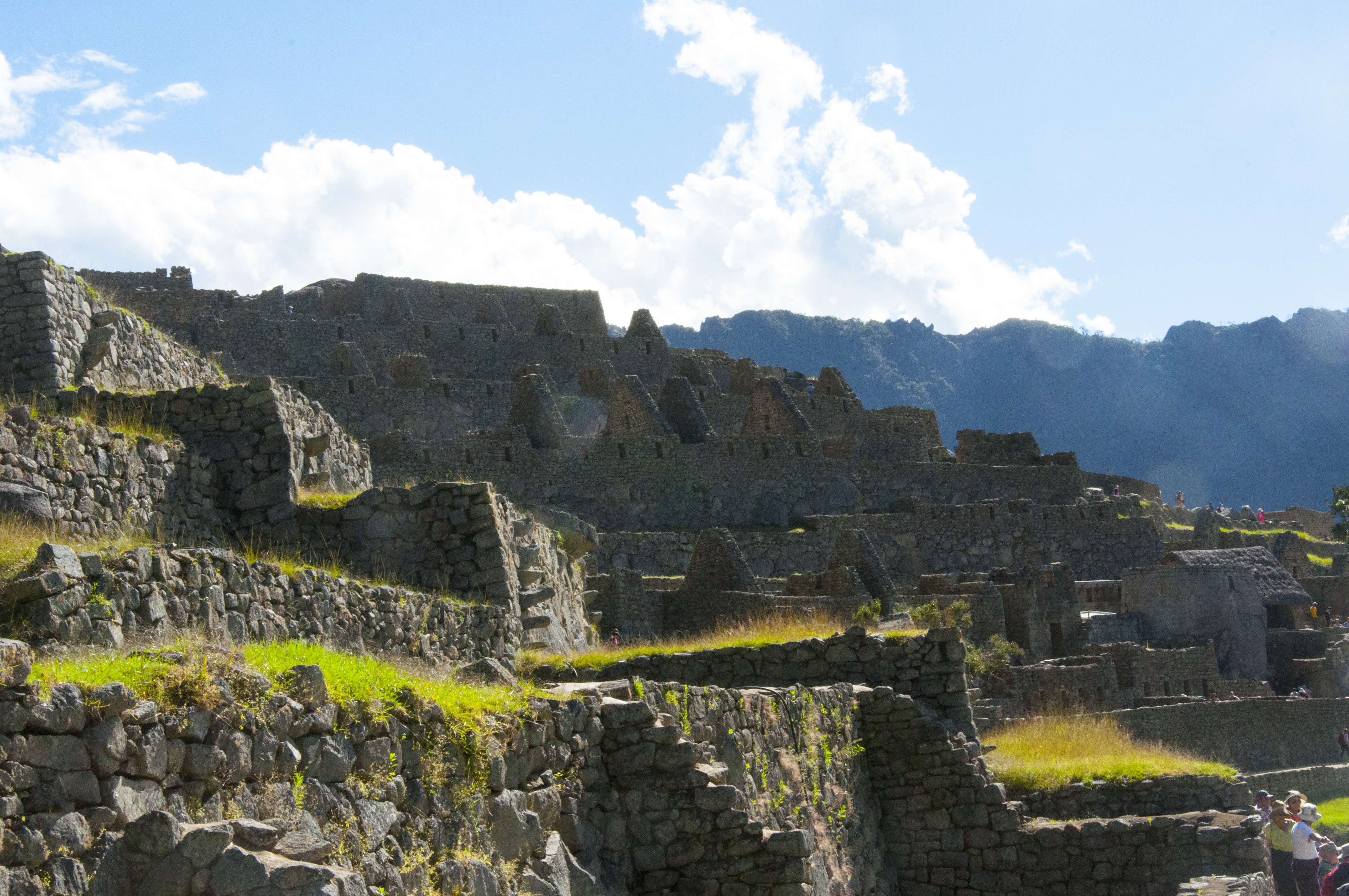 Ceremonial Baths.
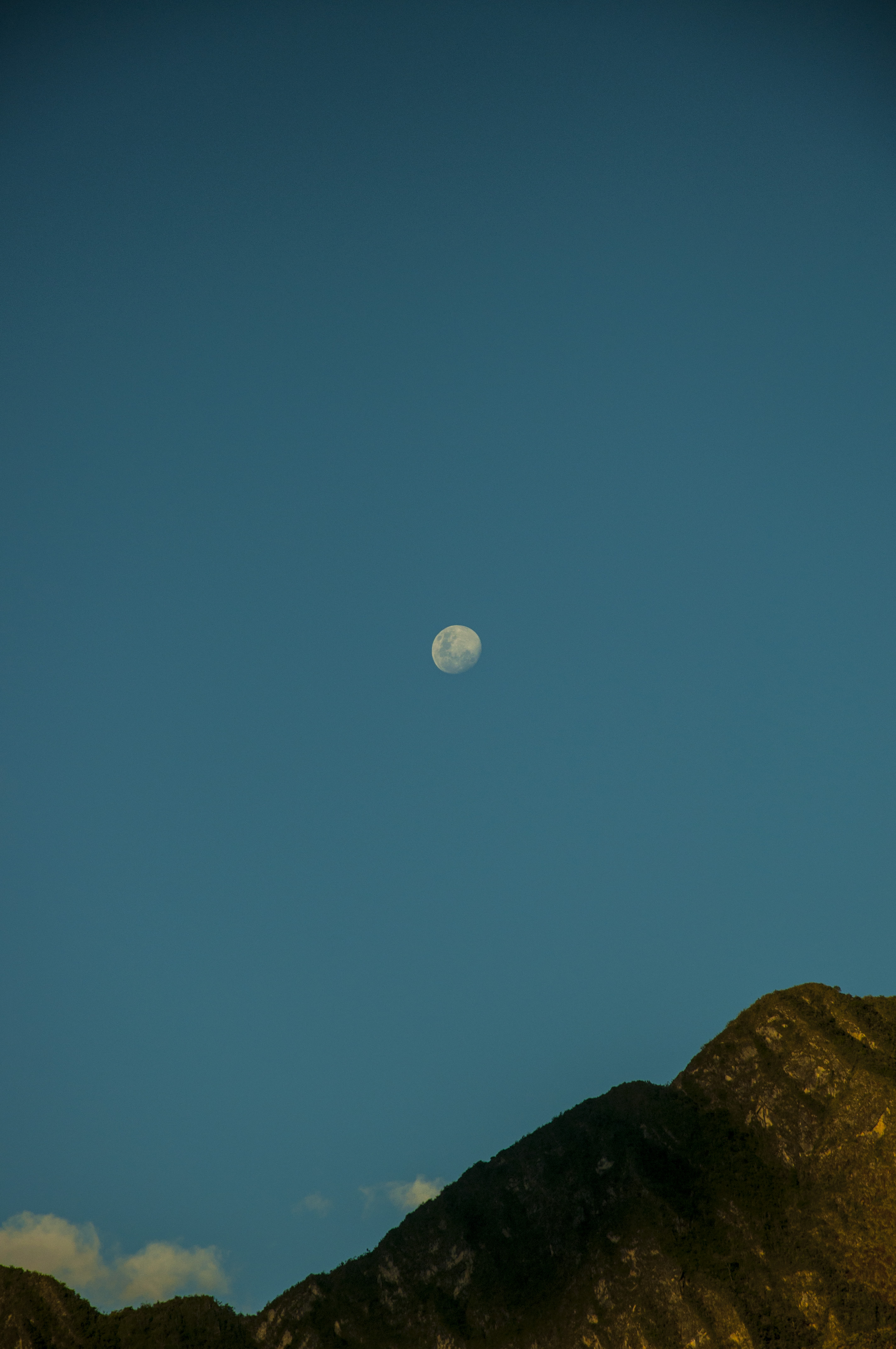 We were the last to leave as the moon made its appearance.
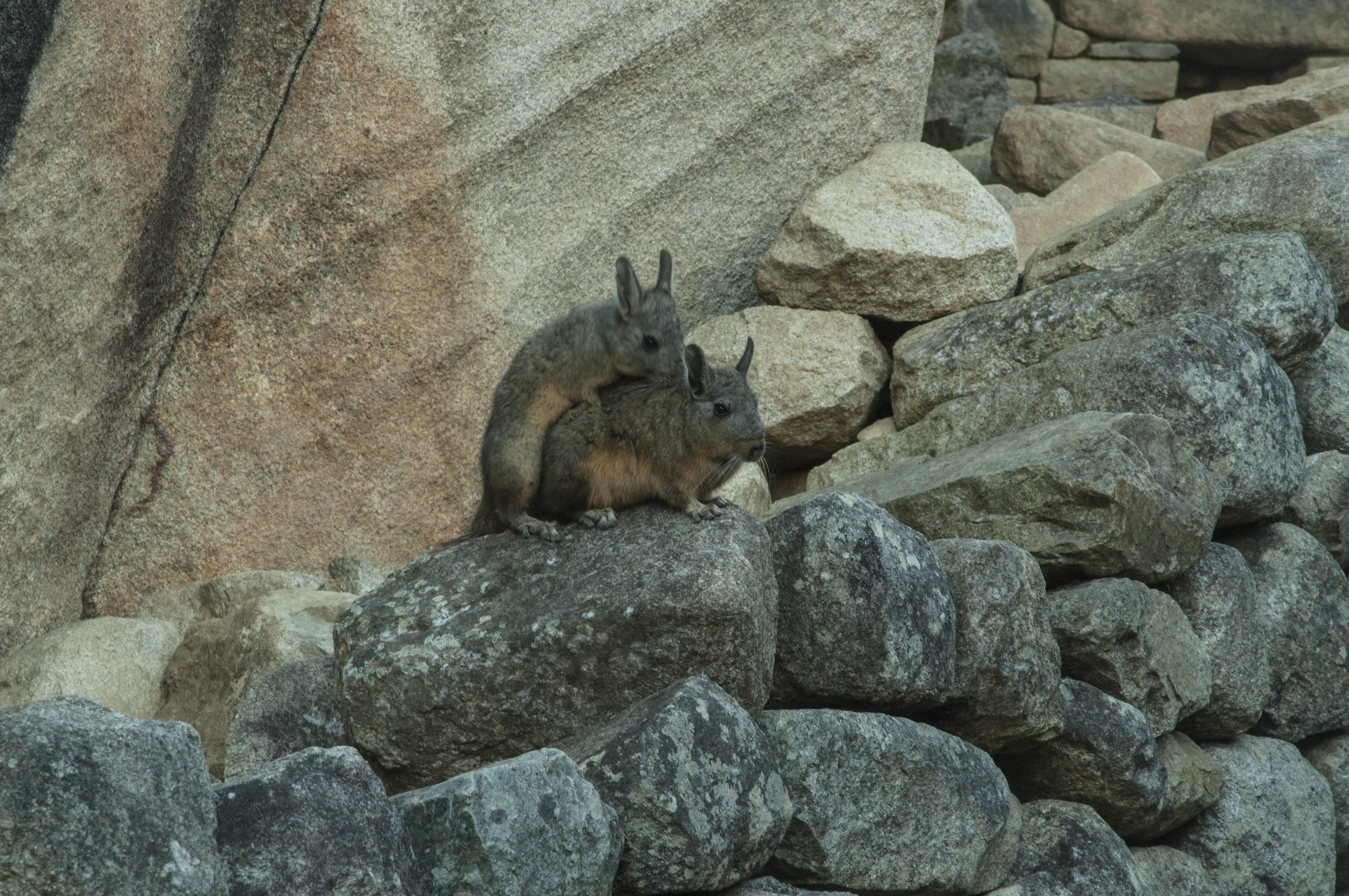 And two chinchillas began their nightly ritual.
 westwardhowithapollo
Very impressively. Great photos.