The different communities that make up Cuzco express their Spanish and Quechua identities through costume and dance. Groups make their way down the city streets and end up at the Plaza de Armas where the statue of Pachacuti reigns.
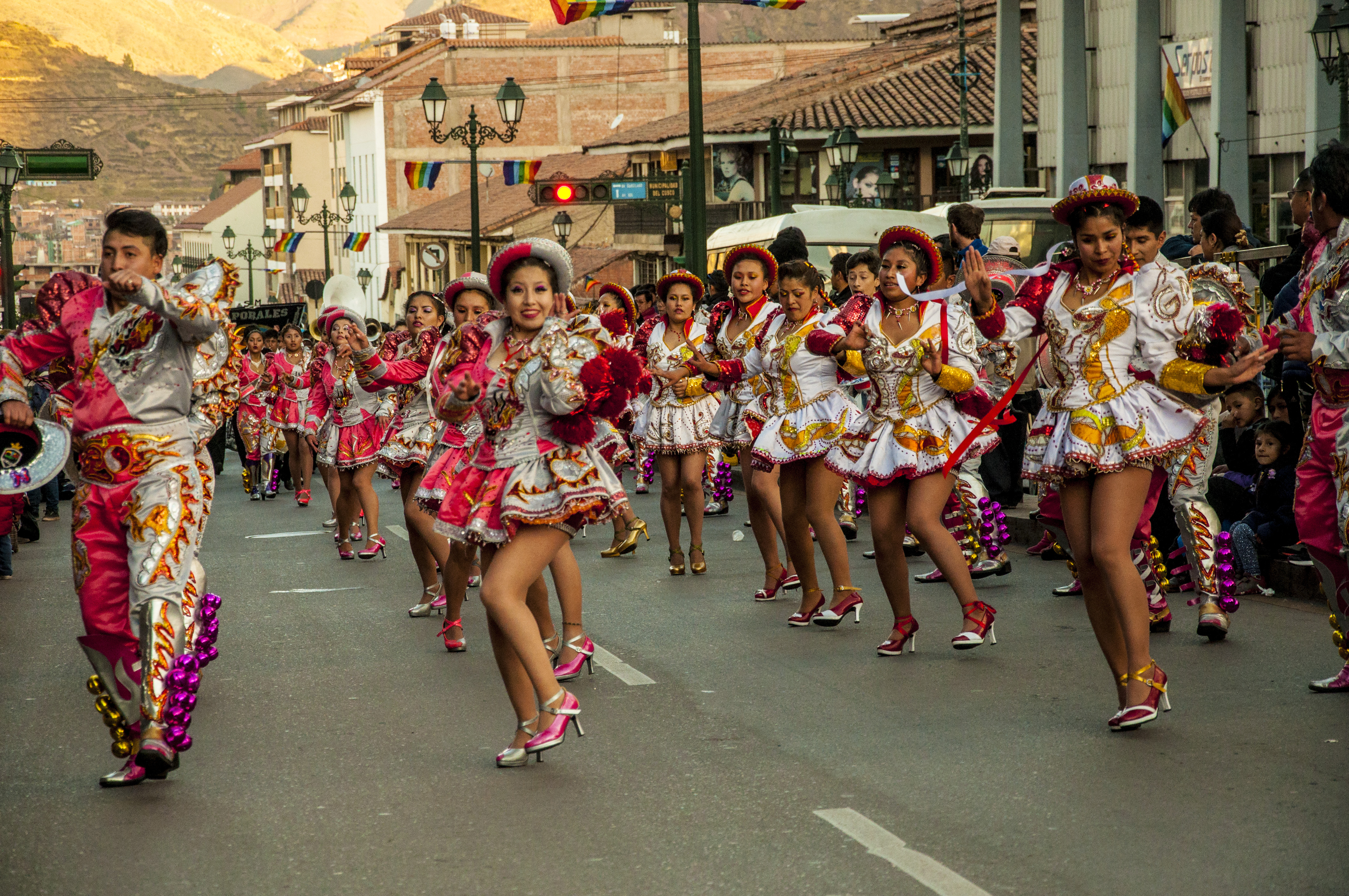
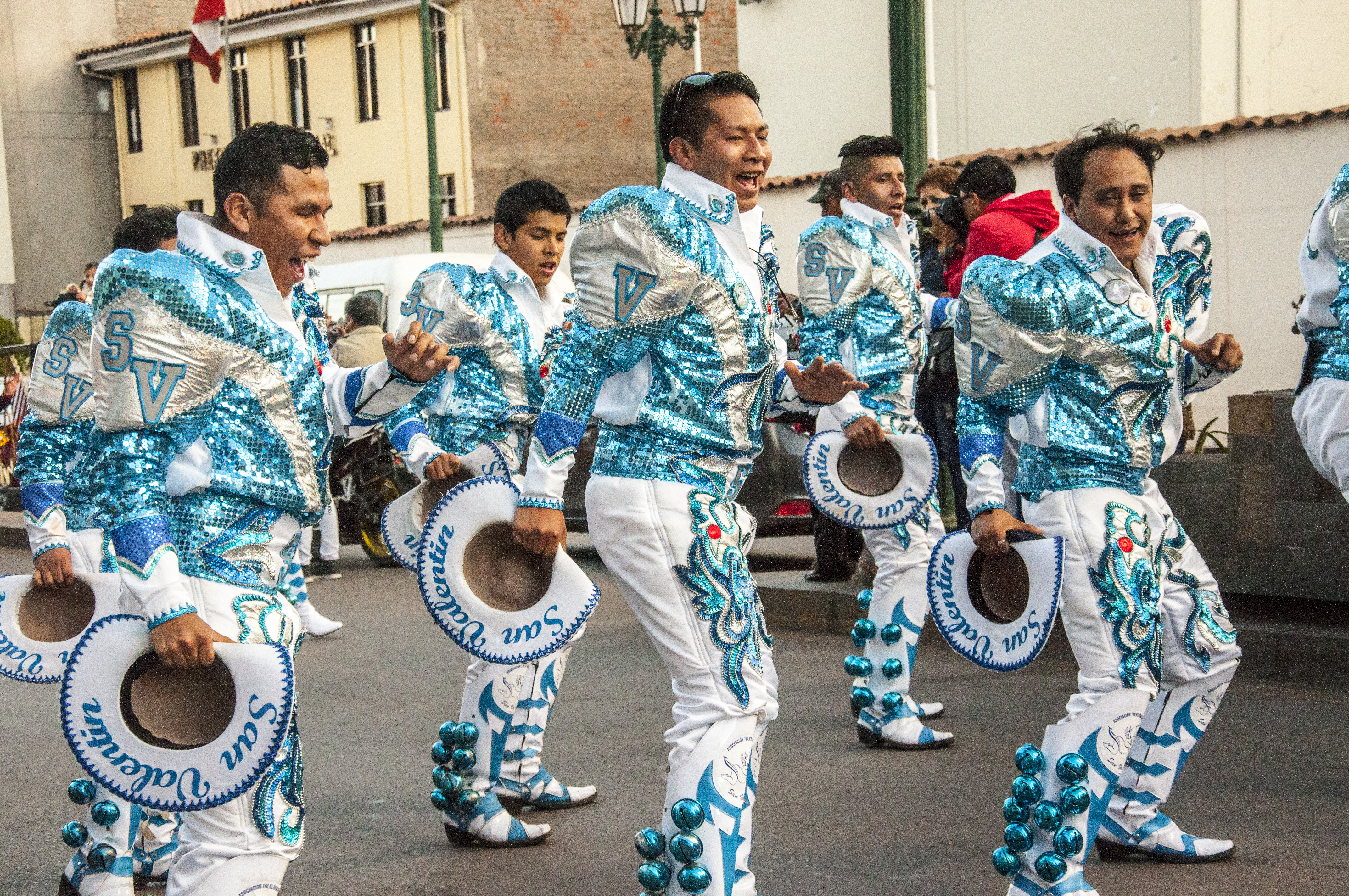


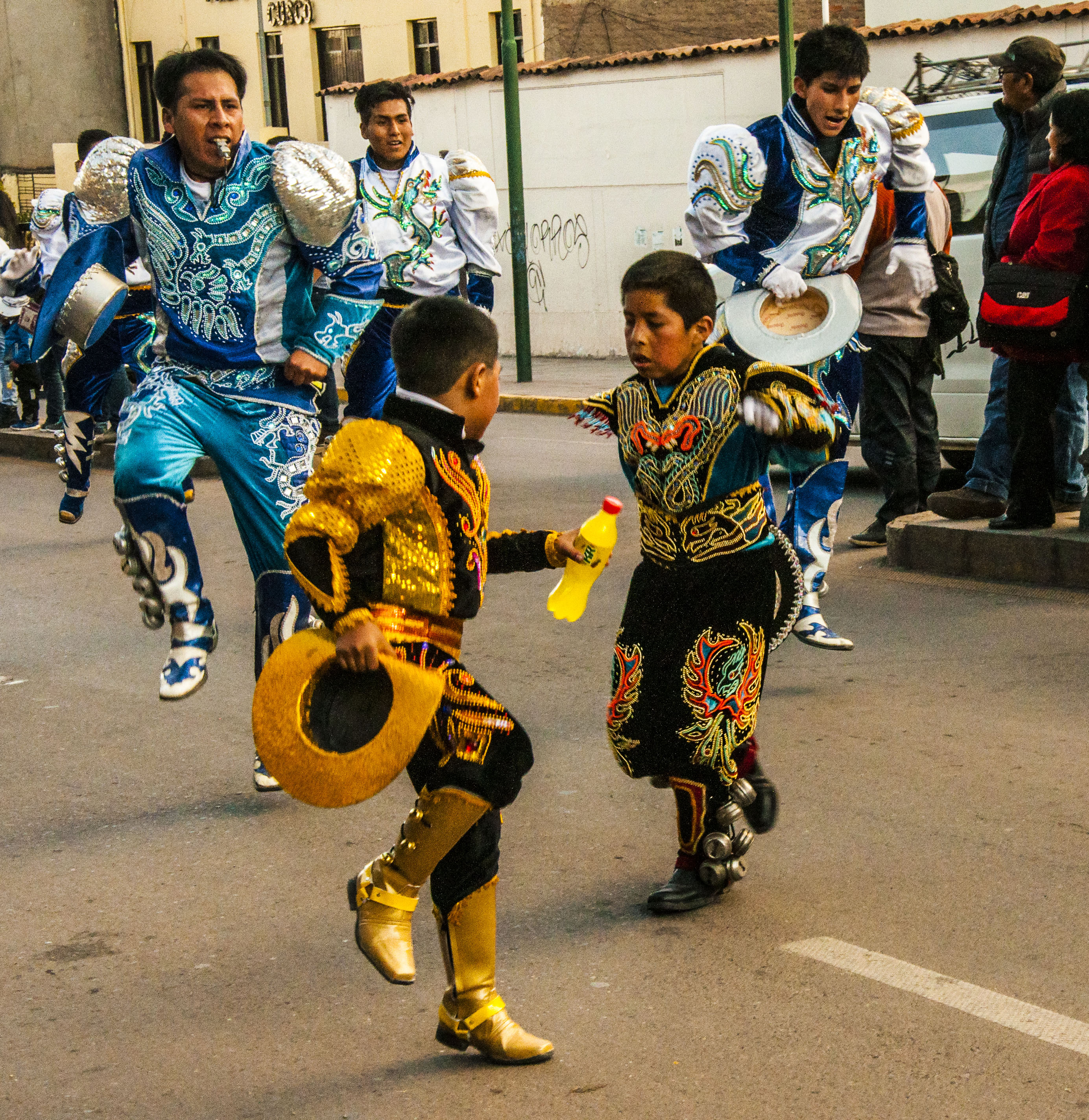
Quechuan children arrived from villages all around Cuzco.
 A mother adjusts her daughter’s elaborate Quechuan outfit.
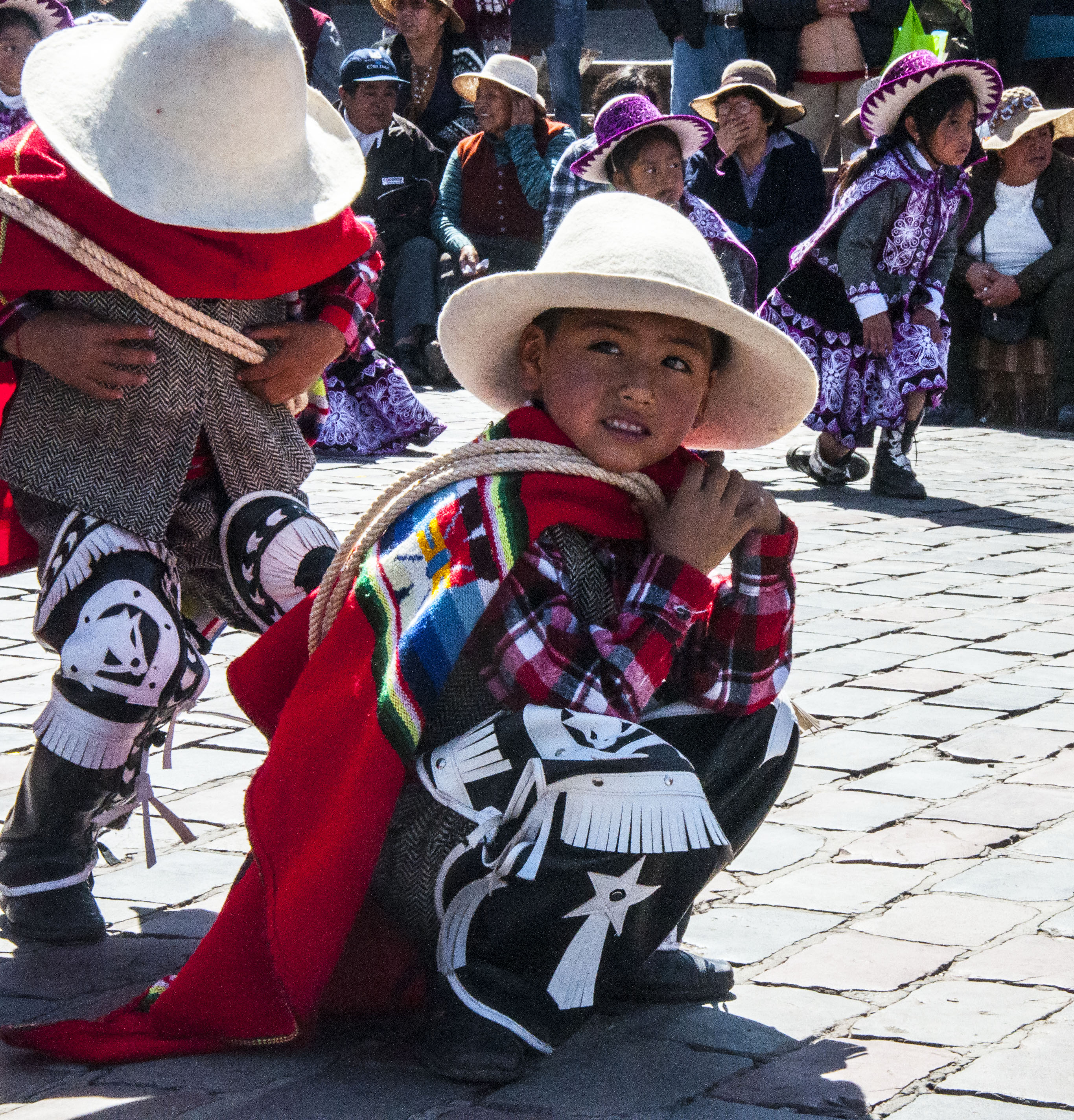 Dressed as caballeros, these little boys carry a lasso. The girls wore purple dresses and hats.
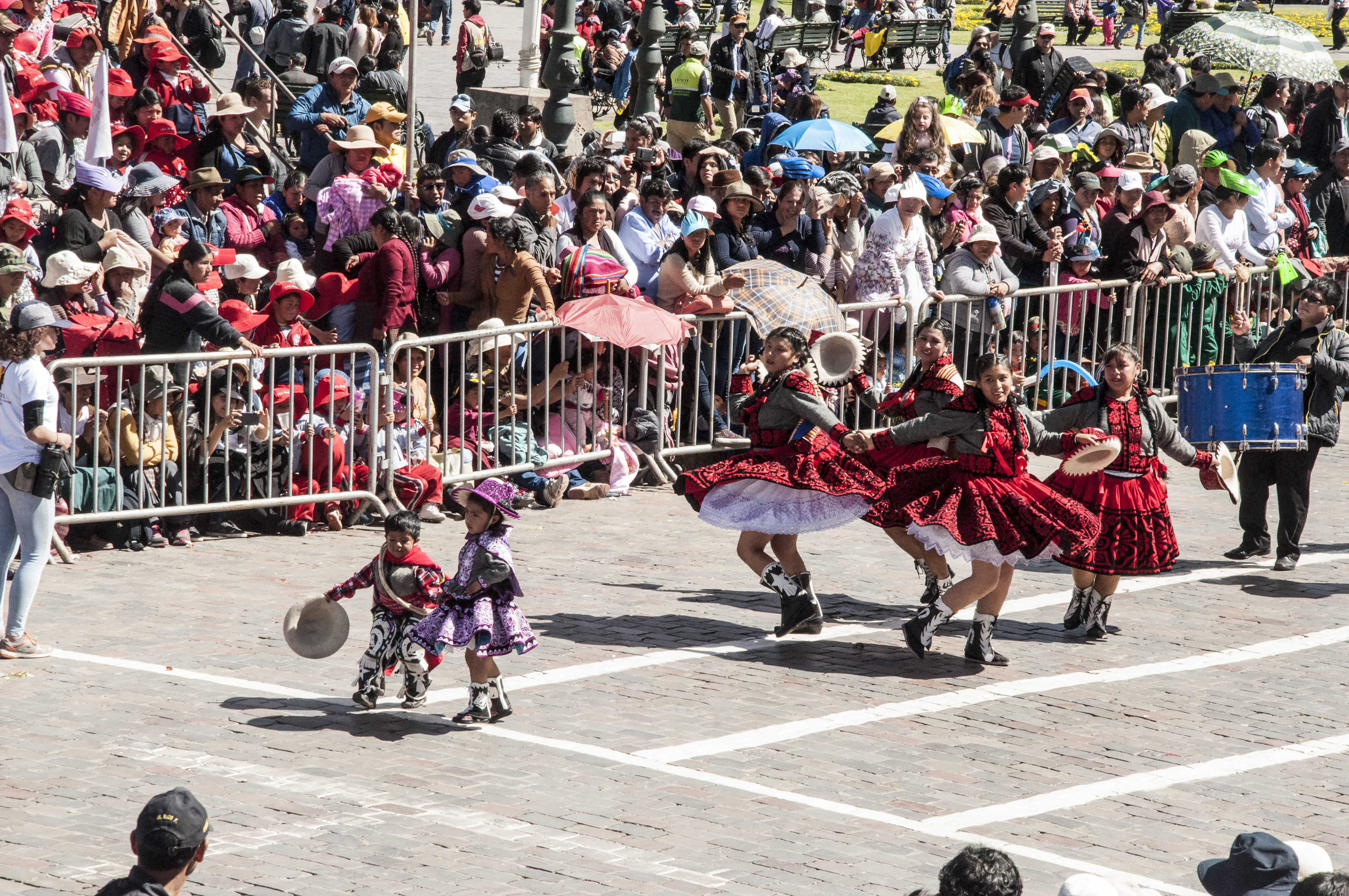 The young boys and girls are paired together.
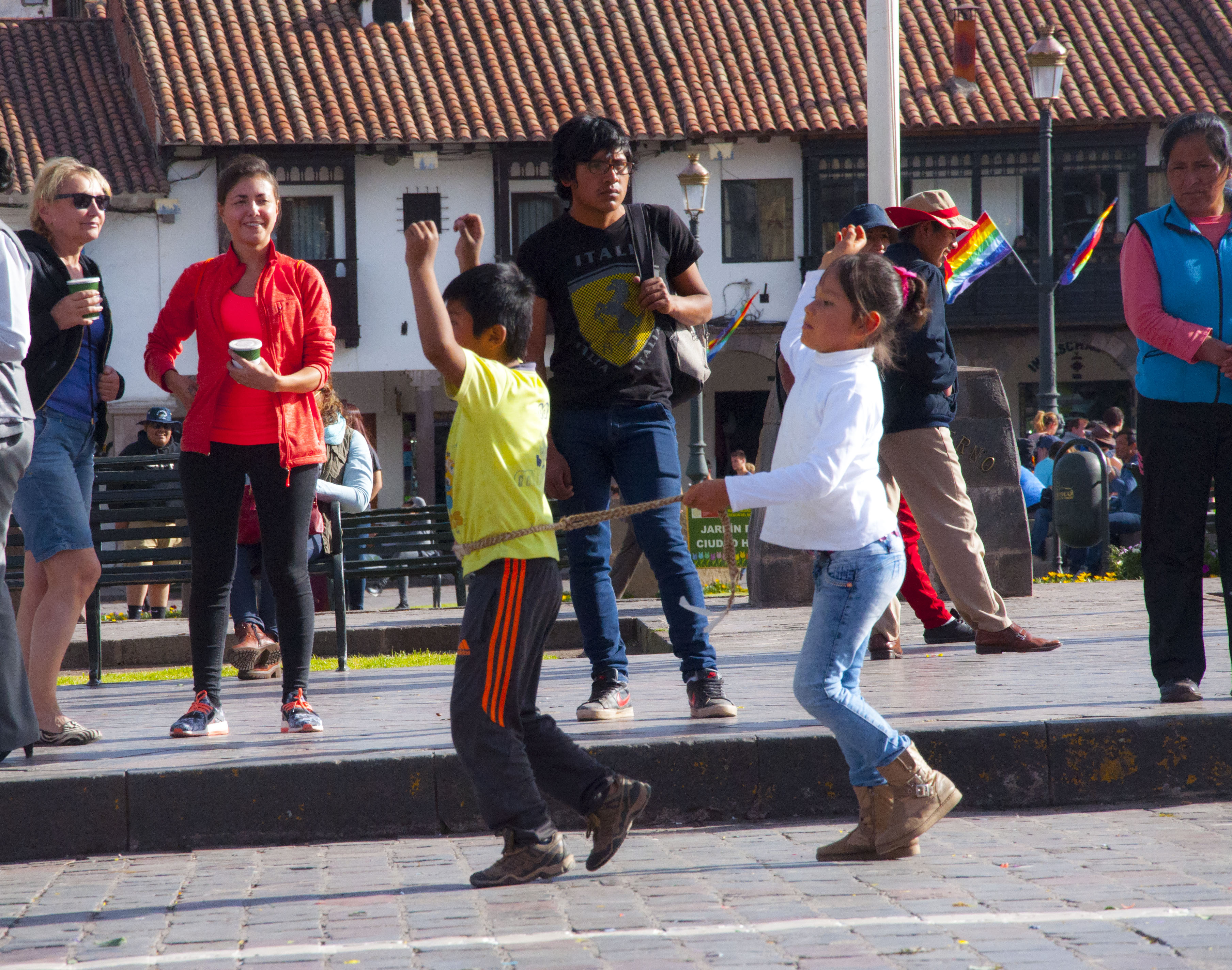 Here the girls tied a rope around the boys’ waist and trotted them around in a circle. This was part of a dance class and the children are in western clothes. Dress rehearsal without the dress.
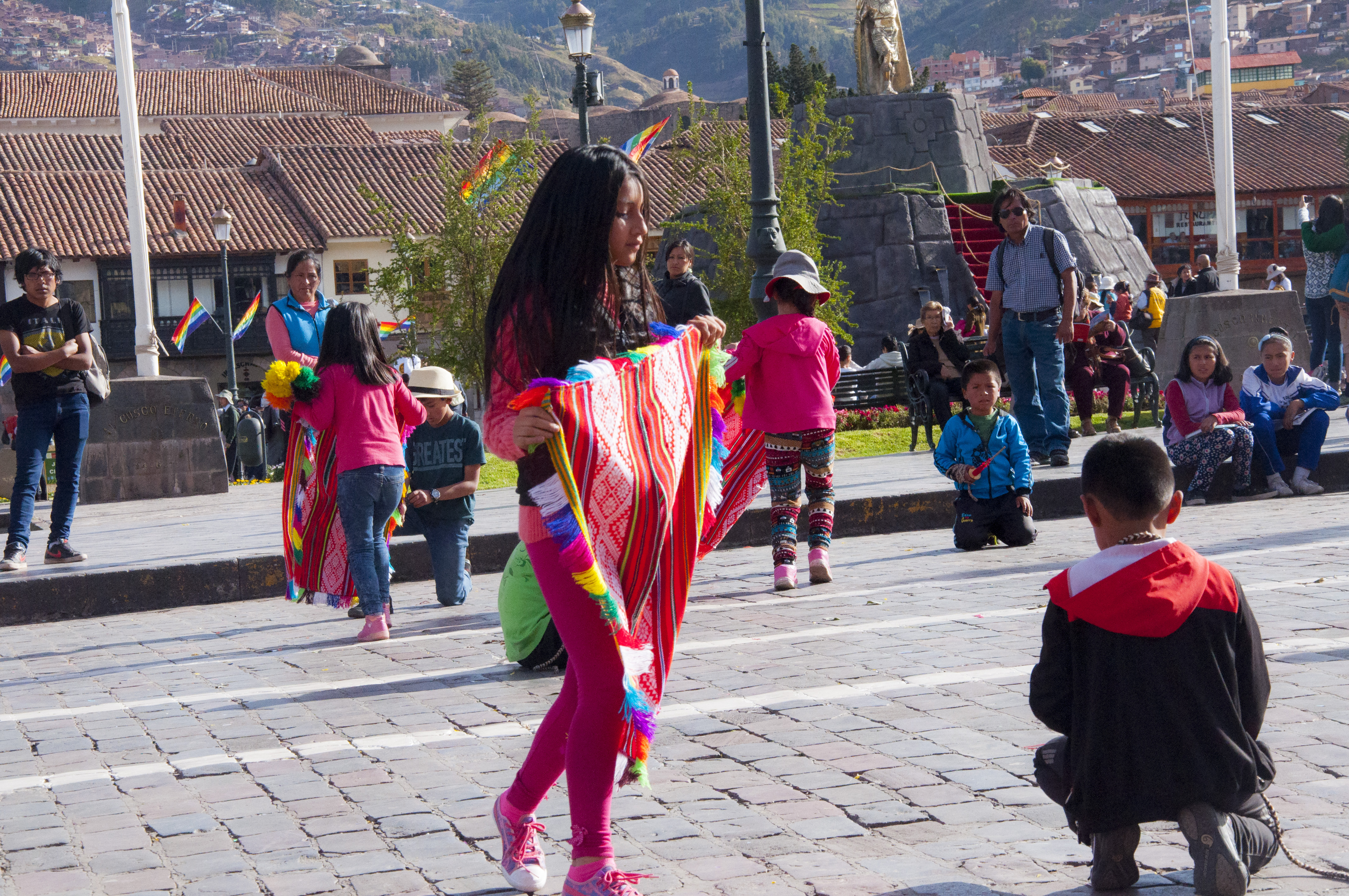 Girls danced around the kneeling boys carrying a serape.
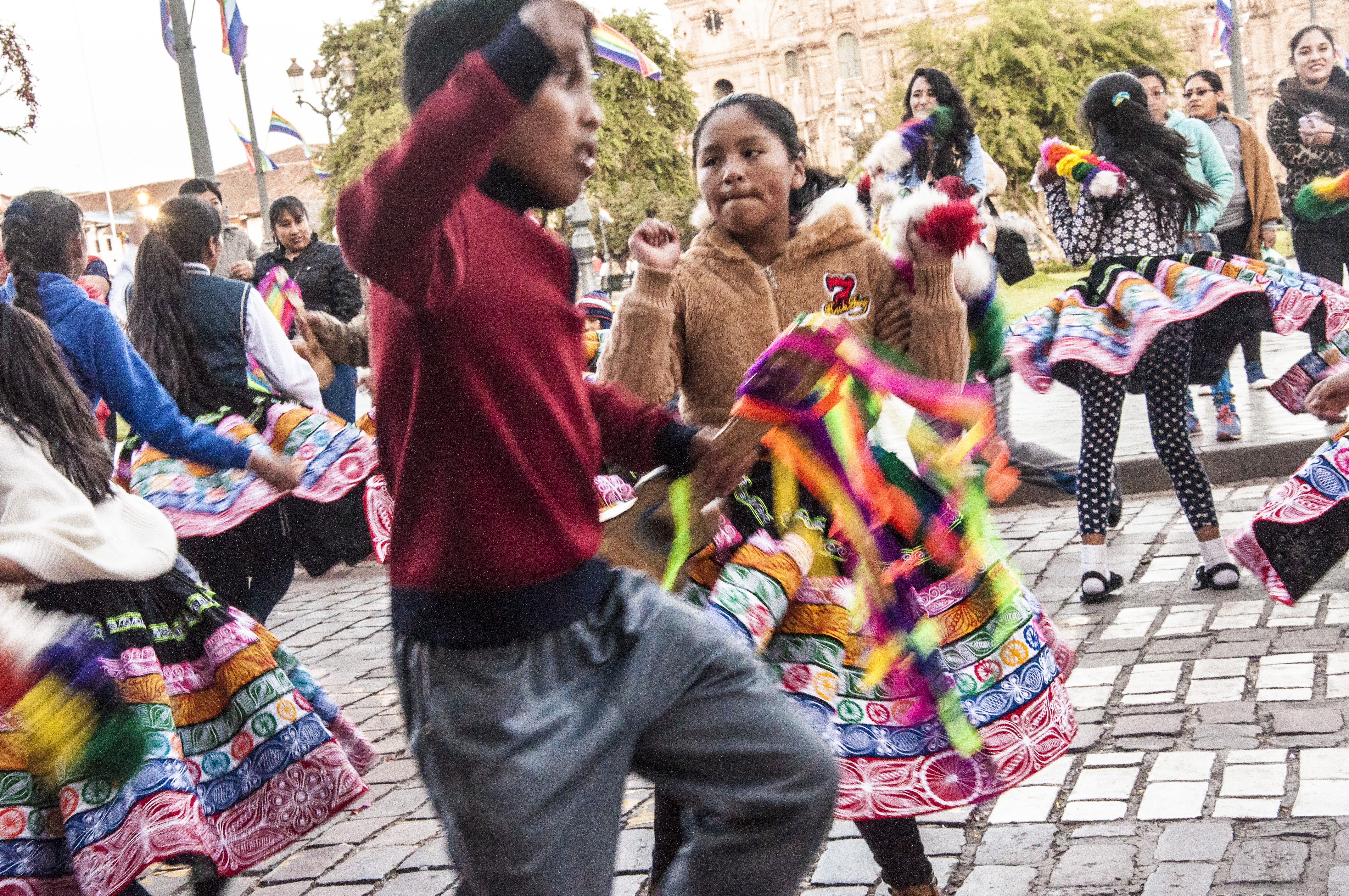 Older boys and girls were very energetic.
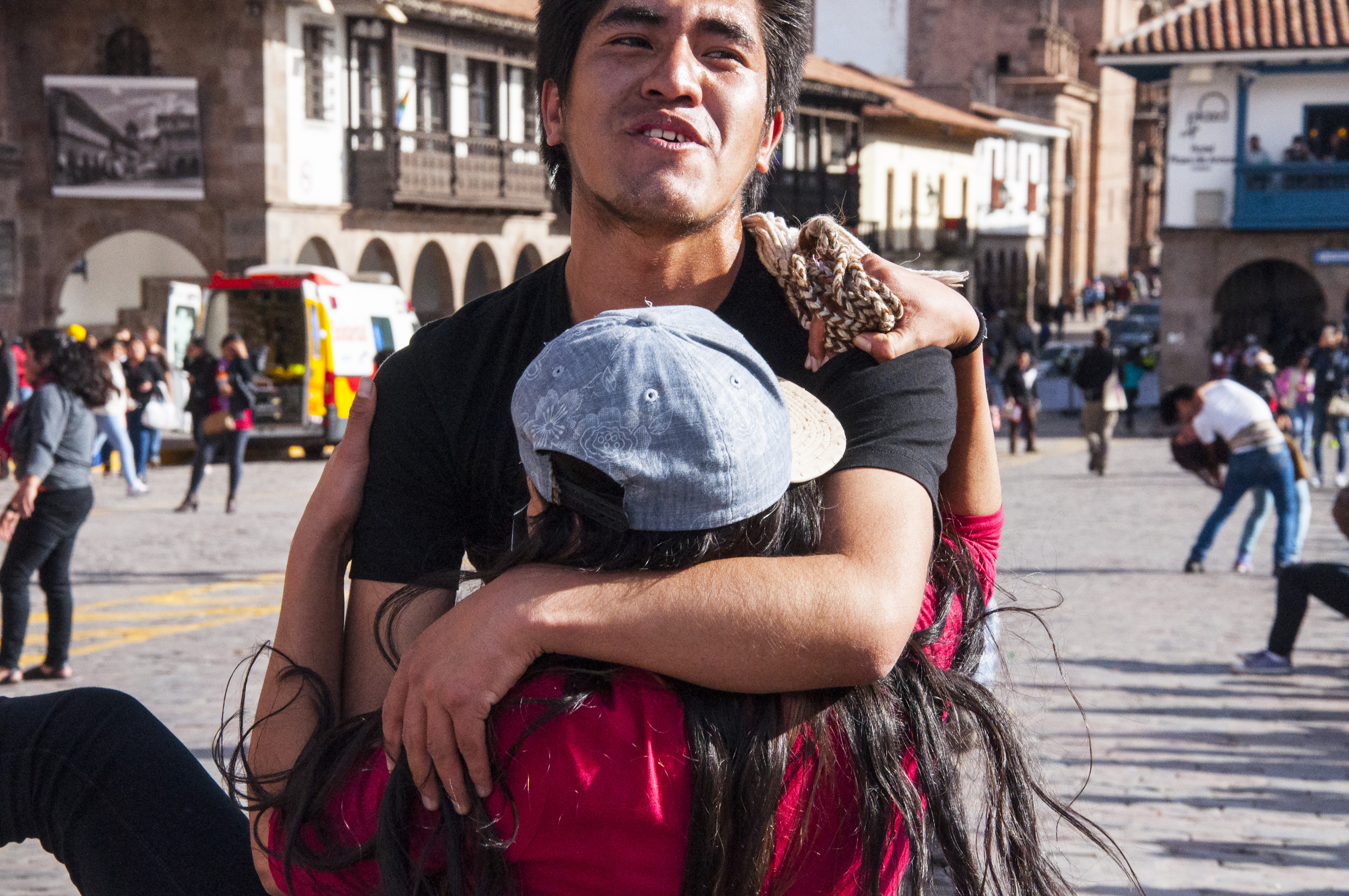 The teen-age dancers acted out a more explicit courtship routine involving hugging and kissing.
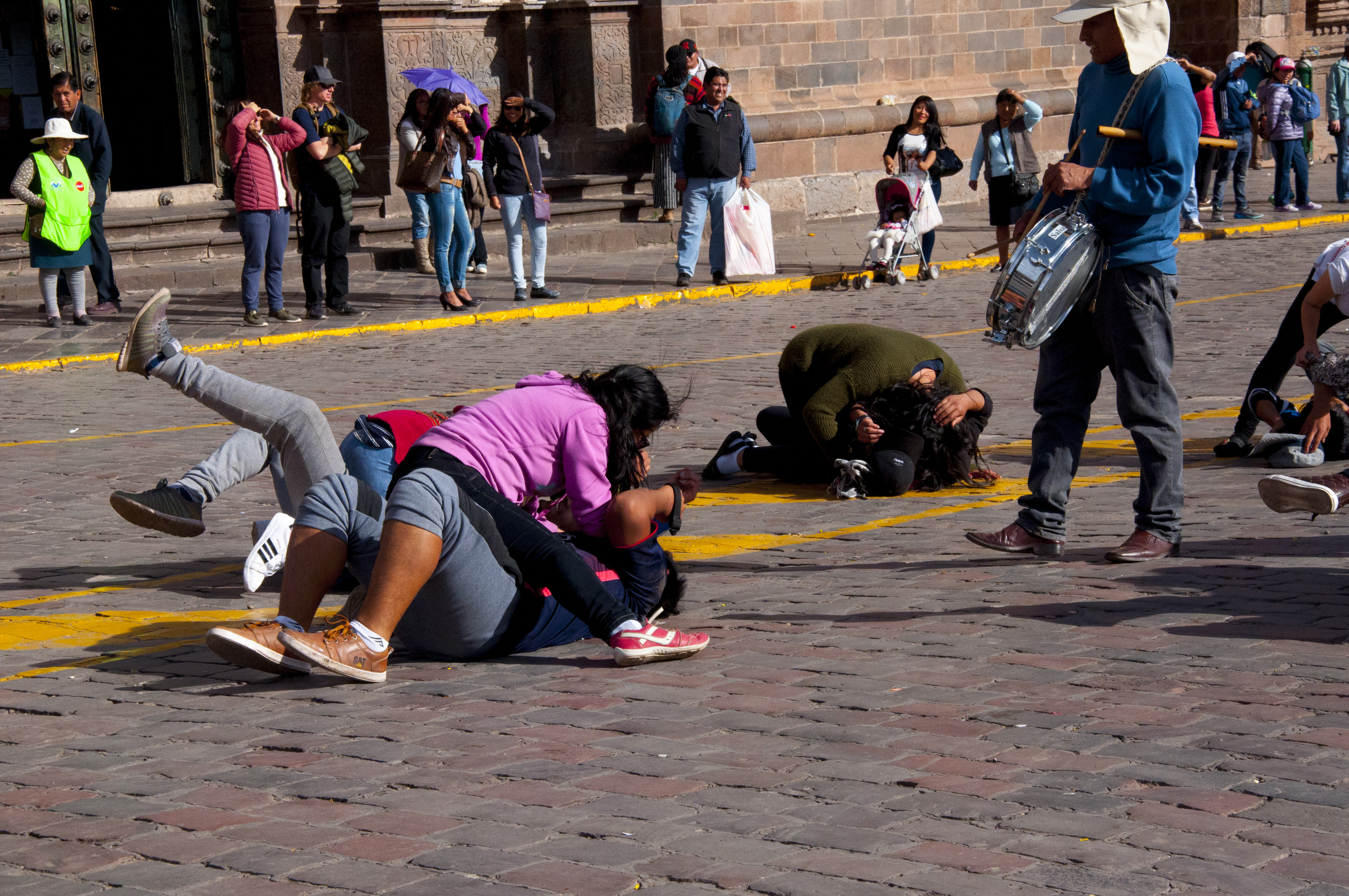 The dance ended with the girls pushing the boys down and sitting on them, to the beat of the drum.
The next day was Sunday and our last day. We followed the crowd from the Cusco Cathedral to the huge, bustling San Pedro market. Mostly everyone was in native dress.
 Crowd in the Plaza
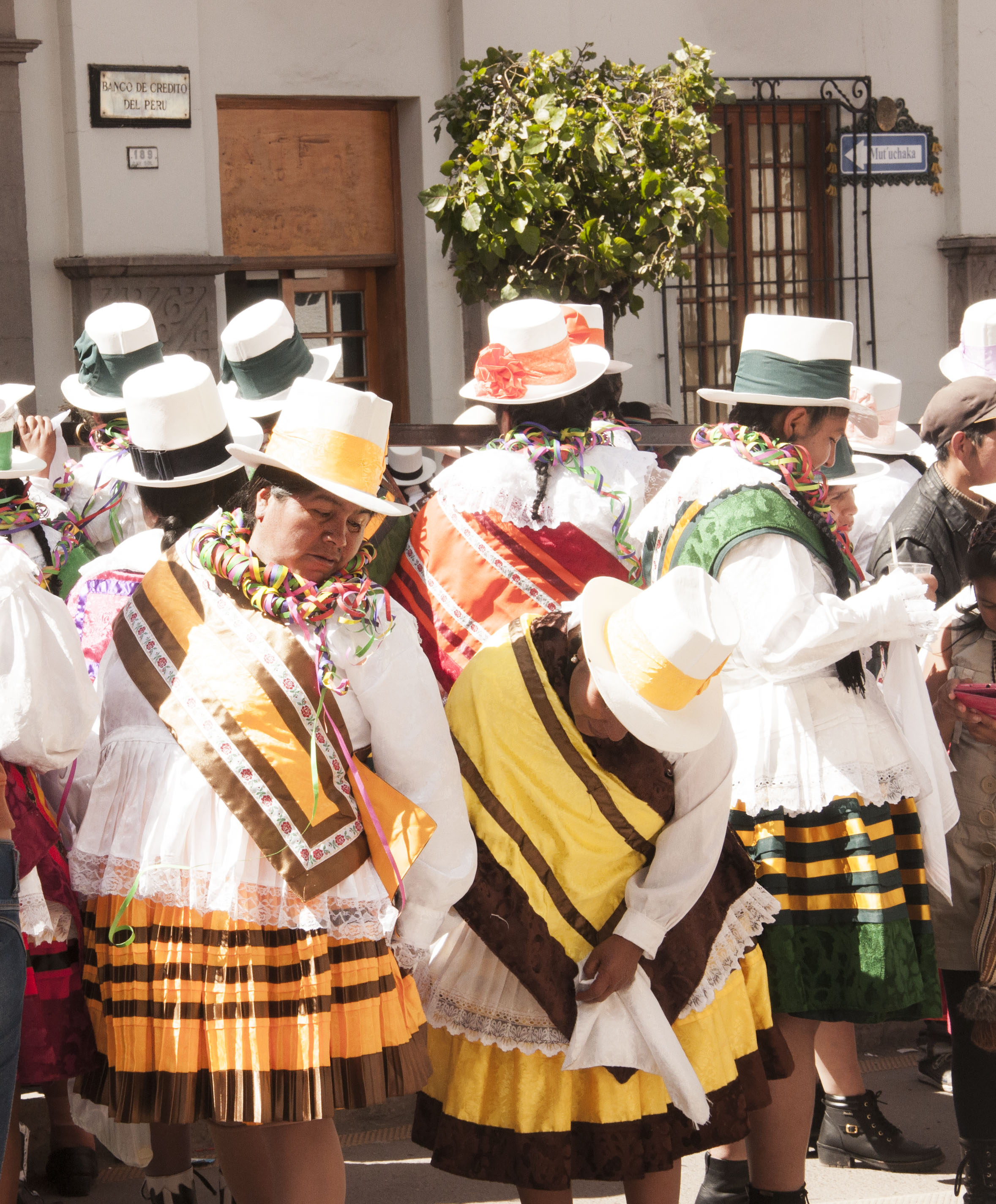 Standing on line to get into the market, these women are wearing the distinctive hat of the “independent woman”.
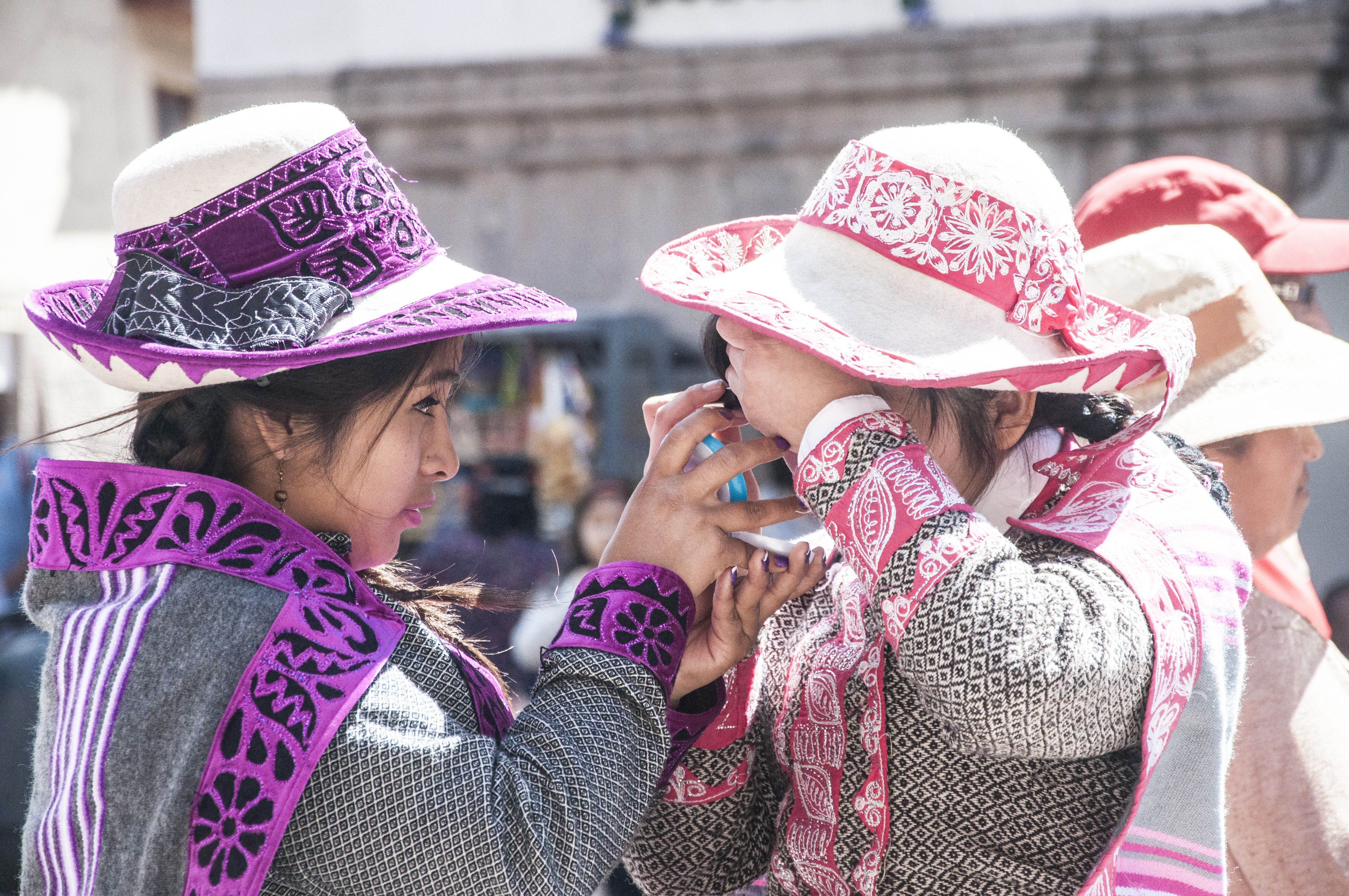 Young girls apply western style make-up.
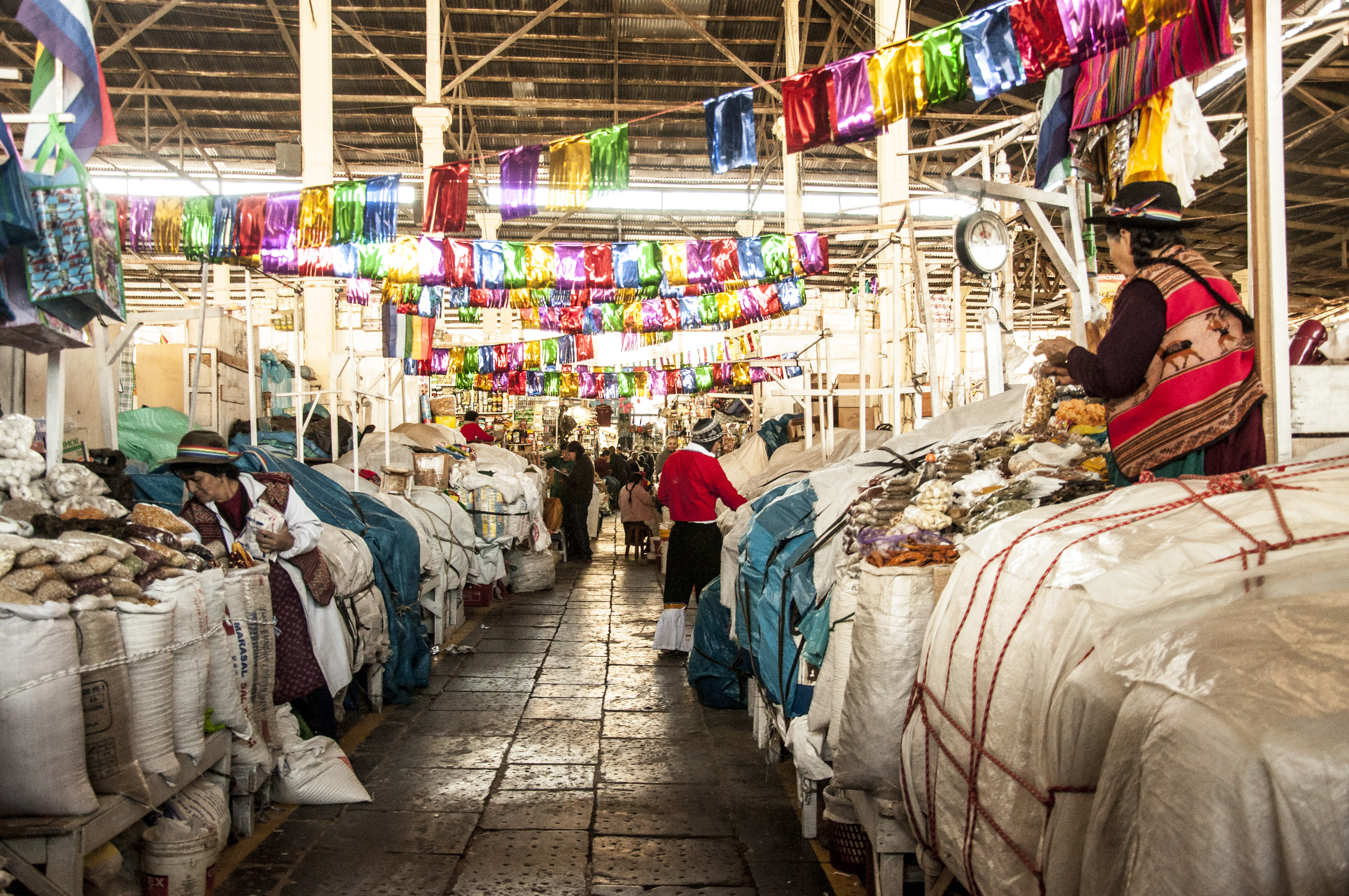 San Pedro Market
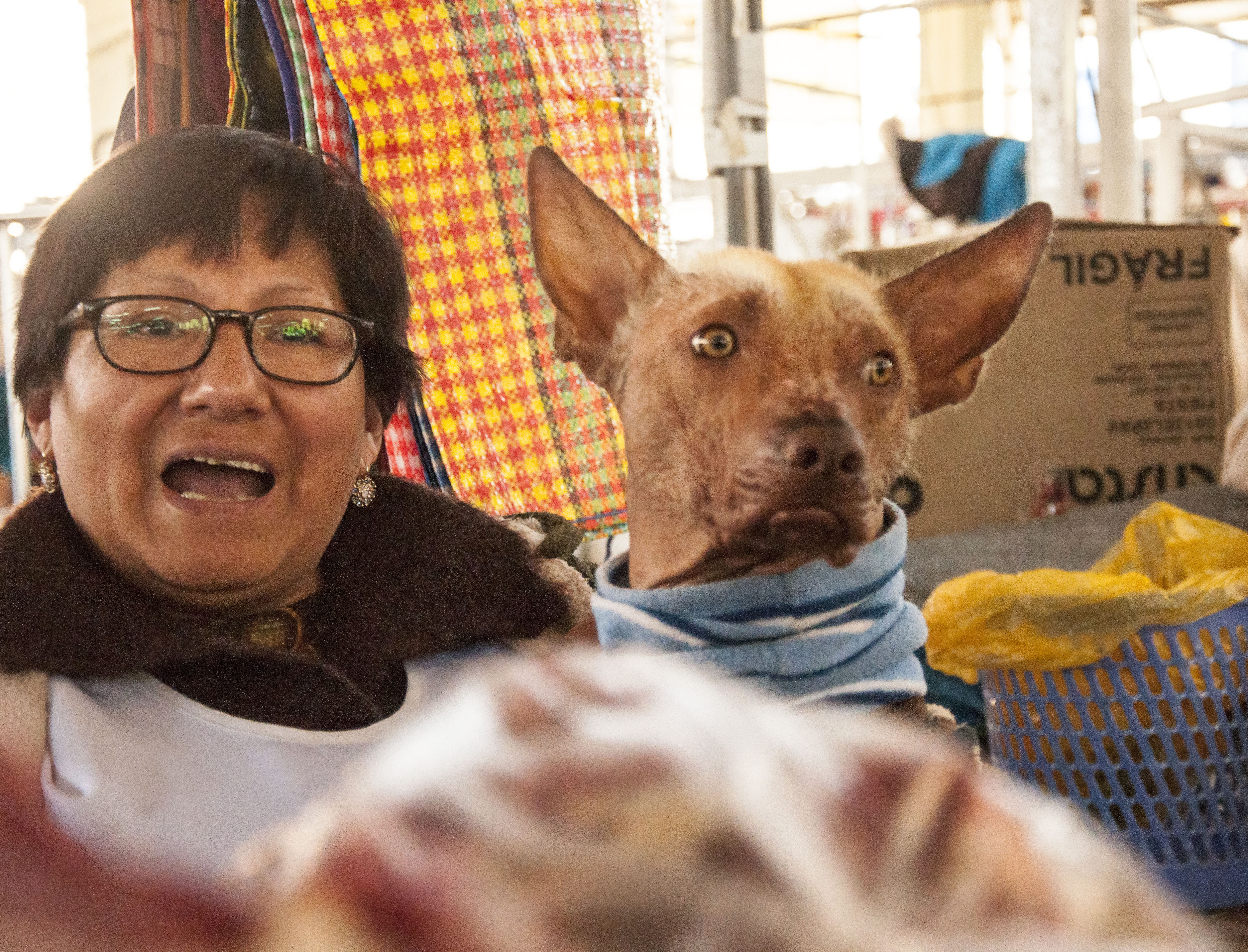 Woman selling meats explained,”My dog guards the bones. He’s wearing a turtle neck sweater because he gets cold from the ice.”
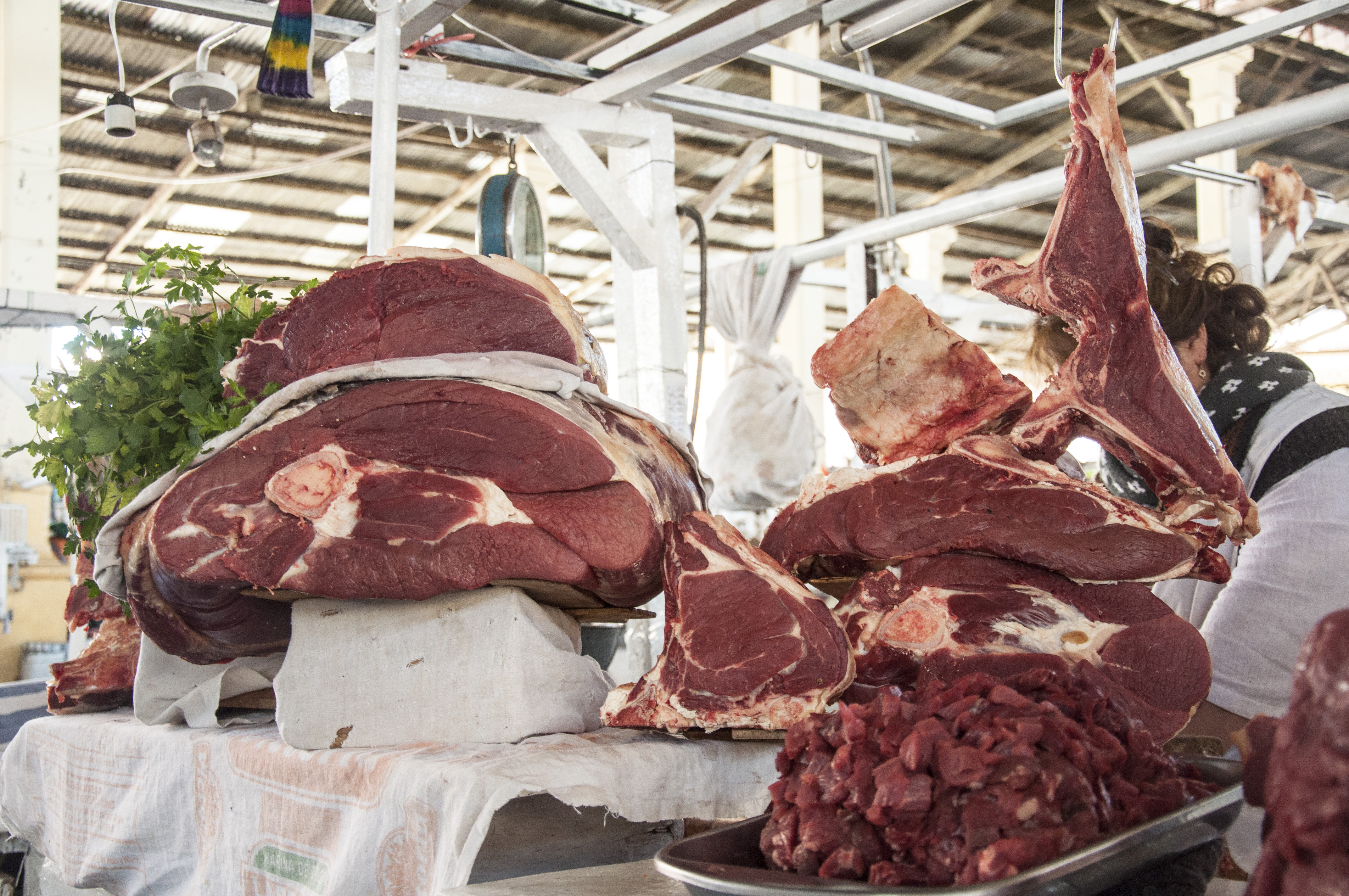 Popular meats are llama and alpaca served grilled, in stews and as carpaccio. Very delicious.
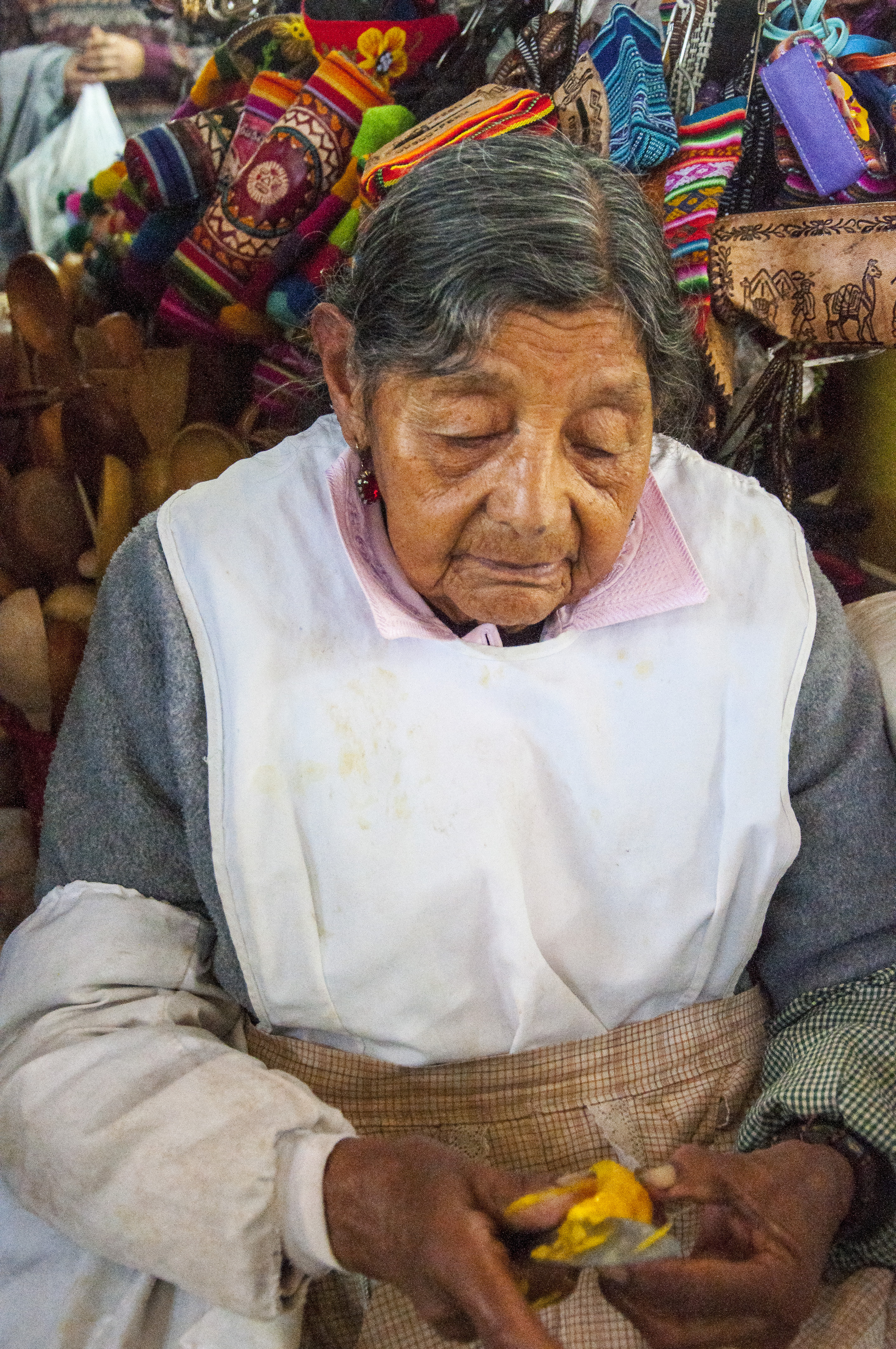 Woman peeling fruit.
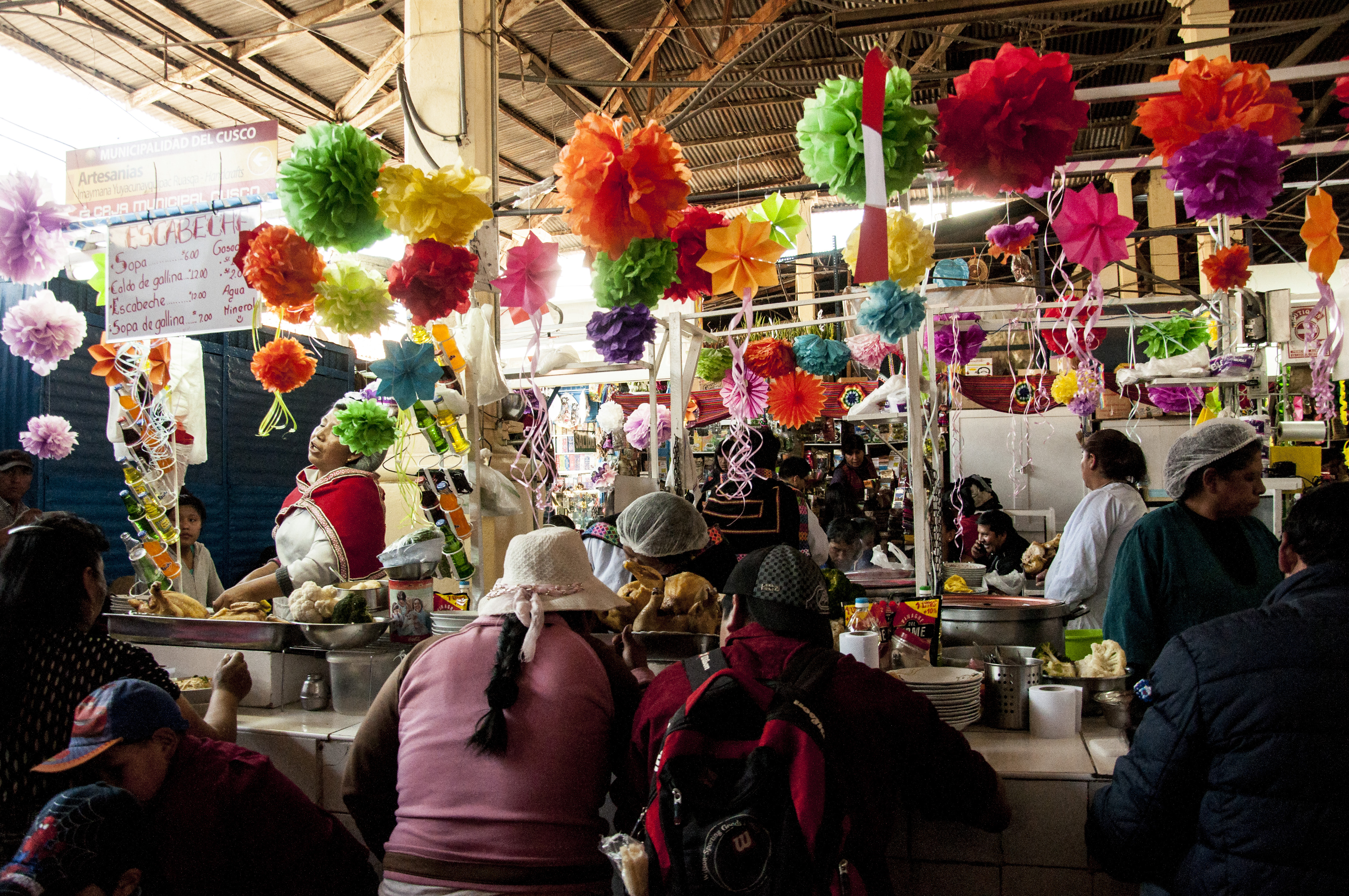 The soup bar.
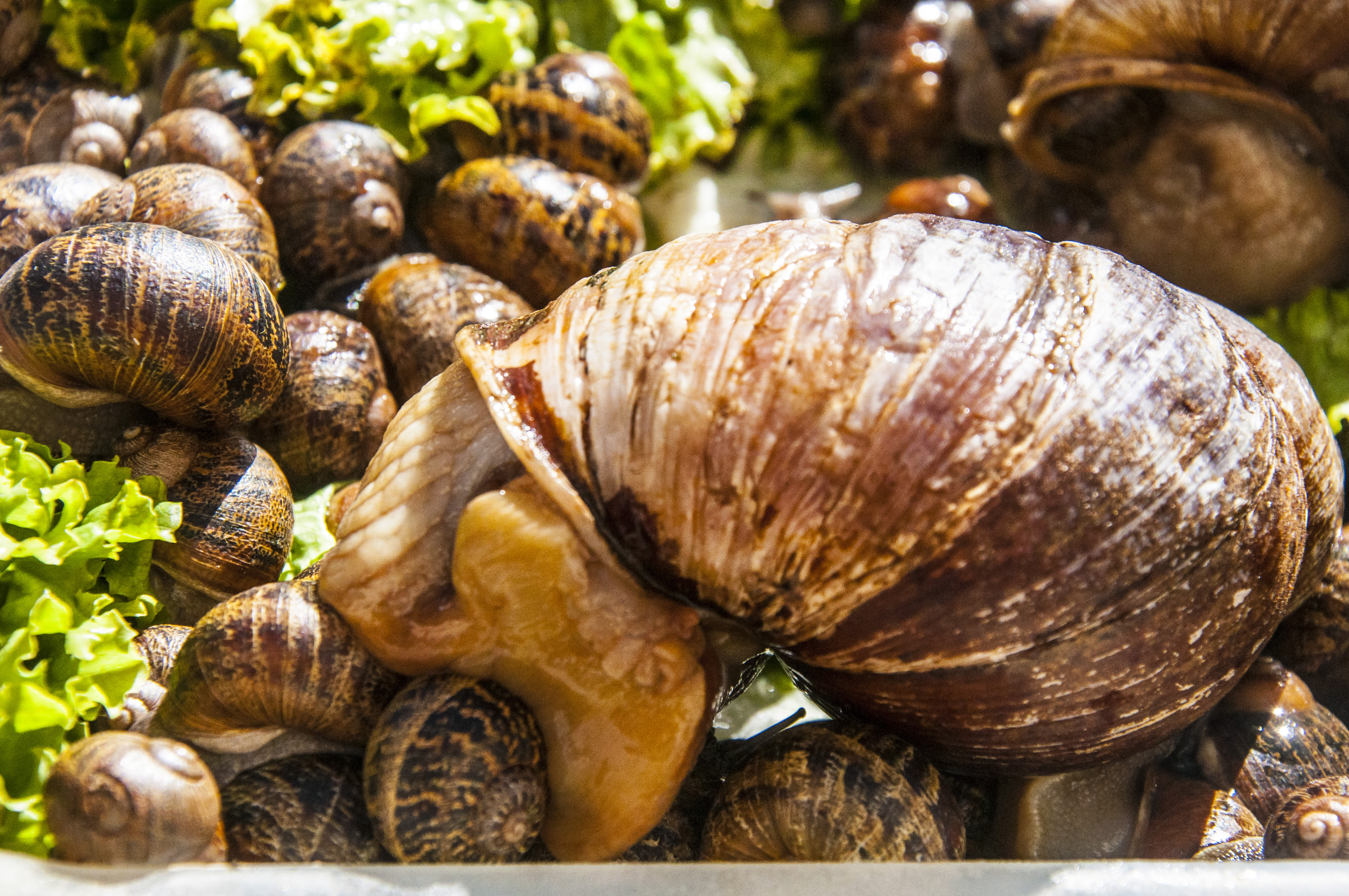 Giant snails are a delicacy.
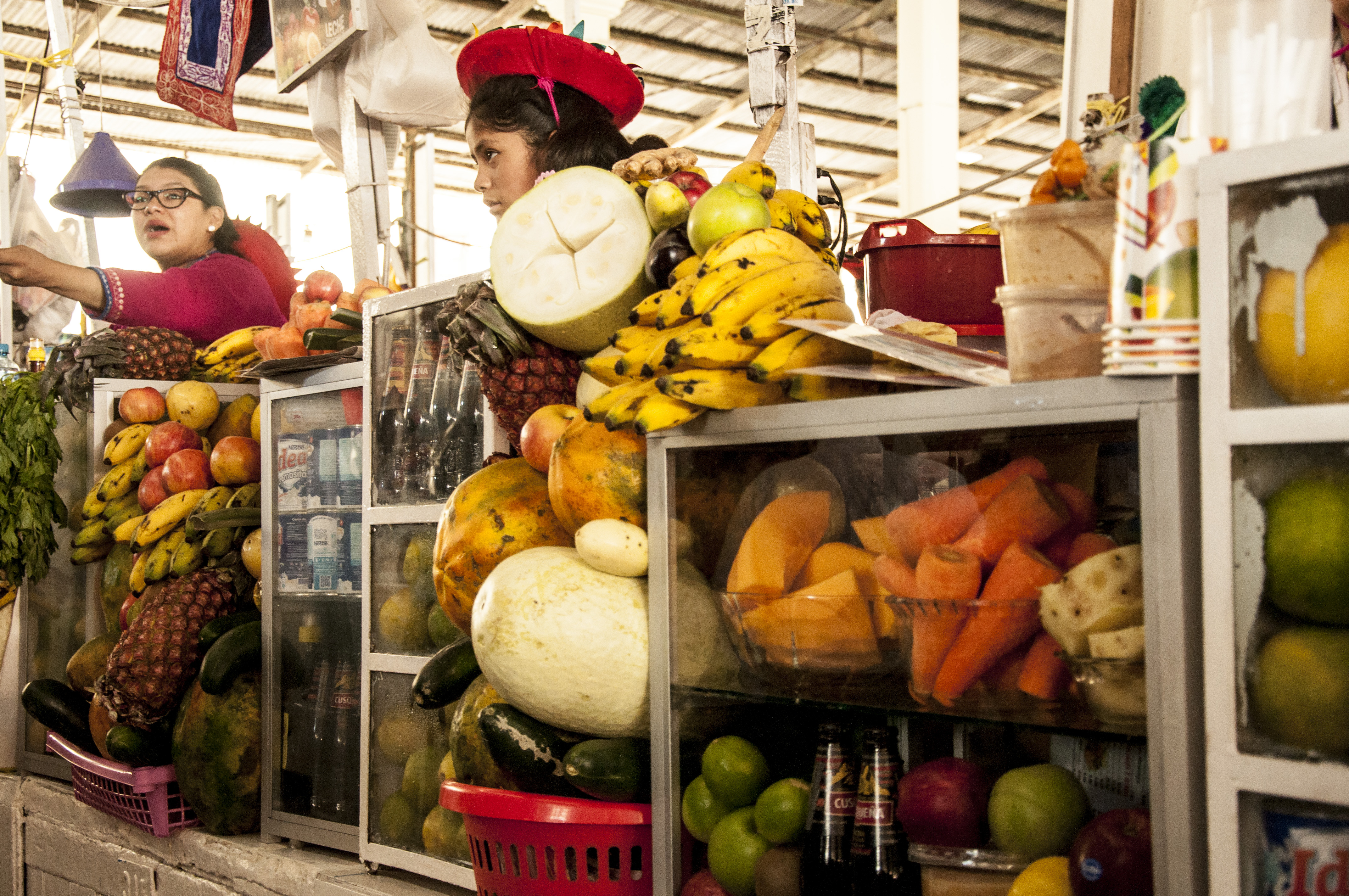 Women selling juices made to order vie for attention.
 How all the clothes get made. There are seamstresses like this woman throughout the city.
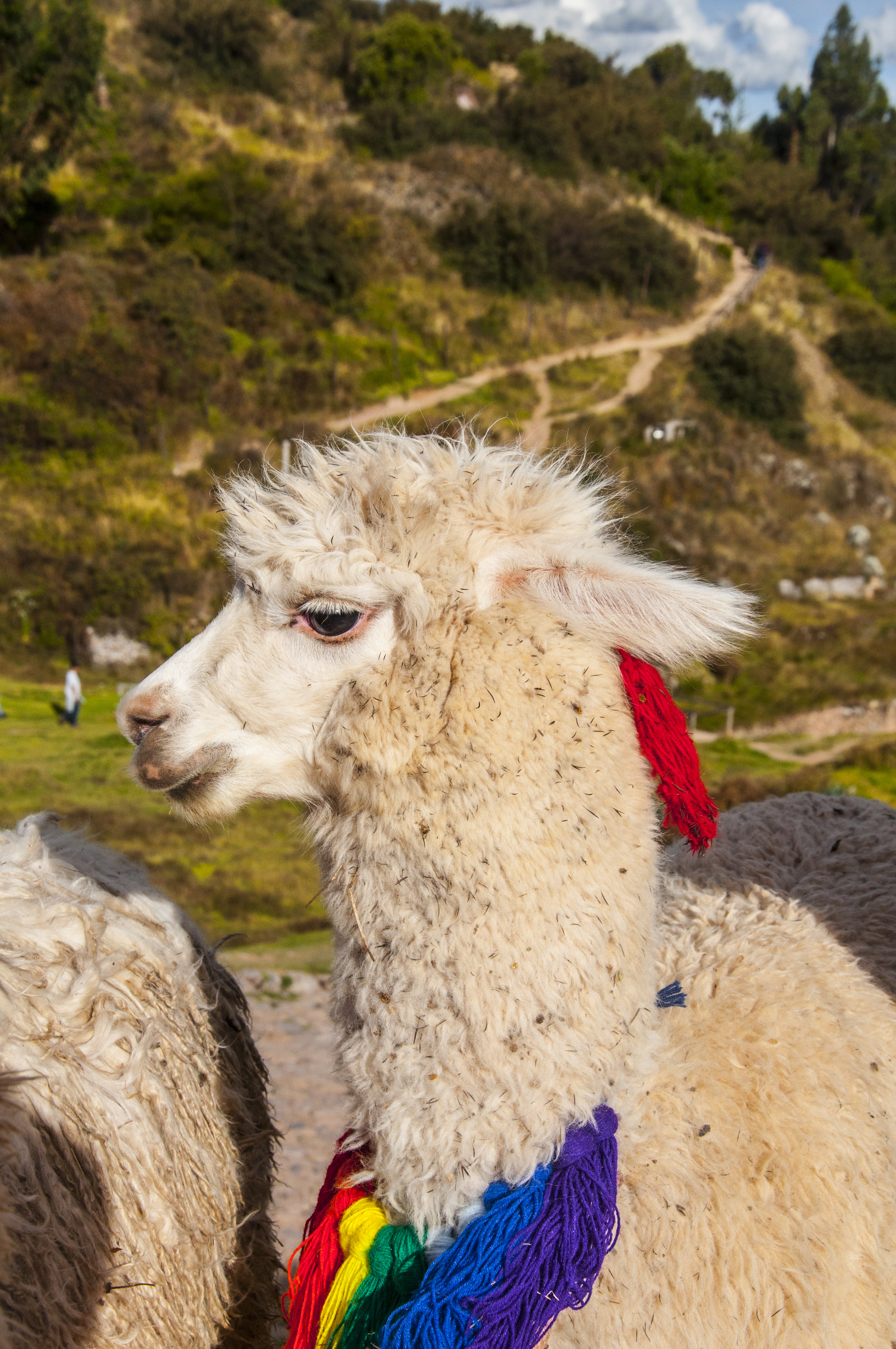 This photograph of a llama marks the end of our trip to Peru, which we enjoyed very much. Thanks for coming along with us.
  westwardhowithapollo
You must be logged in to post a comment.