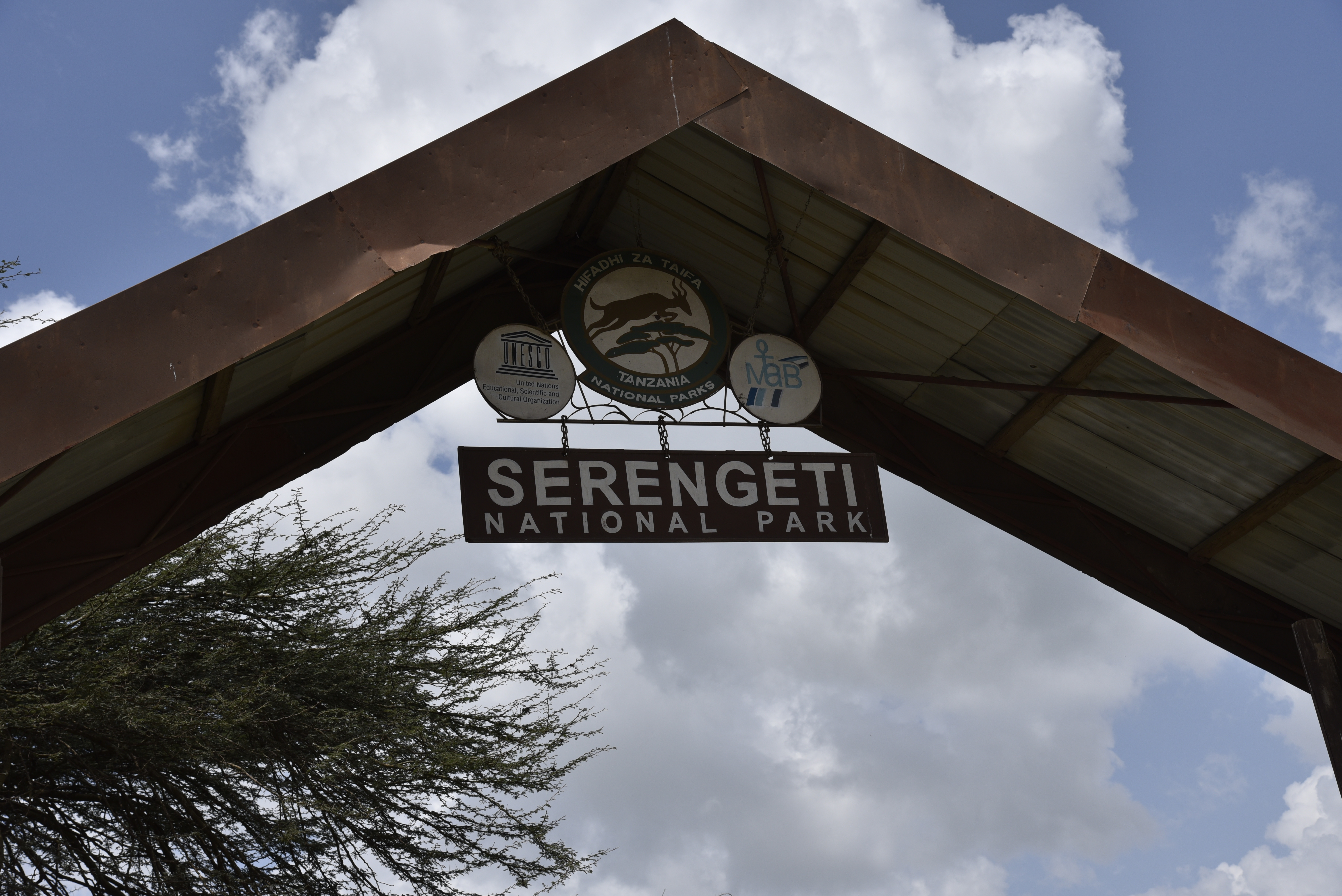
After a torrential rainstorm the night before, the weather turned beautiful as we entered The Serengeti National Park and were greeted by a Marabou stork.
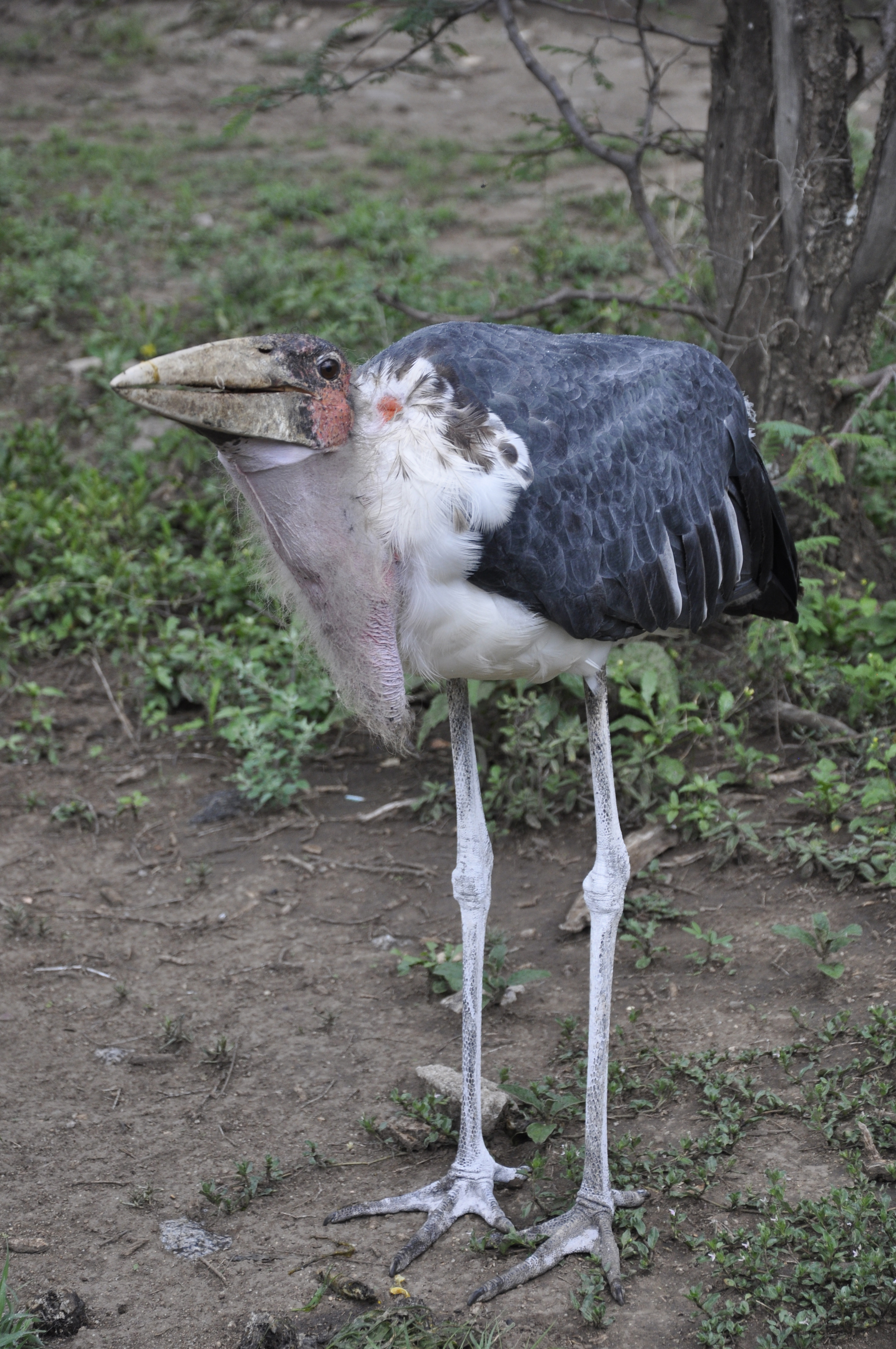
Marabou stork doing a Bernie Sanders imitation.
Serengeti is the Maasai word that means “endless plain”. It covers an area of 14,763 km and at almost every turn on the bumpy, rutted roads the landscape was teaming with wildlife.
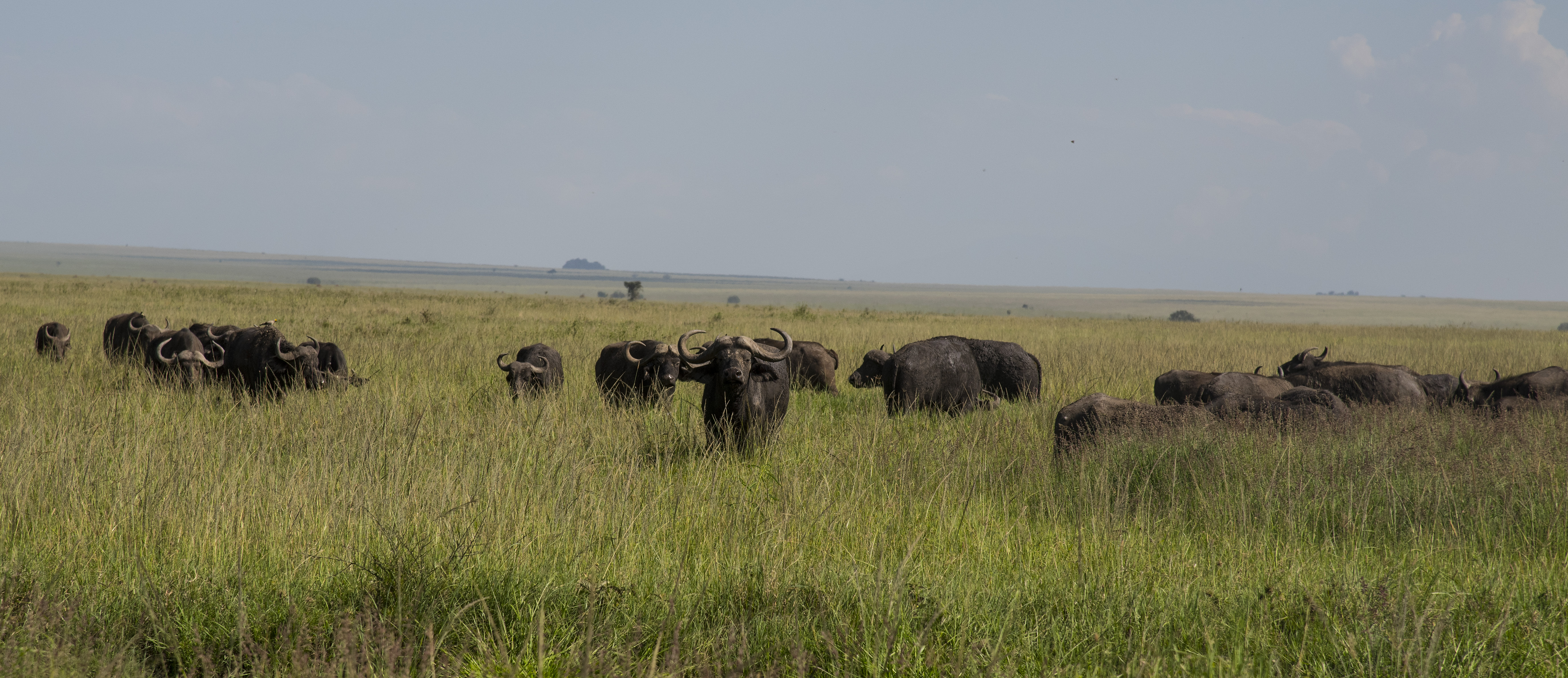
Water Buffalo
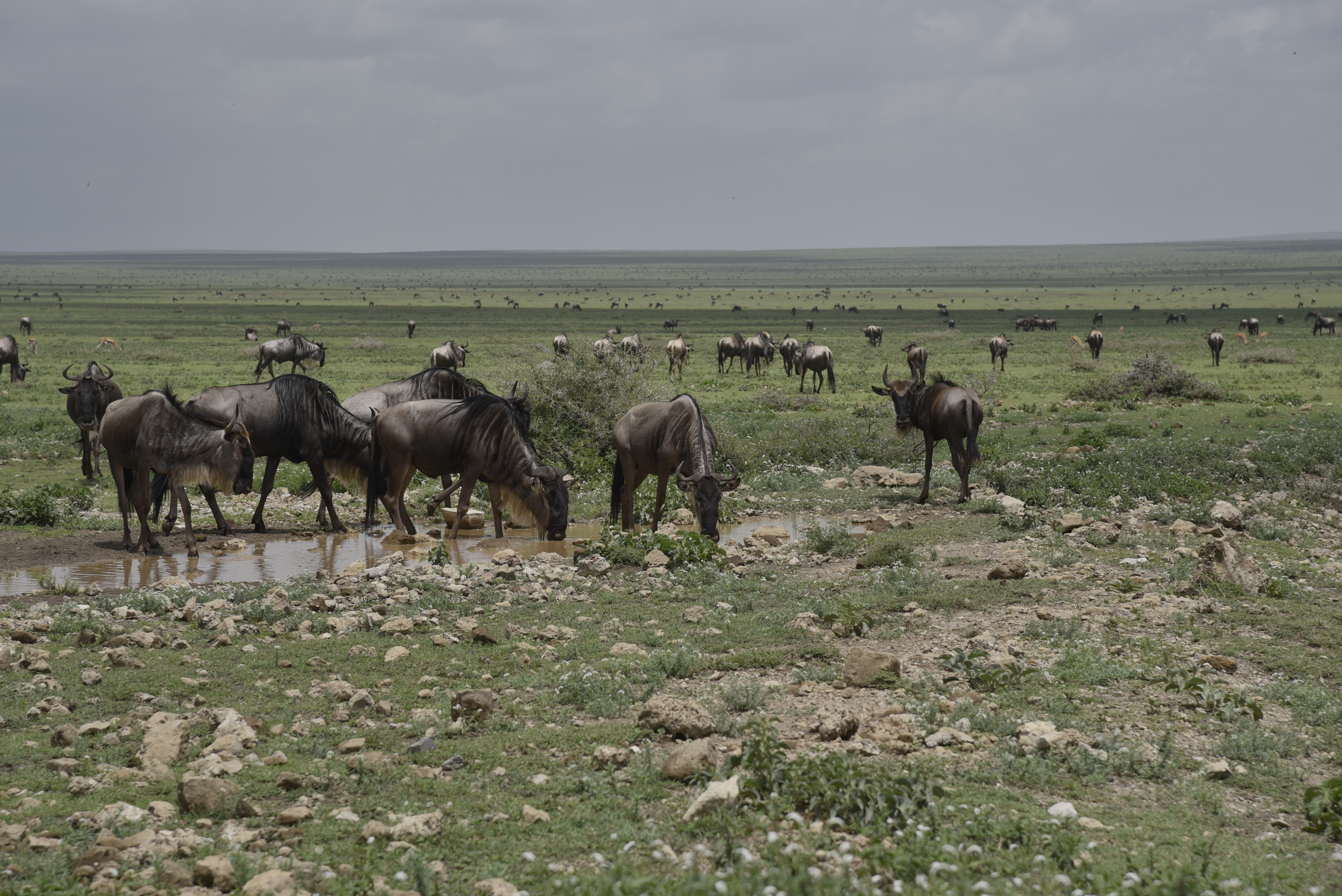
Wildebeest or Gnu

Grant’s Gazelle
And moms showed off their babies.
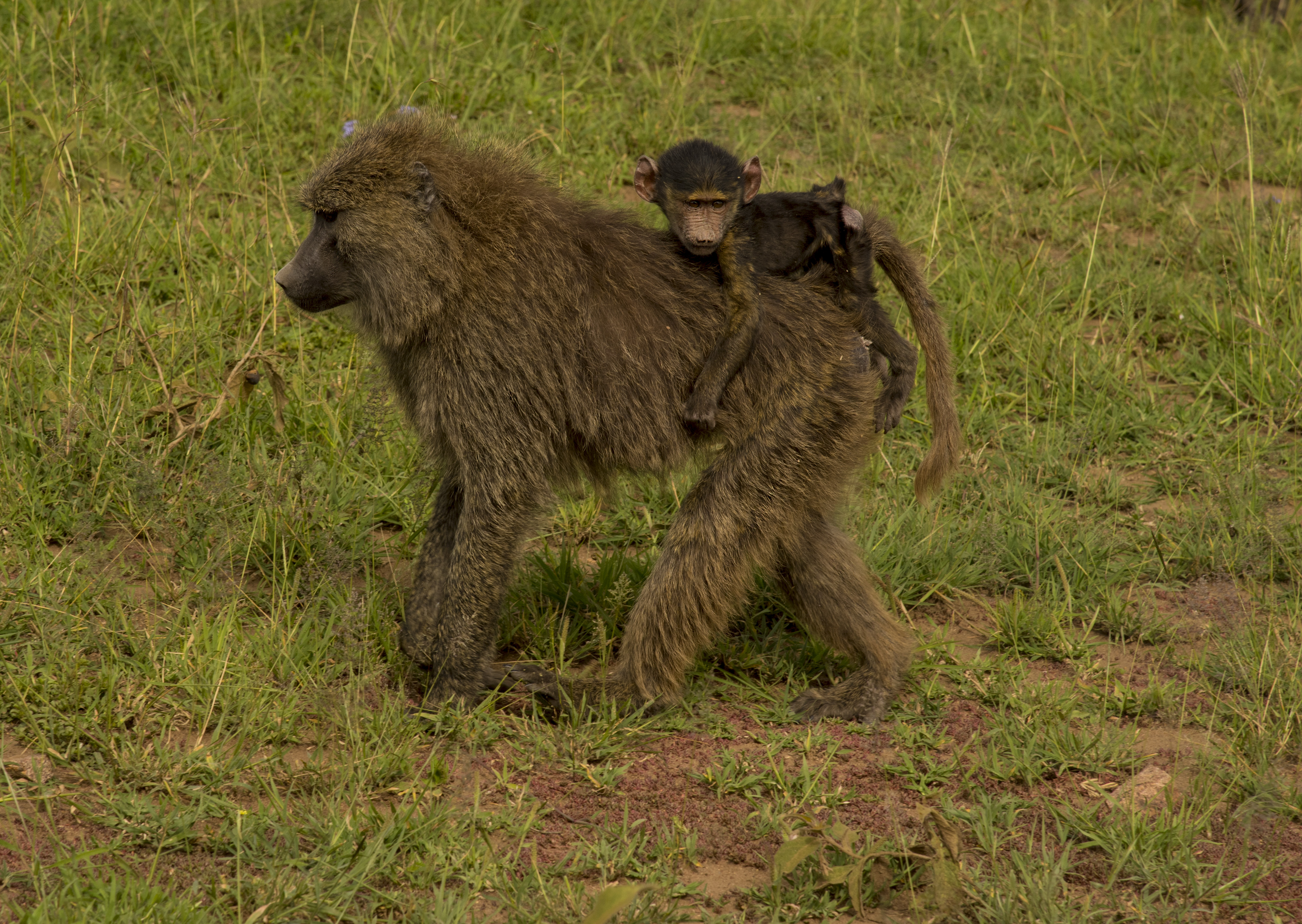
This baby baboon going for a ride.
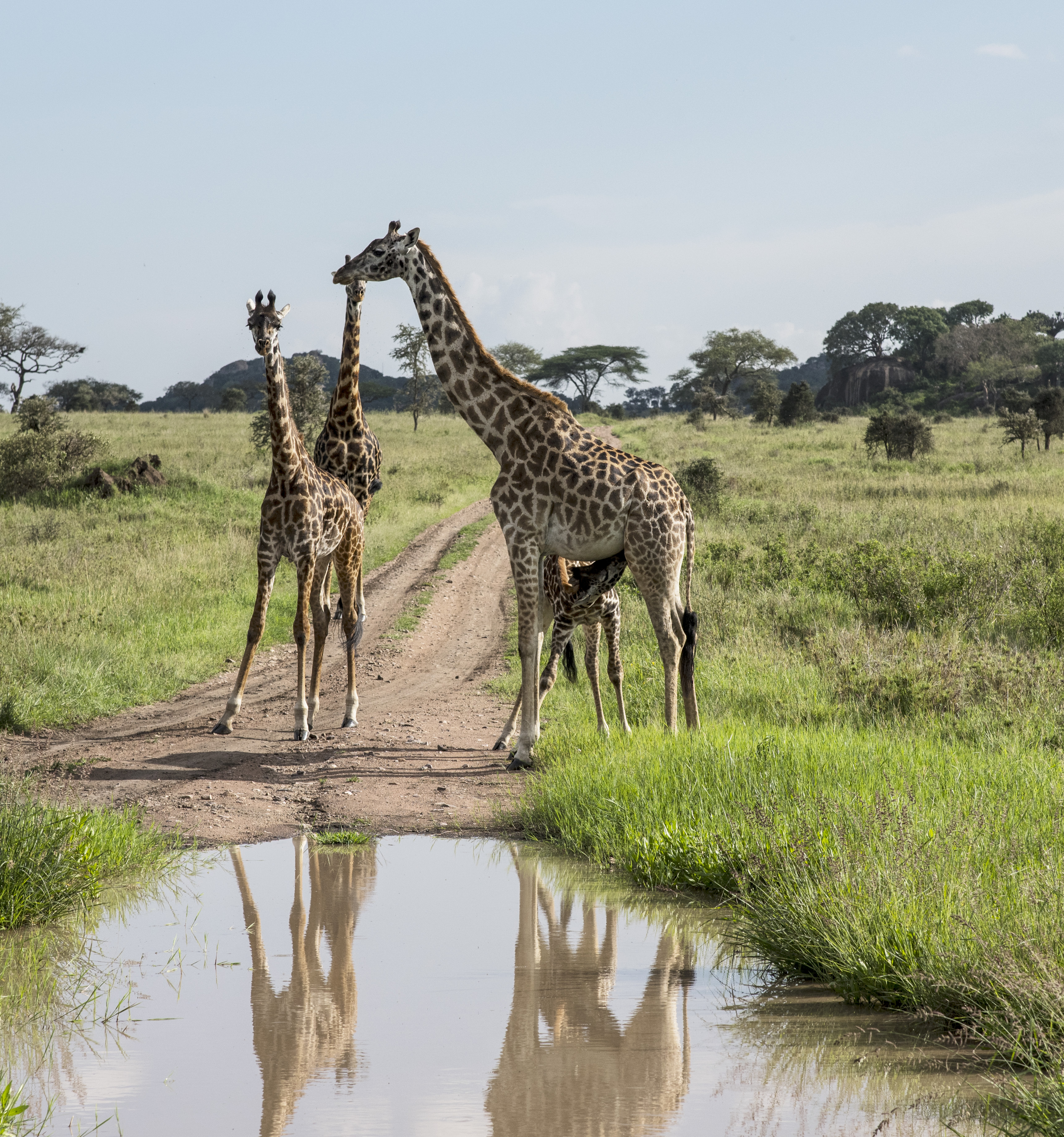
A baby giraffe nursing.

A baby zebra following mom.

Elephants are devoted parents.
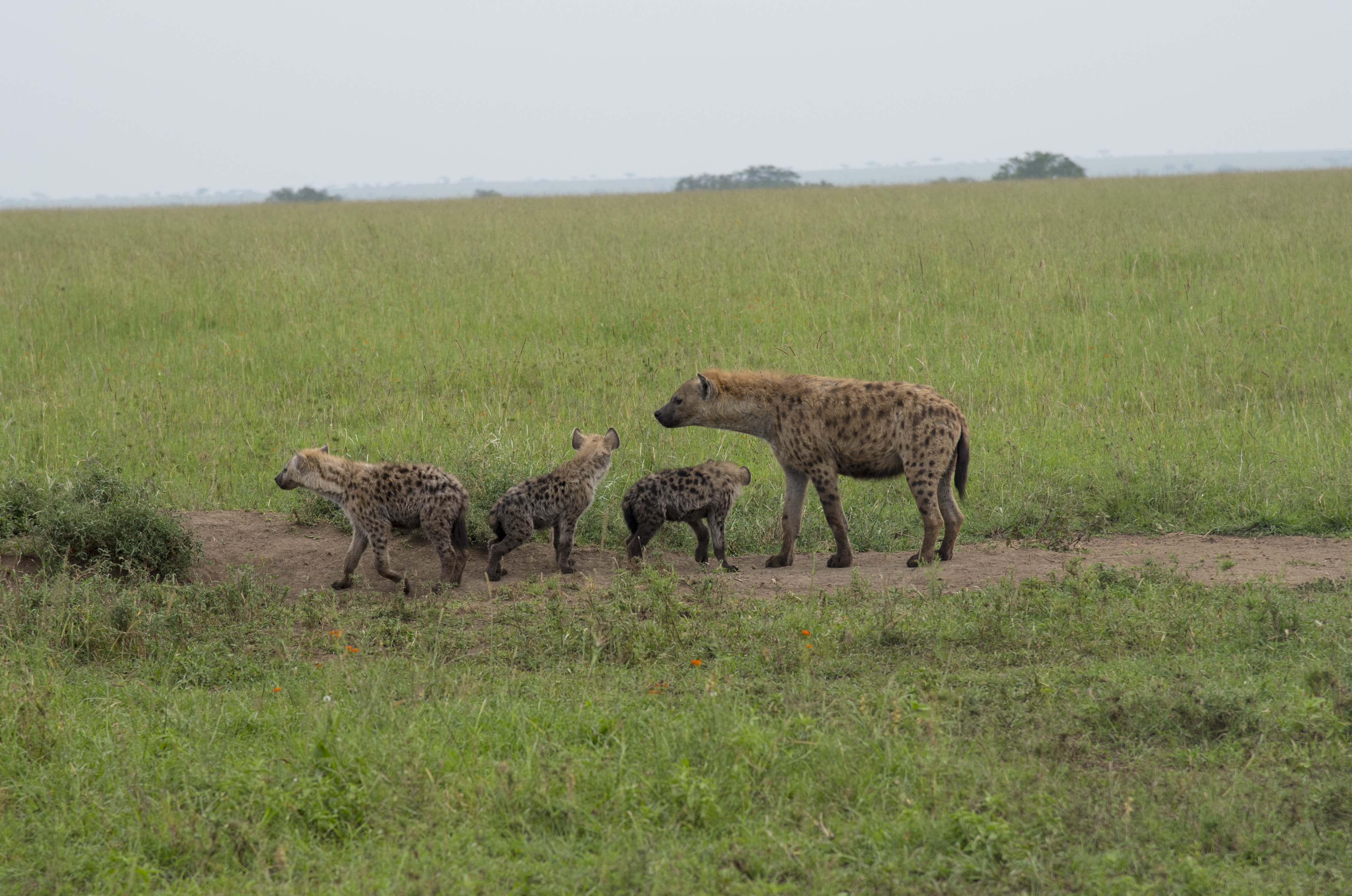
Baby hyenas.
Cheetah
When we were about 1/4 mi. from our camp Goodluck cried out “cheetah!” and our caravan came to a halt. There it was, hidden in the grass, the fastest land animal in the world. Can you find it? The cheetah is hard to see because its spotted coat blends with the tall, dry grass of the plains.
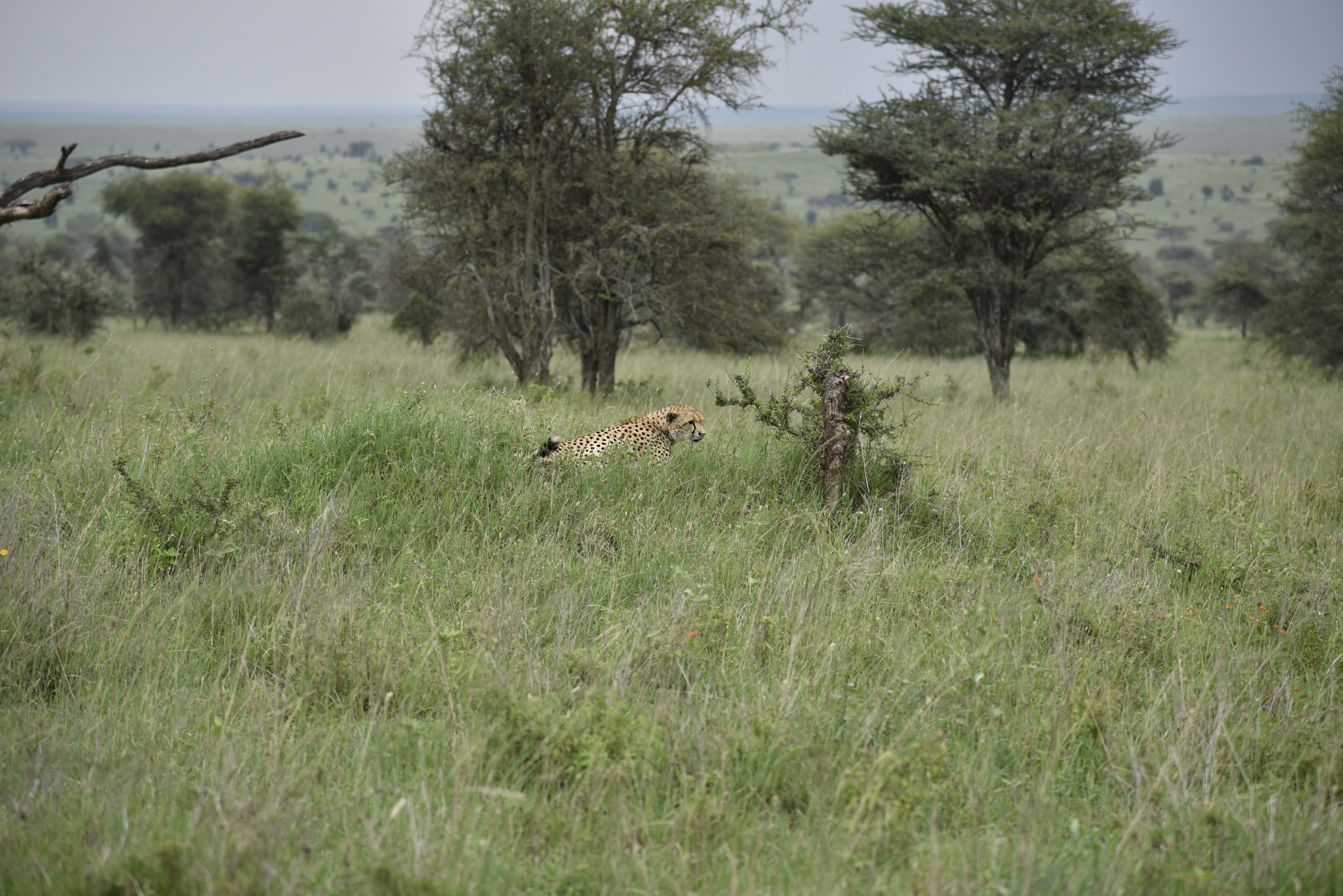
Its hiding place discovered, our cheetah slowly got up, its magnificent markings becoming visible. Cheetahs are diurnal (meaning that they are active during the day) and can reach speeds of 68-75 mph. Males are social and are usually found in groups of 3 or 4. Adult females without cubs are solitary.
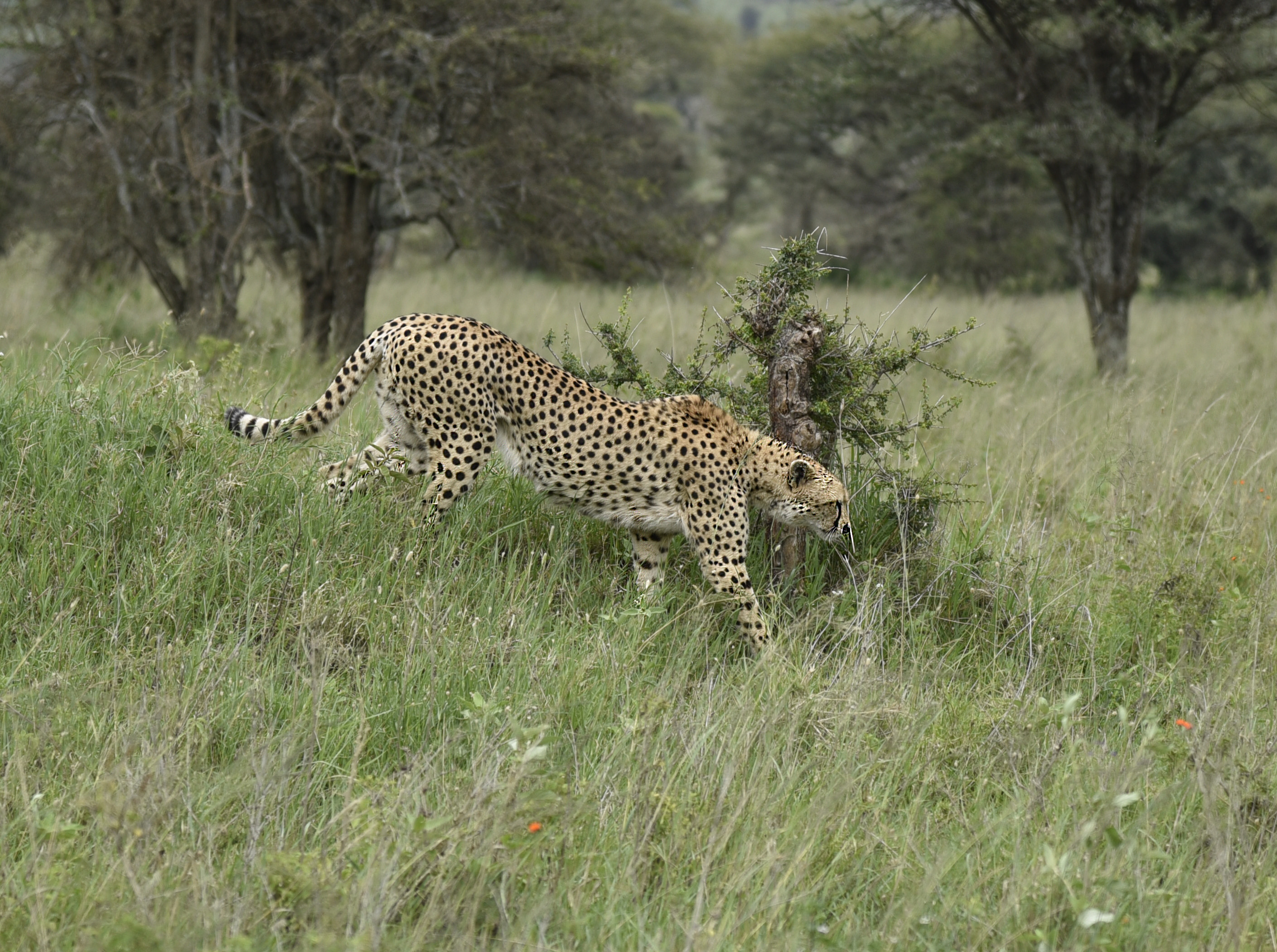
Cheetahs have small heads and well developed hind quarters. They have beautiful markings that consist of black dots covering the entire tawny colored body and black lines or tear drops down both sides of the face. The cheetah’s excellent eyesight helps it find prey. Suddenly, the cheetah makes a lightning dash. It knocks its prey to the ground and then bites its throat. Cheetahs are 3.5 to 4.5 feet long from head to rump, and their tails add an additional 25.5 to 31.5 inches. Normally, these big cats weigh around 77 to 143 lbs. It was so close to camp Mitch decided to forego a stroll beyond the perimeter.
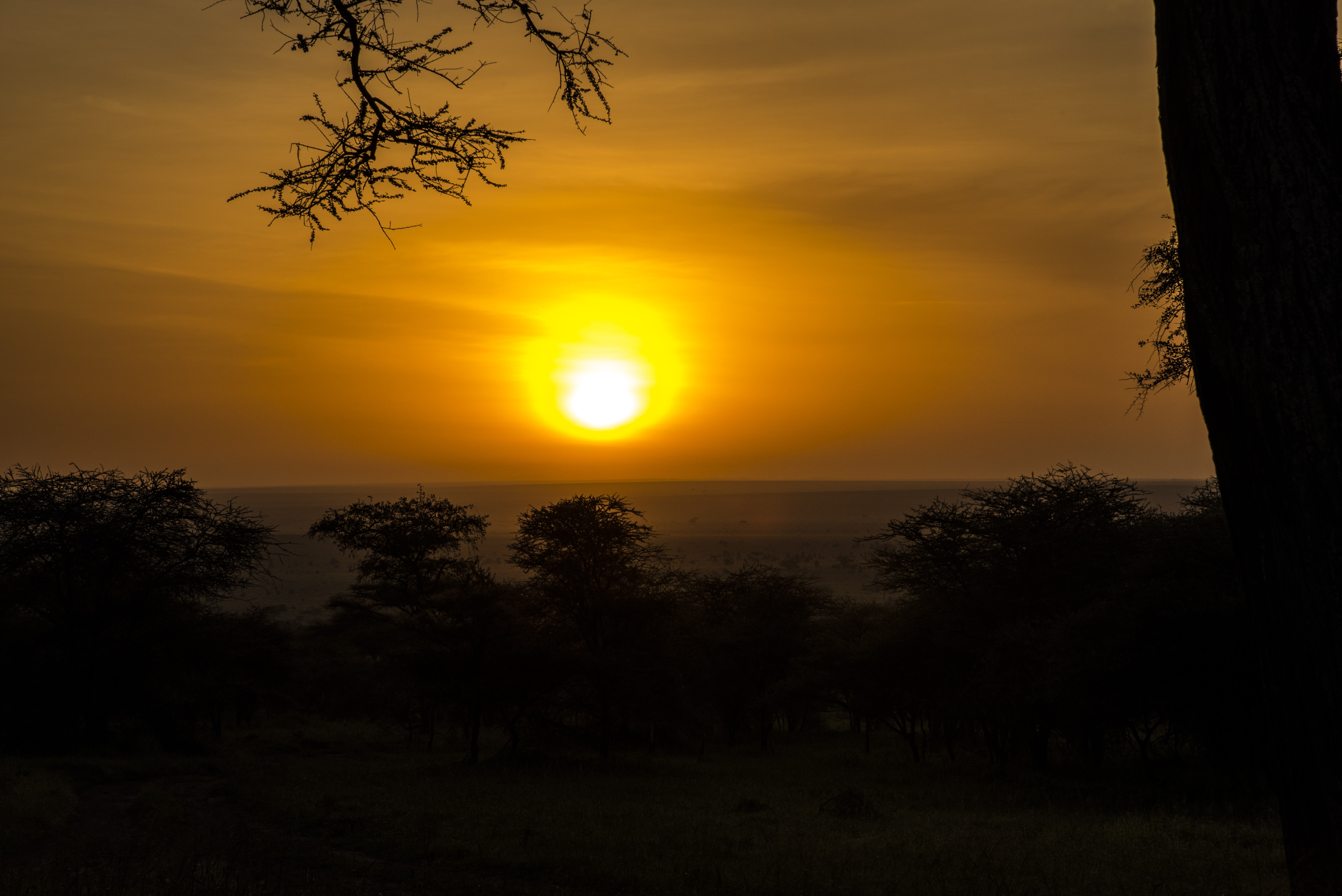
The next day we were up at sunrise. We hoped to see a mature male lion. We got that and much more!
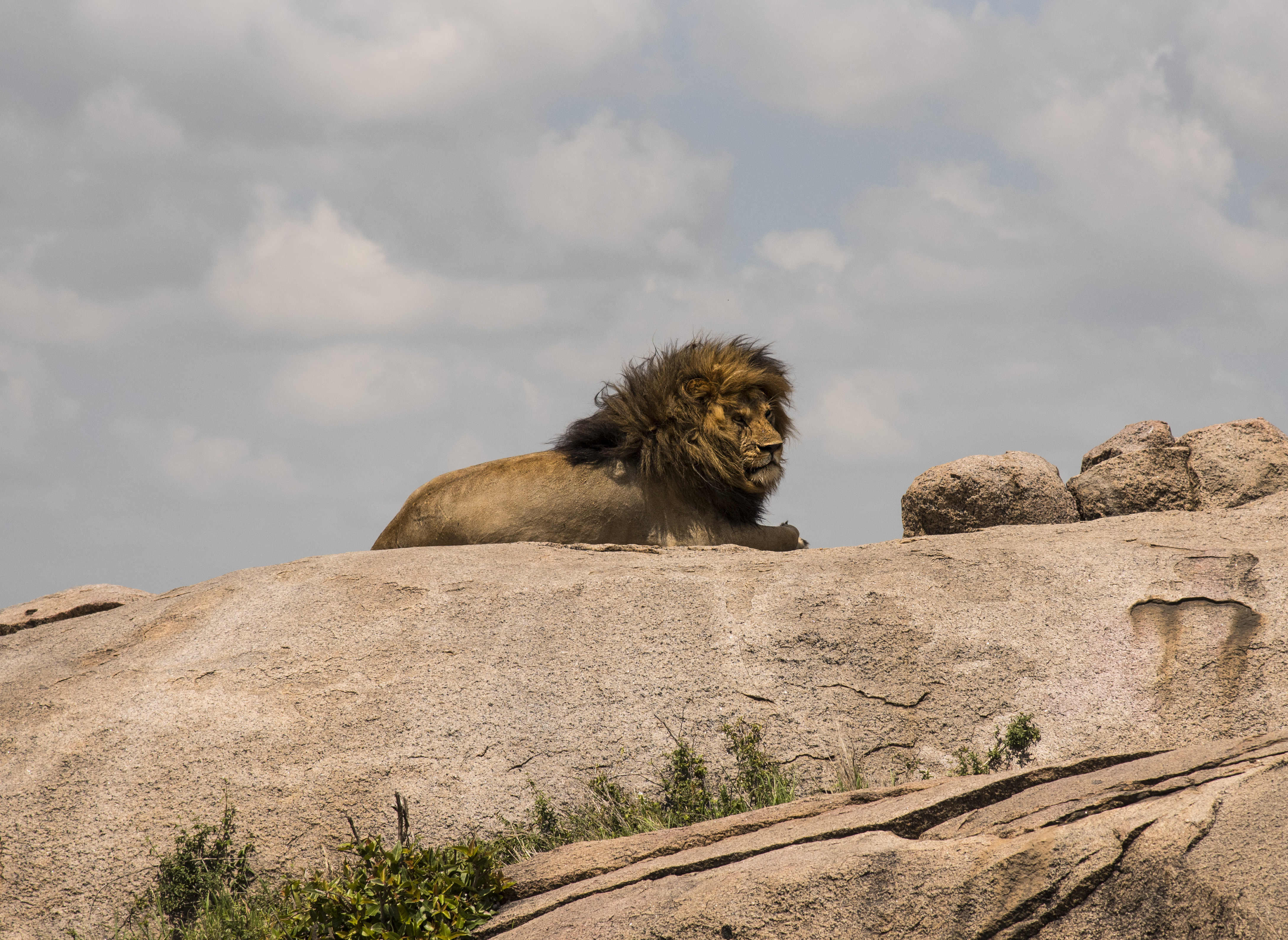
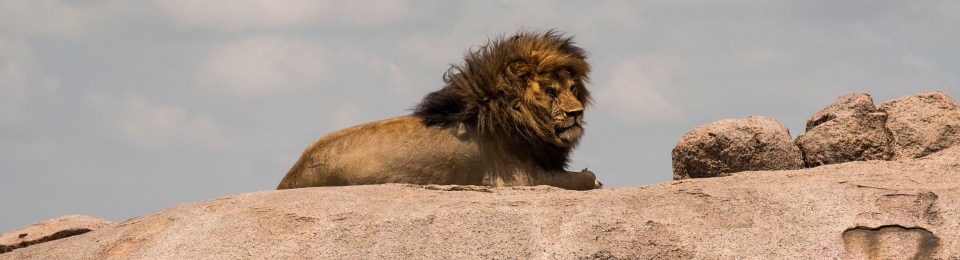
Because we started out early our three vehicles were the only ones around when this mature male lion with a huge mane was found relaxing atop a Serengeti kopje. Kopjes are isolated rock groupings that big cat favorites for shelter, and for surveying the landscape for hunting opportunities. It soon became apparent that we had come upon an entire pride.
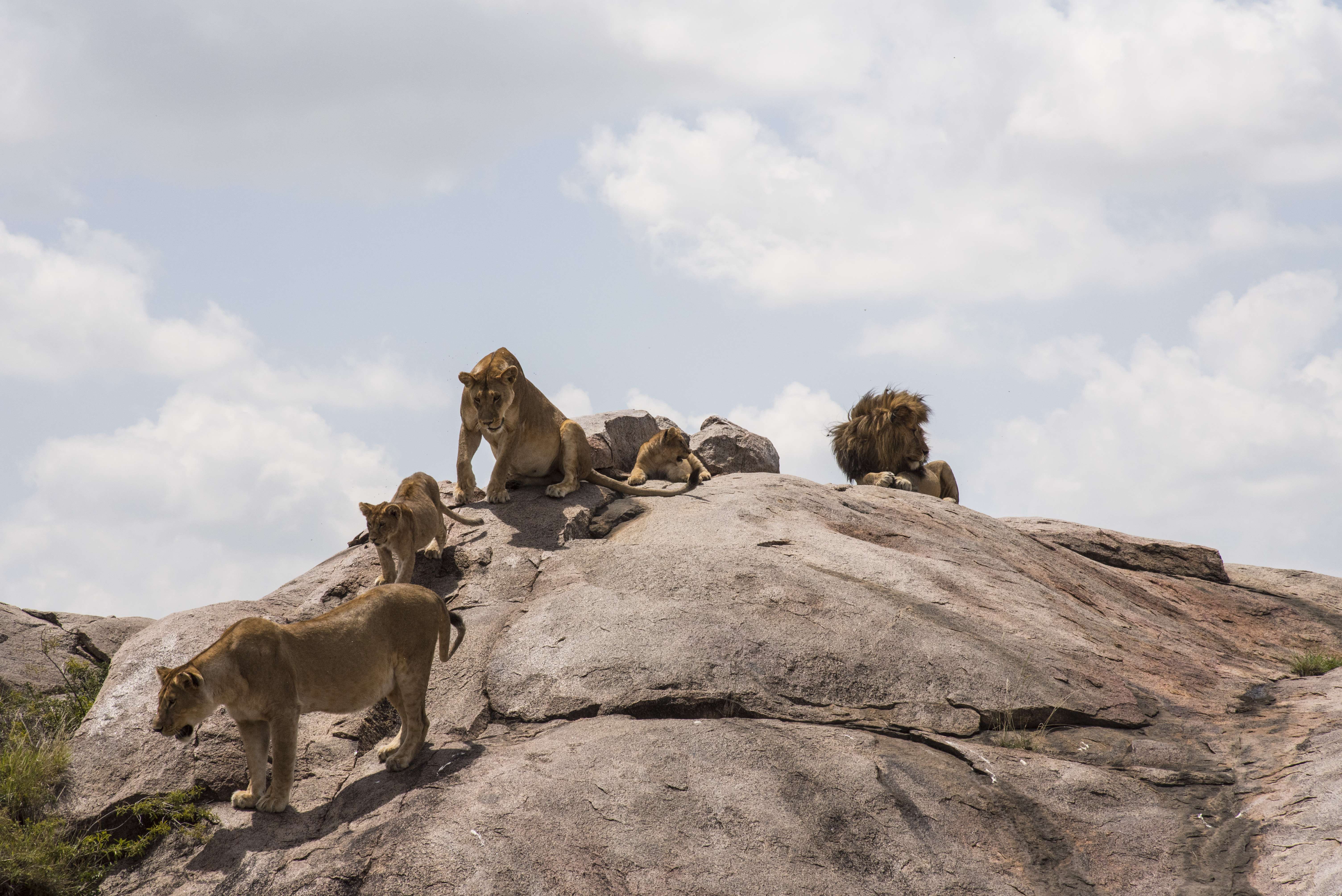
In addition to the mature male, there were two lionesses and five cubs in the pride.
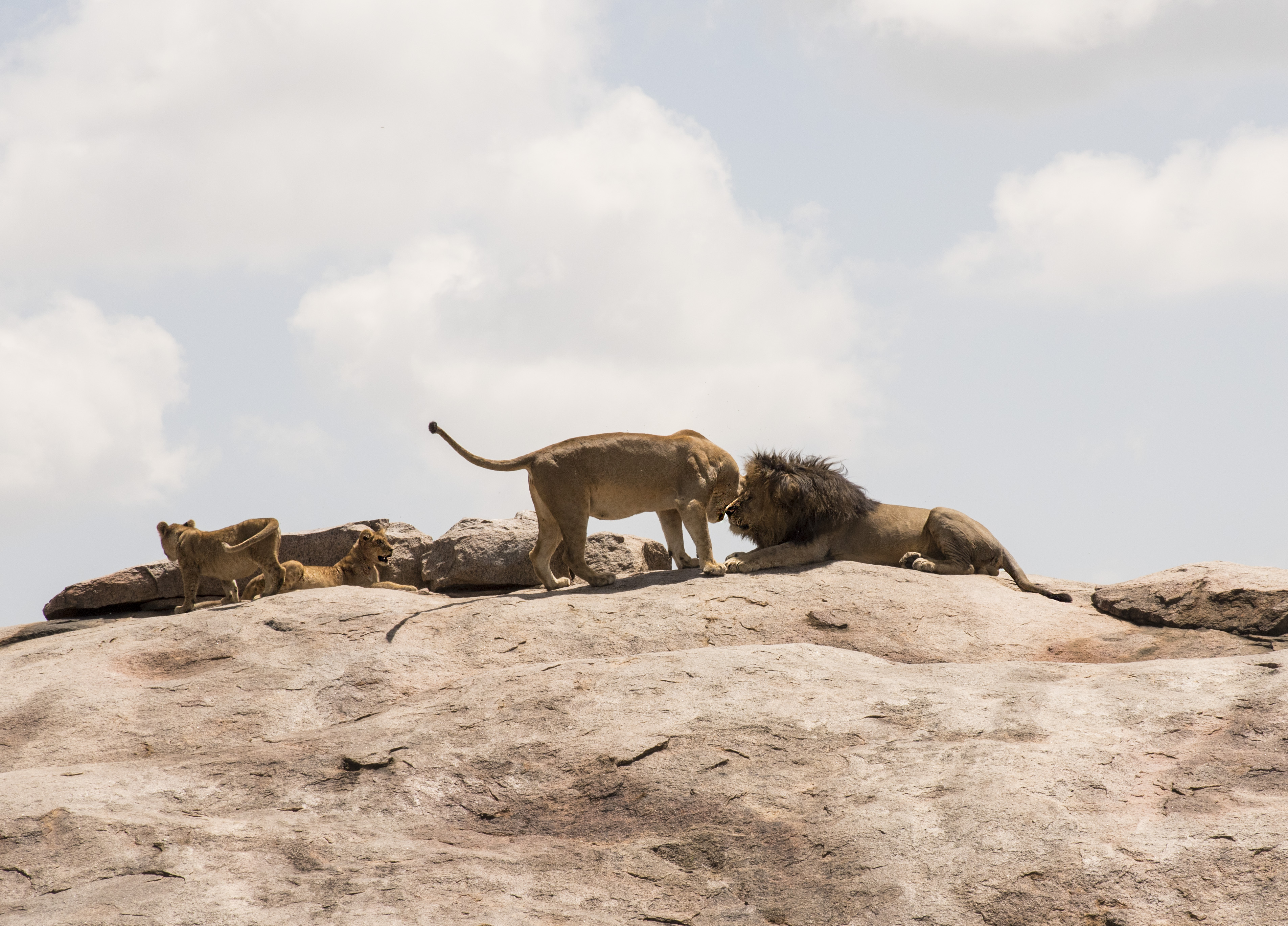
We watched in awe as the domestic life of these magnificent creatures played out before our eyes.
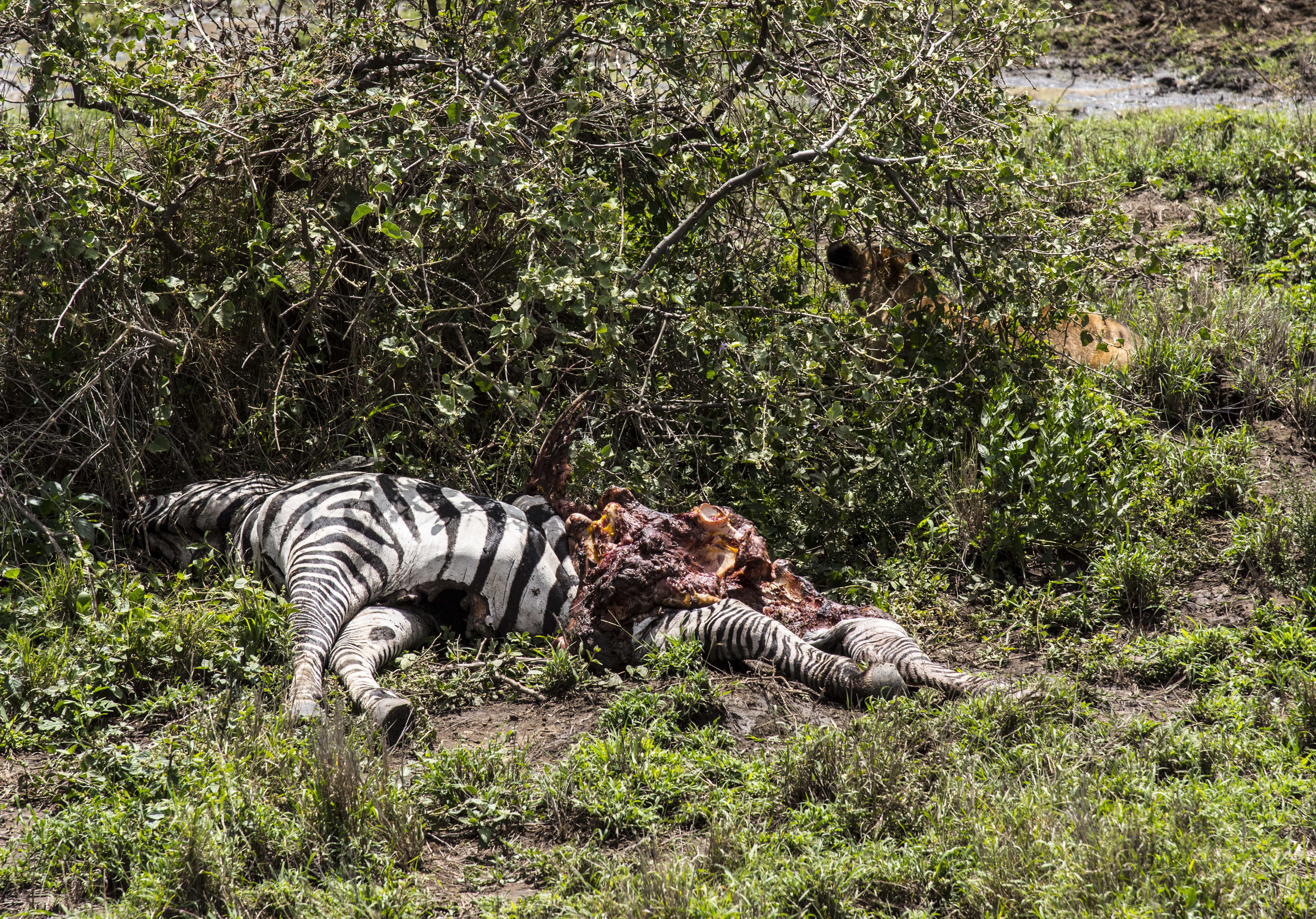
Hidden under a bush was their food source, a half eaten zebra. One of the cubs can be seen nearby.
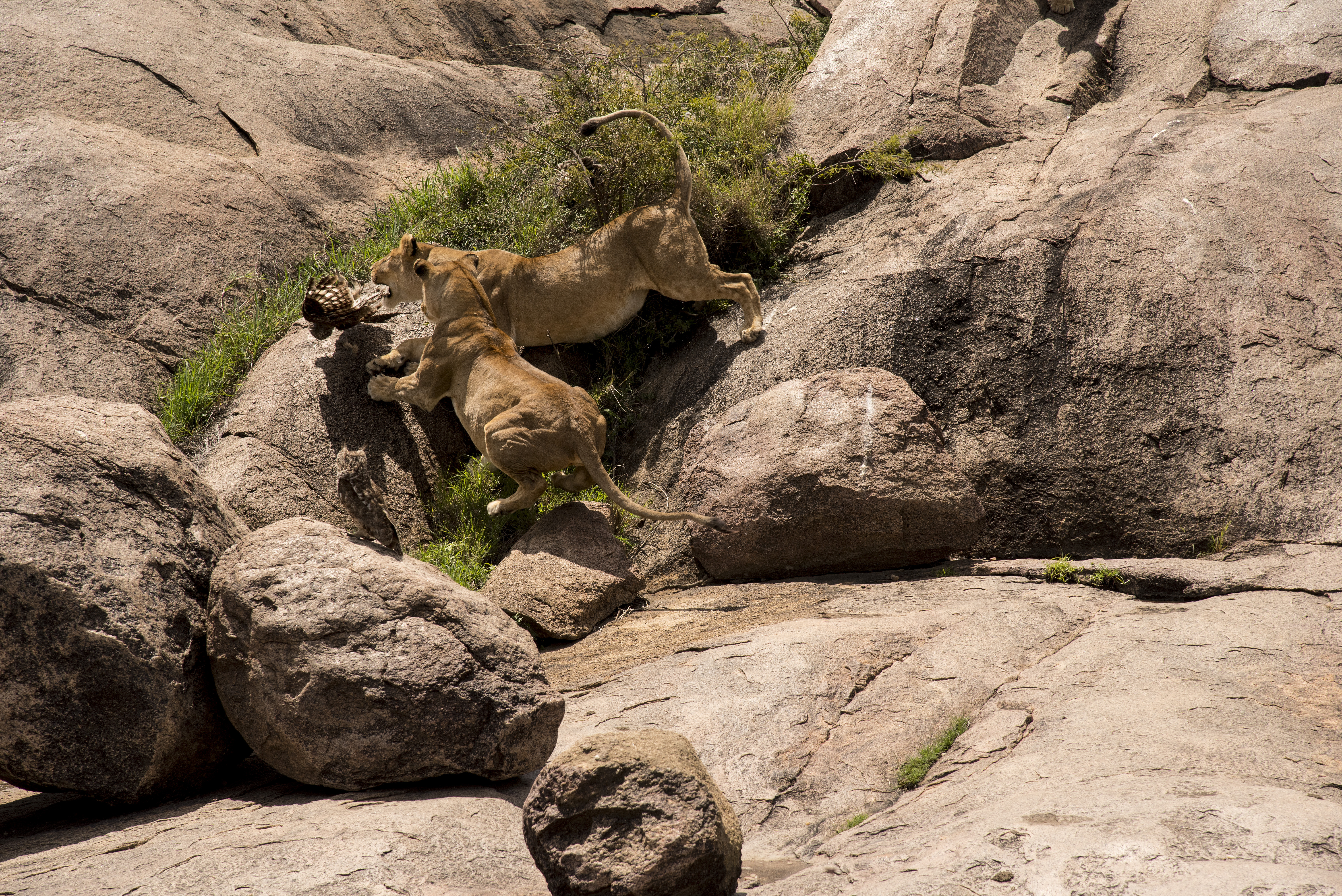
Suddenly the two lionesses made a surprise move and leapt upon three owls that were sitting in a nearby bush. Two of the owls escaped with the loss of just a few feathers. The other owl remained still and undisturbed during the Brouha.
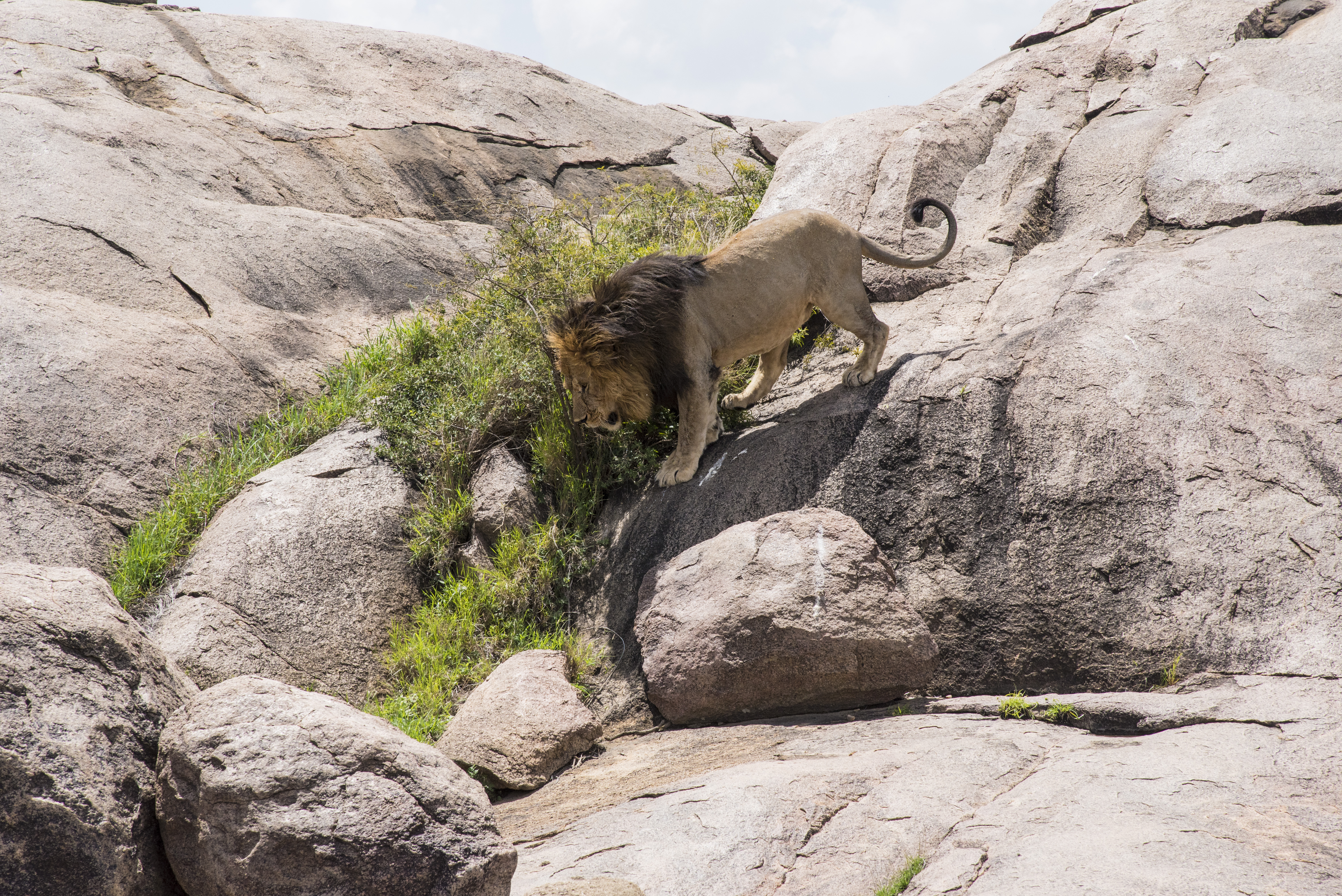
But Simba couldn’t let it go and made his way down to the one remaining owl, we thought, to finish him off. Instead…
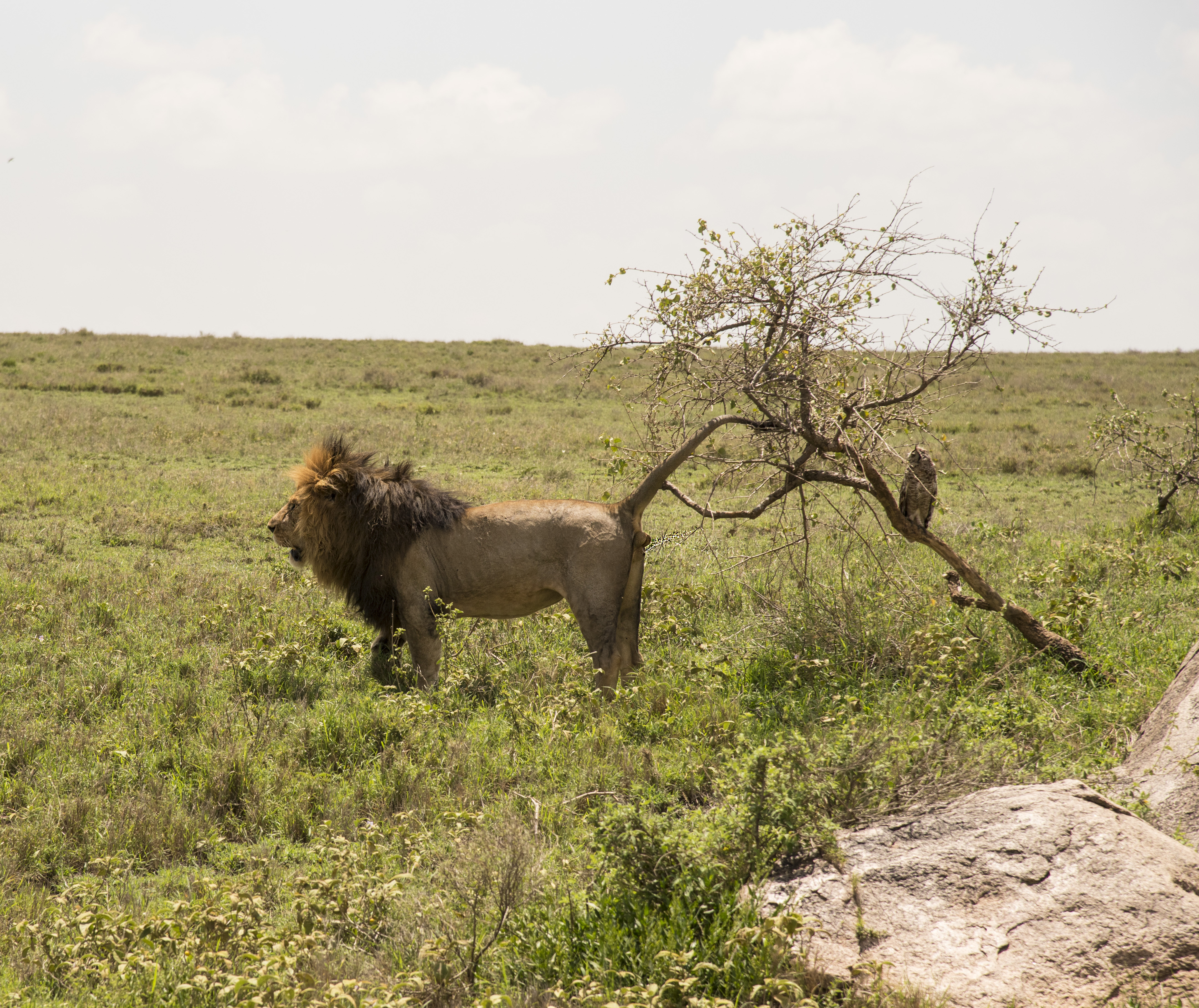
He turned around and gave the owl a spray! “Get out of my territory.”
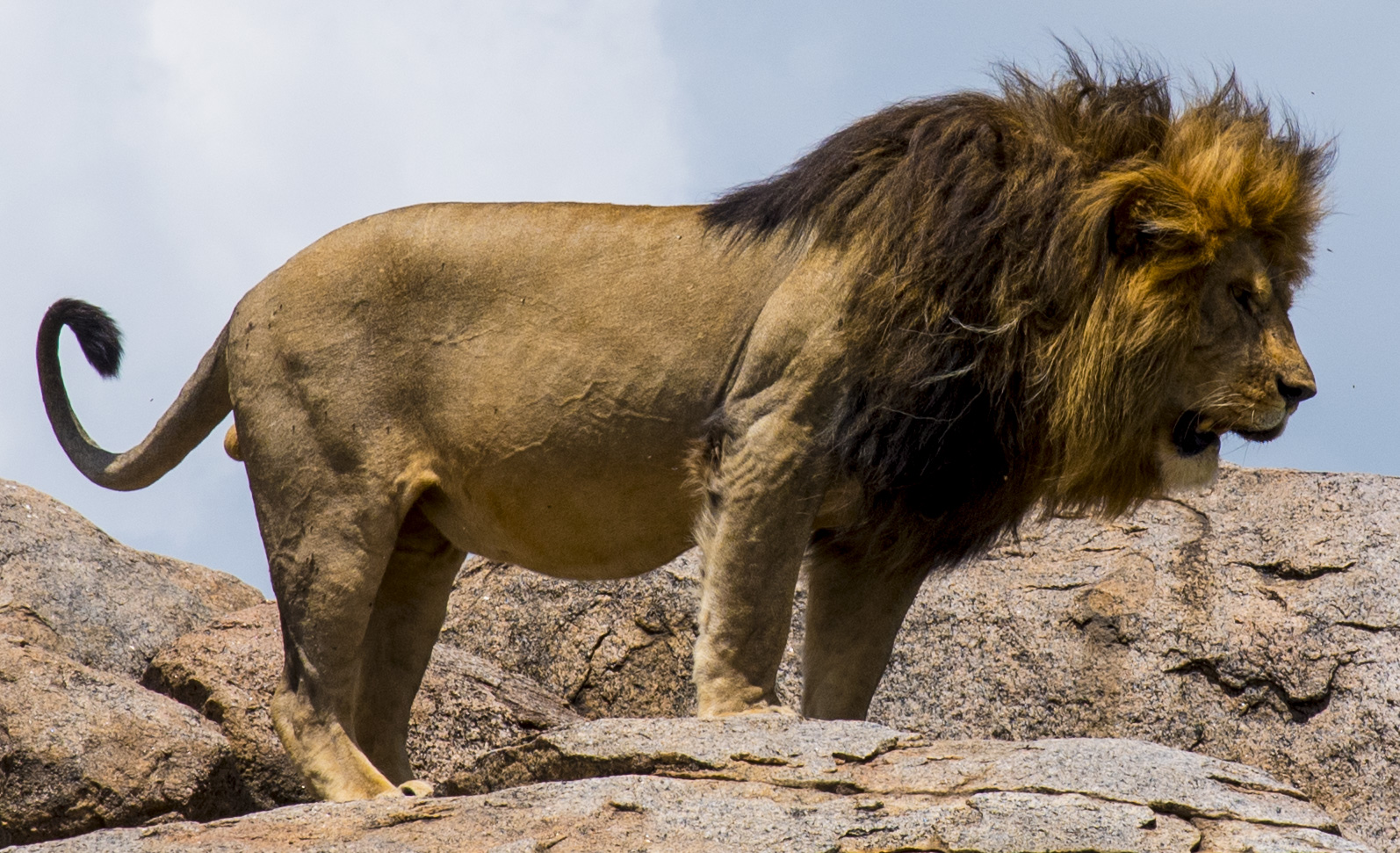
He then climbed up on the kopje, gave a roar….
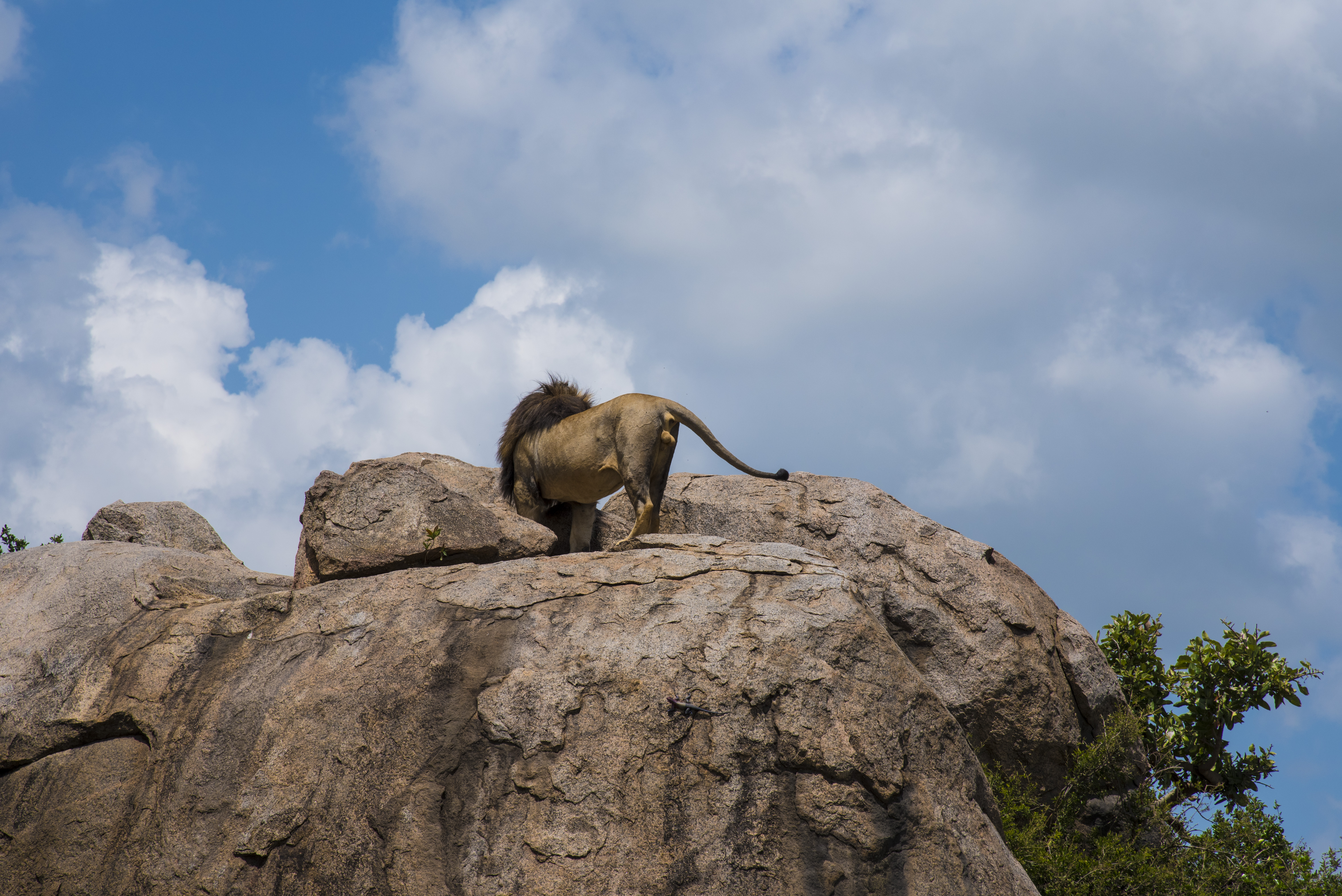
…and turned around and aimed a spray towards us. How do you top that? The only remaining big cat we did not see was a leopard. And the next day, in late morning, we hit the jackpot again.
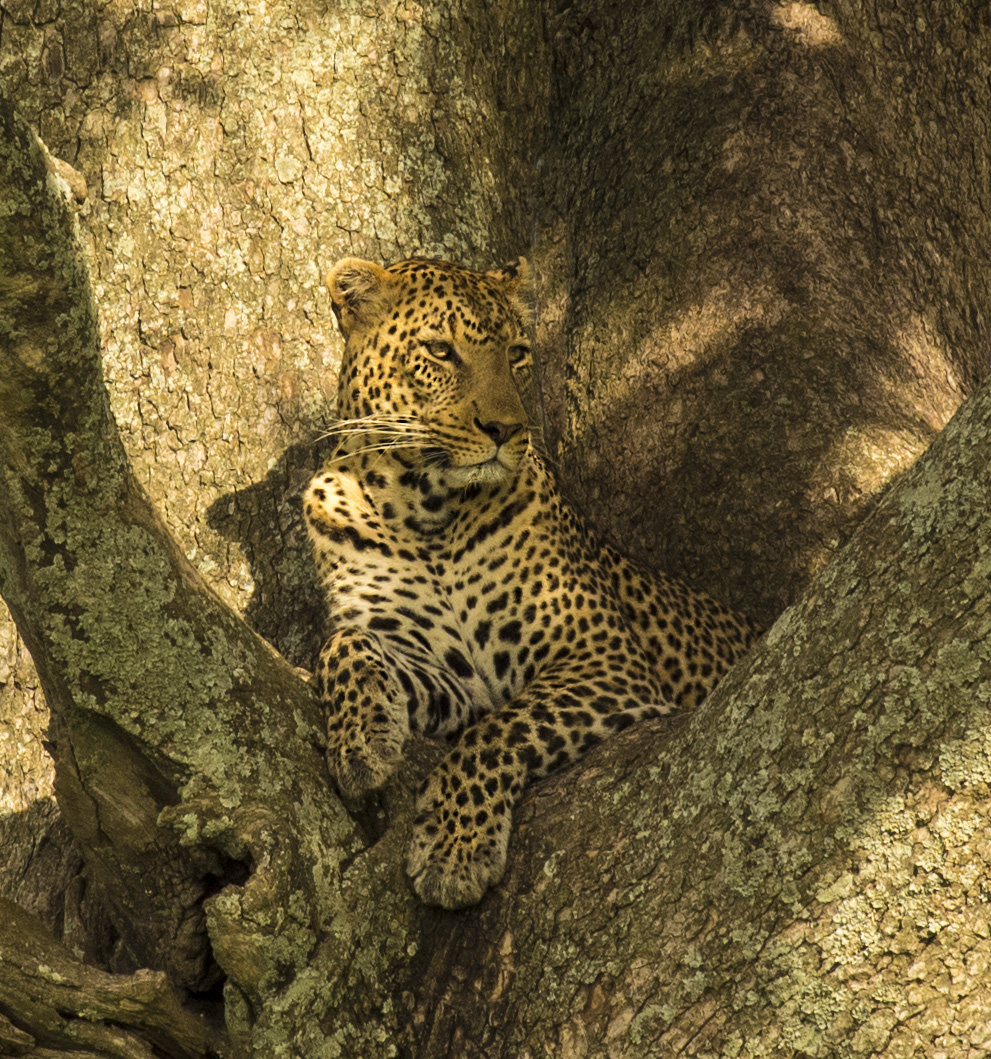
The leopard is elusive and often difficult to find. Unlike the cheetahs and lions, they are nocturnal and rarely hunt during daylight. We were very fortunate to discover this leopard lounging in a tree. They are the smallest of the big cats but extremely powerful and able to drag their kill up onto a tree branch. It is not uncommon to find the carcass of a large animal such as a zebra or giraffe hanging from a branch of a tree, the work of a leopard. This leopard seemed unperturbed by the attention it was receiving.
NEXT: WHAT IT WAS LIKE TO SPEND FOUR NIGHTS IN A SERENGETI CAMP
 westwardhowithapollo
You must be logged in to post a comment.