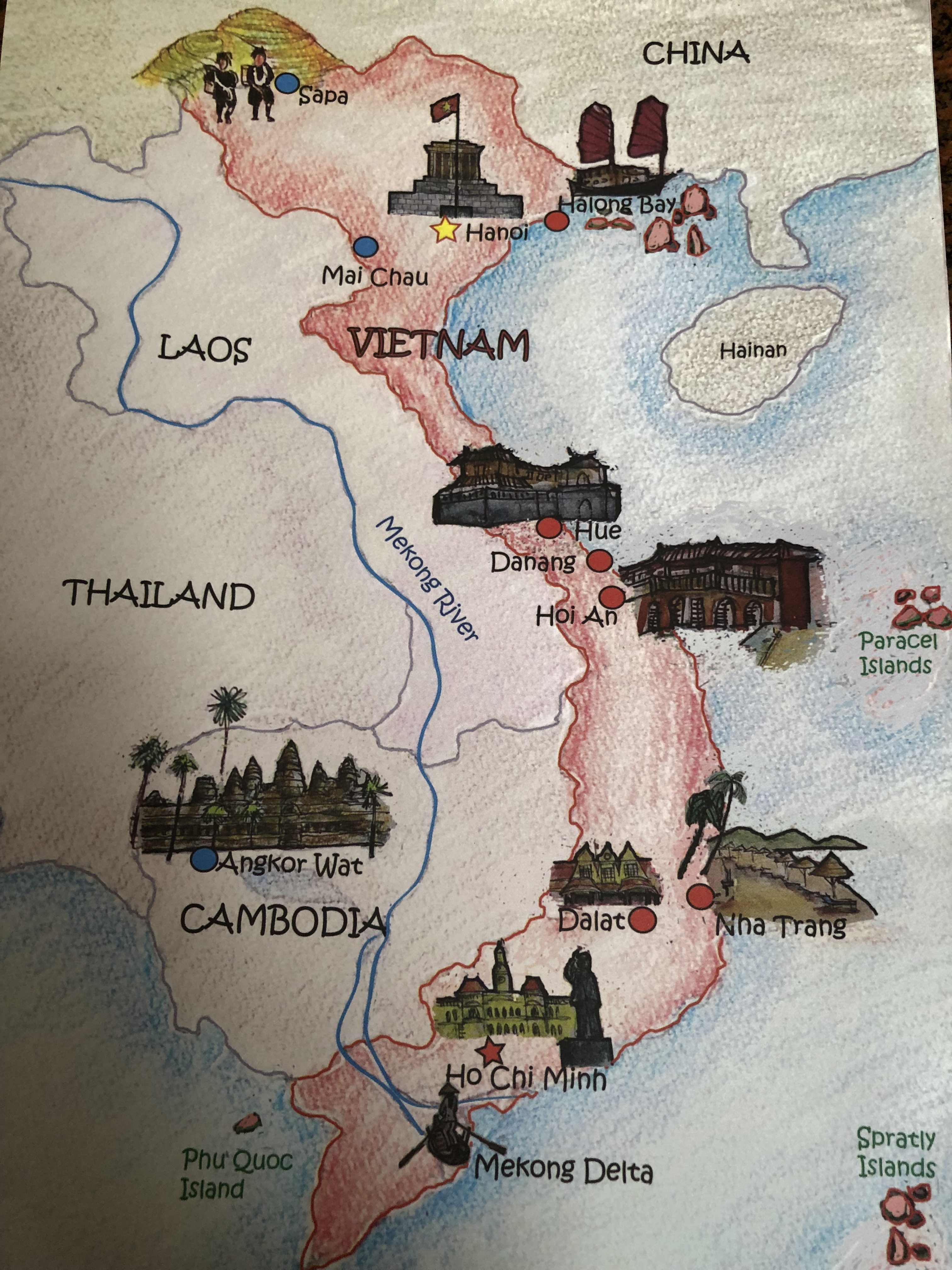
This map will give you an overview of the major cities we visited on our trip, along with many surrounding villages in each area. Our adventure started in Mai Chau which we covered in our first blog post. After we left Mai Chau we returned to Hanoi to pick up the nine-hour overnight train ride to the city of Lao Cai which is 23 miles northeast of Sapa on the Chinese border. The town of Sapa is the starting off point for visits to the northern mountain tribes in local villages and trekking, which is popular with backpackers.
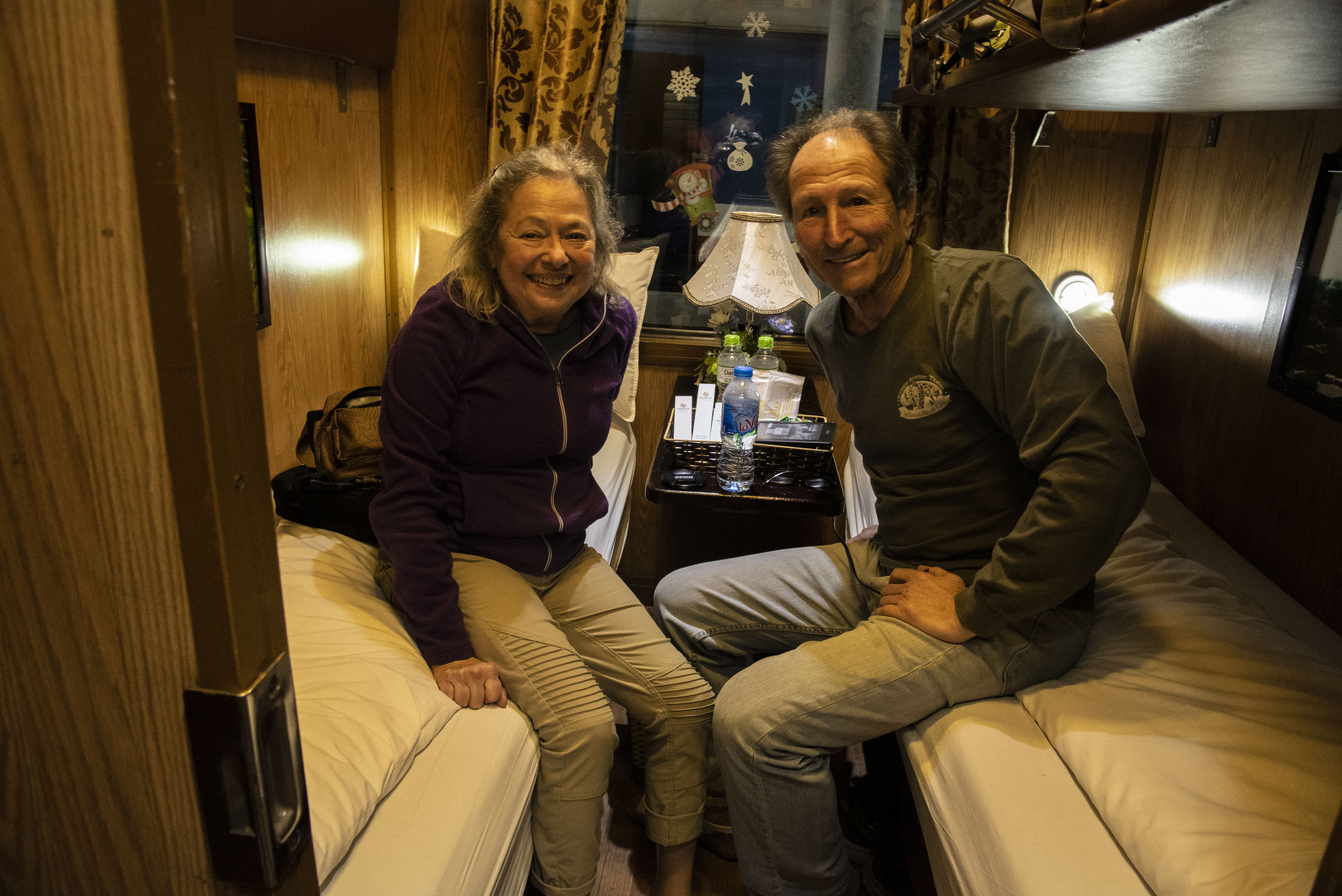
Our sleeping compartment on the Sapaly train to Sapa was cozy and quite comfortable.

Larry and Jiji hosted a wine/card party in their compartment.
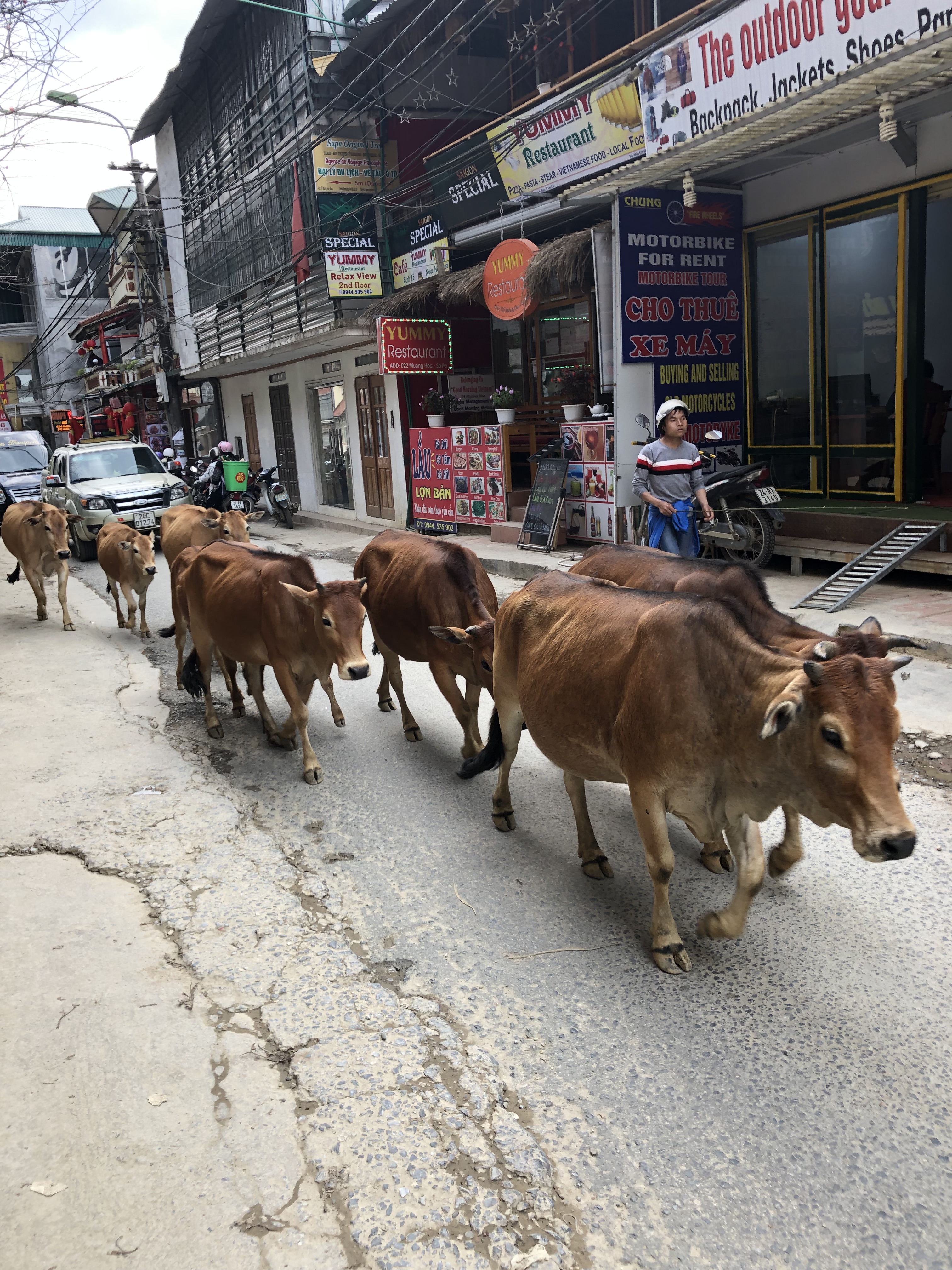
Sapa’s main thoroughfare is a narrow, winding, rugged strip lined with knock-off outdoor outfitters, cheap restaurants, many massage parlors, and motorbike rentals. The traffic is chaotic, and slows down only for the occasional herd of cattle passing through.

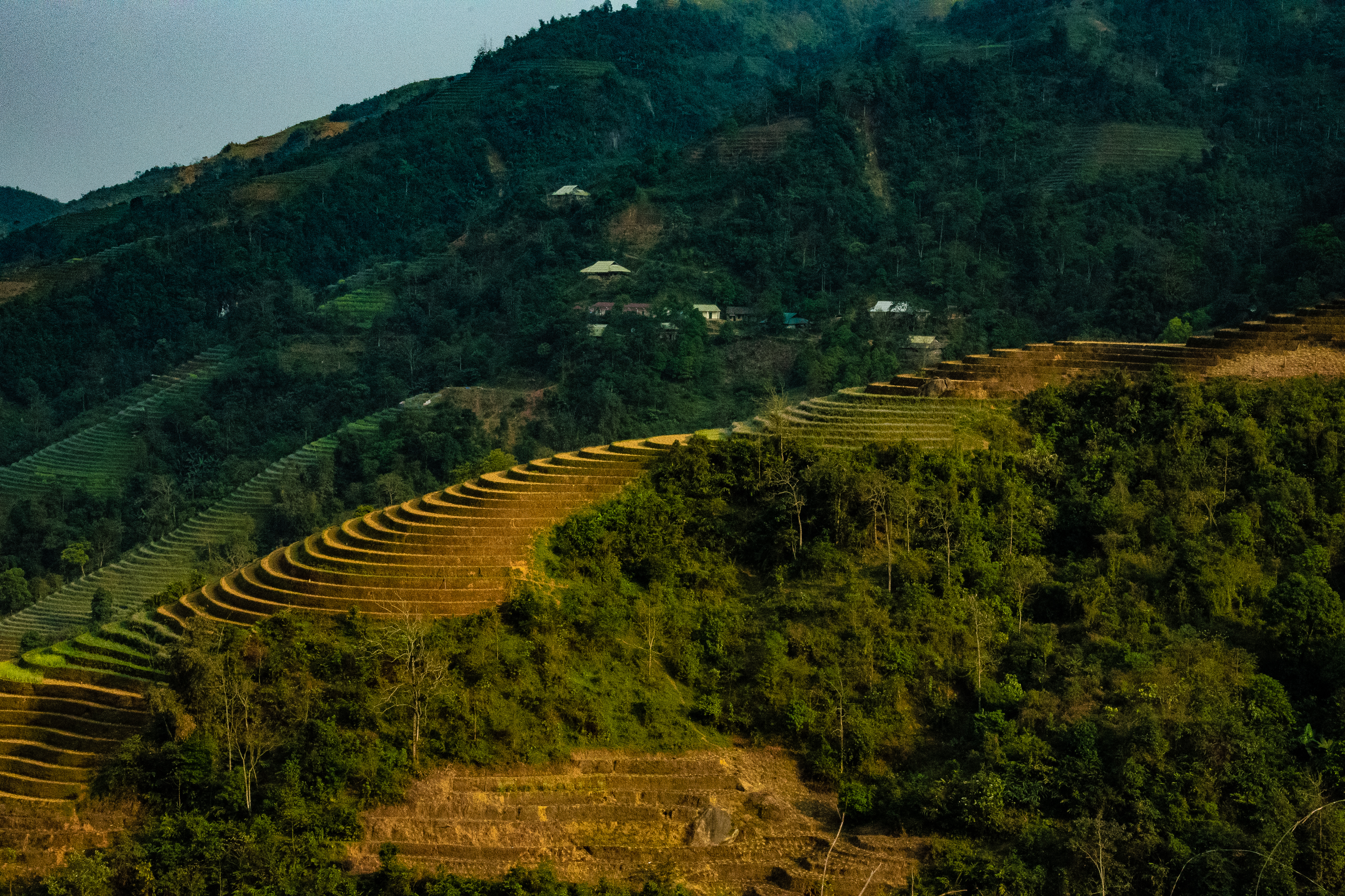
From Sapa, which is 5000 feet above sea level, you can access the surrounding high mountains and reach the tribal villages. Terrace farming in Vietnam is an art form. The beauty of this undulating landscape is breathtaking.
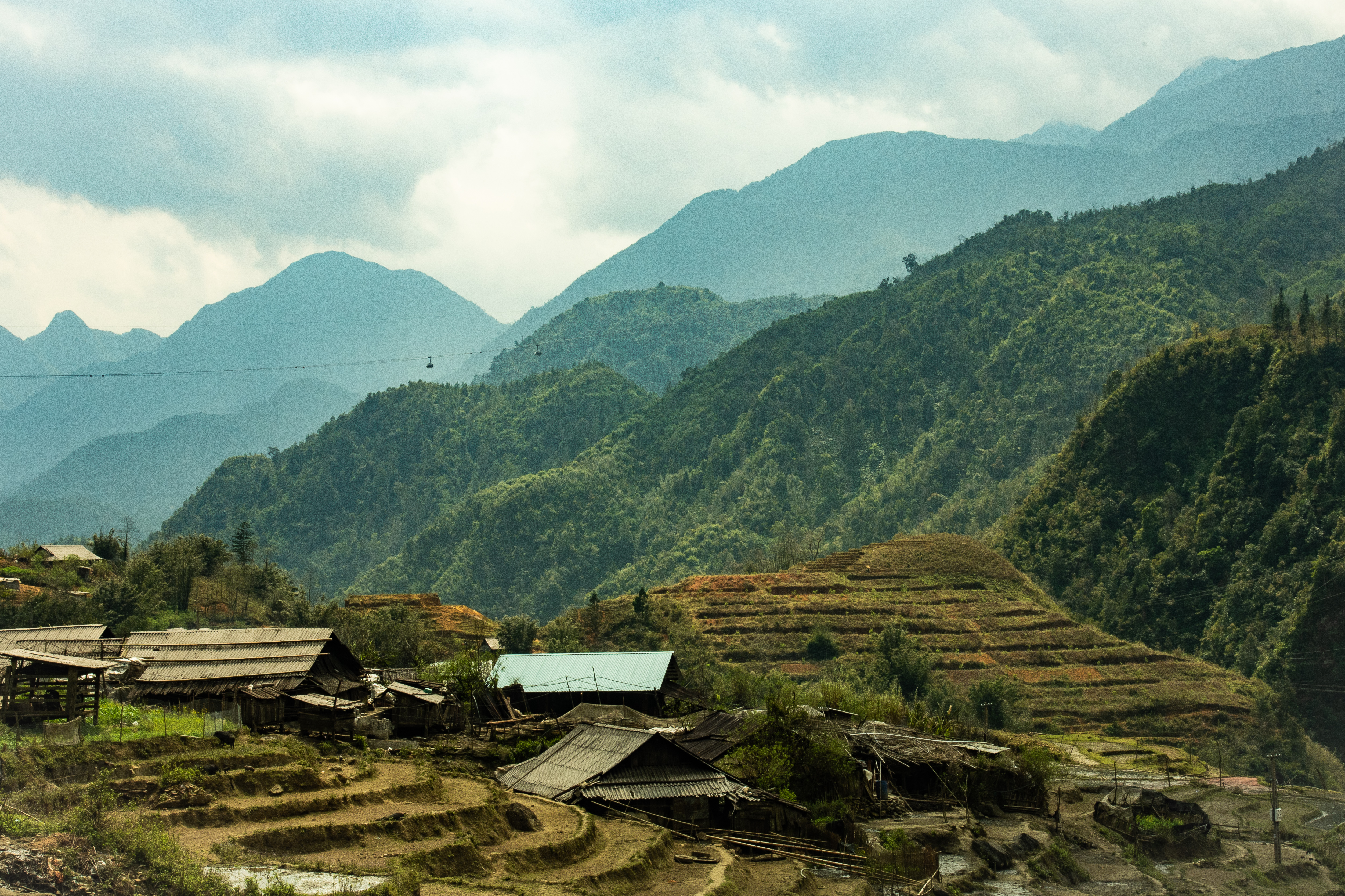
We were there in late February and early March, just before the main planting season at which time the terraces become a verdant green.
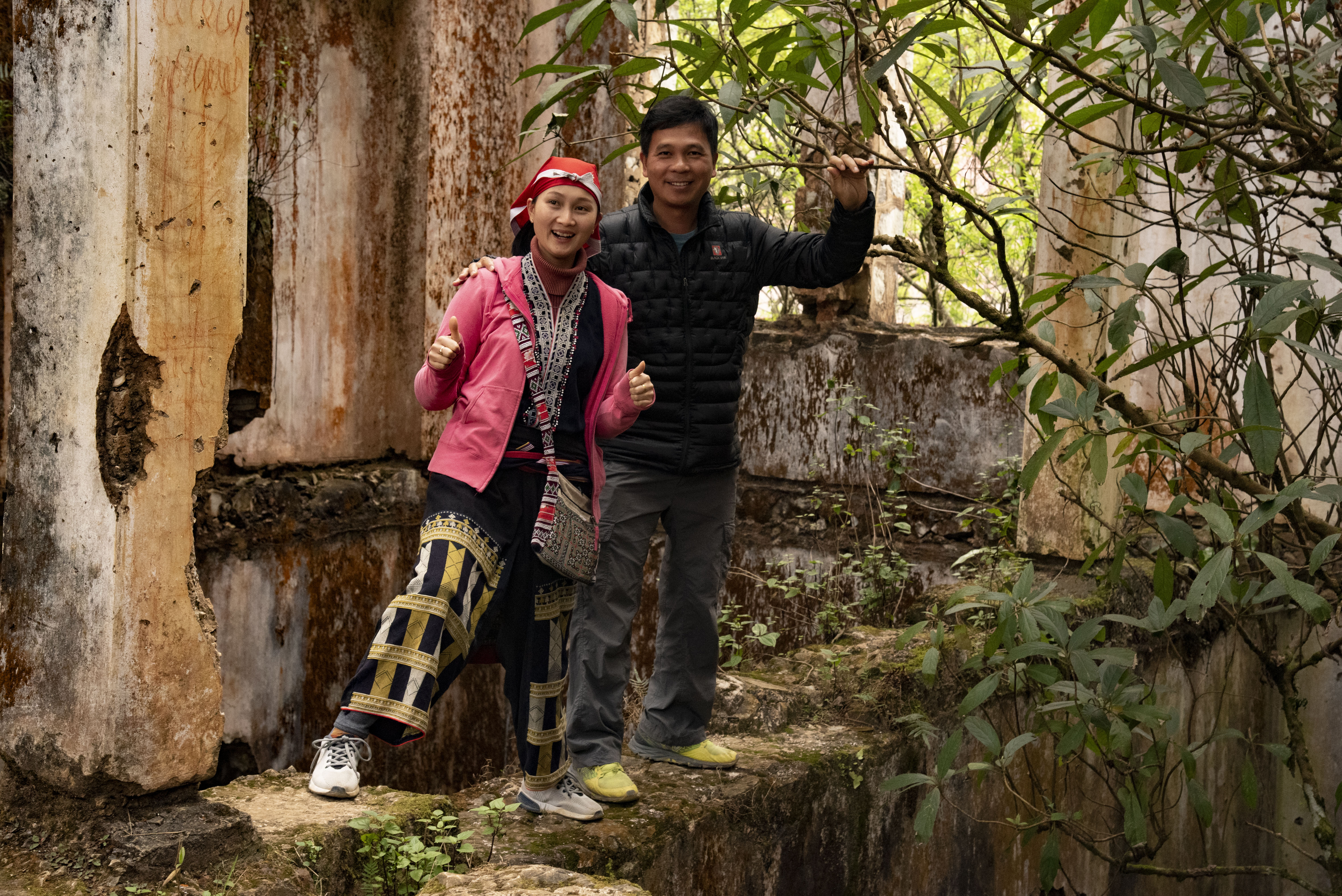
Our local guide was Mai Linh, a member of the Red Dzao Tribe. She is shown here with Thai at the remains of an old French monastery. She took us to visit her village of Ta Phin where we met with her mother and other members of the Red Dzao community.

The women carry items for sale in baskets on their backs and each day, always wearing their tribe’s traditional clothing, go down to Sapa to sell their wares. Mai Linh poses below with her mother in front of the house that she grew up in, and which is still occupied by her family. Mai Linh lives in Sapa with her husband and young daughter.
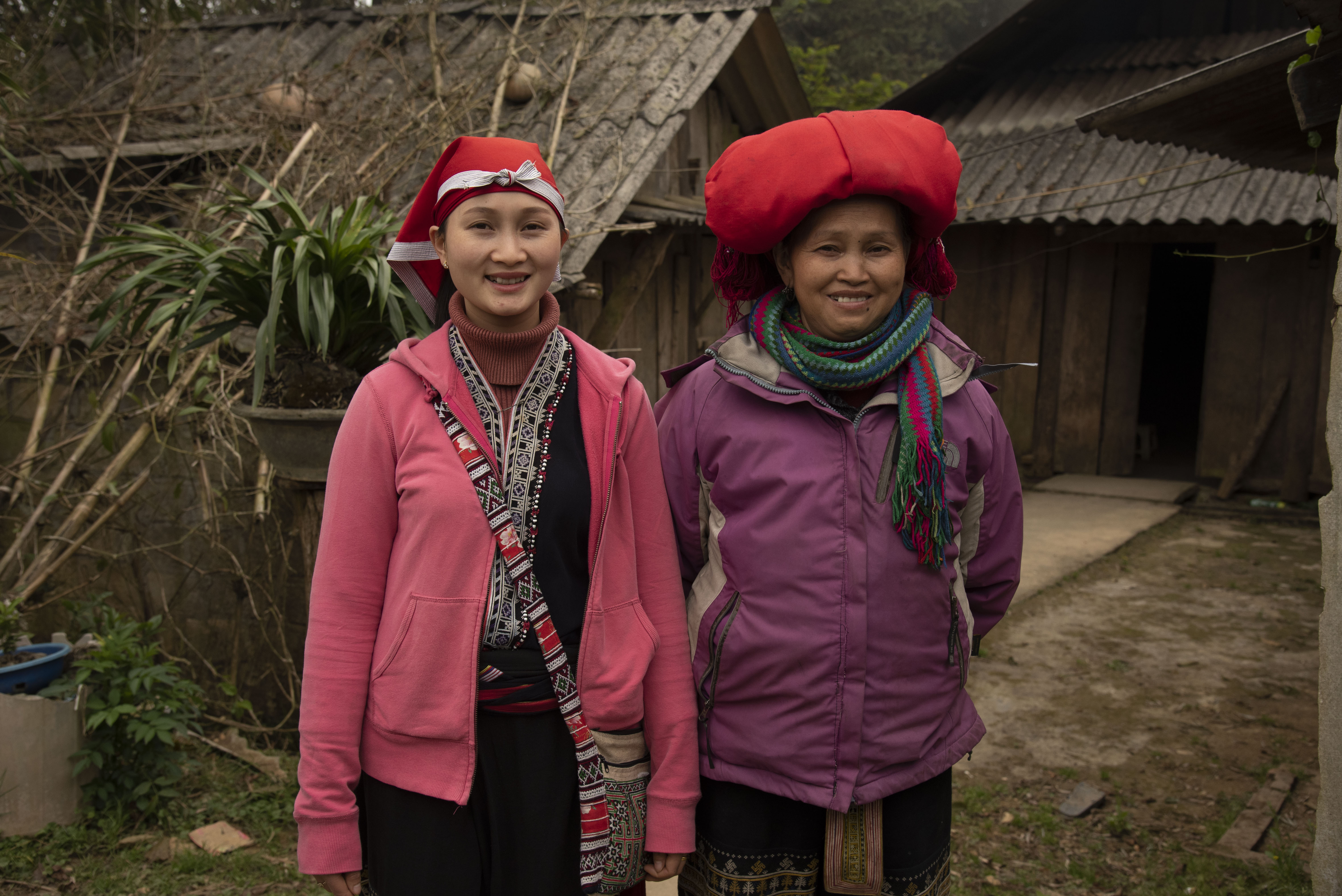
The red headdress identifies Mai Linh and her mother as members of the Red Dzao tribe.

The women gathered in the main room of Mai Linh’s family house which has a hard dirt floor and minimal furnishings. A couple of hanging bulbs provide some light.
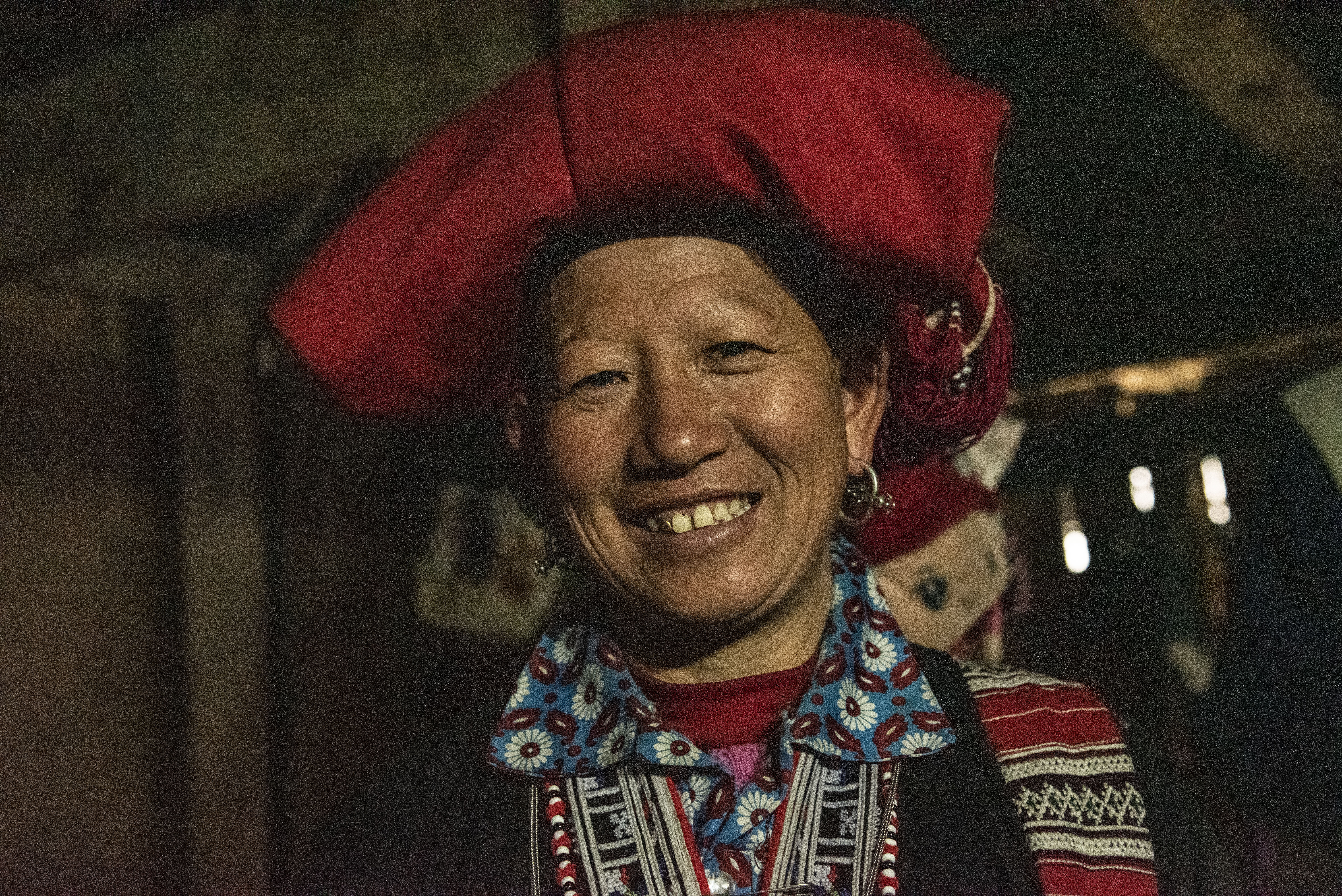
The women were open and friendly, eager to connect with us and sell us their wares.
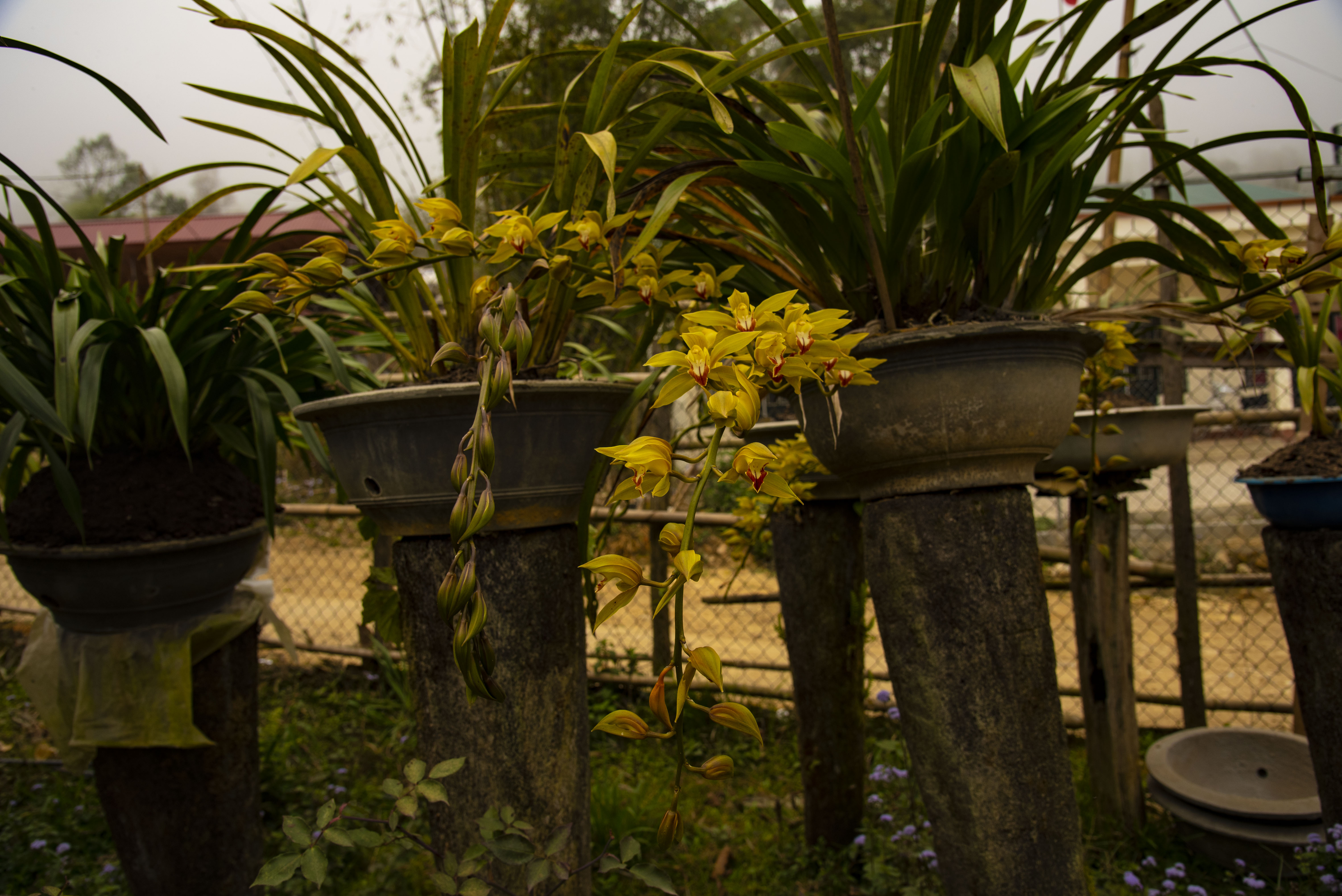
Mai Linh’s mother grows orchids, which she sells.
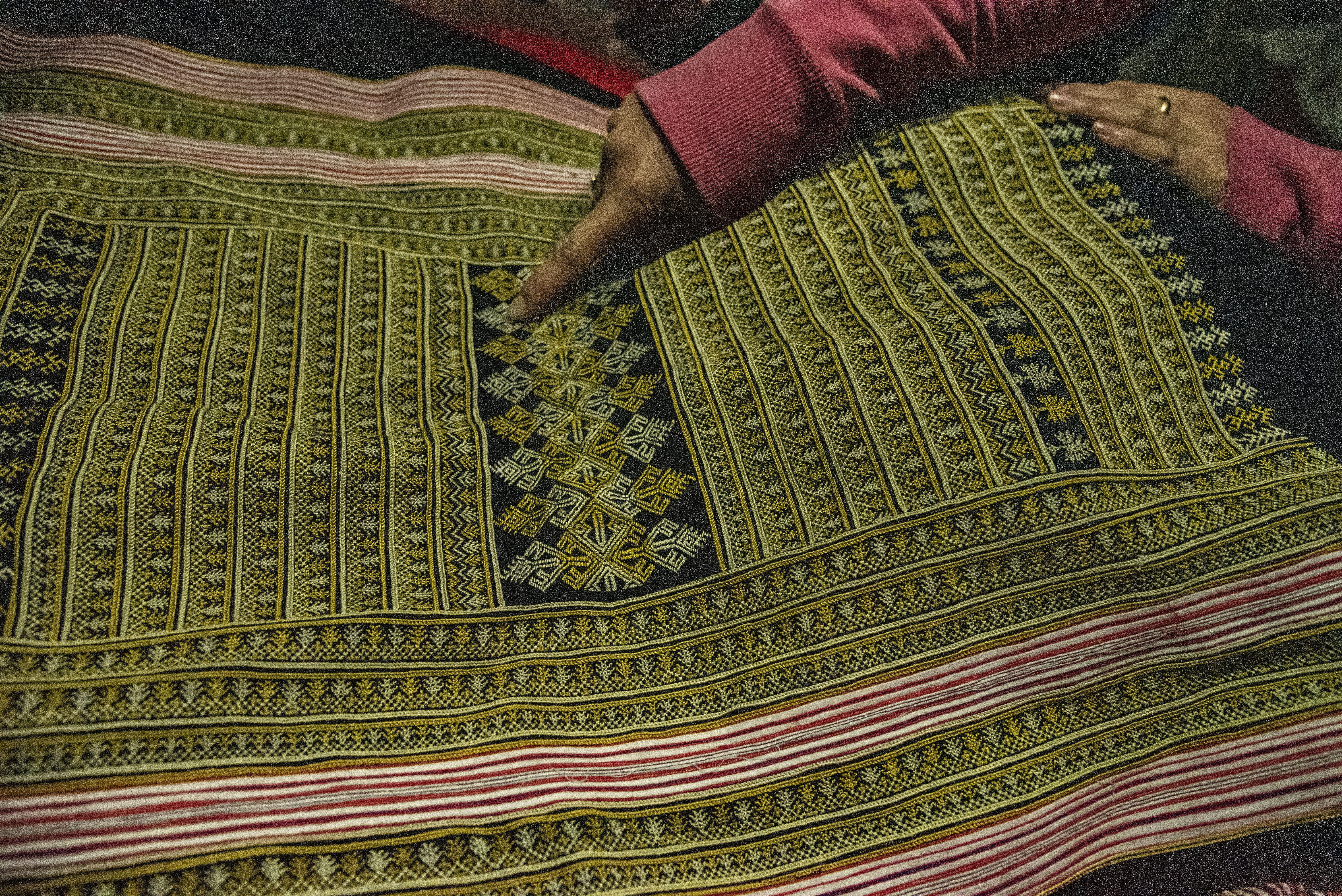
The Red Dzao are known for their fine embroidery. Mai Linh pointed out some of the primarily agrarian symbols they employ. At a young age, girls begin creating their wedding dress and by the time they marry, at around 15, their wedding costume is complete. Arranged marriage is the norm. Below is Mai Linh in her mother’s wedding dress.

Mai Linh told us that she herself was over 20 when she got married and that she married for love. She also shared with us that she had had a close call with human traffickers when she was around 14. Her grandmother, sensing what was happening, intervened. After that, Mai Linh applied herself in school and noted that she learned most of her English language ability on the internet. As a guide, she is held in high regard by the other women. She is one of the few people from her village who has gained middle-class status.
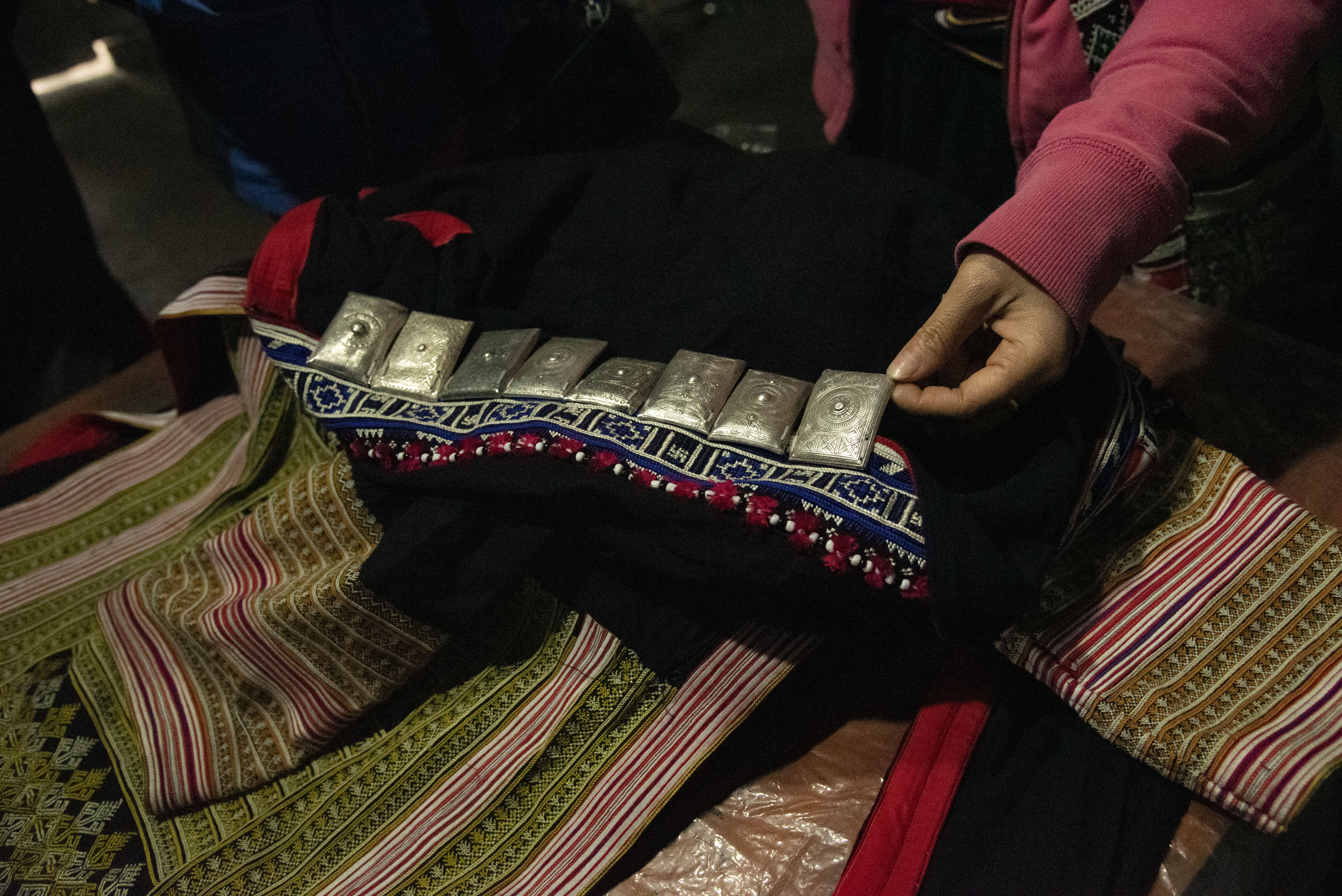
Her silver frontispiece is made from French coins, although cheap imitations can be found in Sapa.
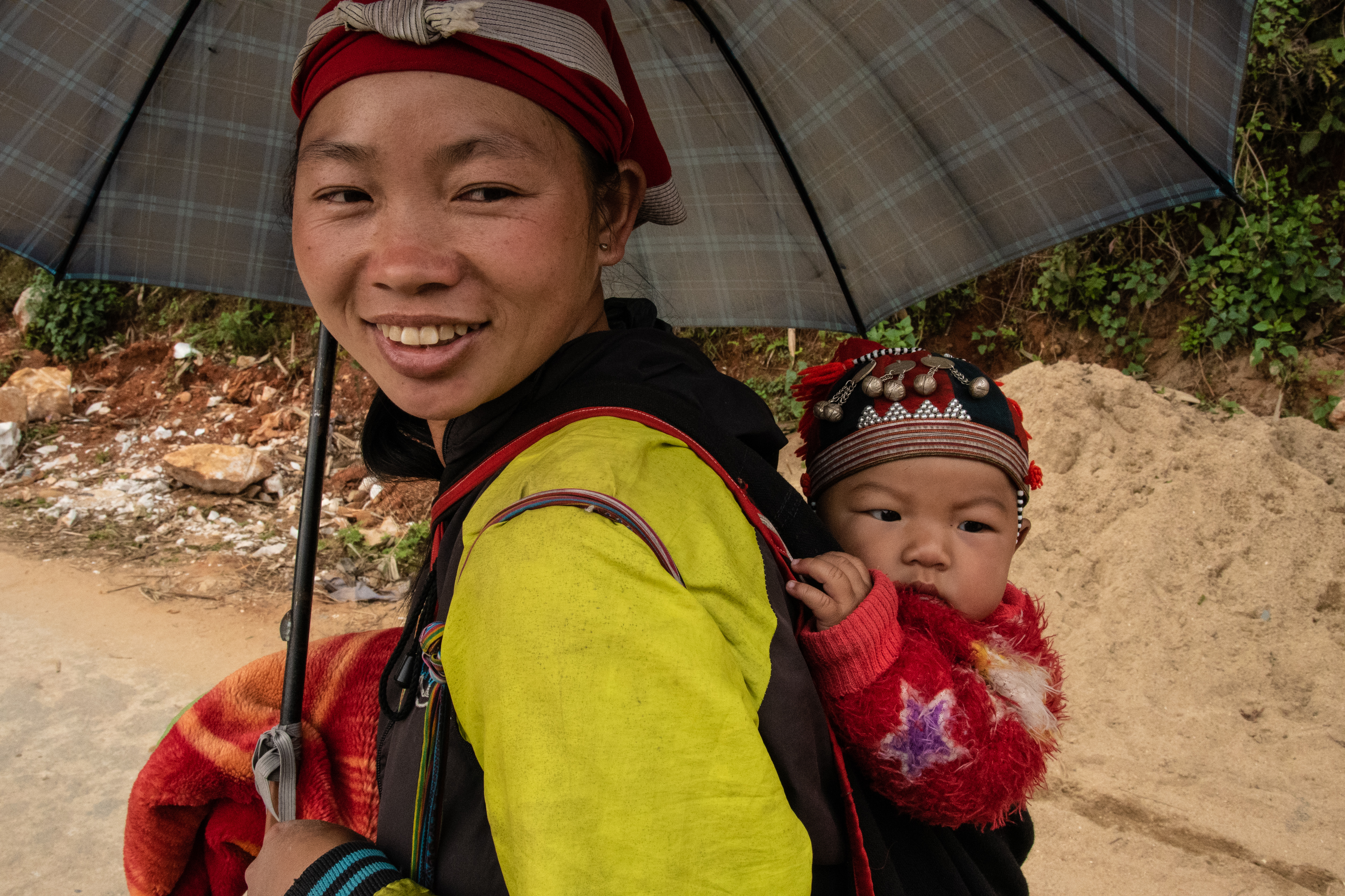
This baby is wearing a traditional cap meant to ward off evil spirits. Mothers hand make these hats during pregnancy.
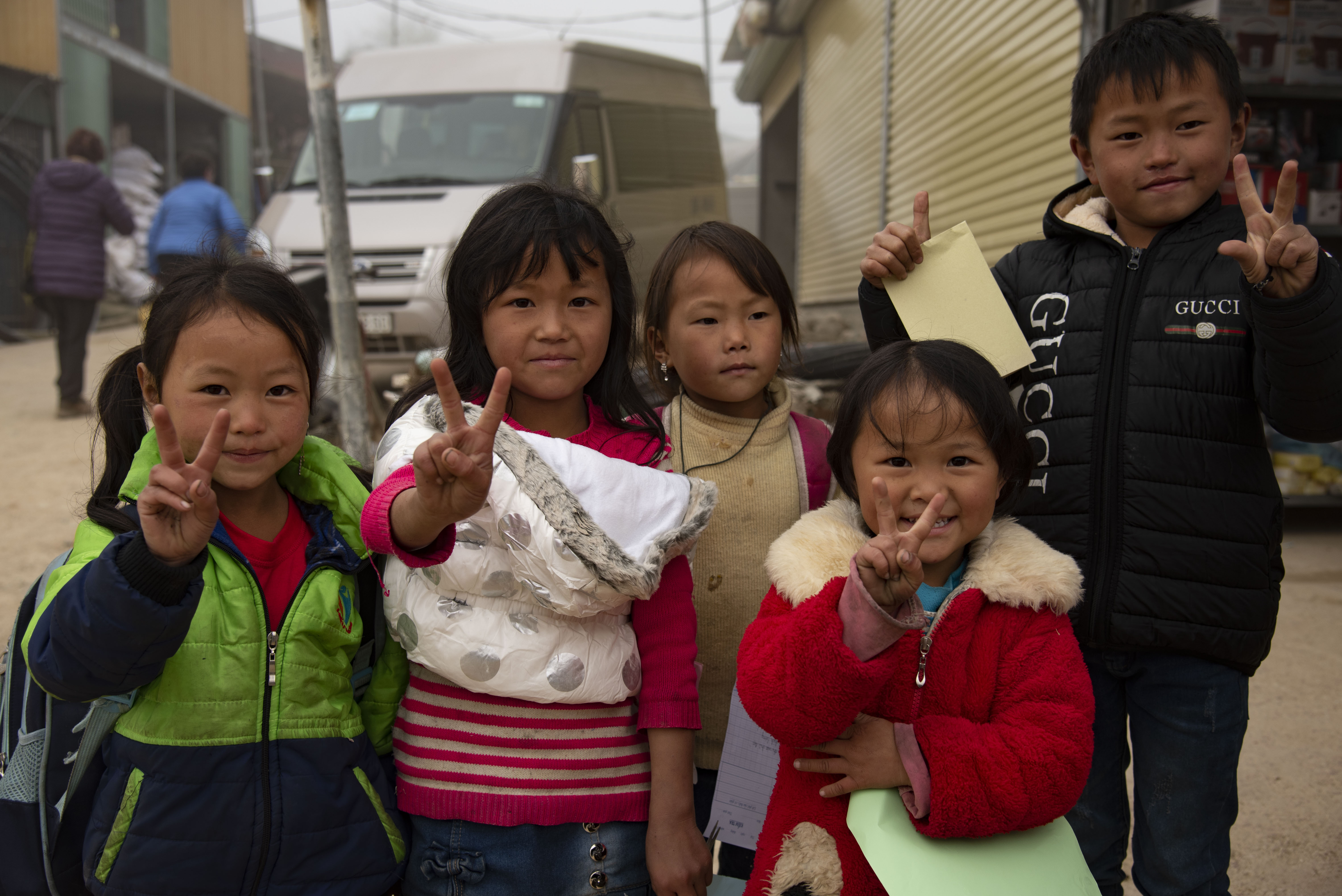
On our way out of Ta Phin, school kids flashed us the peace sign. Universal education is a top priority for the government.
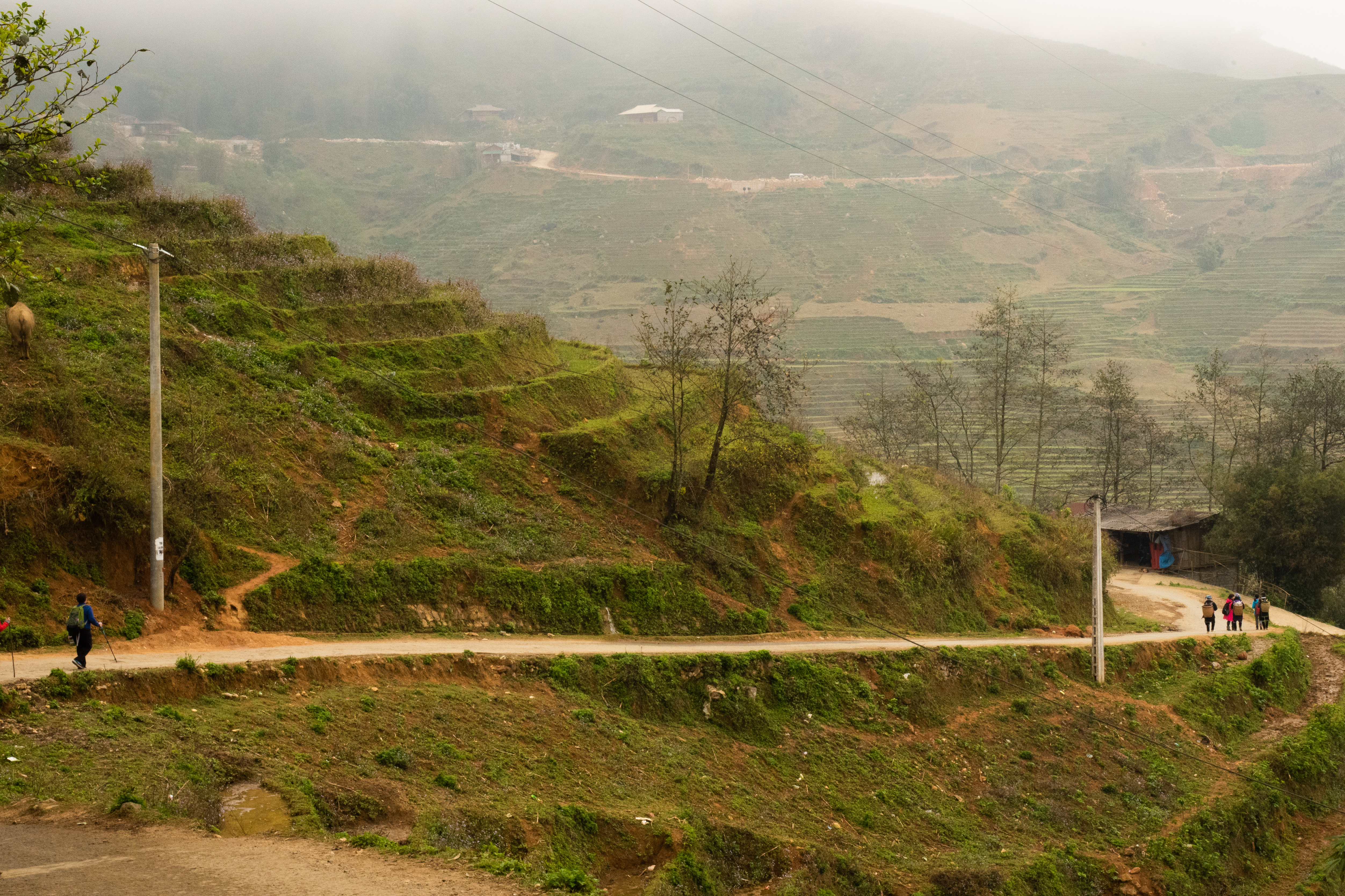
The next morning we trekked to Lao Chai and Ta Van Villages.
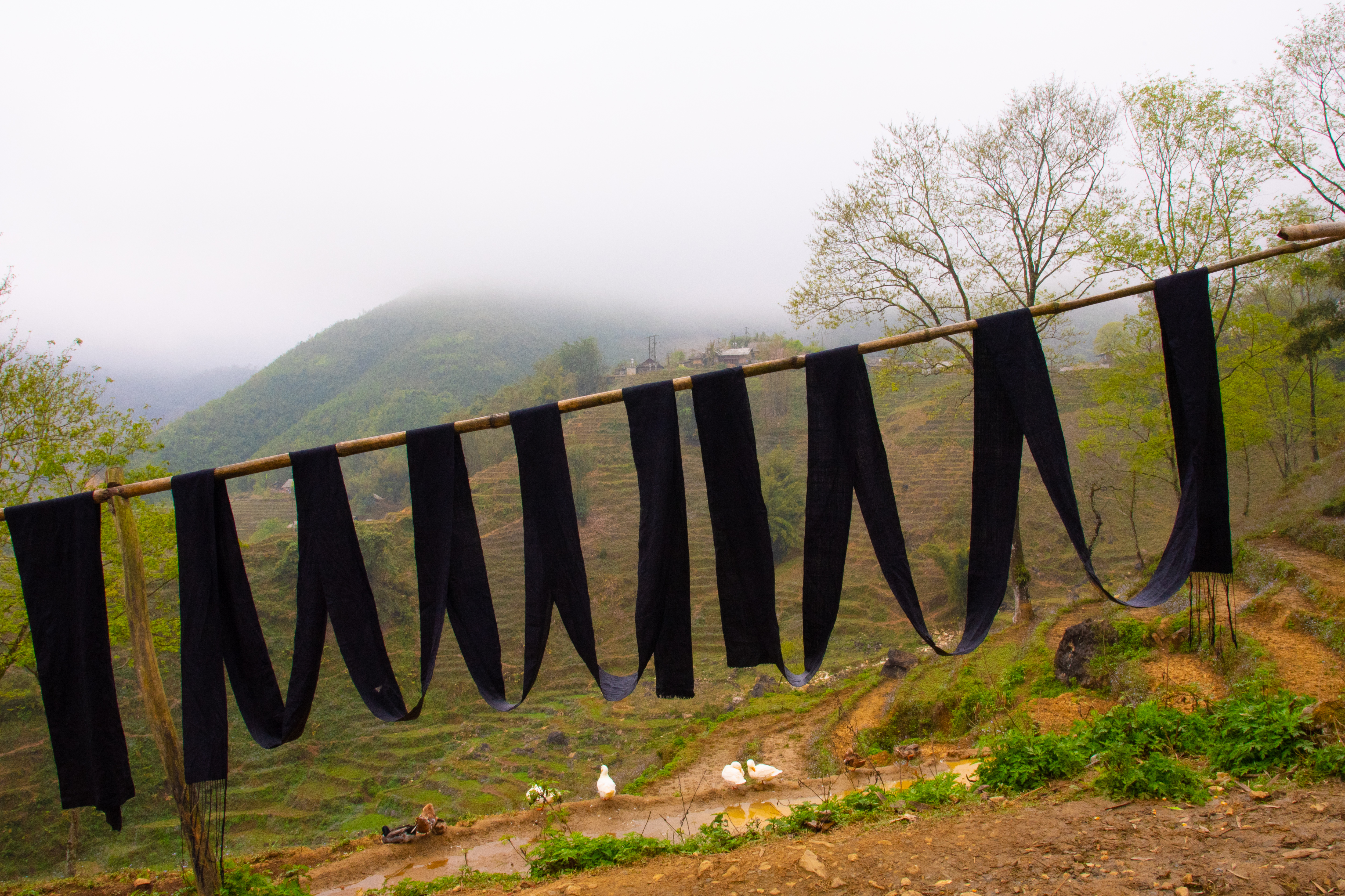
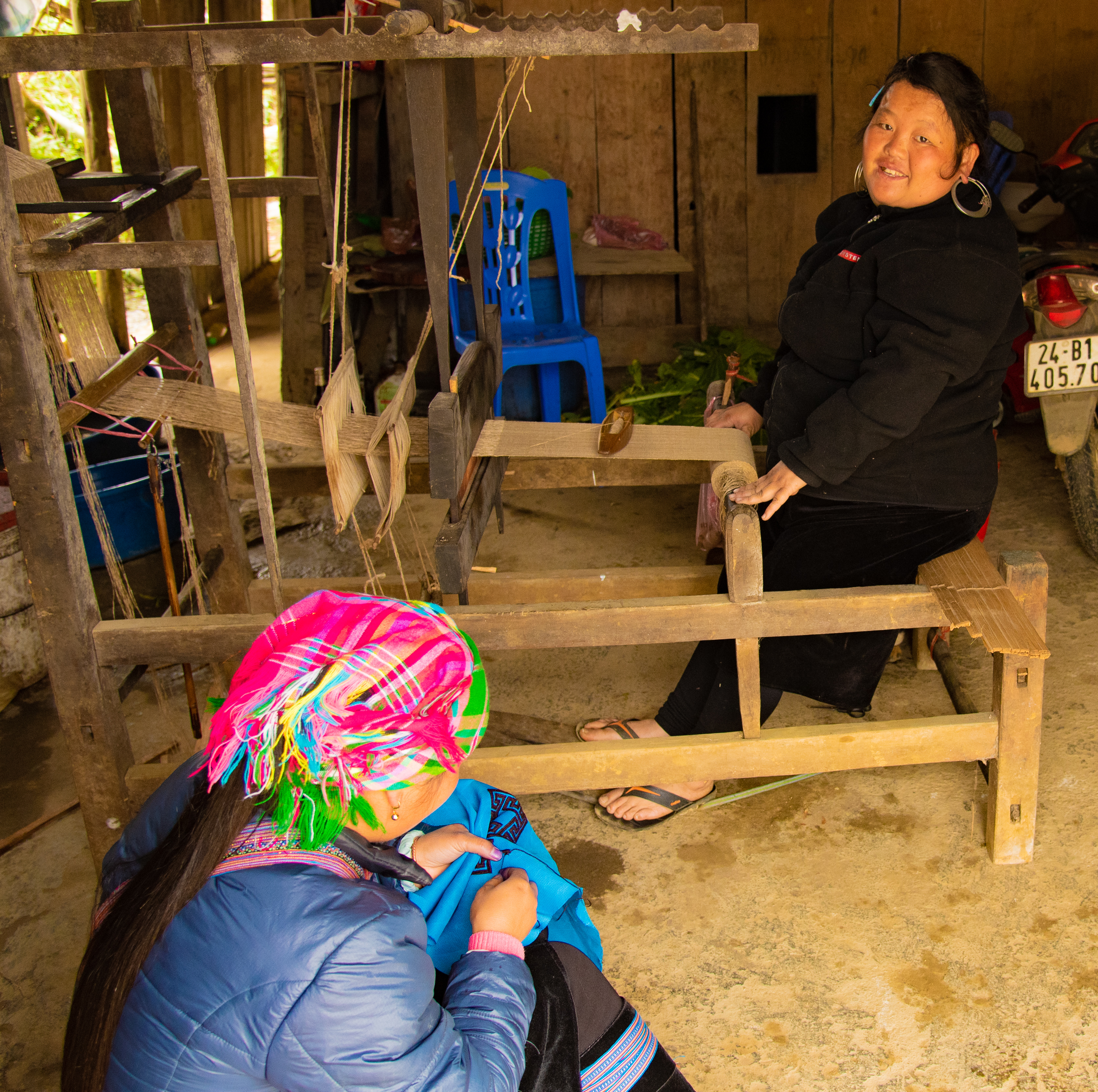
The Black H’mong are famous for their indigo dyed hemp fabric. Here we see a length of indigo cloth being dried on a line. Below is a weaver working at her loom.
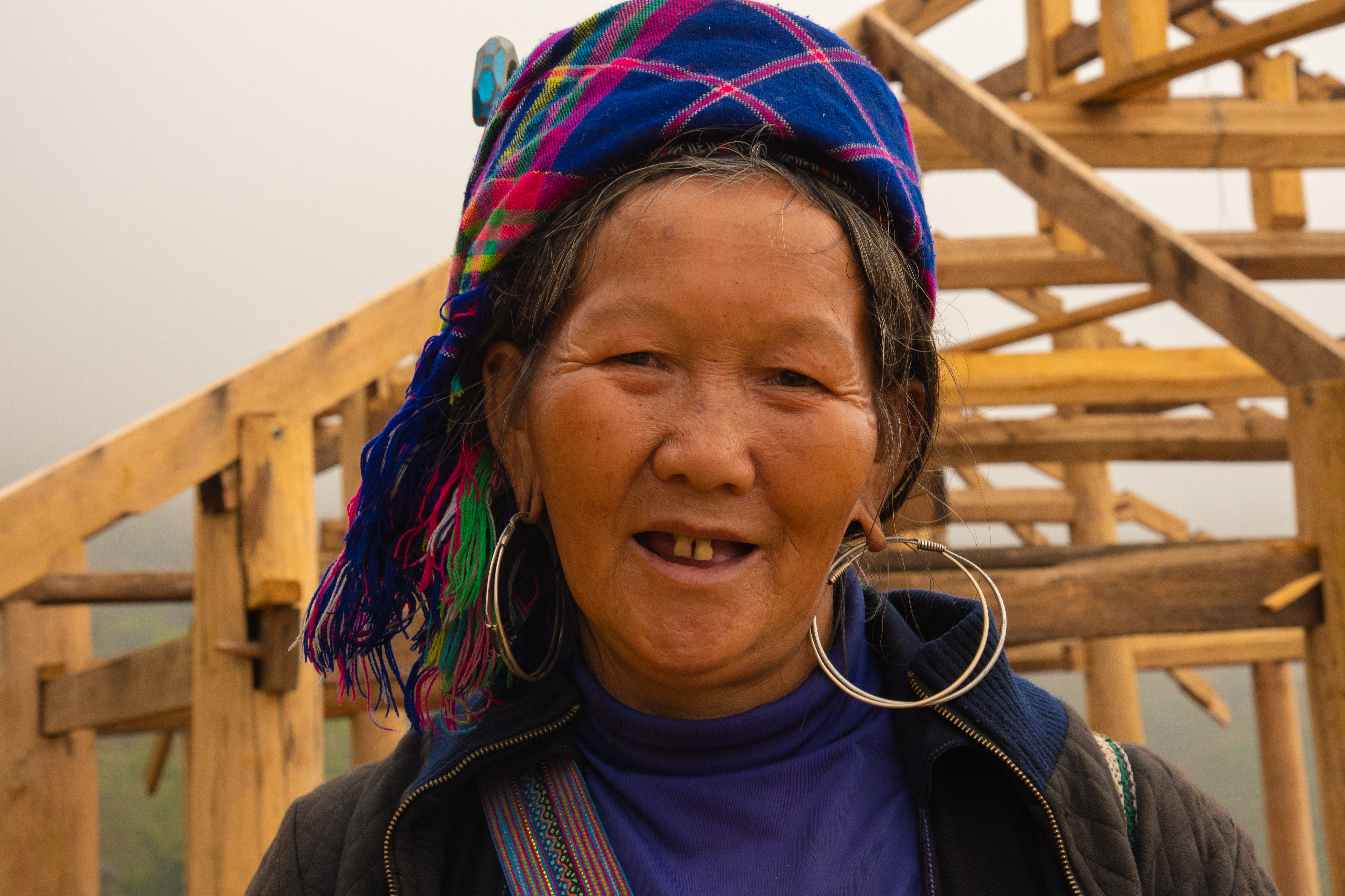
A woman wearing traditional Black H’mong headdress stands in front of framing for a new house set on a cliff overlooking the village. More affluent people from Sapa are starting to build new homes in this lush, picturesque area. It is in stark contrast to the traditional H’mong way of life.

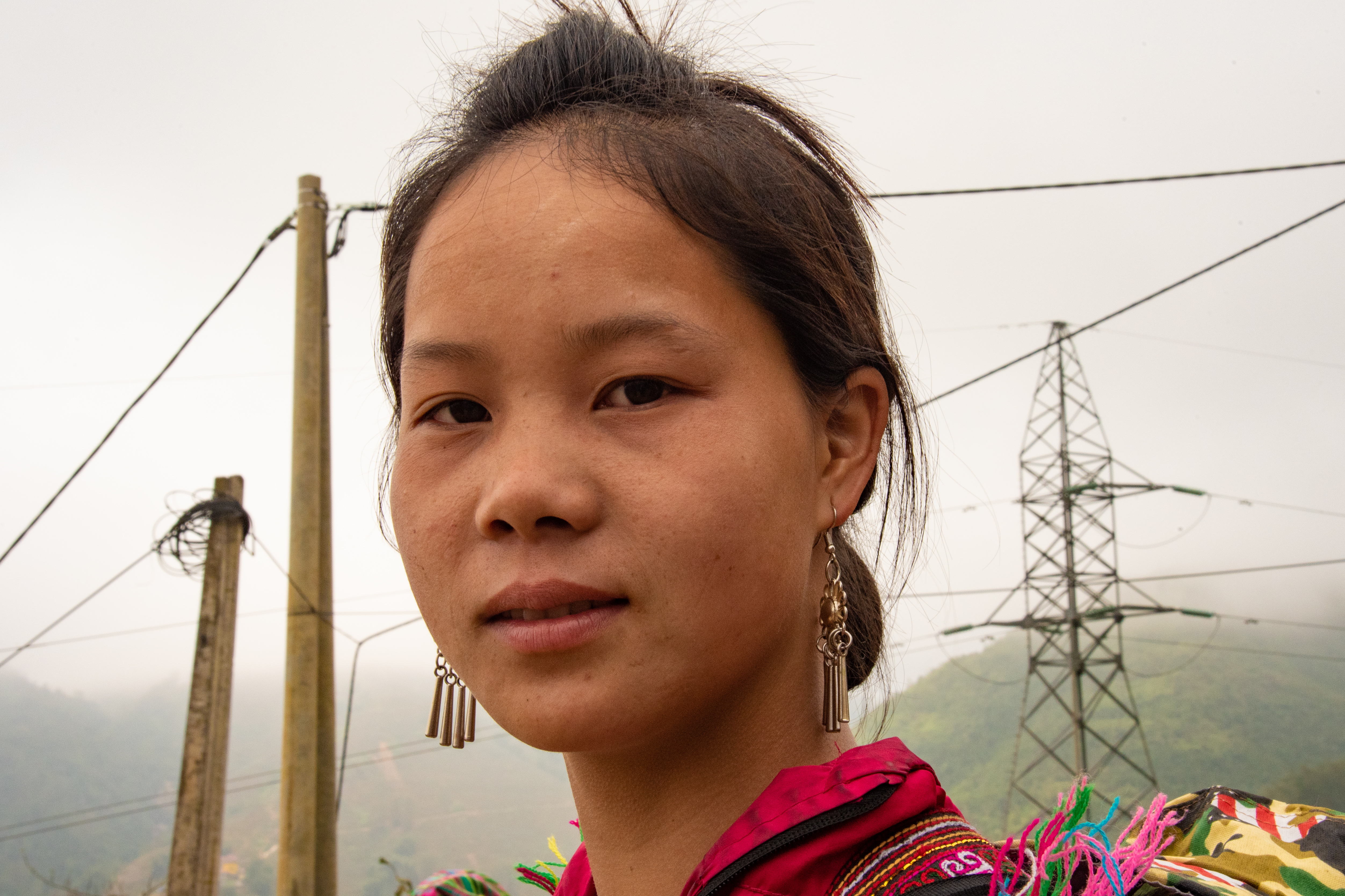
This young woman is pictured in front of new electric infrastructure.
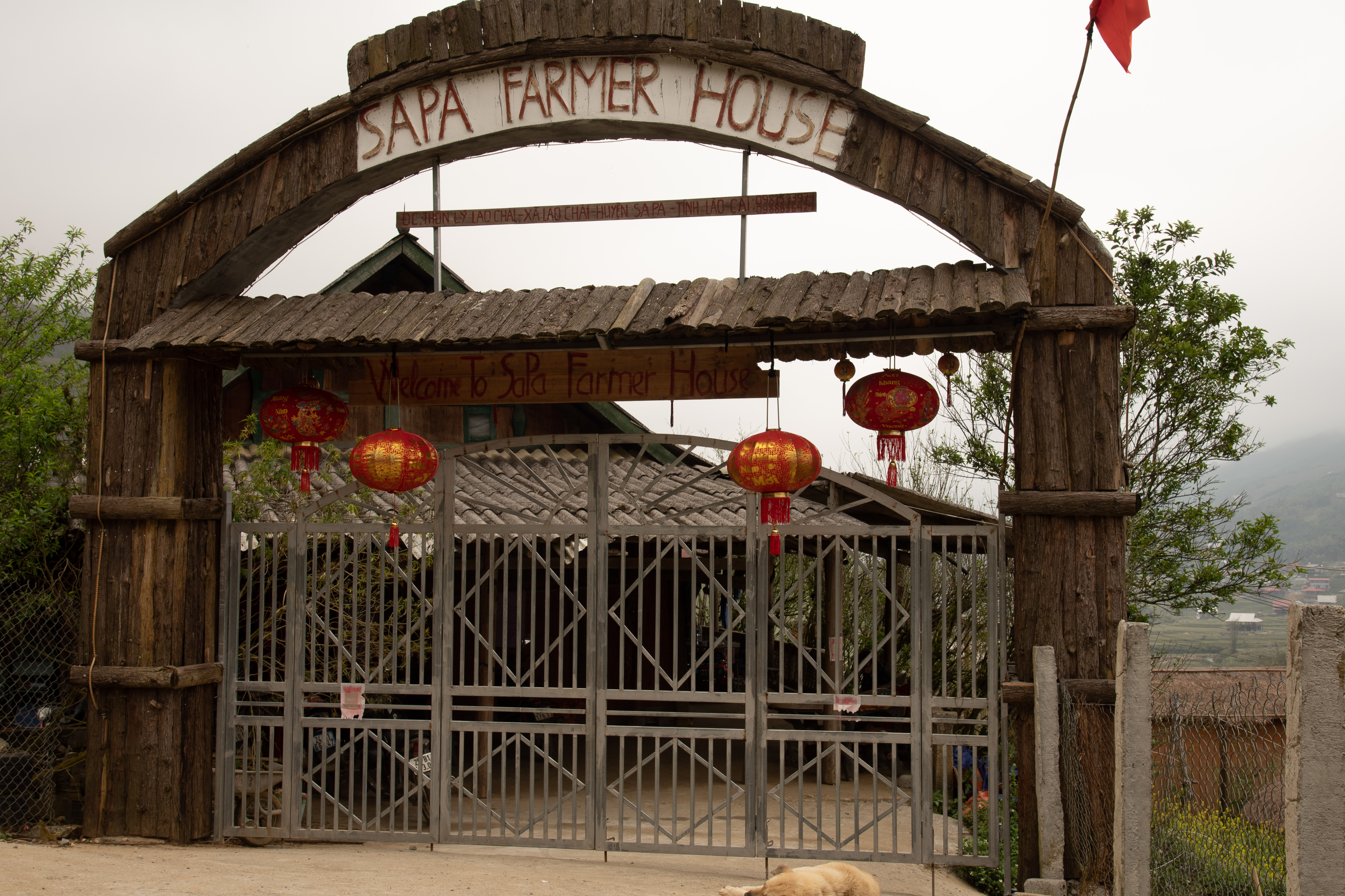
One of the several homestays aimed at the growing tourism in the area.

View of Lao Chai village from above.
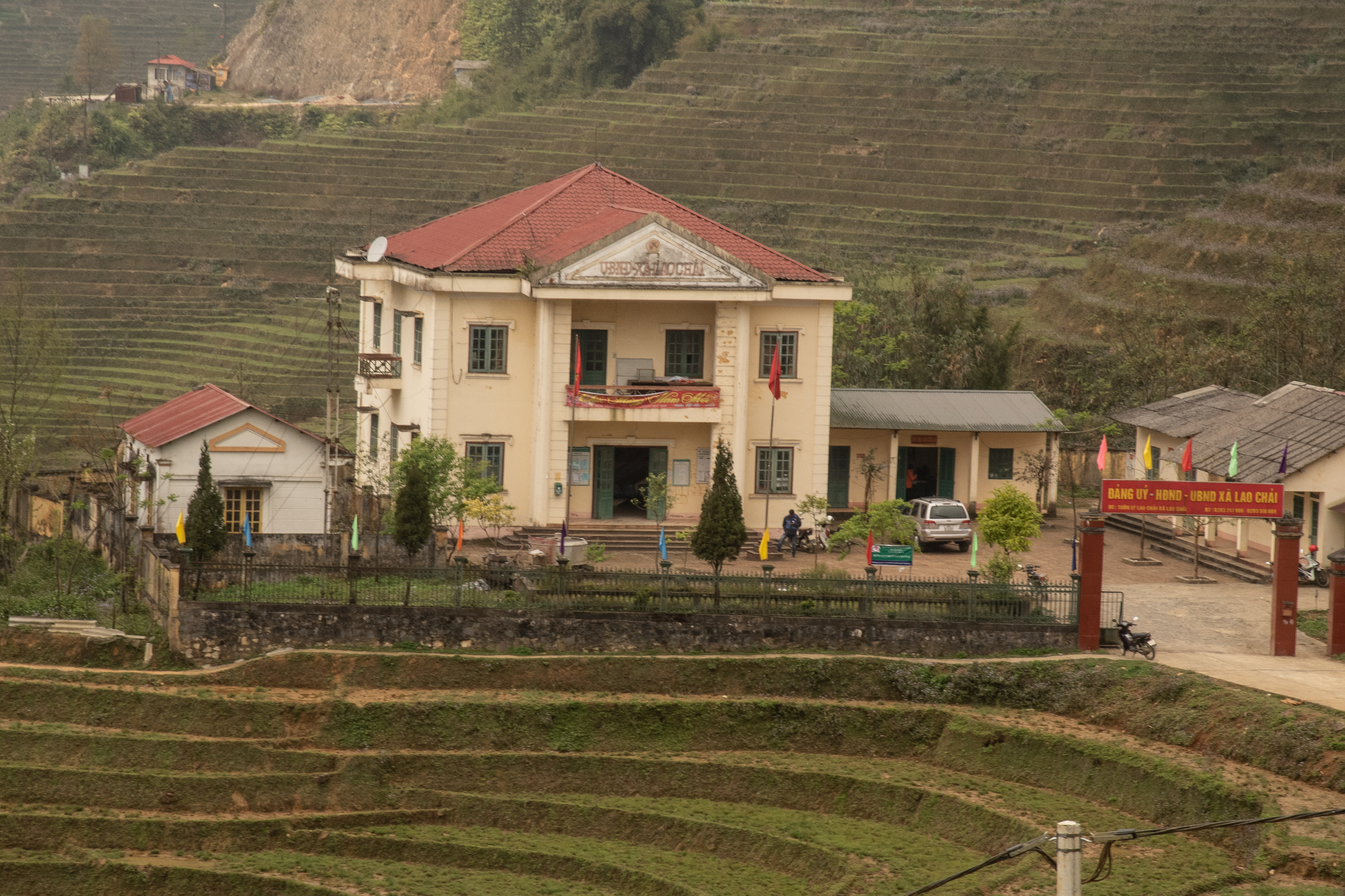
Lao Chai Municipal Building
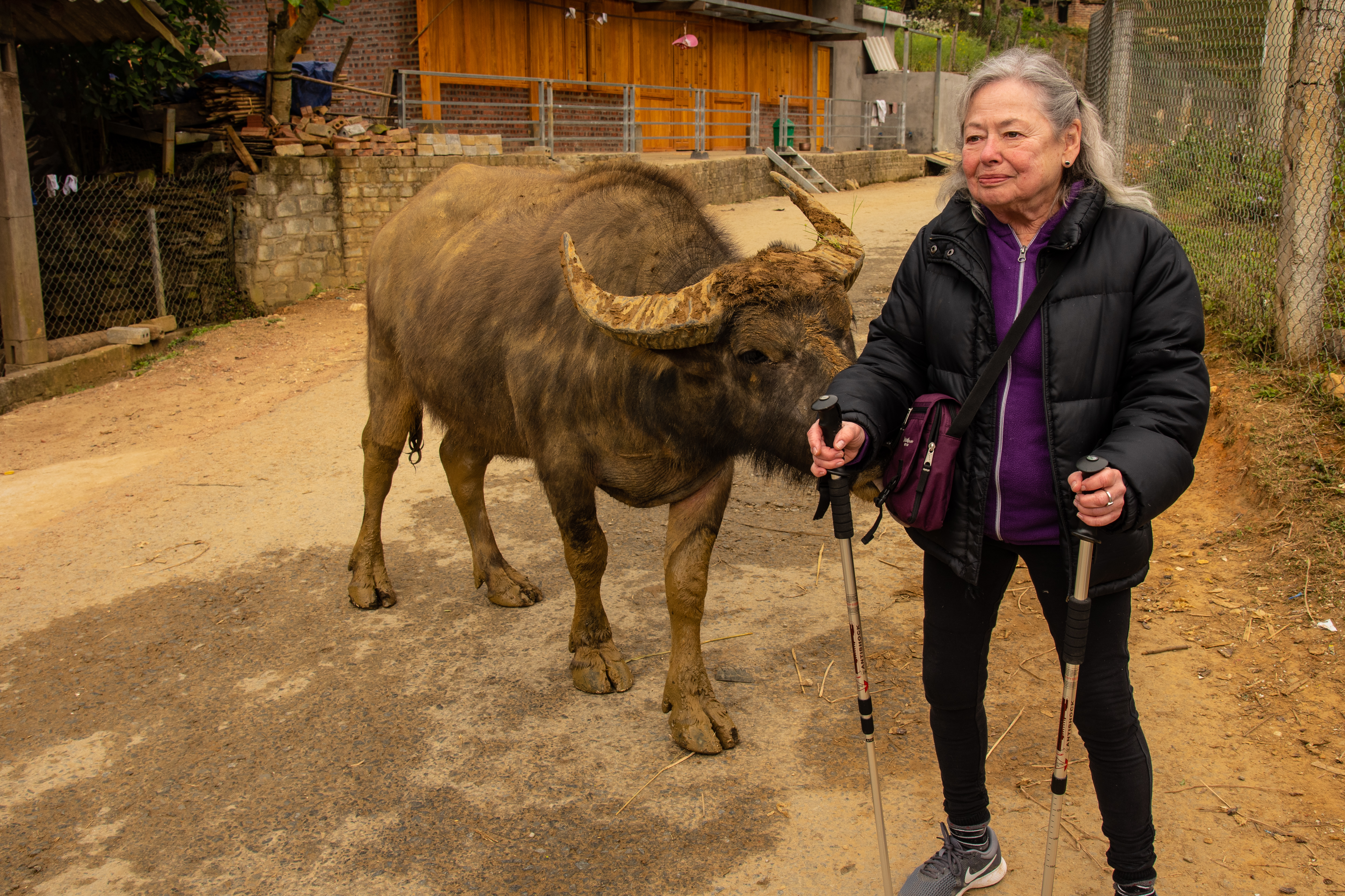
You never know who or what you might meet on a village road. This water buffalo, fresh from a roll in the mud, became very interested in Joanne and began to sniff and follow her.
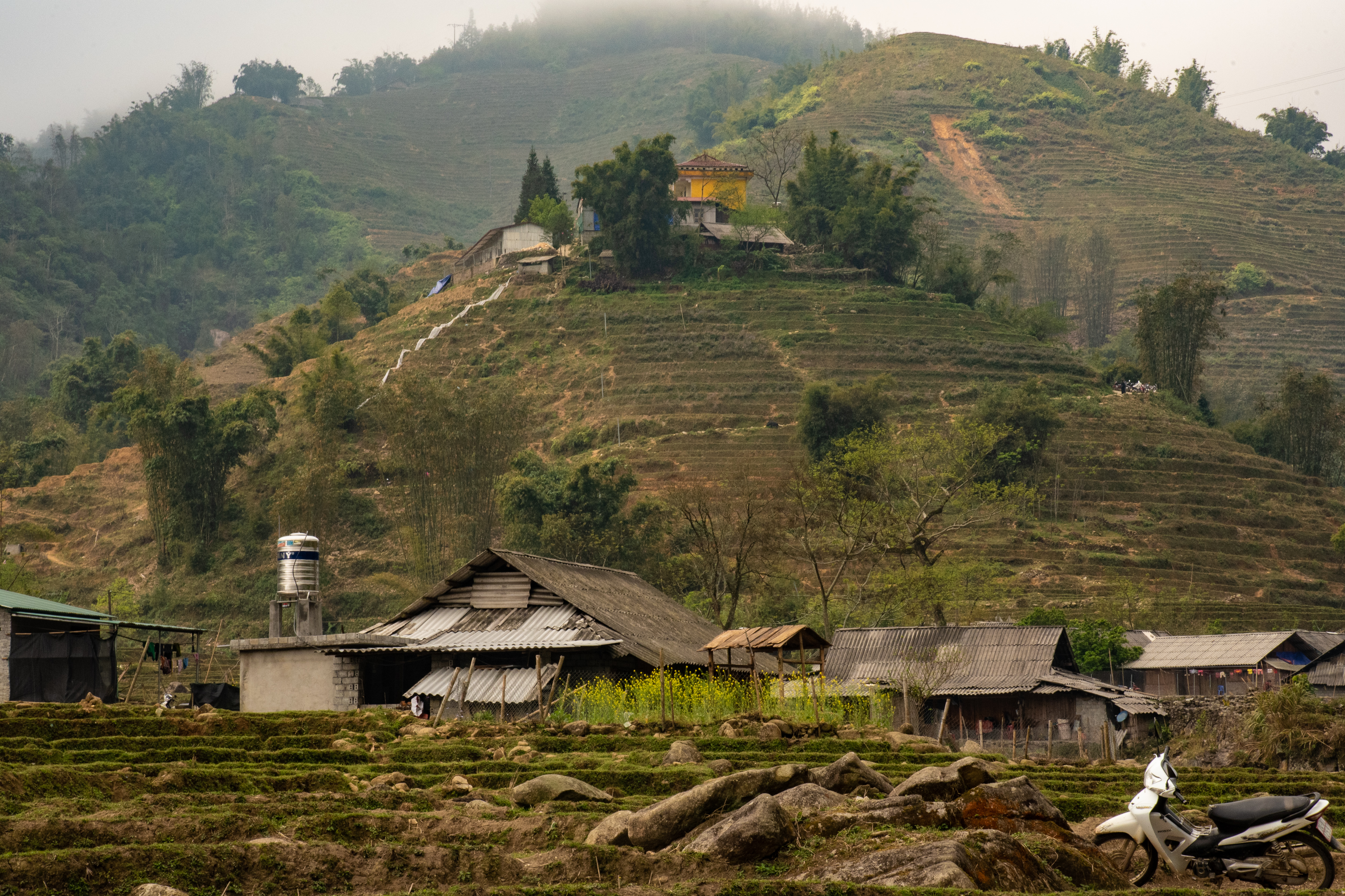
This is a typical farm scene with its terraced hillside in the Muong Hoa Valley that lies between Loa Chai and Ta Van.
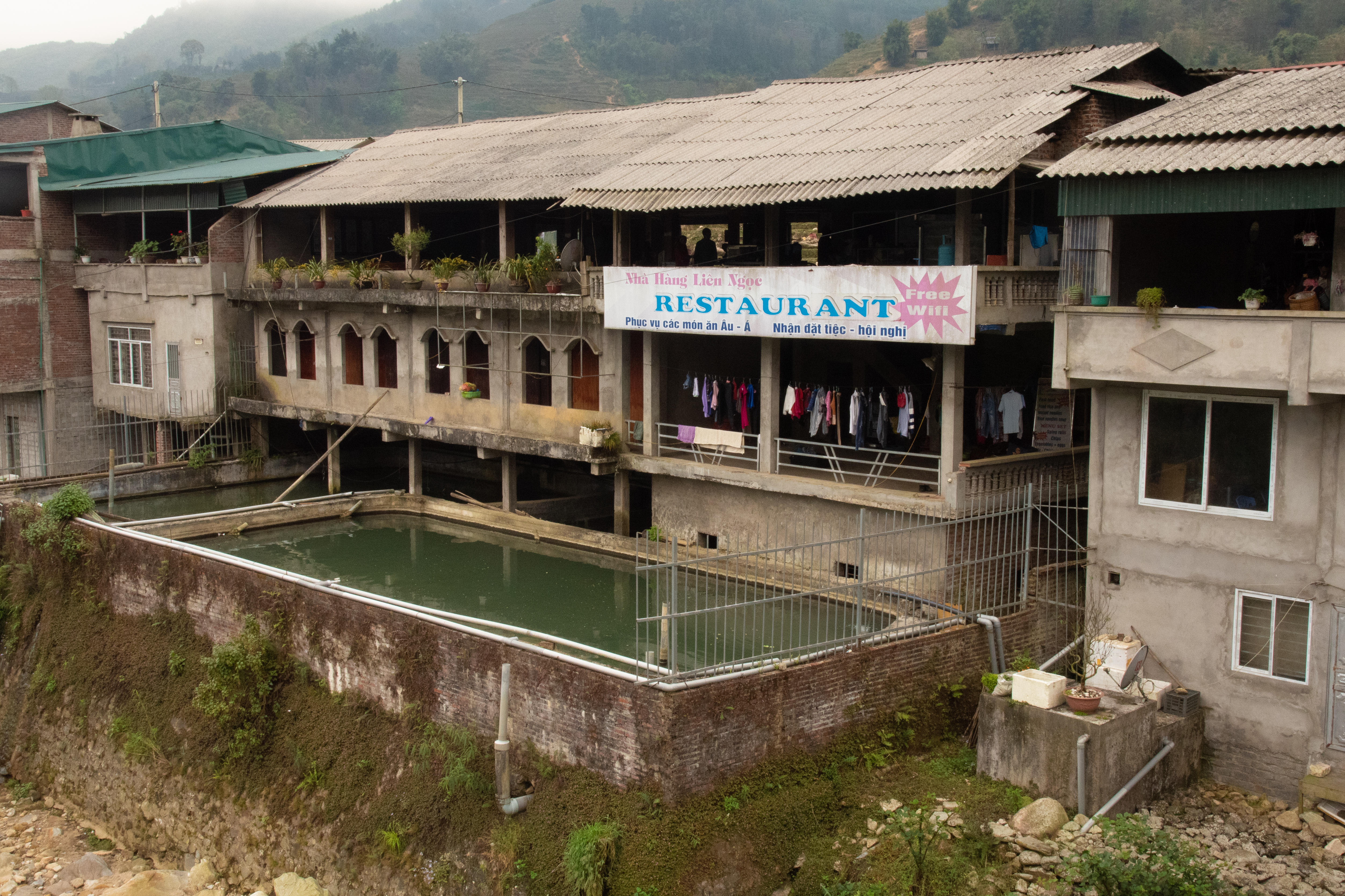
We had lunch at this restaurant, overlooking its fish farm.
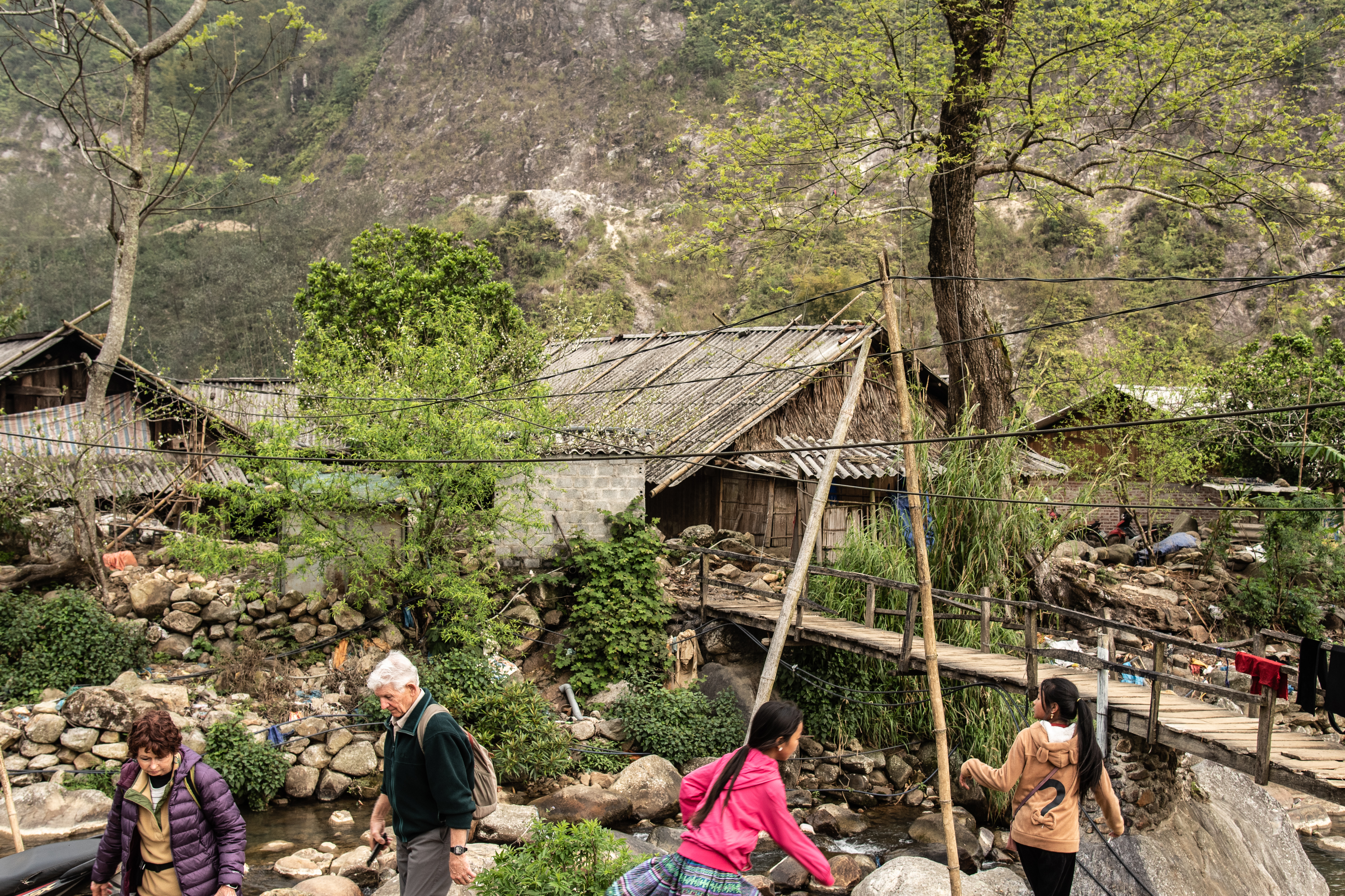
We crossed the bridge and visited with a local family who were members of the Giay tribe.
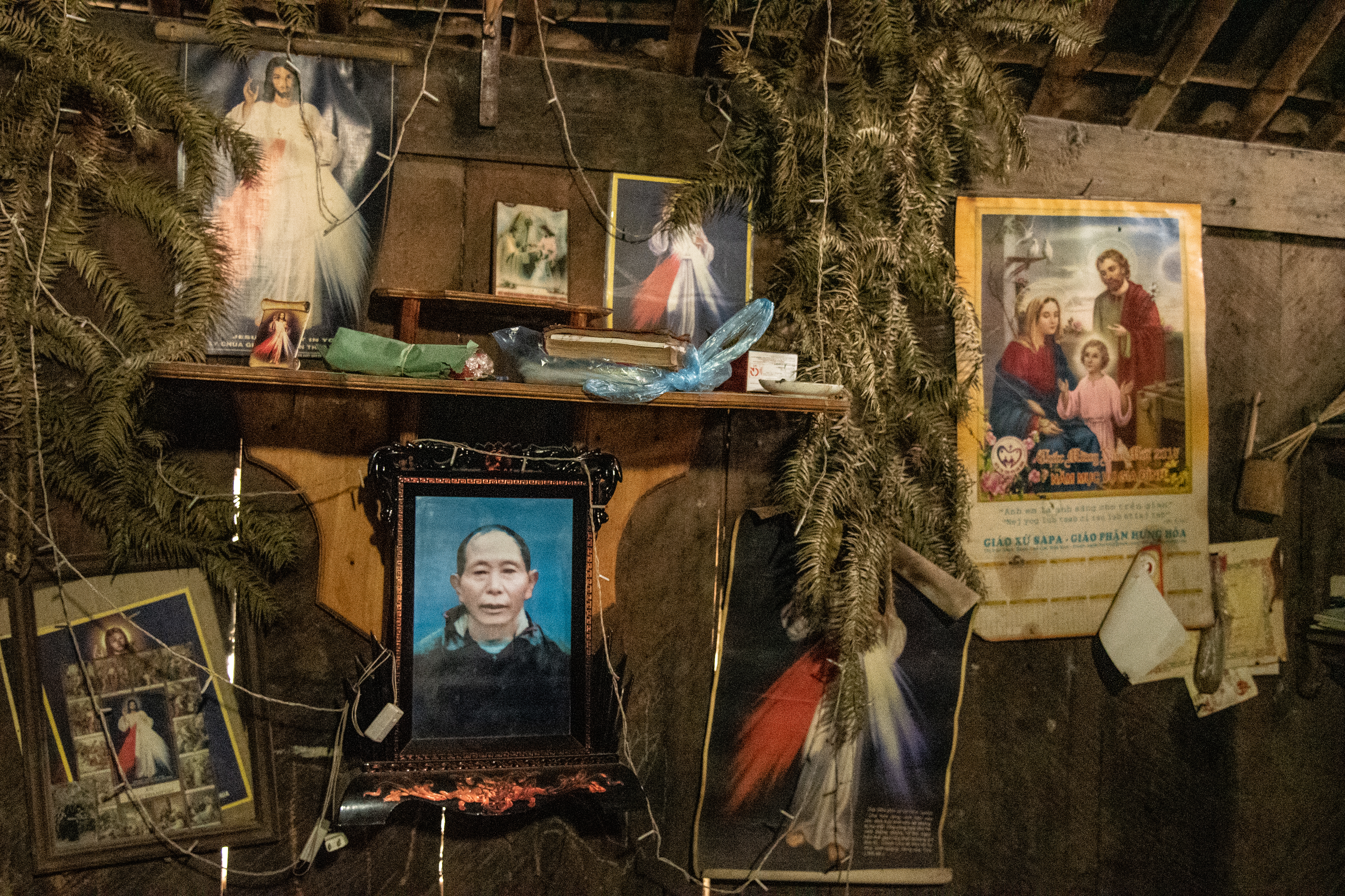
Eight percent of the Vietnamese population is Catholic. Here the typical household altar devoted to the family’s ancestors is shared with Catholic iconography.
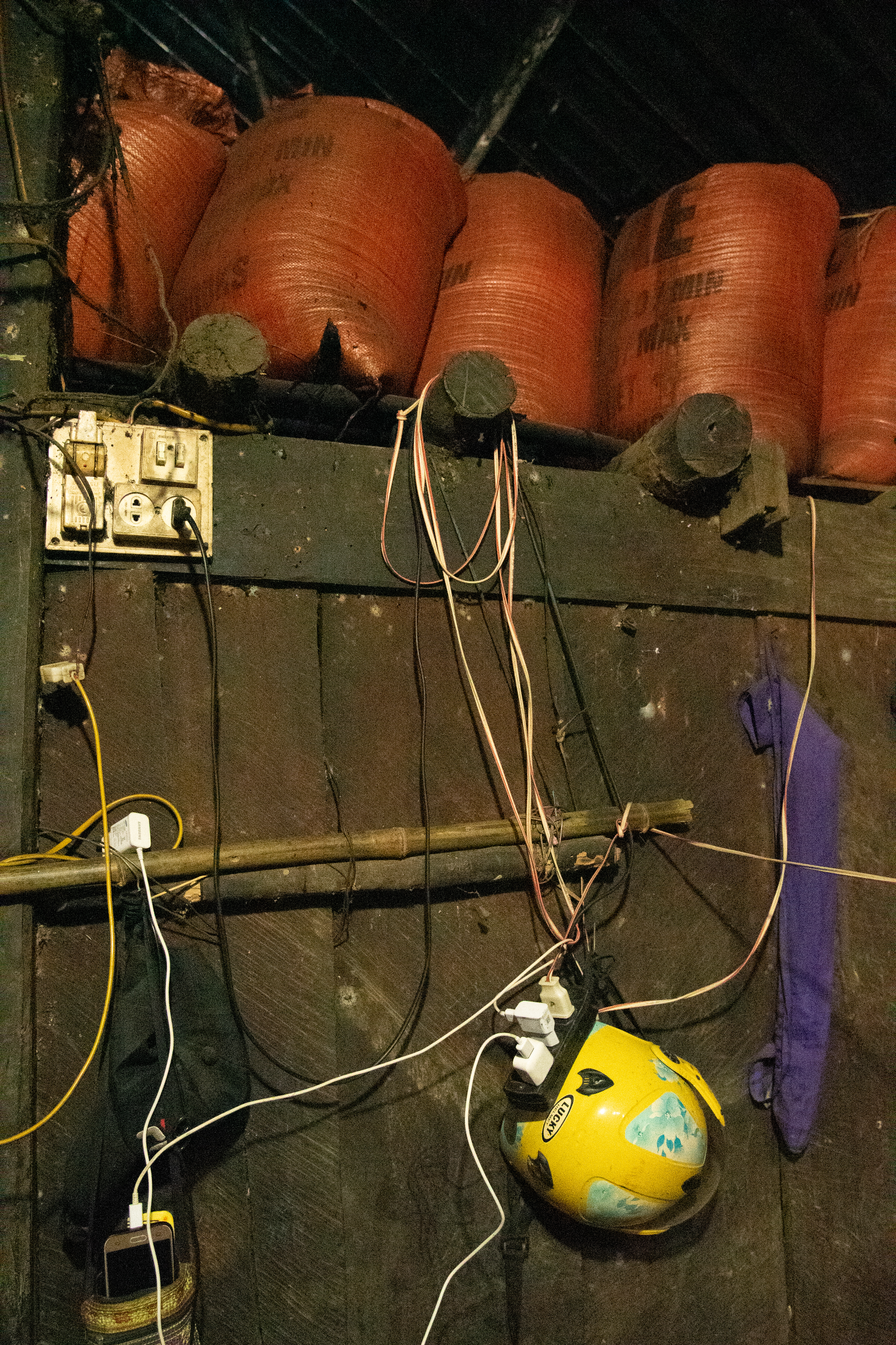
Electrical wiring is an iffy thing.
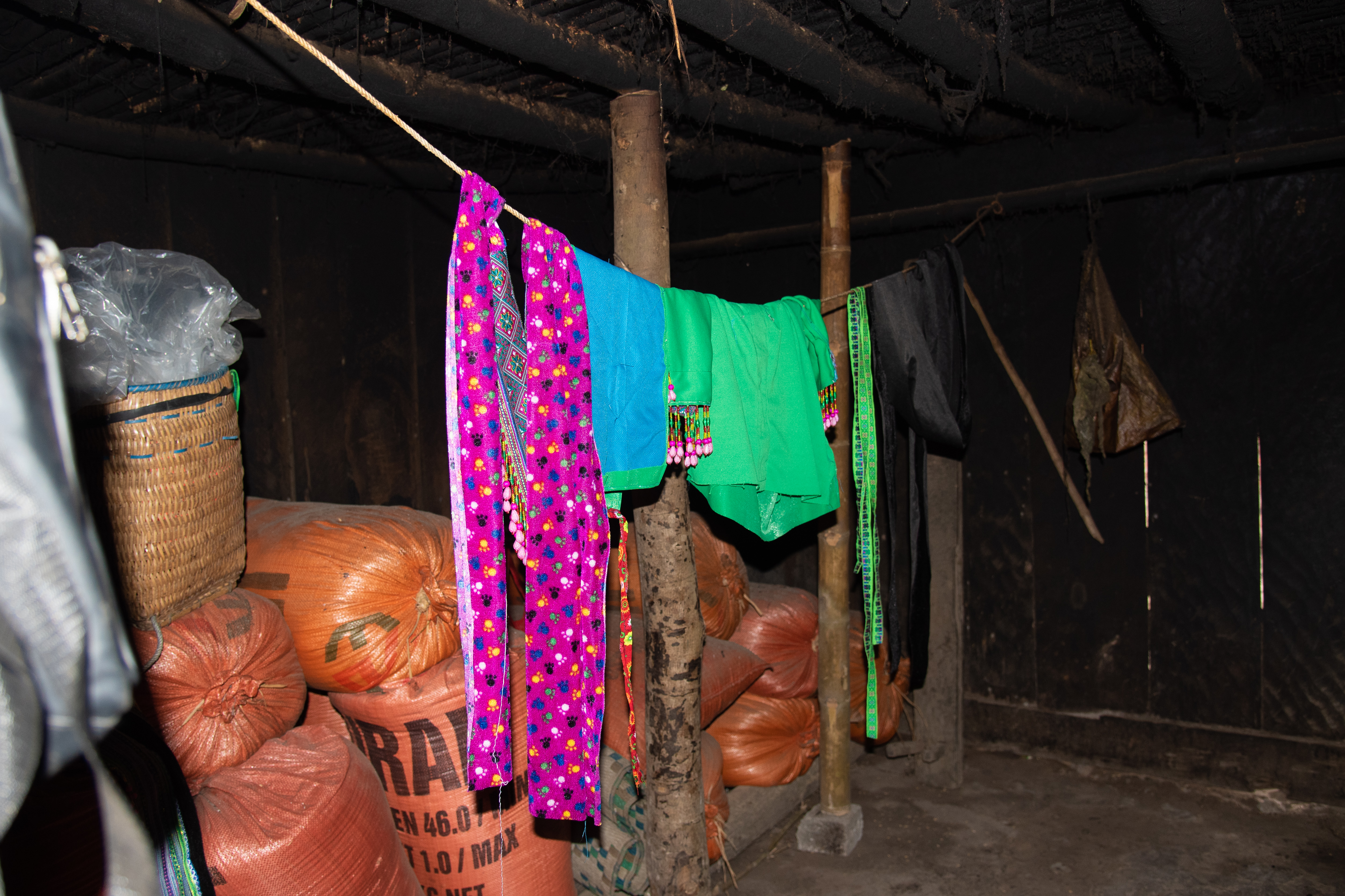
Bags of rice filled the rafters. These are the wedding gifts given to the newly married couple in the household.
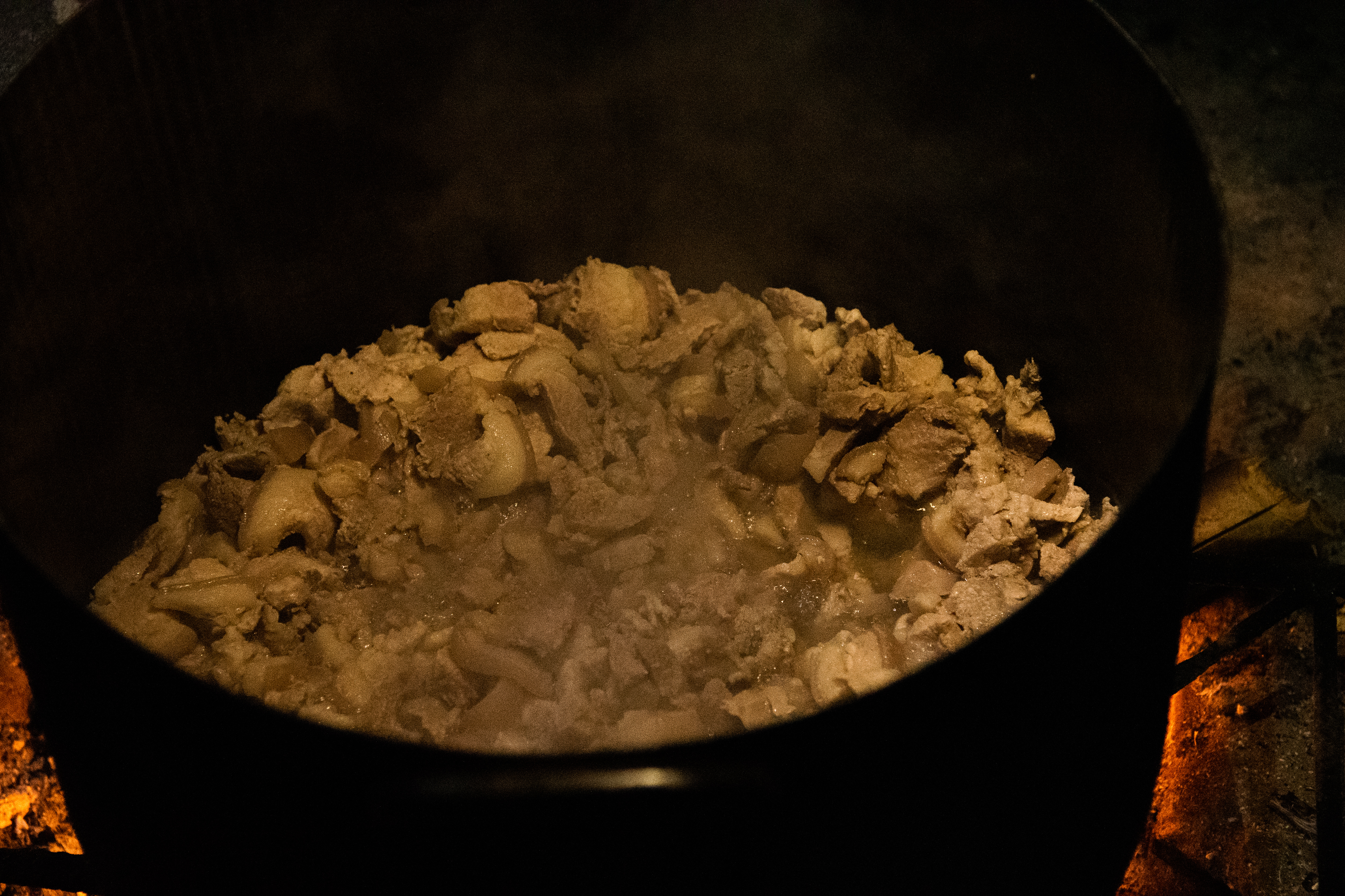
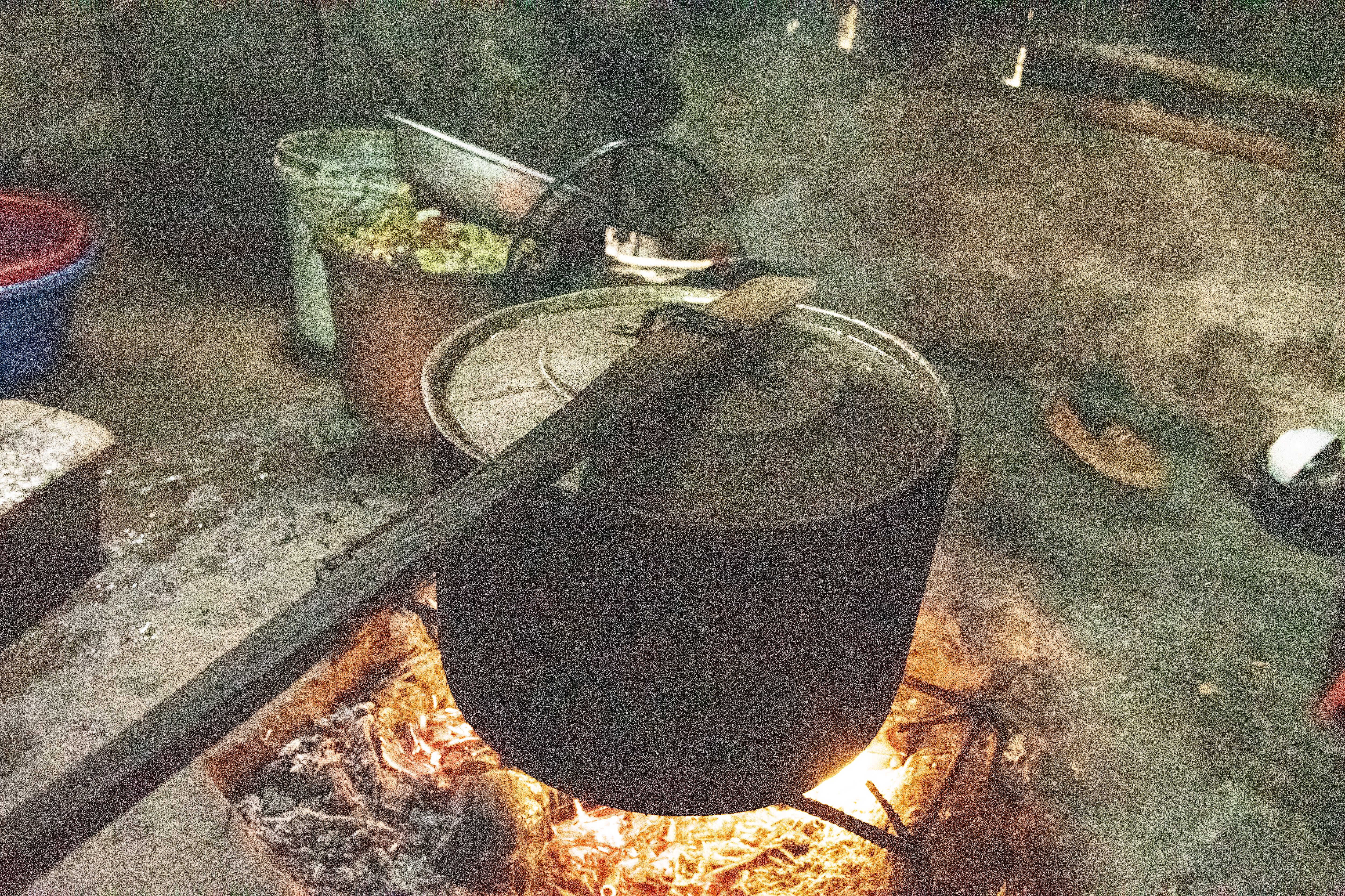
The family was preparing a big dinner for visiting relatives.
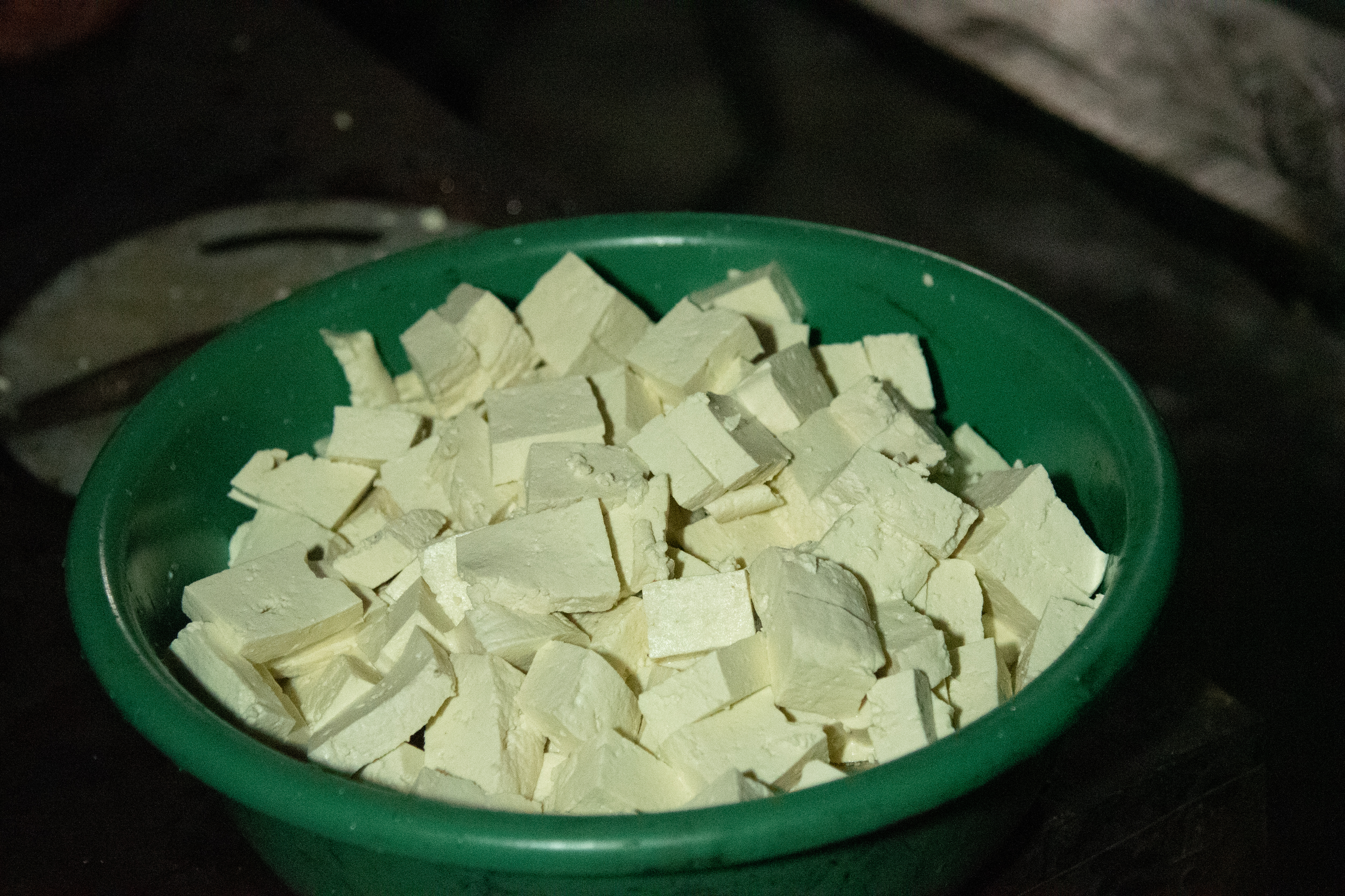
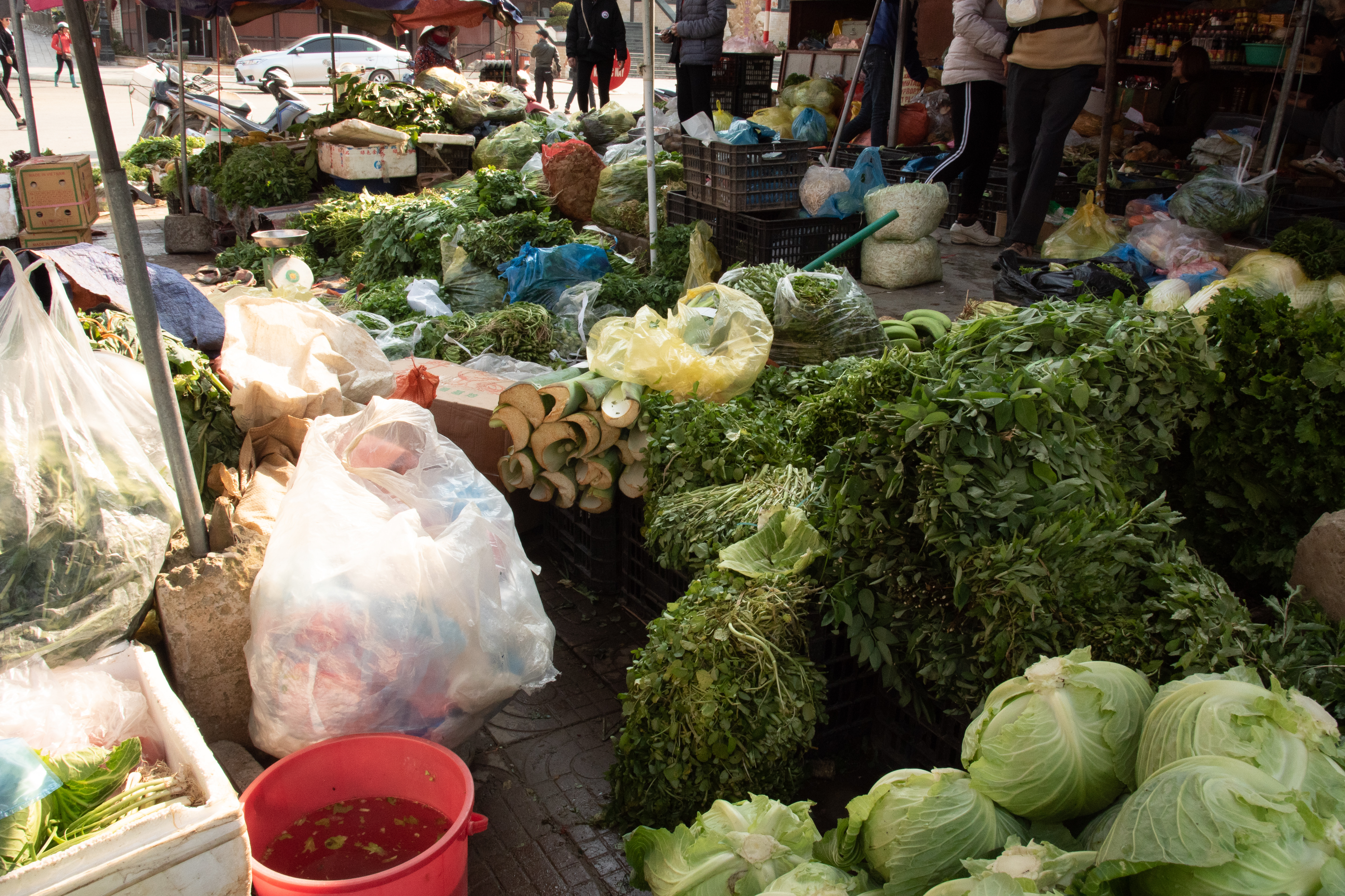
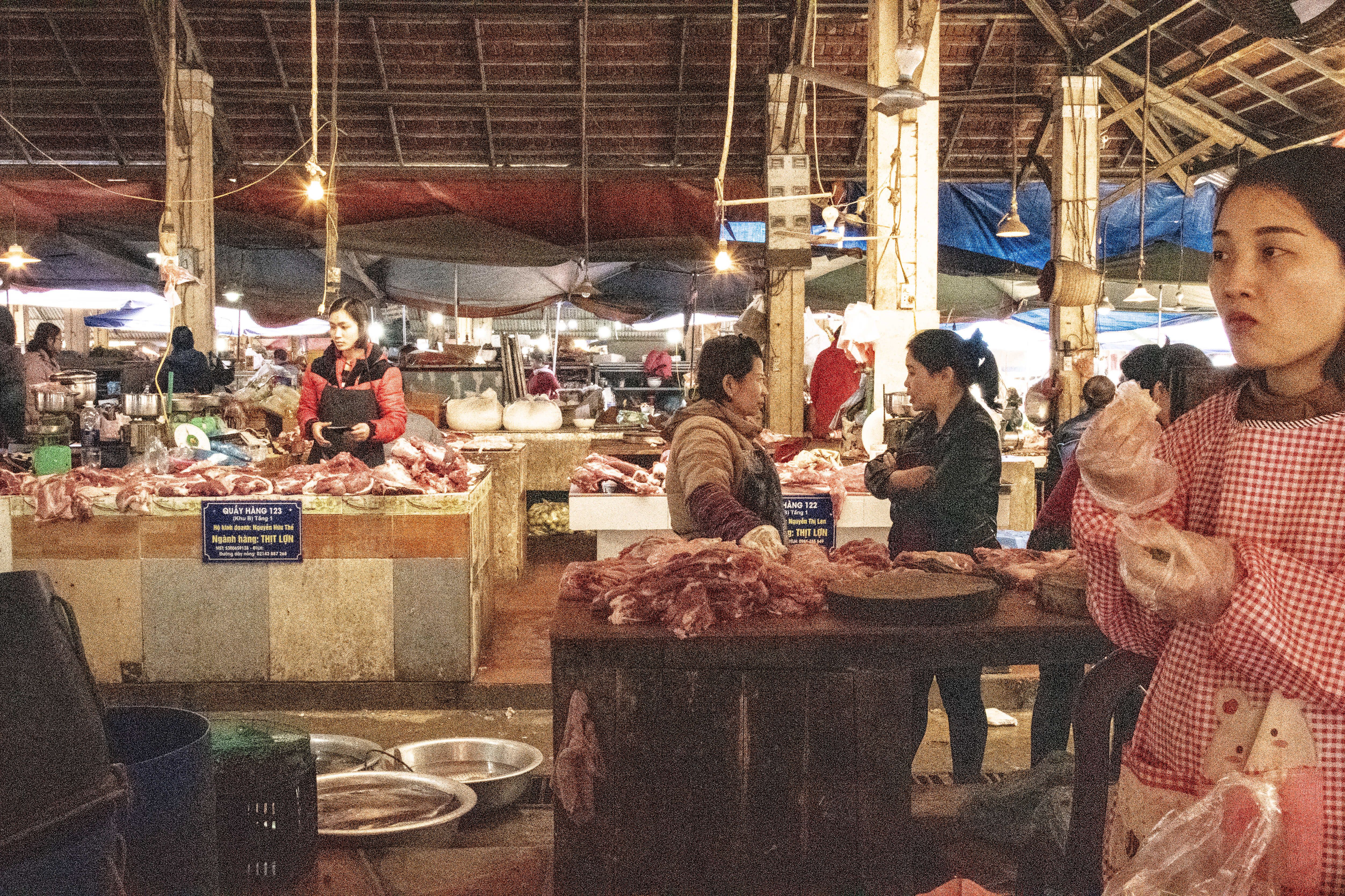
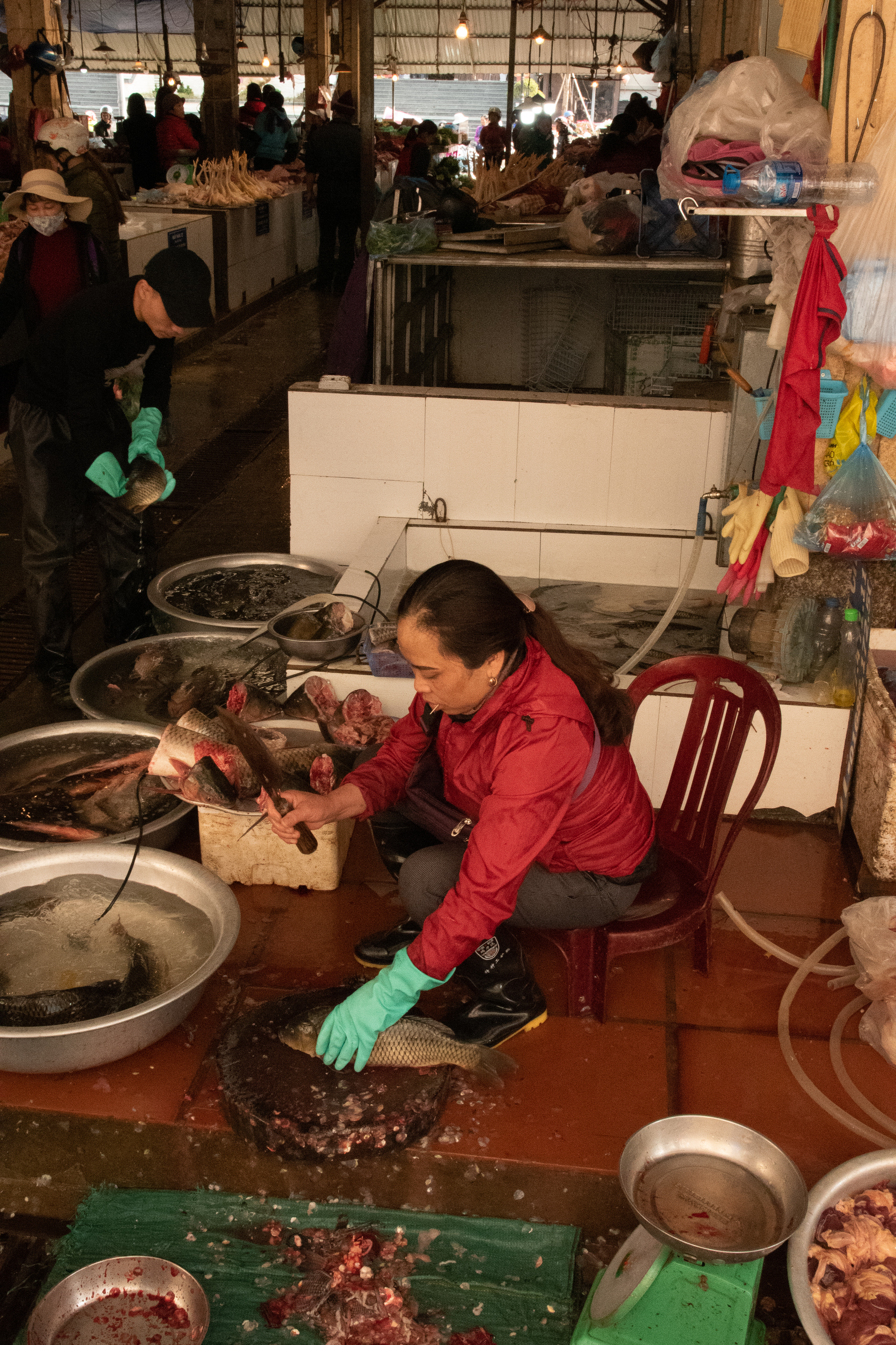
The next morning we shopped for food at the large Sapa market. Our plan was to buy food and later help prepare lunch for the children at the Sin Chai elementary school.
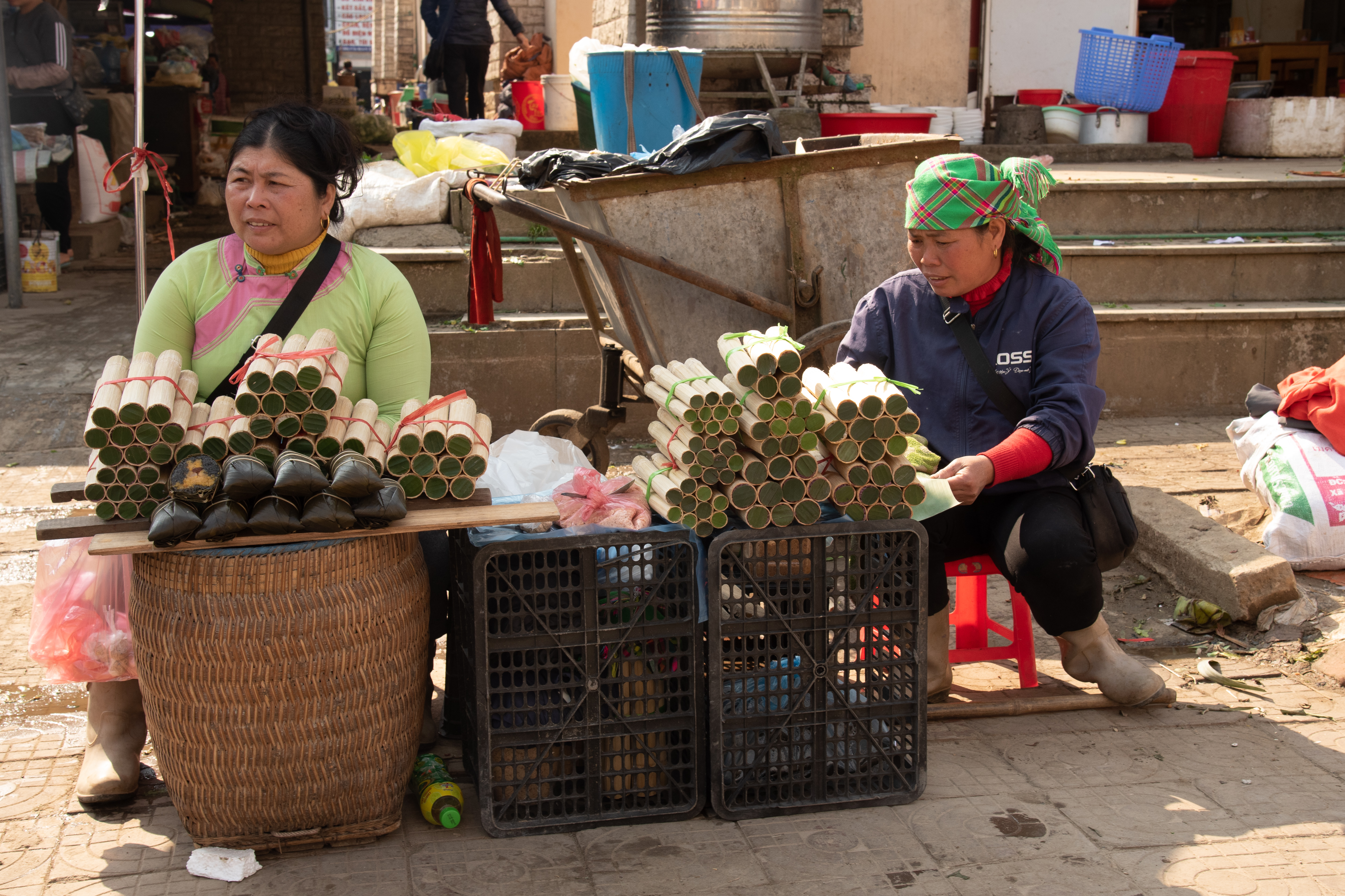
Sticky rice, ever present in Vietnam, is steamed in bamboo tubes. It has a pleasant smokey flavor.

This is the public school with visited in Sin Chai.
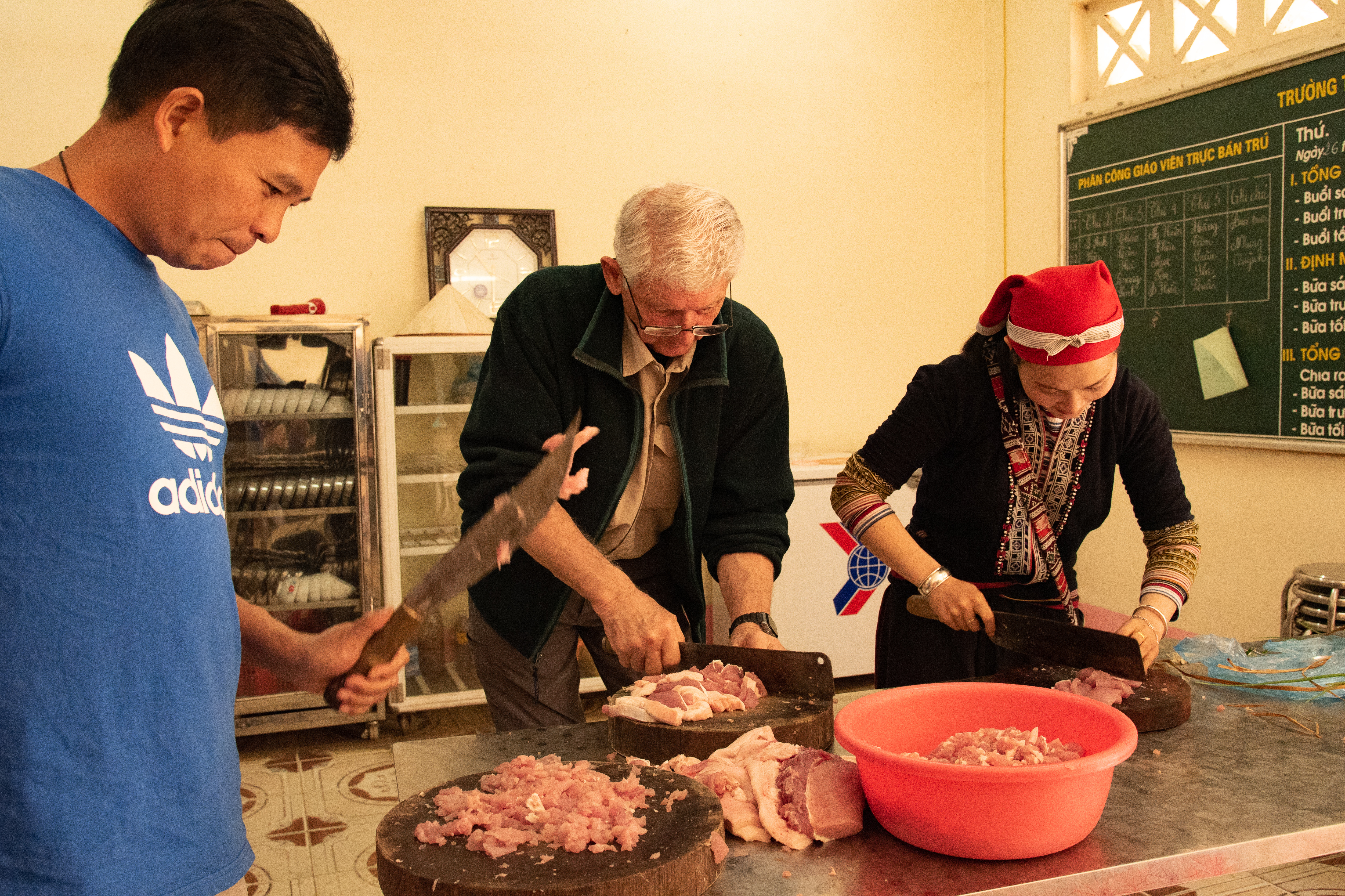
In the school’s kitchen we were given large knives and cleavers and were instructed to chop the meat and vegetables into small pieces.

The “chef” washed the vegetables in water gotten from a trough.
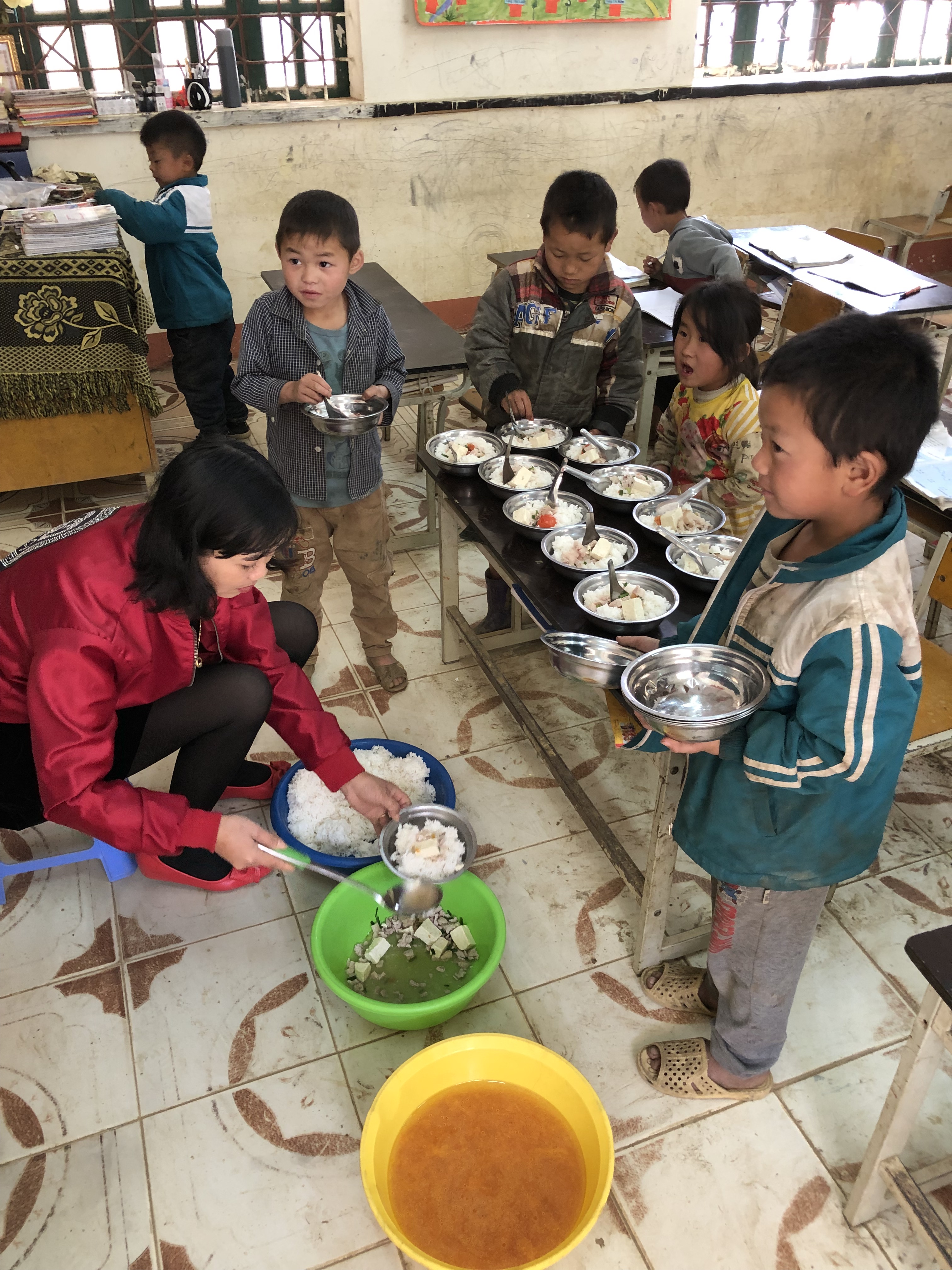
Some of the children helped the teacher serve the food in individual bowls. The others waited patiently. While boiling all the ingredients together produced a rather bland meal, the children enjoyed it immensely. Often all they get is a bowl of rice with nothing on it. This is one of the few times they get meat with their meals.
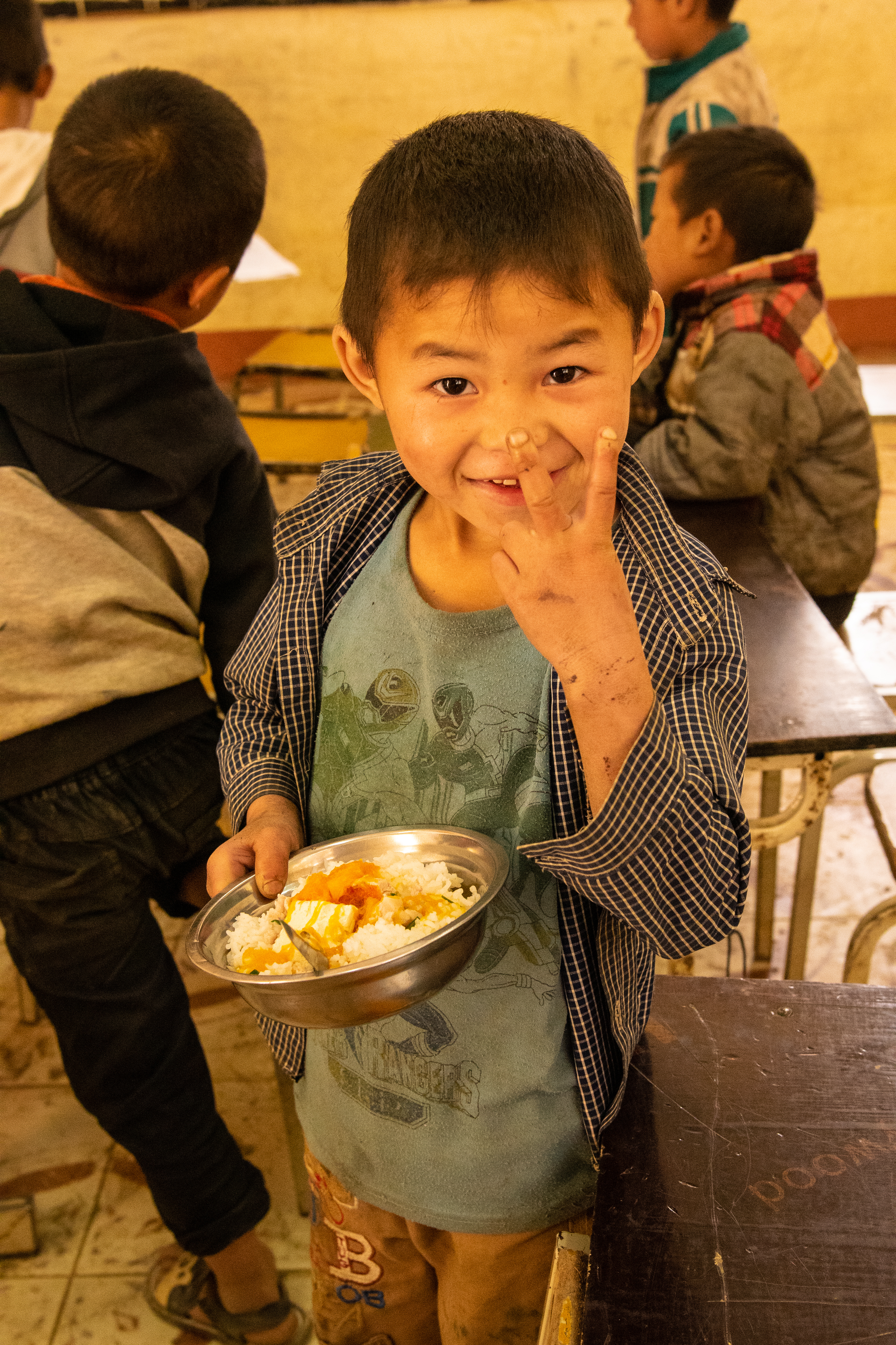
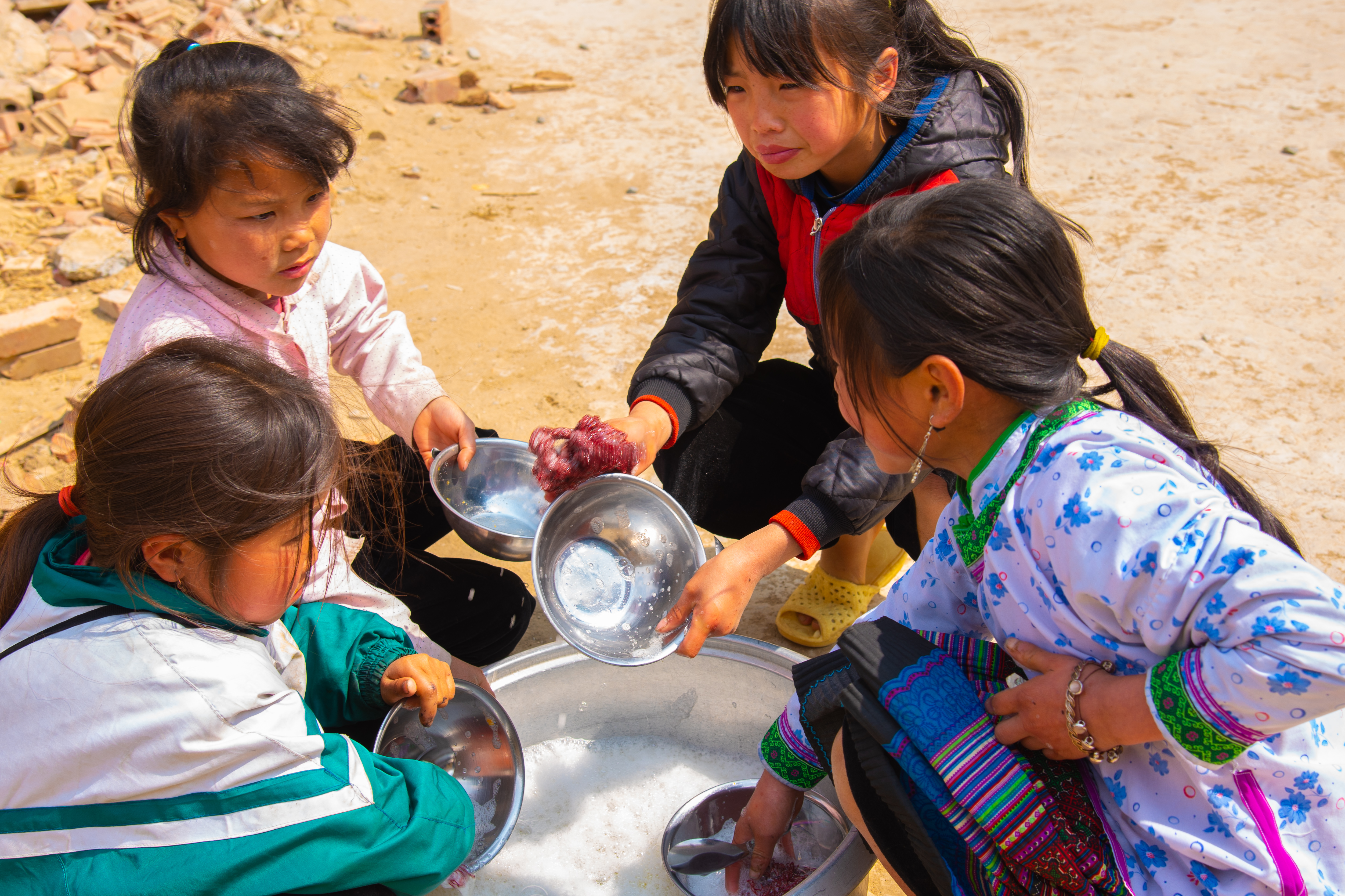
After the meal, each child washed their own bowl.
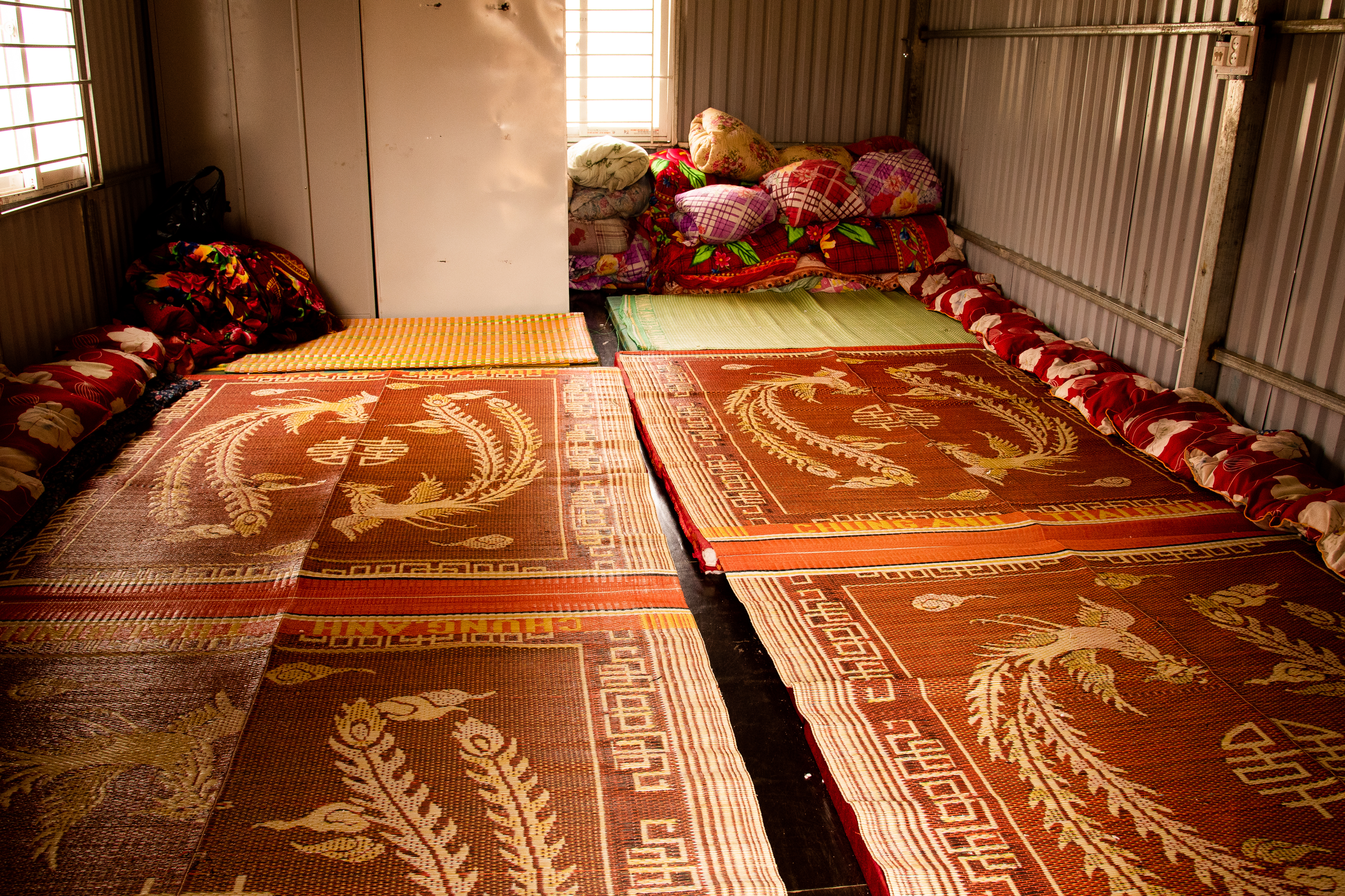
Those children who live too far a distance from the school are able to stay overnight in dormitories.
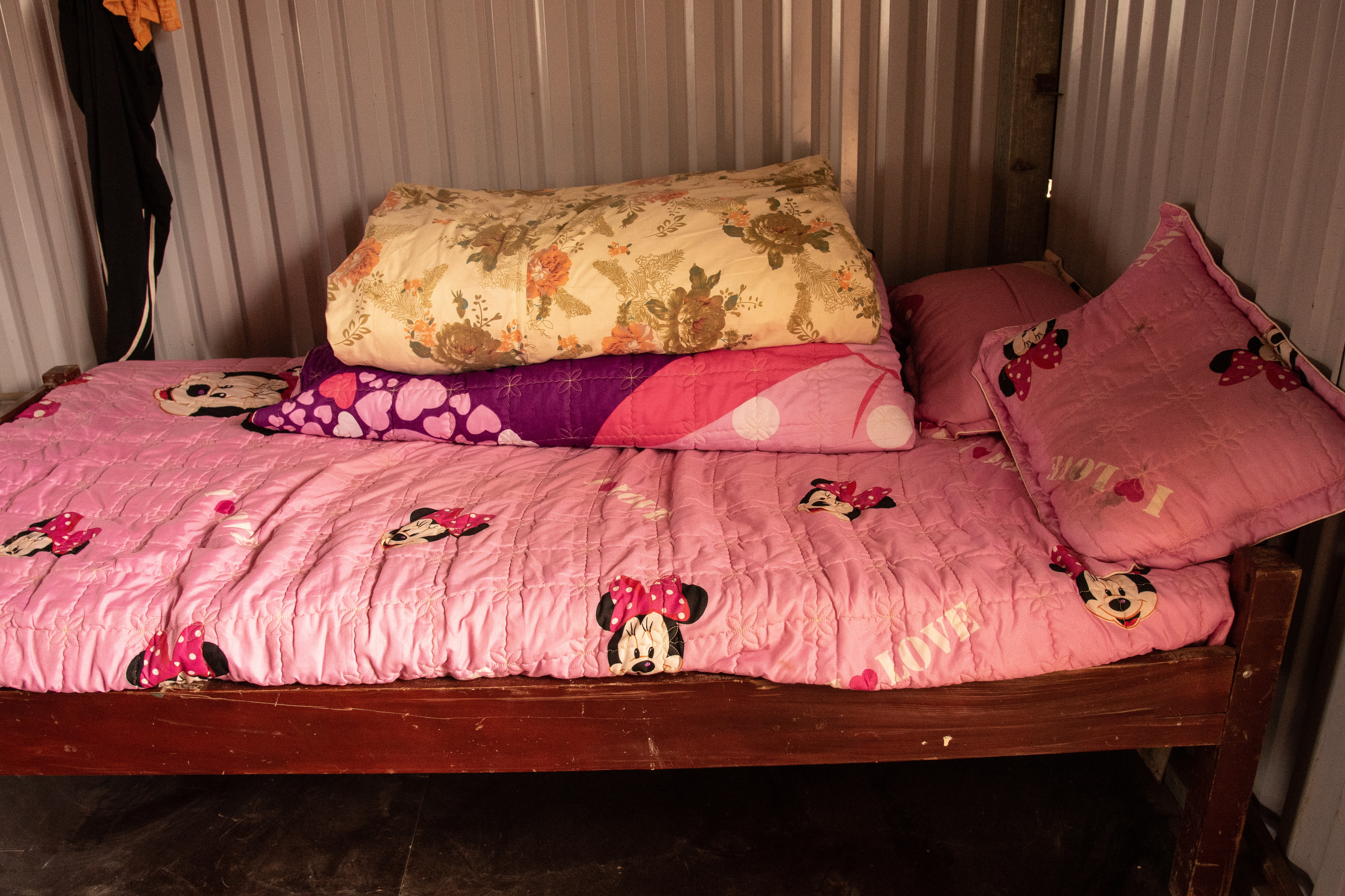
The teacher’s bed.
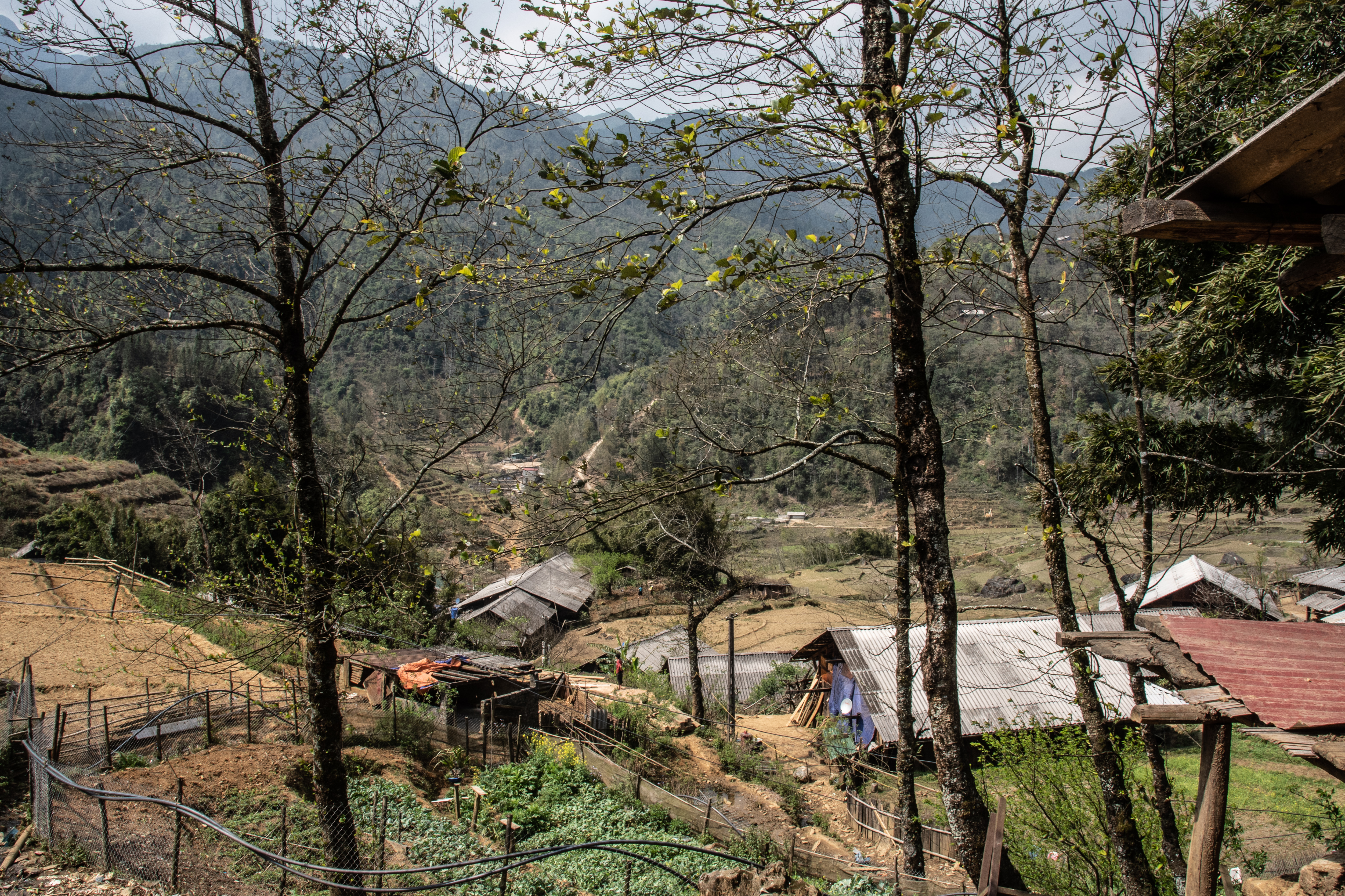
We continued to explore Sin Chai village, meeting with residents along the way.
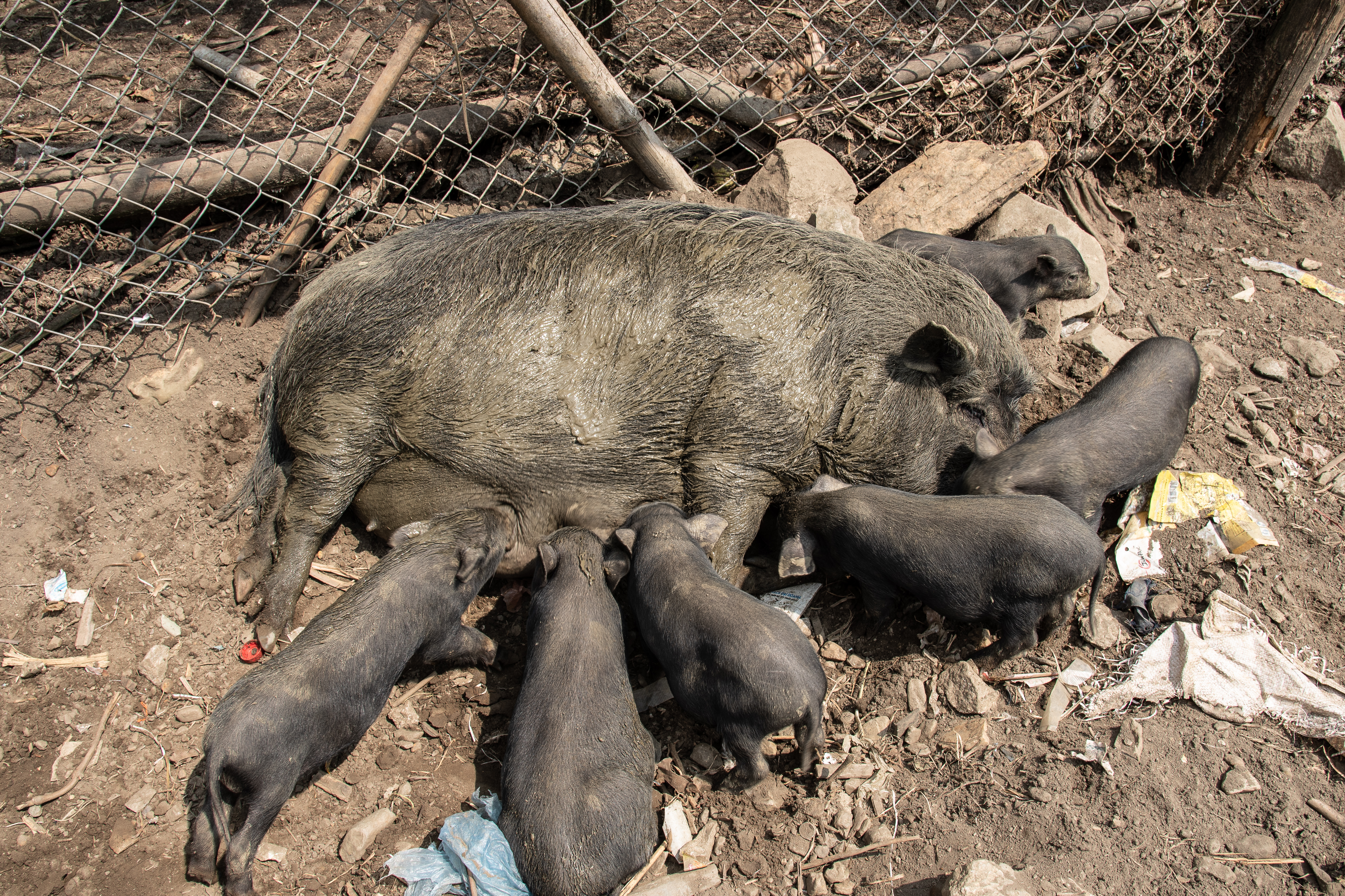
There are almost as many pigs as people living in the village.

Young mother with her baby.
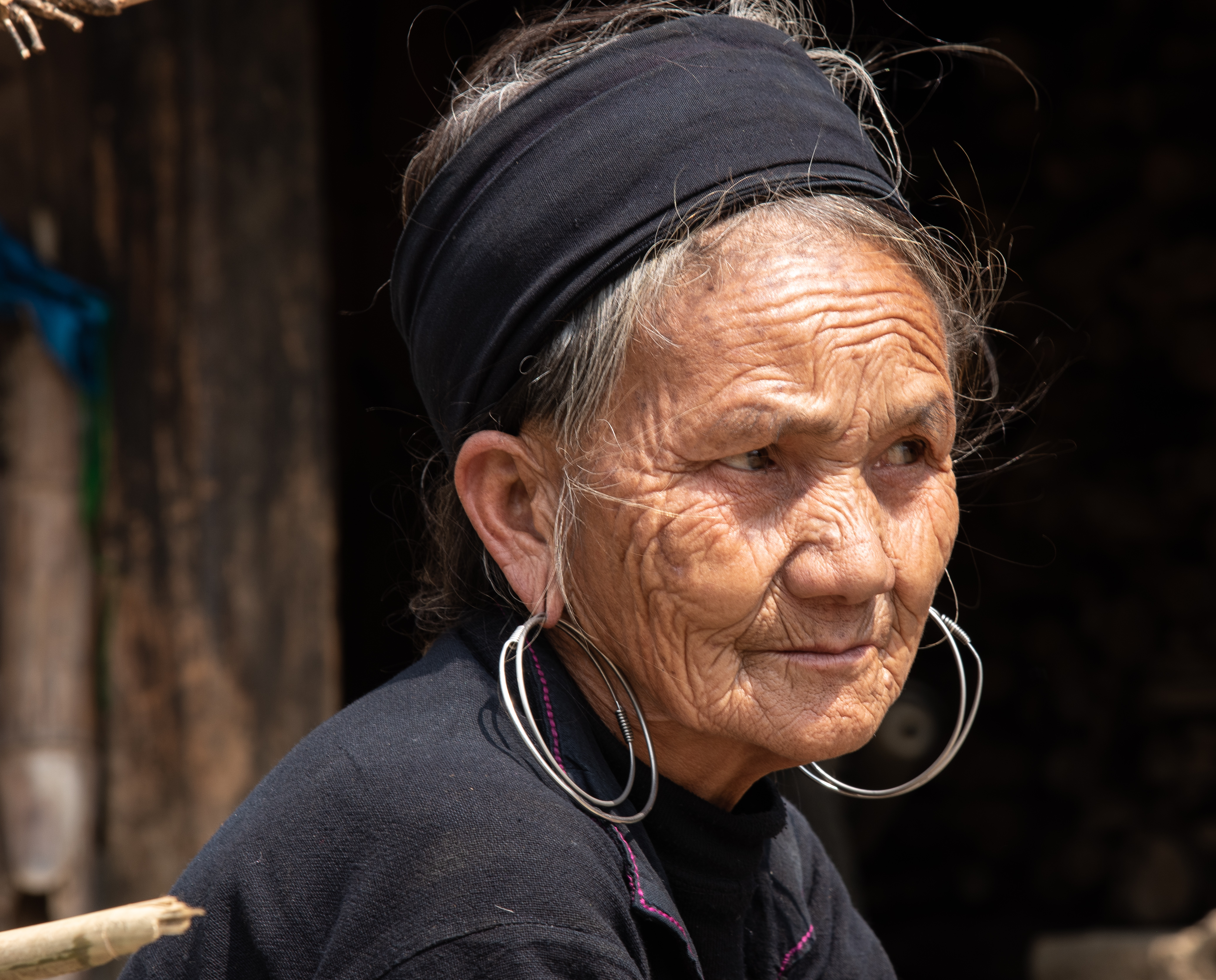
Older members of the community hold positions of authority and are highly respected.
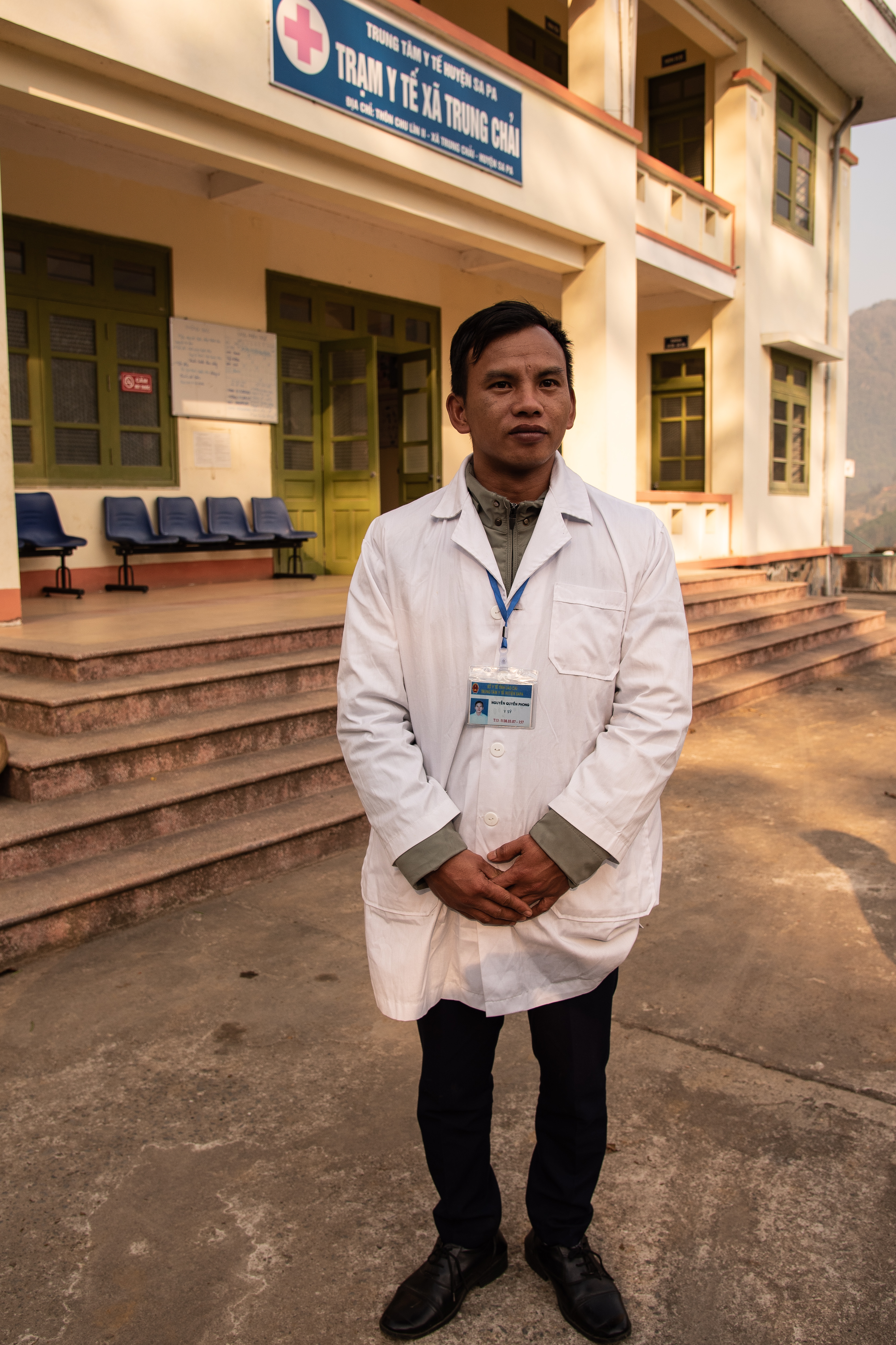
This is a doctor who works at the medical clinic that serves the area.
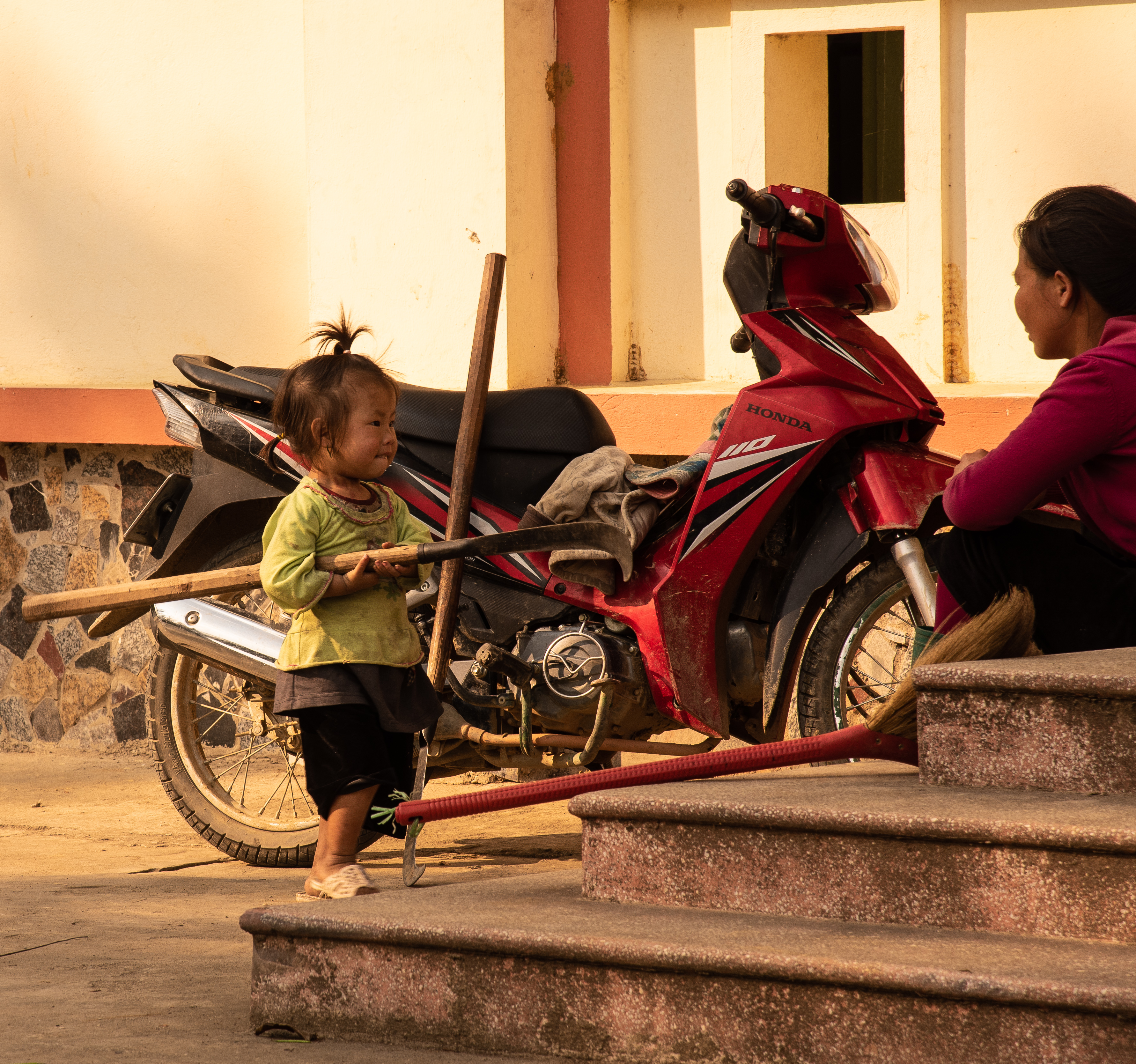
This child was waiting with her mother for her father who was receiving treatment. There is no charge for treatment at the clinic but free medical care is not universal in Vietnam. It is somewhat fragmented dependent on occupational status, with better health care available in the larger cities.
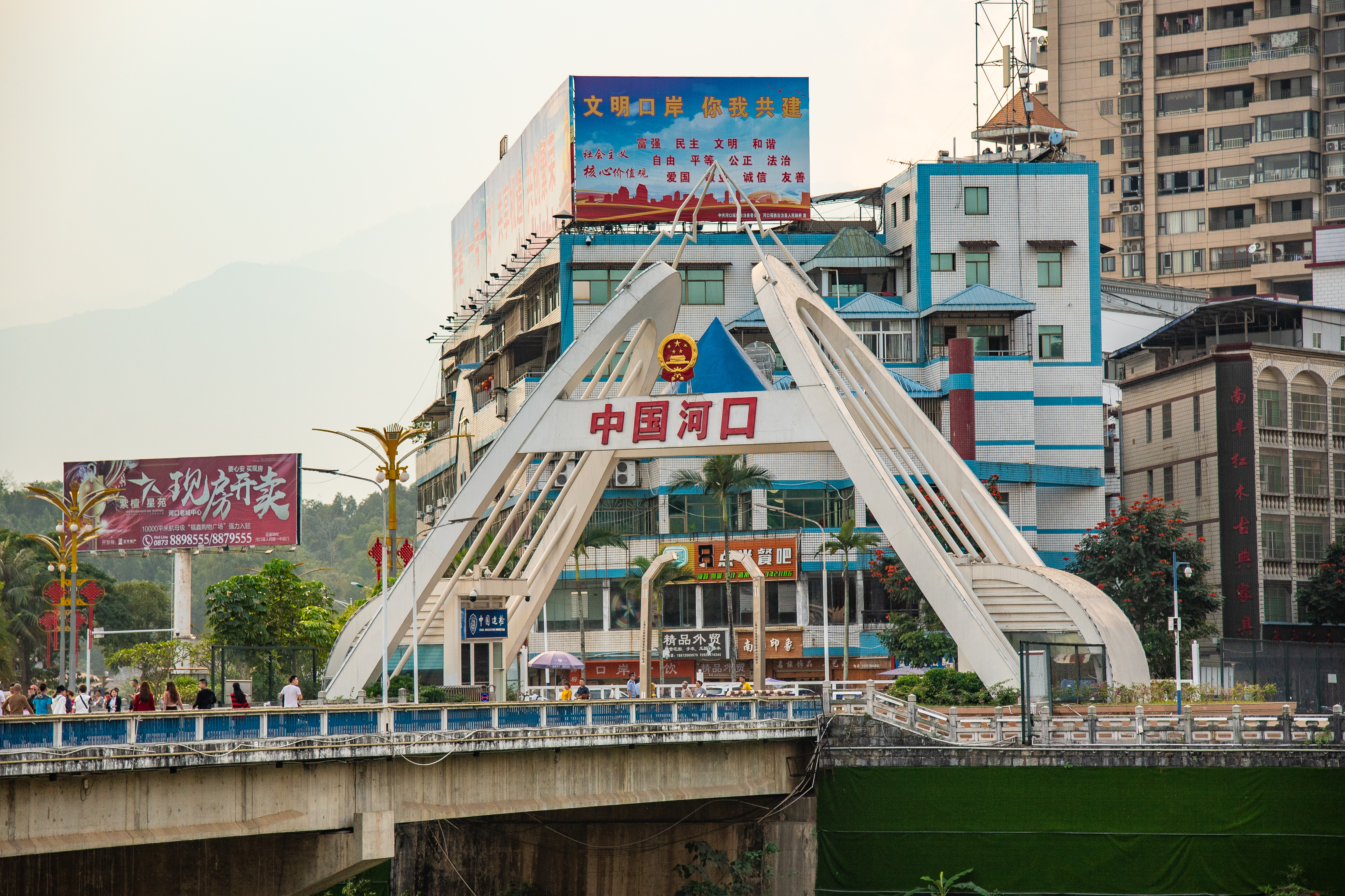
We ended our trip to the hill country at the Ho Kieu Bridge that connects Lao Cai in Vietnam with the Chinese city of Hekou. For the Chinese and the Vietnamese it is an easy back and forth across the border. Although the Vietnamese are quick to complain about past Chinese military incursions along the border, hundreds cross the Red River each day for work and shopping.
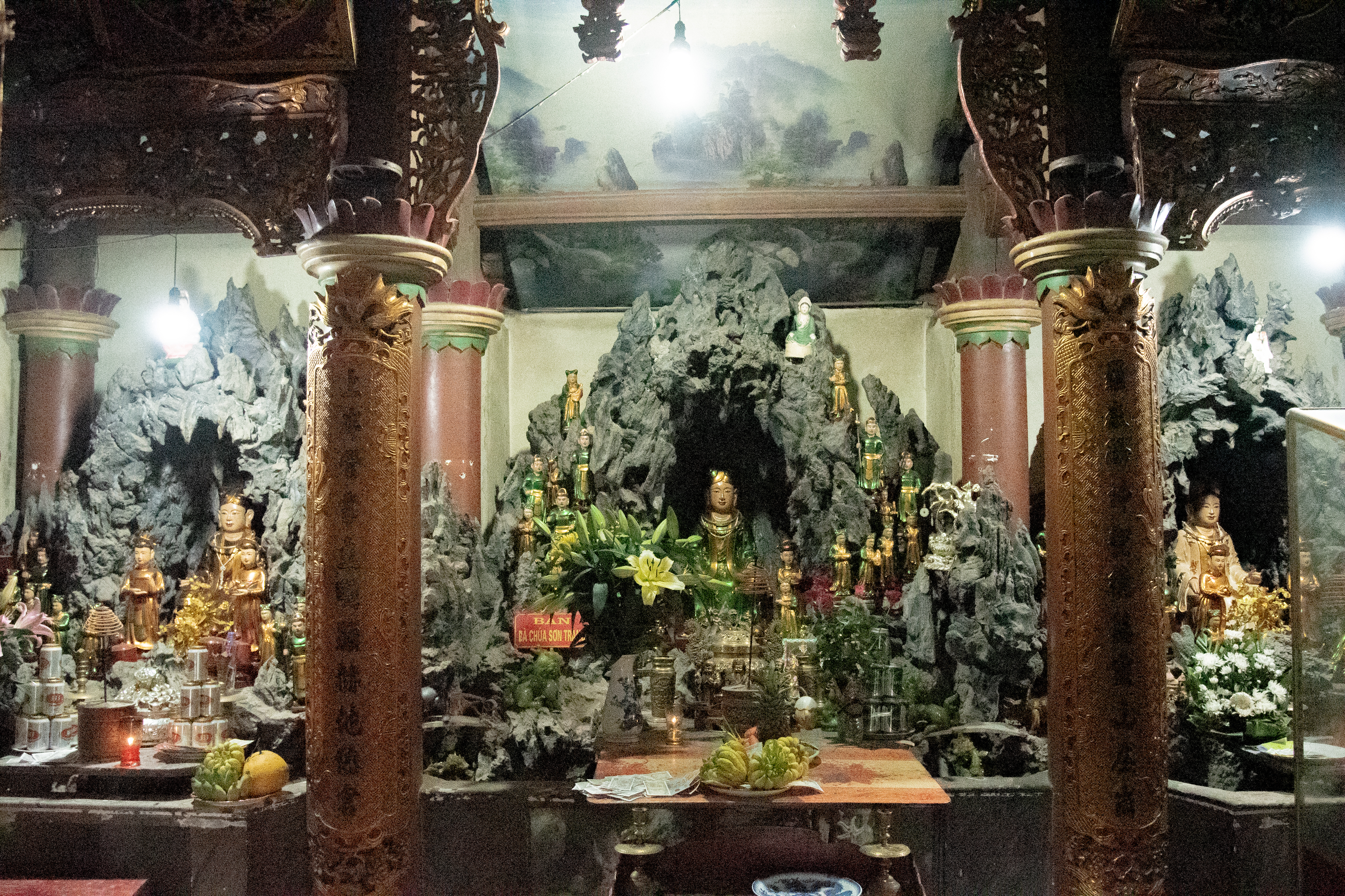
We paid a last visit to a shrine to “Mother” near the border. We then got on the overnight train to return to Hanoi, starting the rest of our journey through Vietnam.
 westwardhowithapollo
The photos of the tribal people are fantastic. And what a nice train ride! I also love Joanne with her new pet water buffalo! Honestly, you did so many things off the regular tourist route, I feel like I should go back. I didn’t know there were Hmong in Vietnam, I only knew about them in Laos. Travel is the best way to learn about people and the world!!
Stunning Photos and a wonderful detailed account of life in Vietnam today. Thank you for letting me travel along.