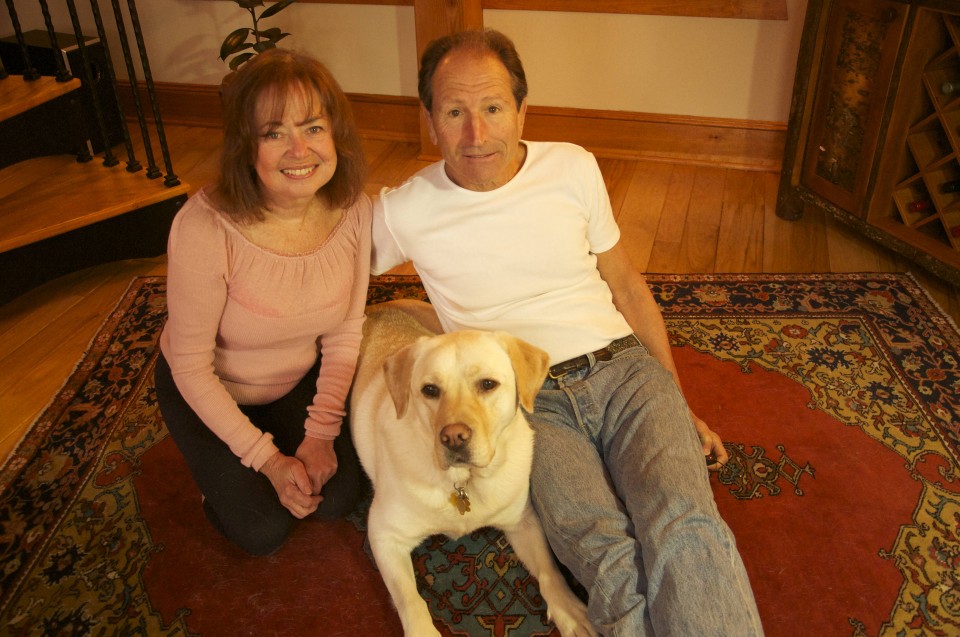
Joanne and Mitch land in Tokyo
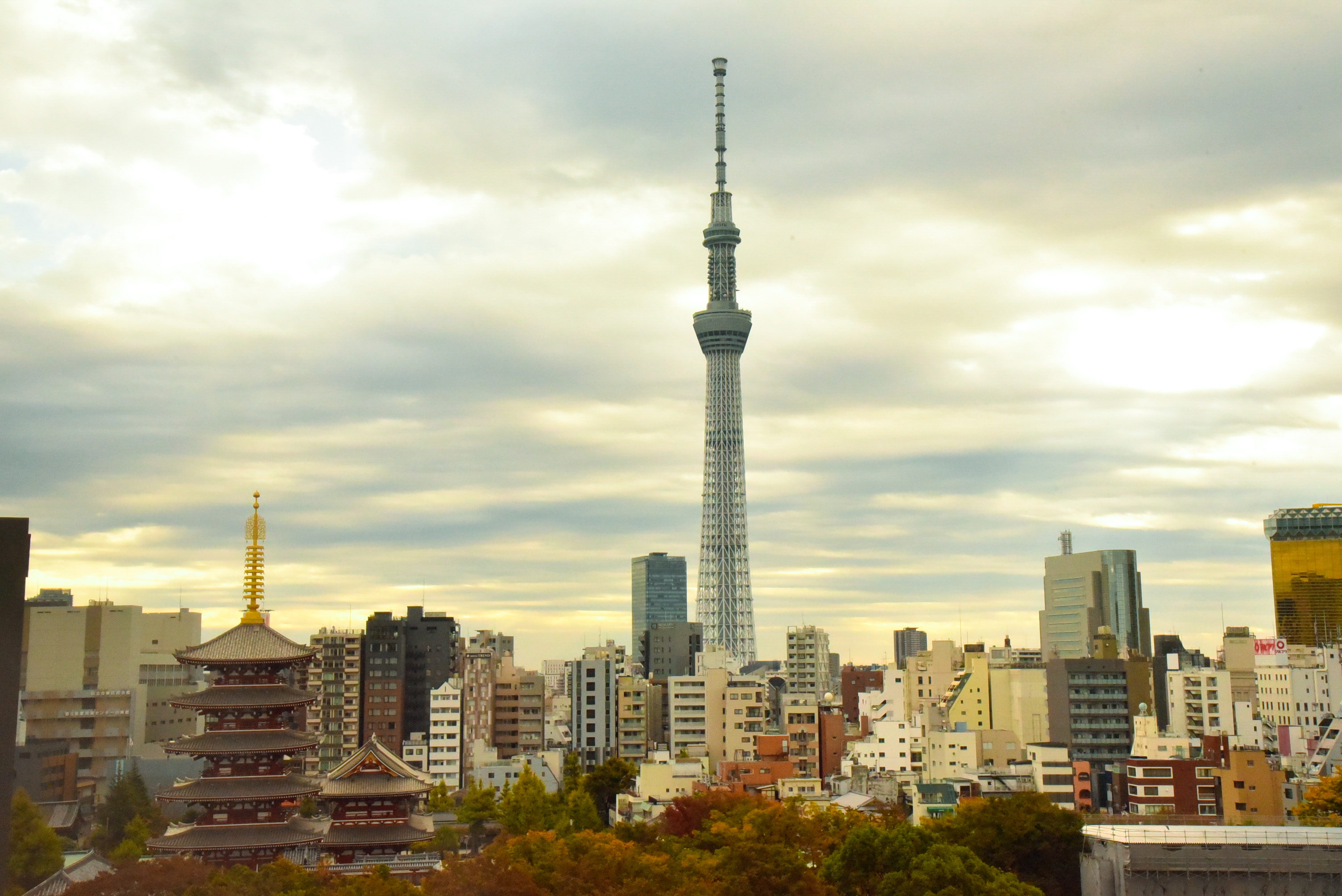
We arrived in Tokyo late in the afternoon after a 14 hour flight. This is the view from our room in the Asakusa neighborhood showing the Skytree Observation Tower, the Senso-ji Buddhist Temple and and the Demboin Pagoda.
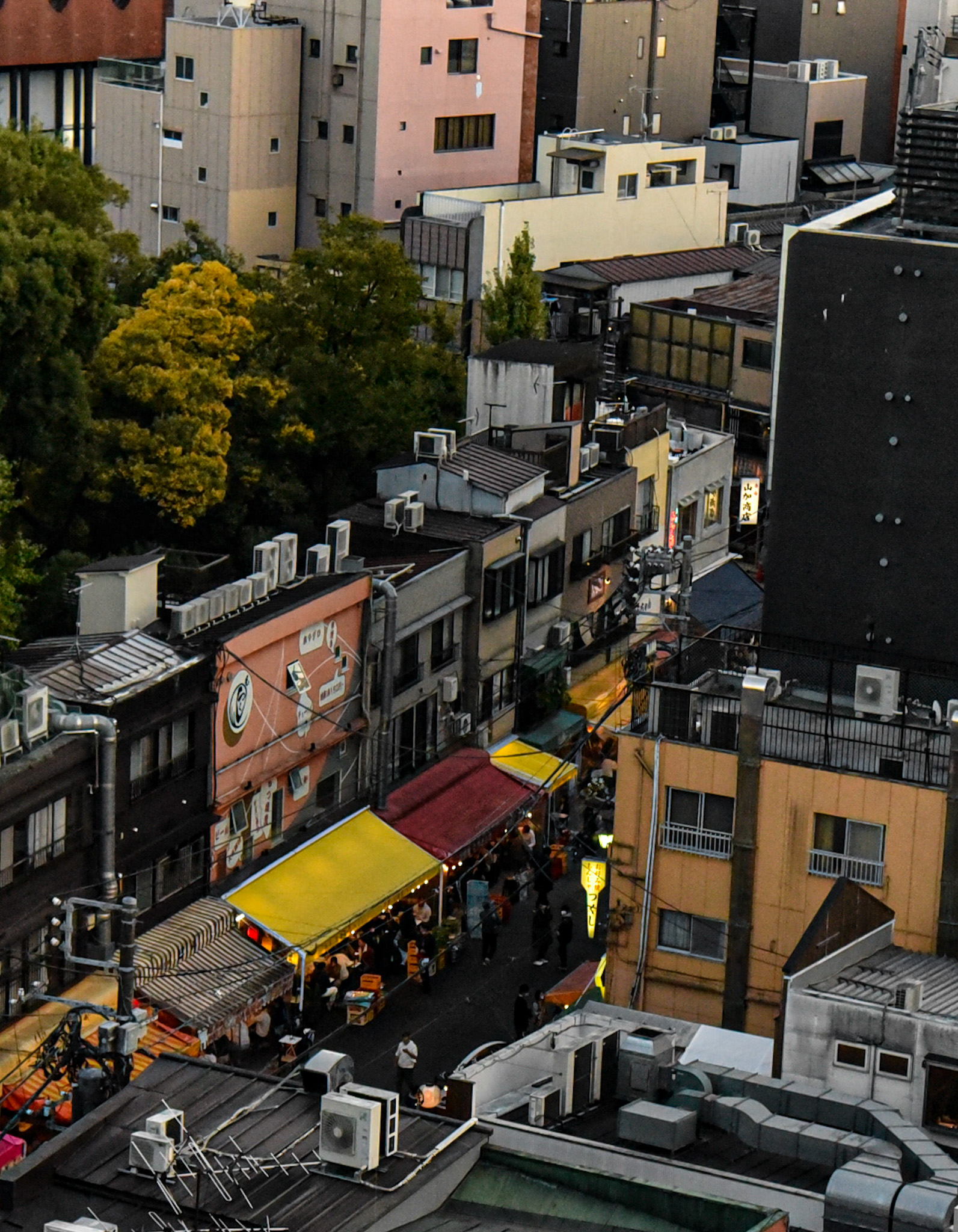
After looking out the window at the street scene below, exhausted, we ventured out for dinner to this lively block of restaurants filled with young people. Unable to say anything in Japanese other than konnichiwa, we managed a bowl of edamame and a noodle dish.
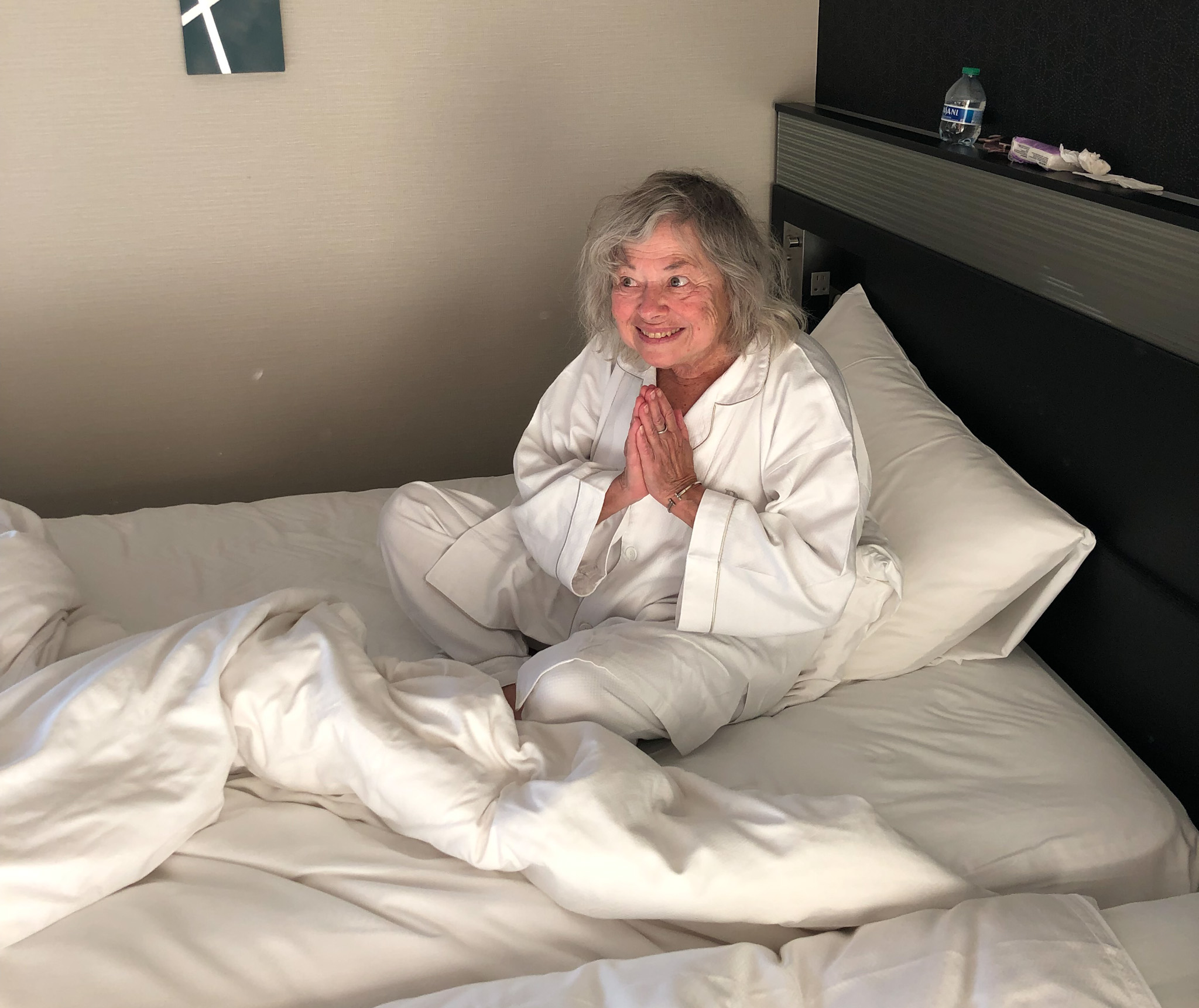
Western style beds and luxurious pajamas awaited us.
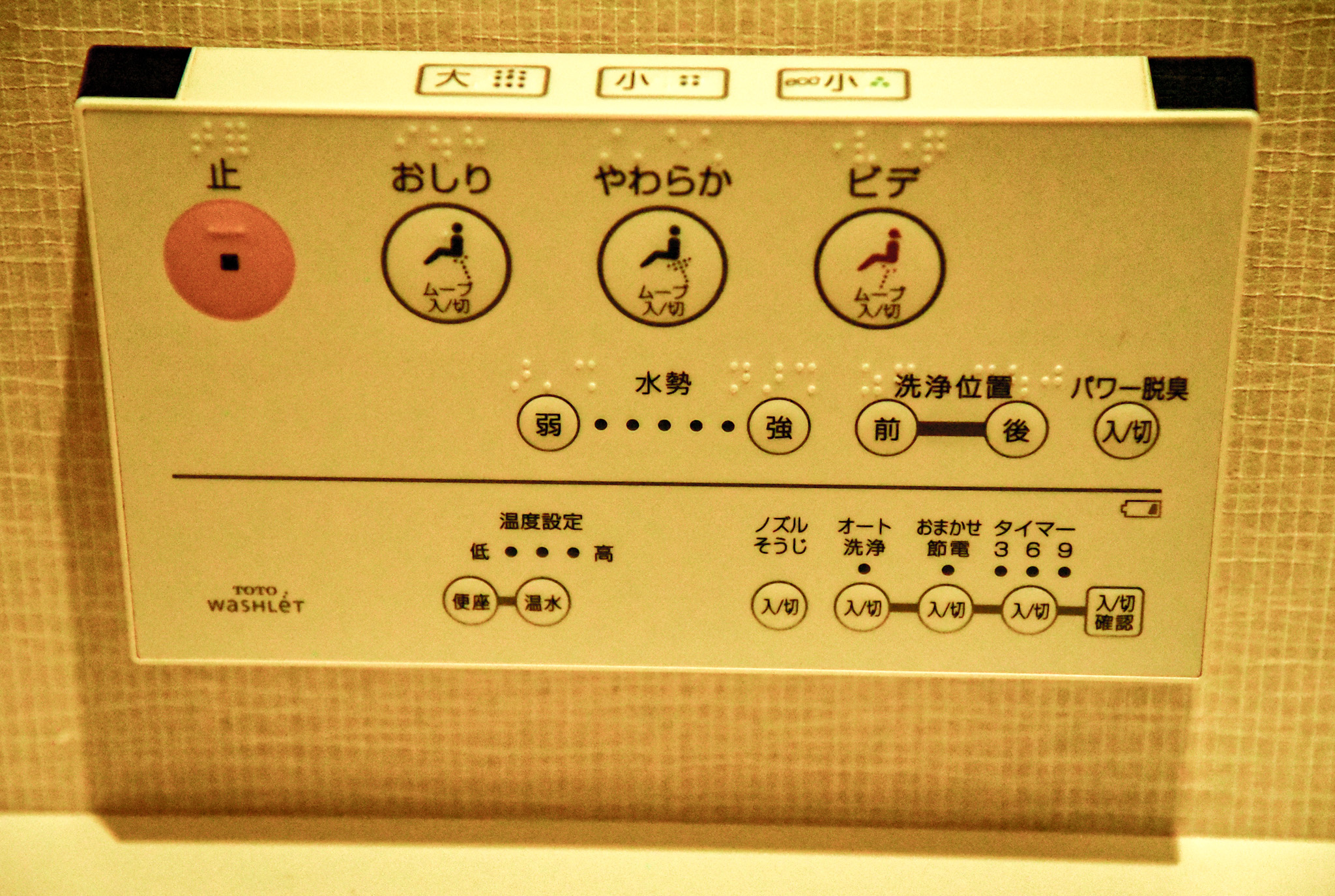
Meet the Japanese bidet toilet or washlet. You figure it out.
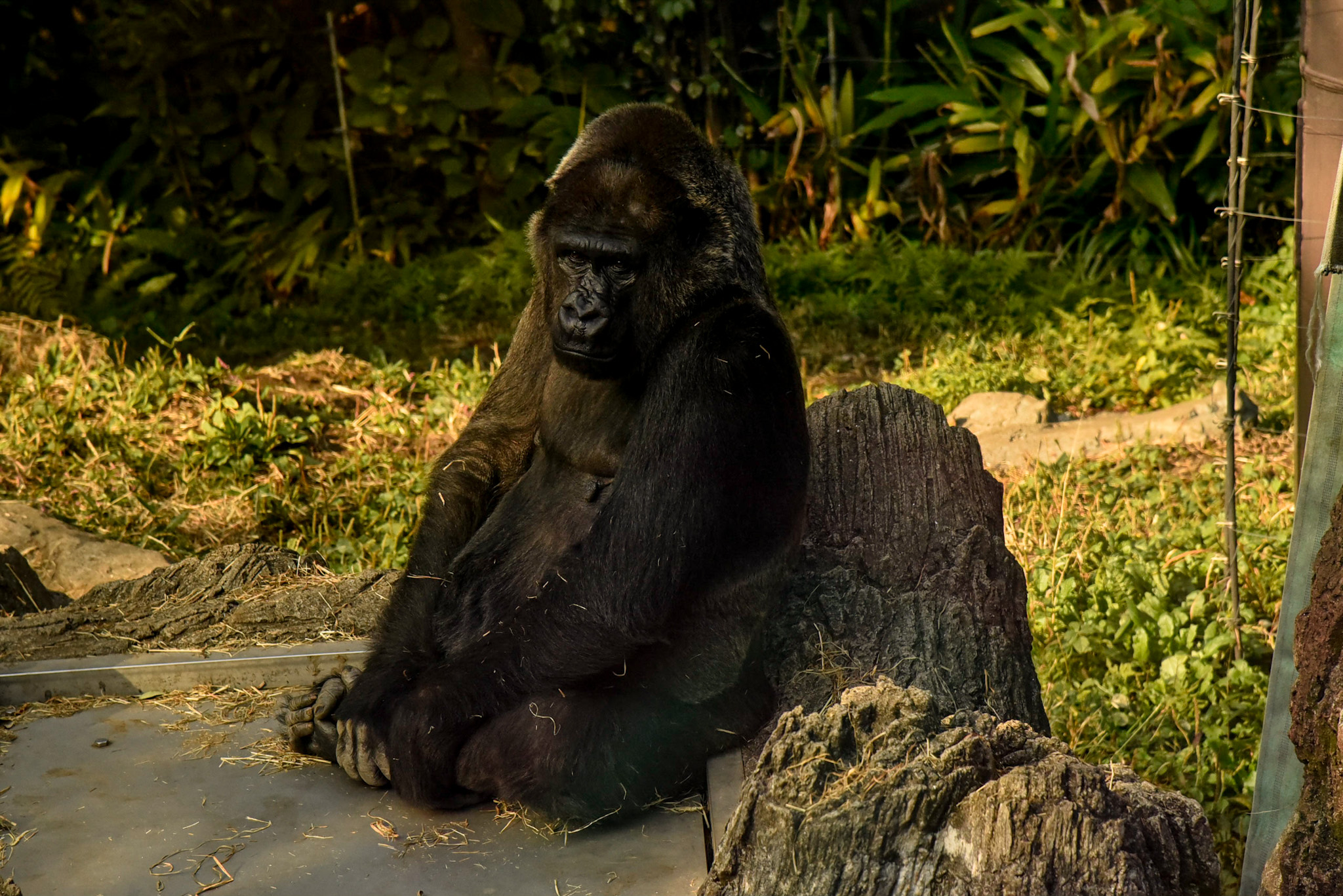
In the morning we decided to walk to the Uena Zoo where we saw a familiar face (re: our gorilla trek in Uganda) looking rather downcast in this environment. The Zoo is part of the Uena Park system, a very popular family destination.
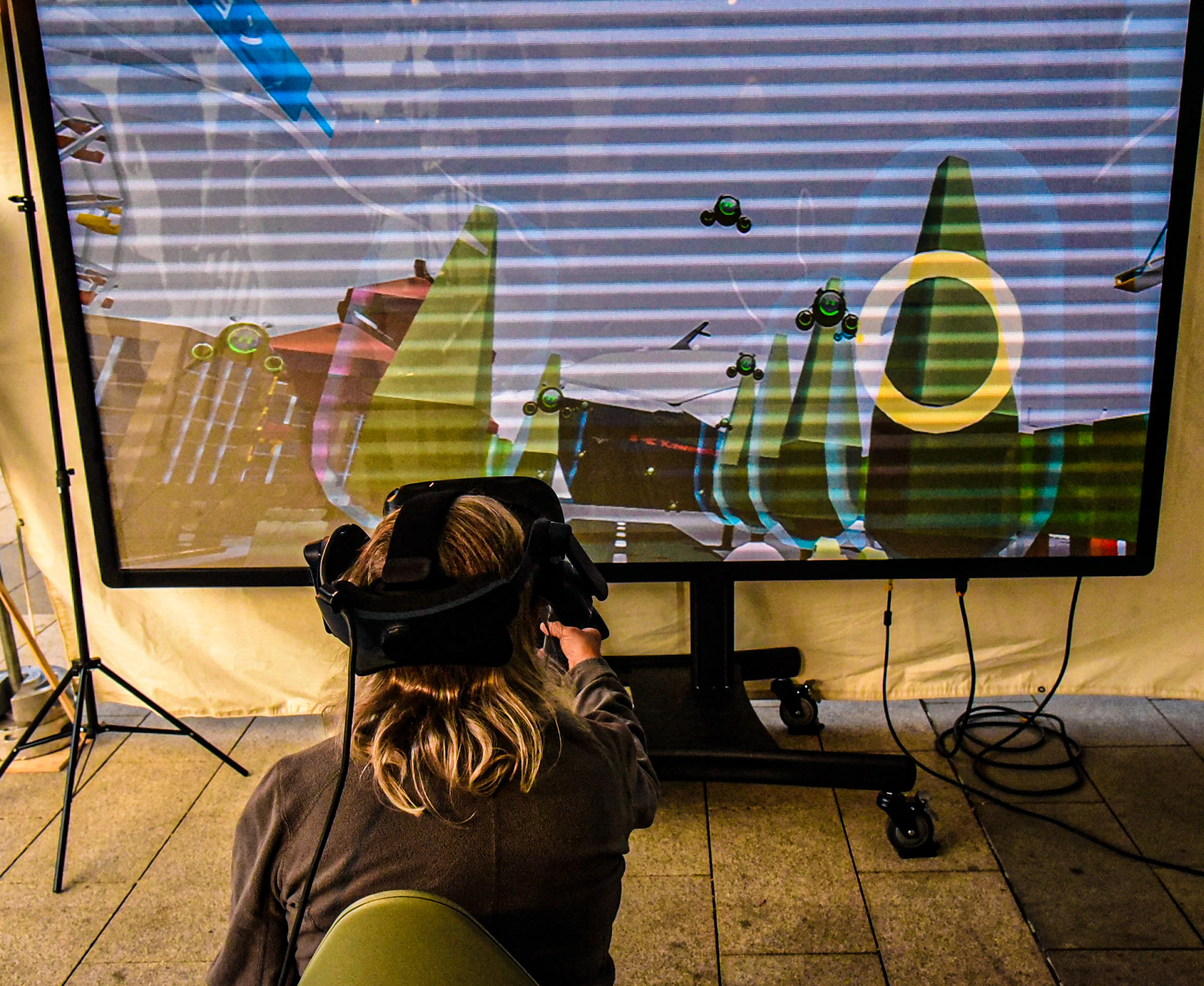
There was also a clean energy expo in the park where Joanne put on head gear and tried her hand at the latest in 3D Vision Gaming which the Japanese are wild for. She hit the mark….occasionally.
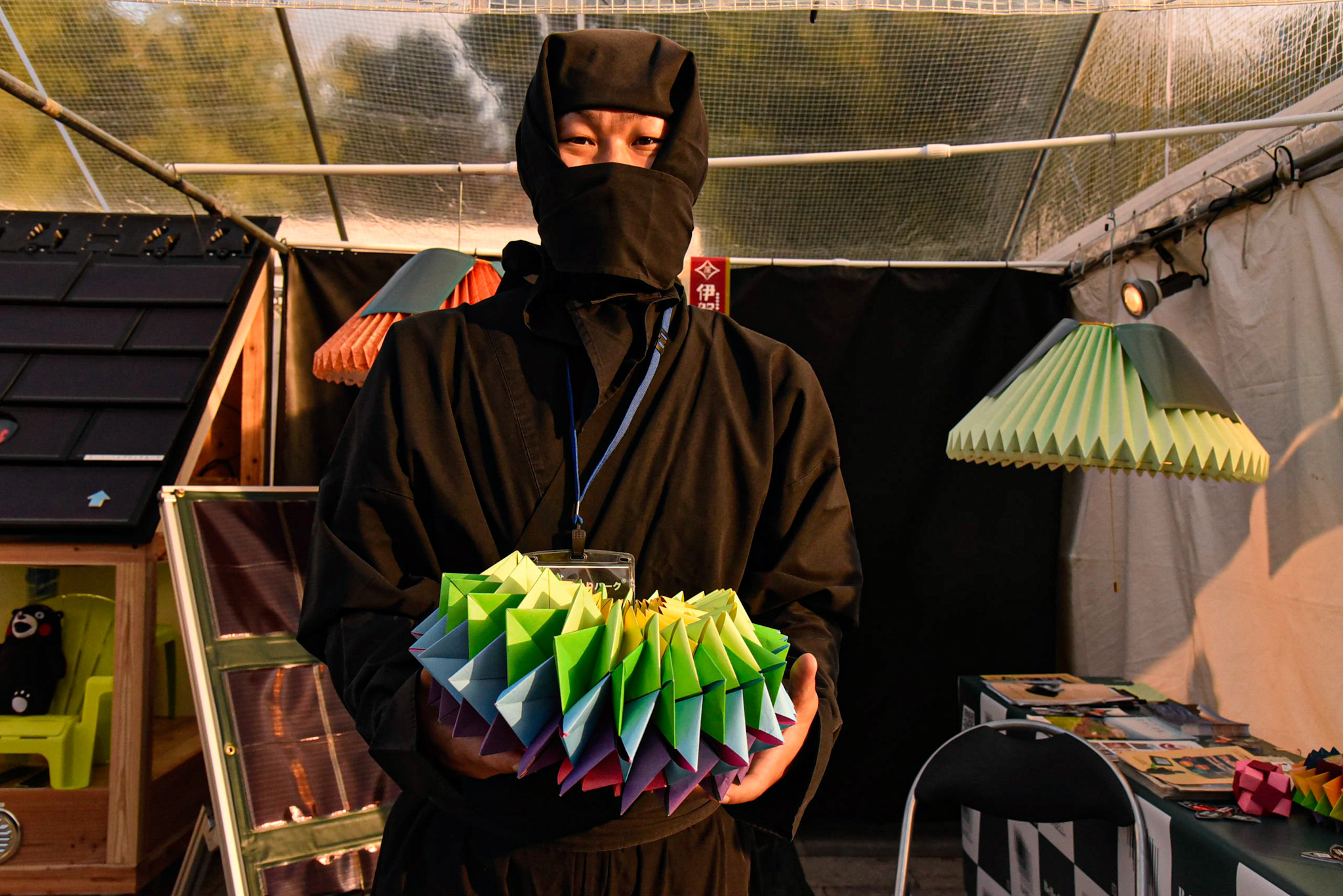
We met an Eco Ninja, who showed us some of the latest in Japanese sustainable technology.
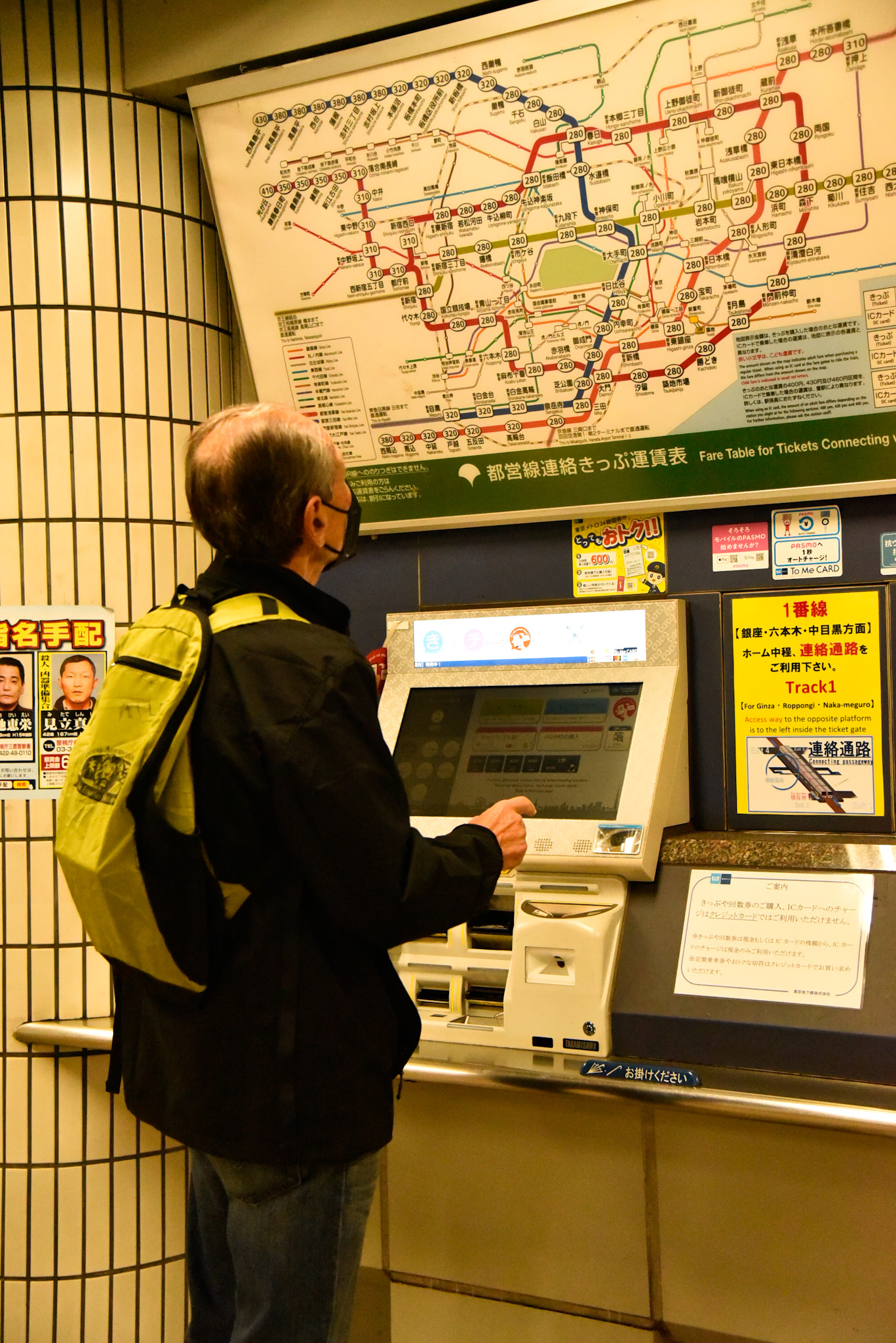
The next day we decided to tackle the Tokyo subway system. It is challenging but once mastered, it is a truly brilliant system.
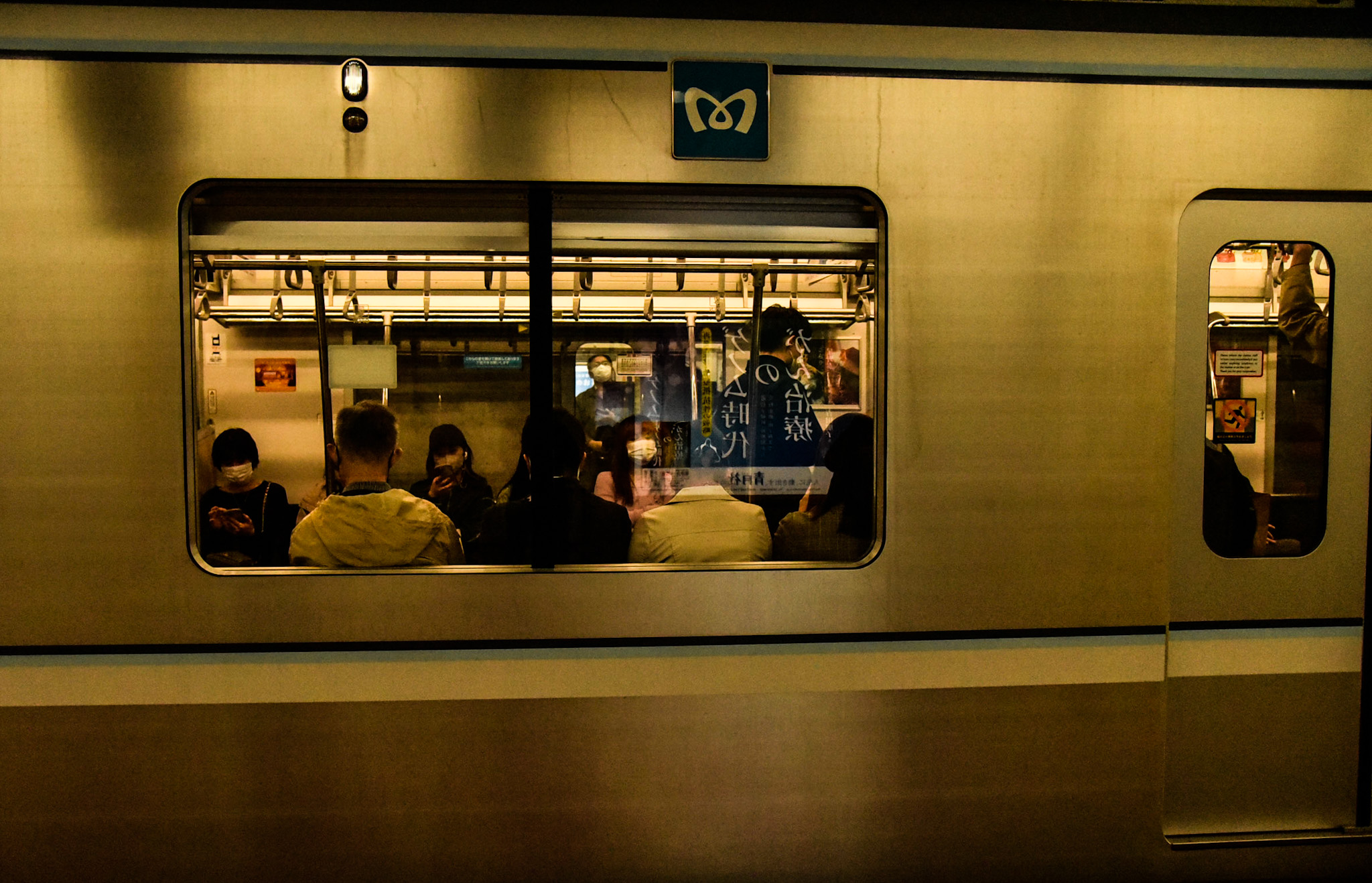
The trains run often and on time. The cars and stations are immaculate. Mitch had a hard time finding trash here or anywhere else on the Tokyo streets. The Japanese take great pride in their environment.
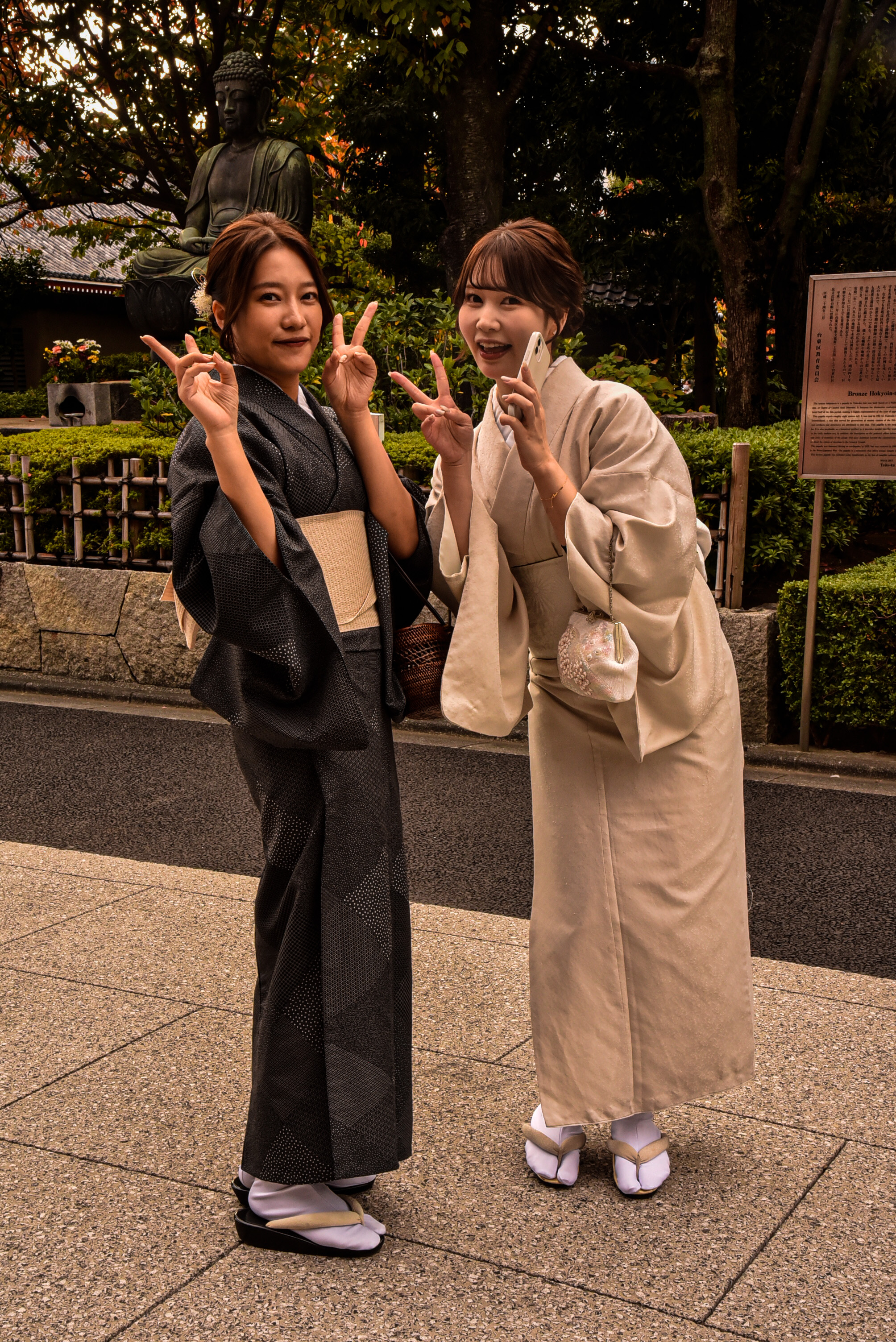
If you don’t already own one, renting kimonos is popular in Asakusa and young people show up in traditional garb taking selfies.
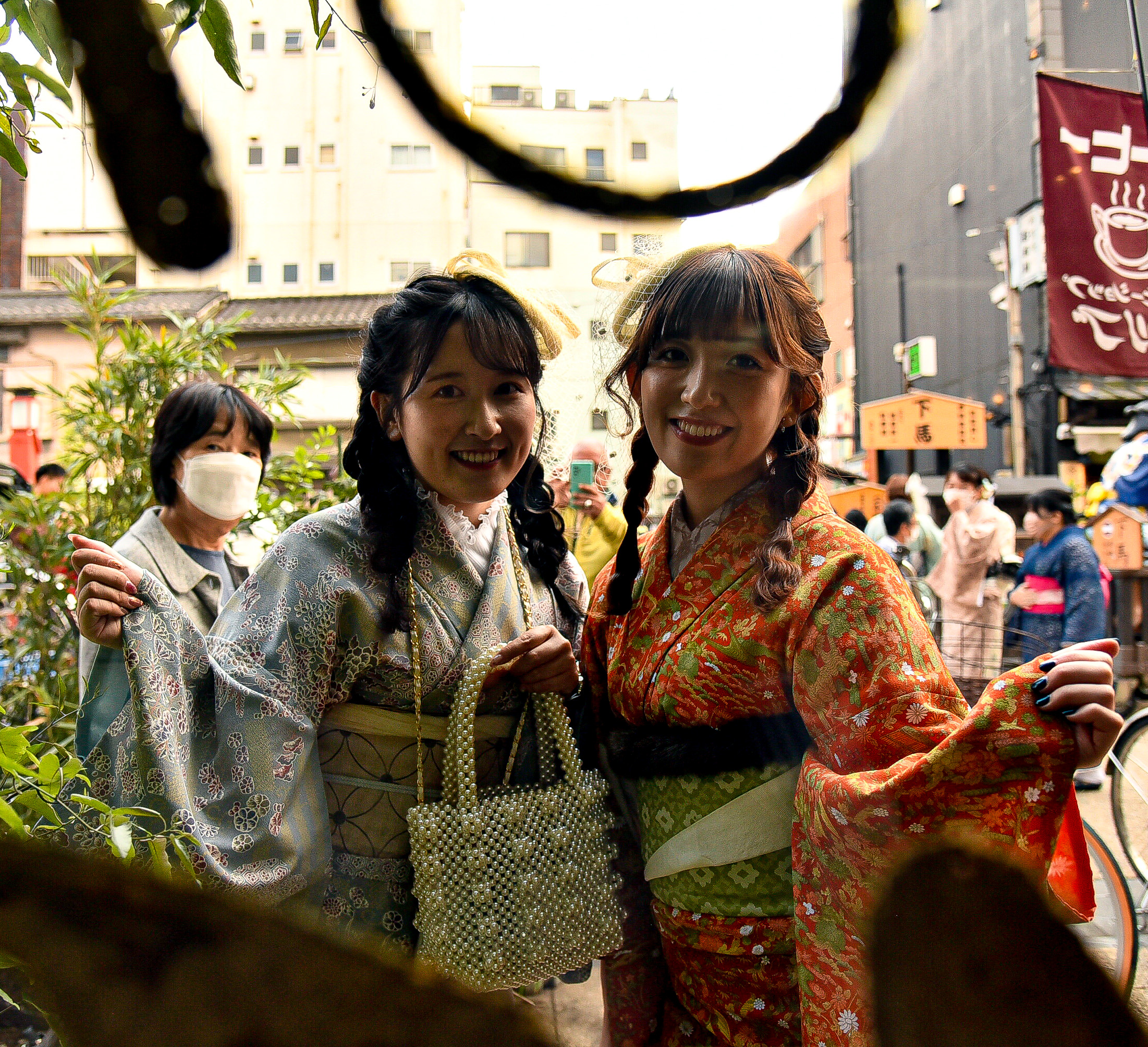
We stopped for tea in the afternoon and these two girls, seeing the camera, posed at the cafe window.
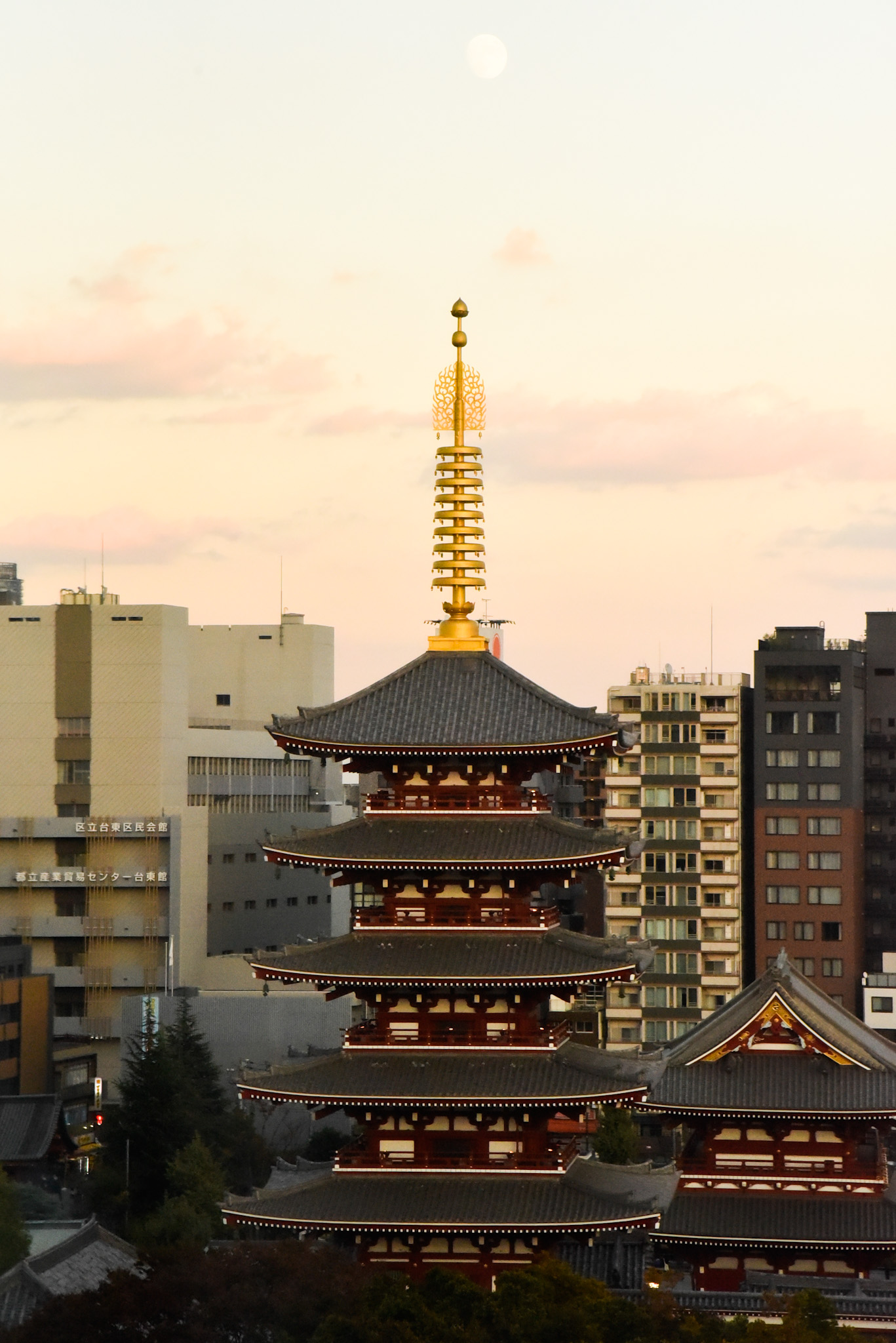
The Senso-ji Buddhist Temple on the right is the oldest {628 AD) in Tokyo and one of the City’s most significant religious sites It is dedicated to Kannon, the bodhisattva of compassion. The five story Demboin Pagoda, which is a Shinto shrine, was added in the 1940’s. Most Japanese identify as both Buddhist and Shinto. The entire site is the most widely visited spiritual site in the world. Surrounding the buildings are many street food vendors and shops selling traditional goods.
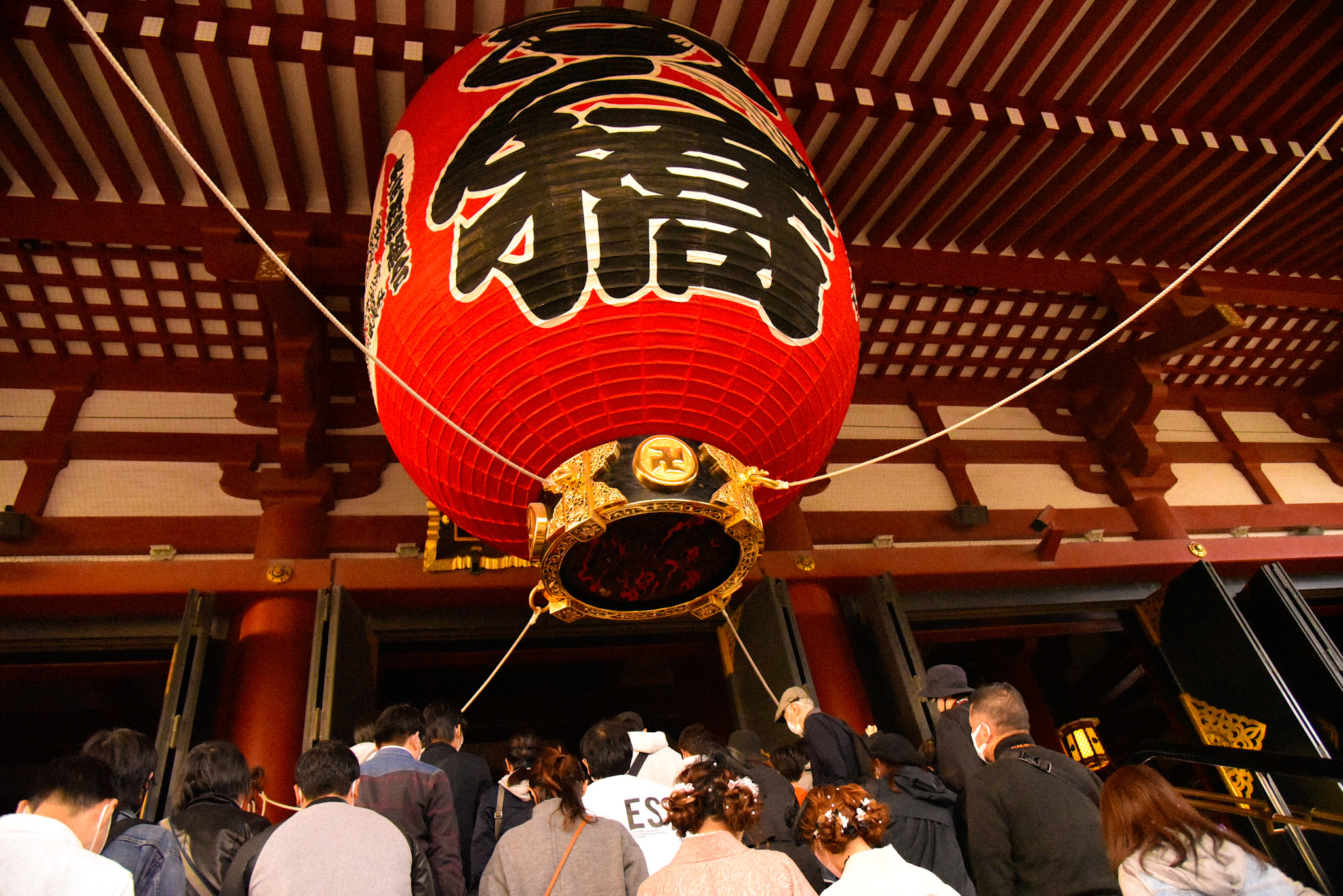
Over 30 million people visit this site annually.
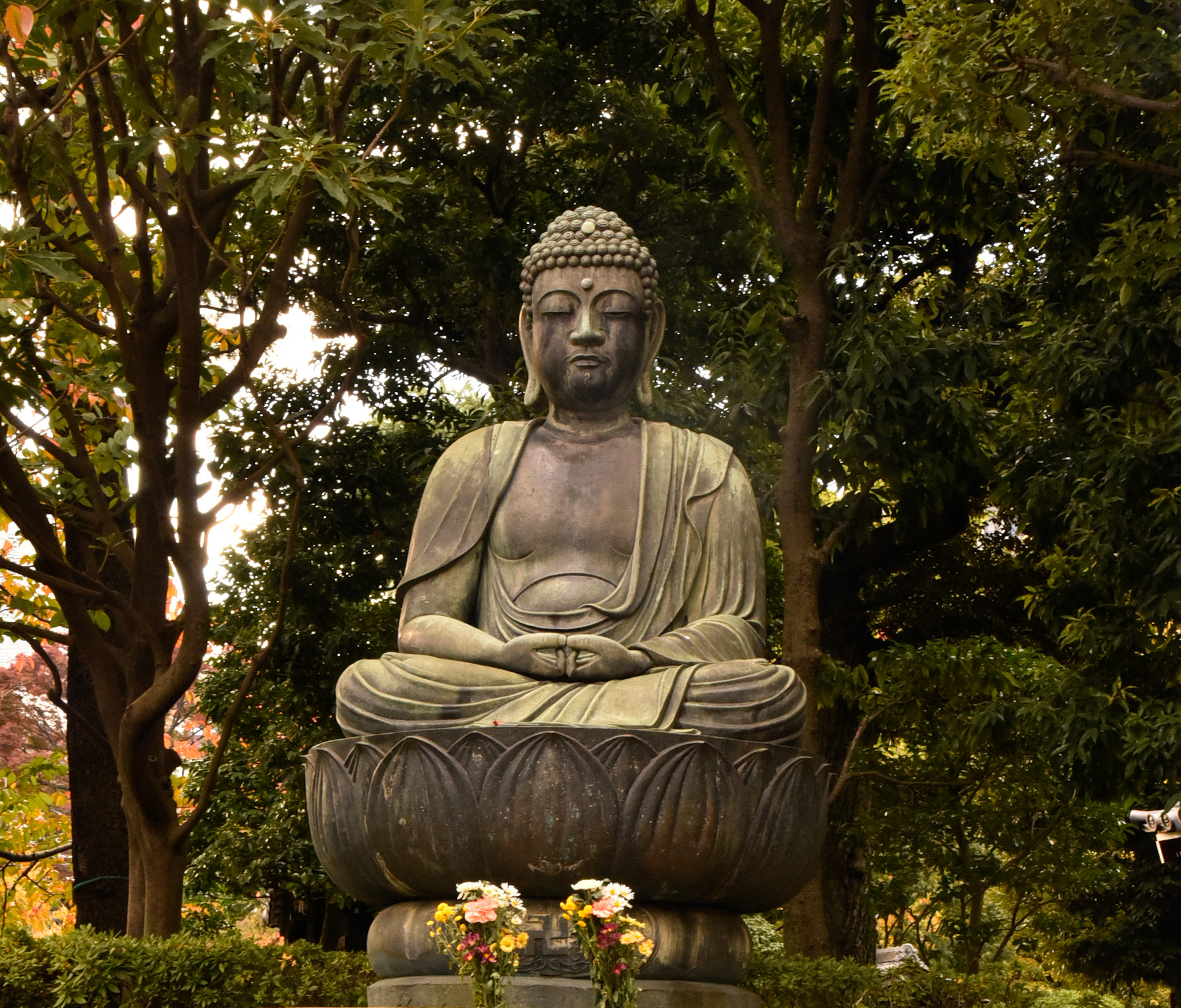
Buddha at the Hozomon Gate.

Joanne at the Tsukiji Hongwanji Temple erected in 1617 reminiscent of South Asian and Indian traditional design. It’s adherents follow Jodo Shinshu, Japan’s most practiced branch of Buddhism.
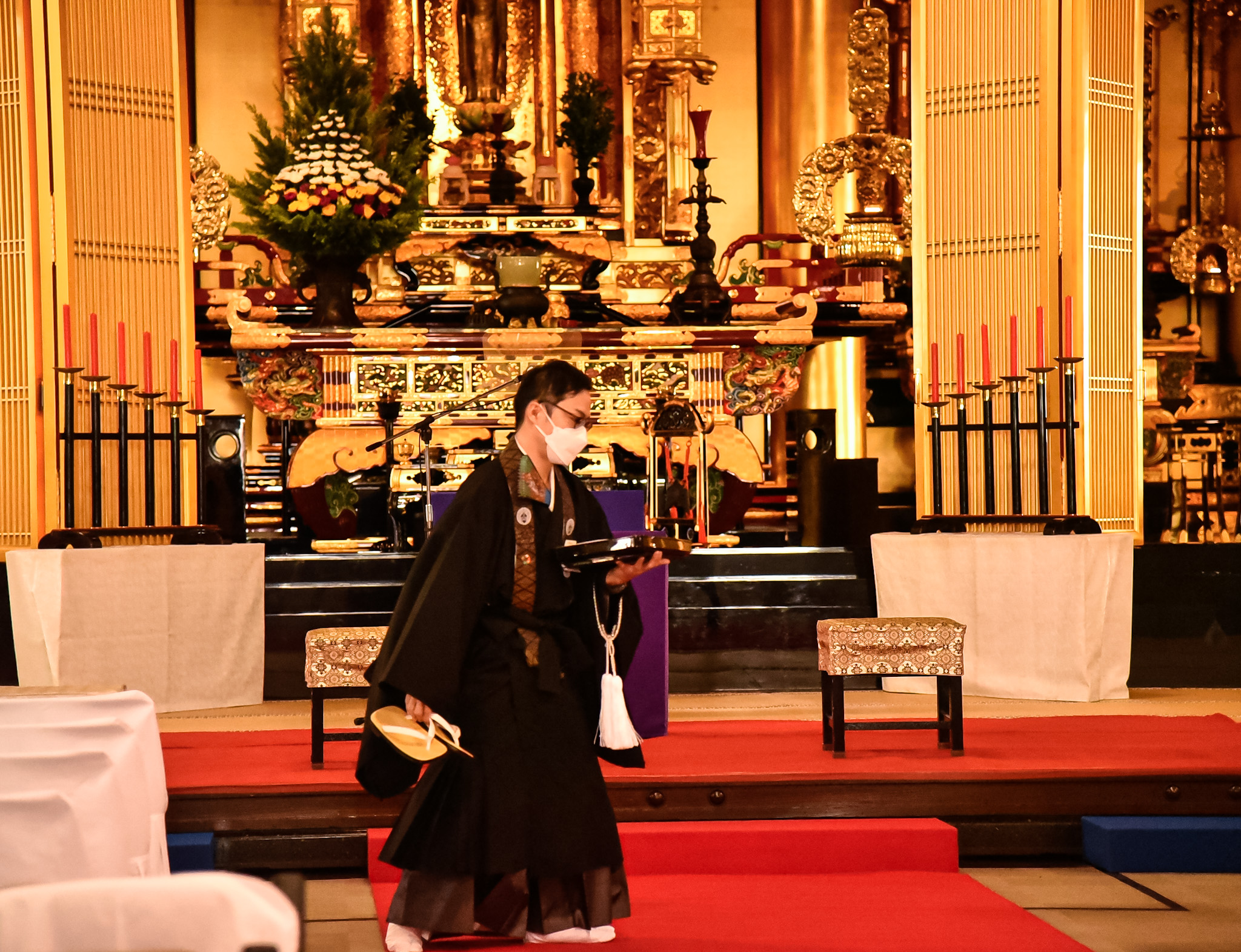
The interior is more conventional Japanese. Here we see a young monk carrying his shoes.
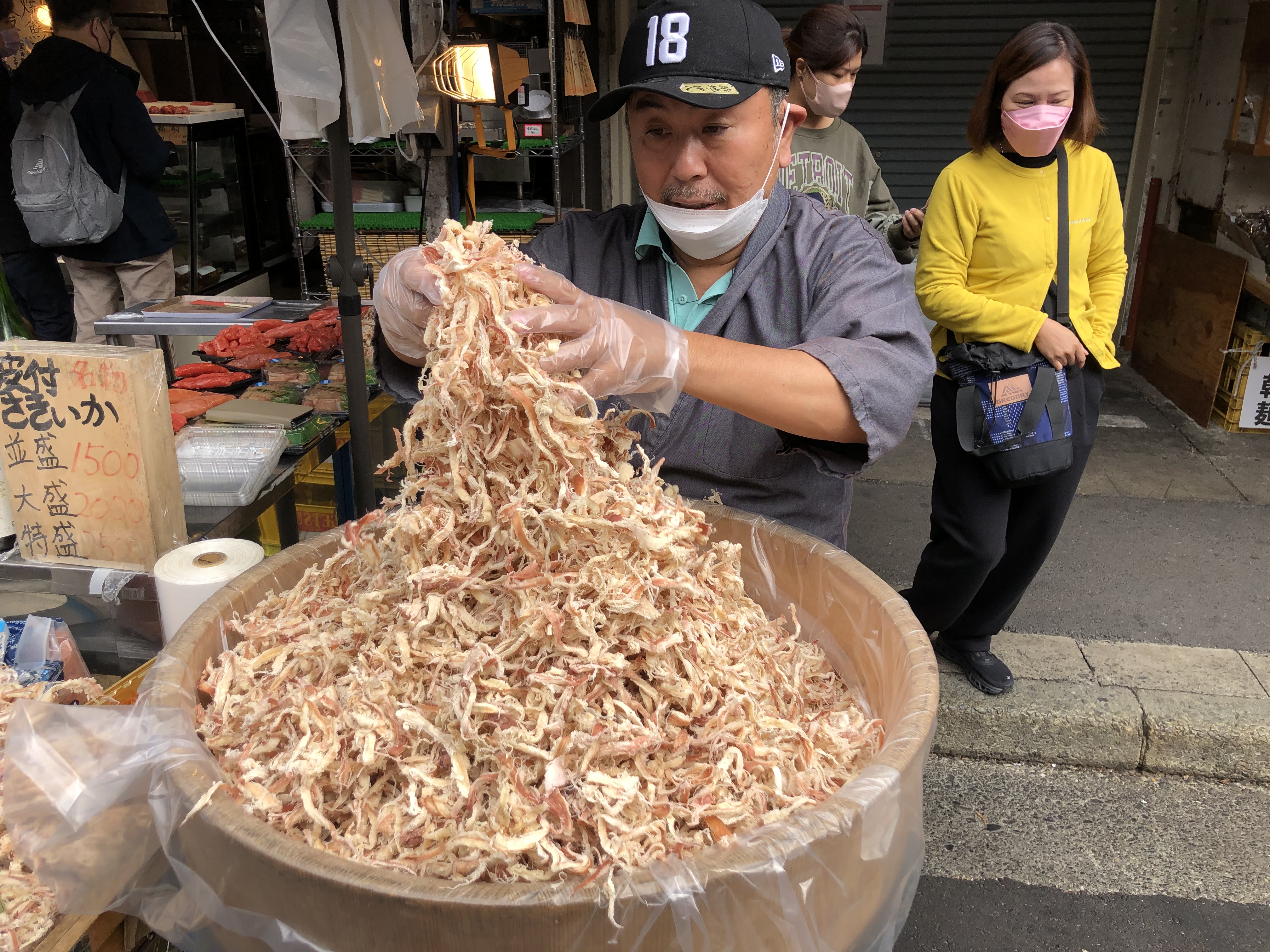
The Tsukiji Fish Market offers everything from dried squid to expensive wagu beef on a skewer. No longer the site for the famous tuna auction, the Tsukiji Market is now mainly vendors hawking their stuff. Yes, you can get sushi, sashimi, etc. but it’s mostly standing room only and on to the next stand.
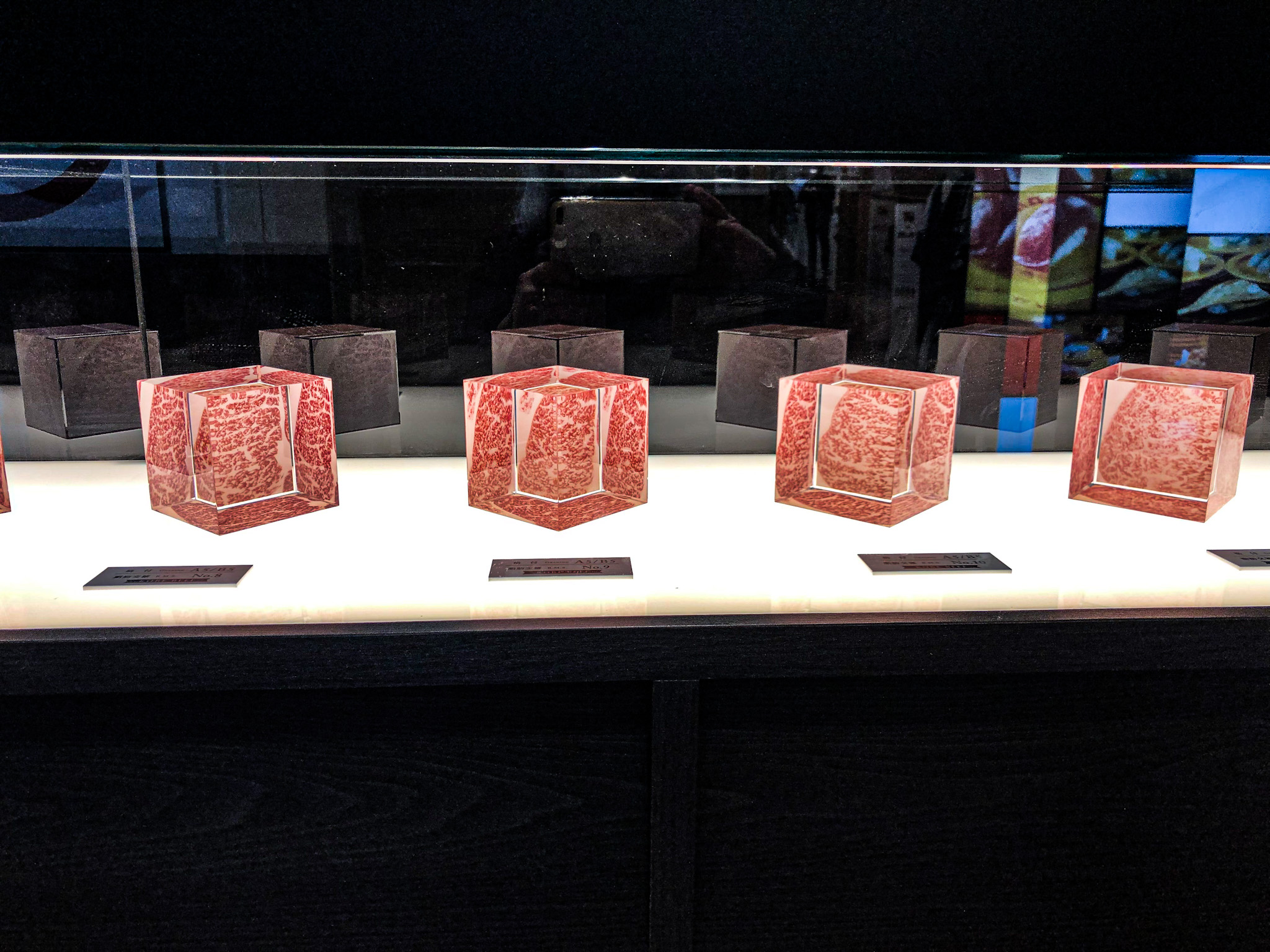
The Japanese take their beef seriously. At this restaurant you can choose how much fat marbling you want in your piece of meat.
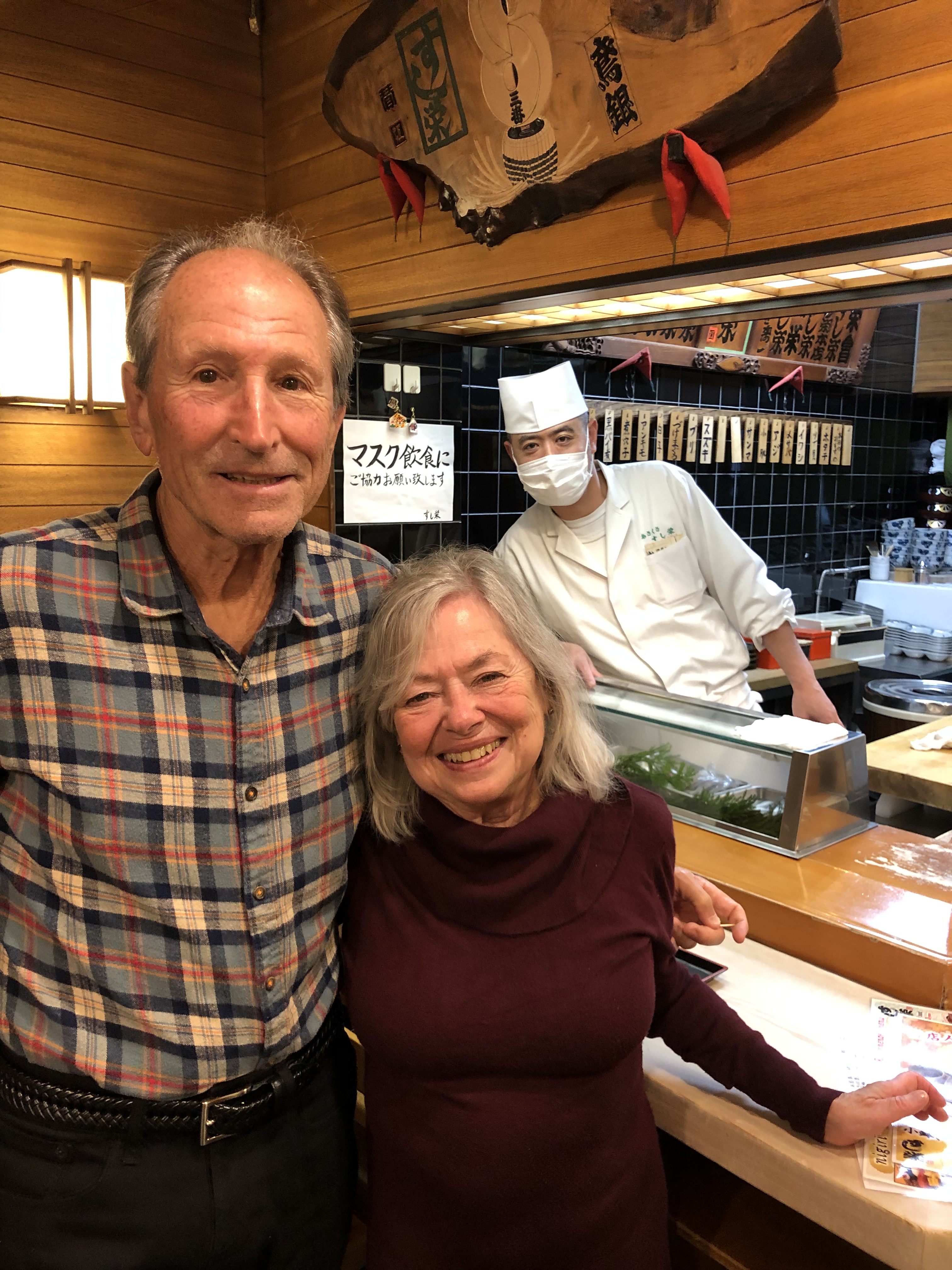
That evening we ate at a local sushi/sashimi restaurant that reminded us of Midnight Diner. (If you haven’t yet watched this Netflix series, we recommend it.)
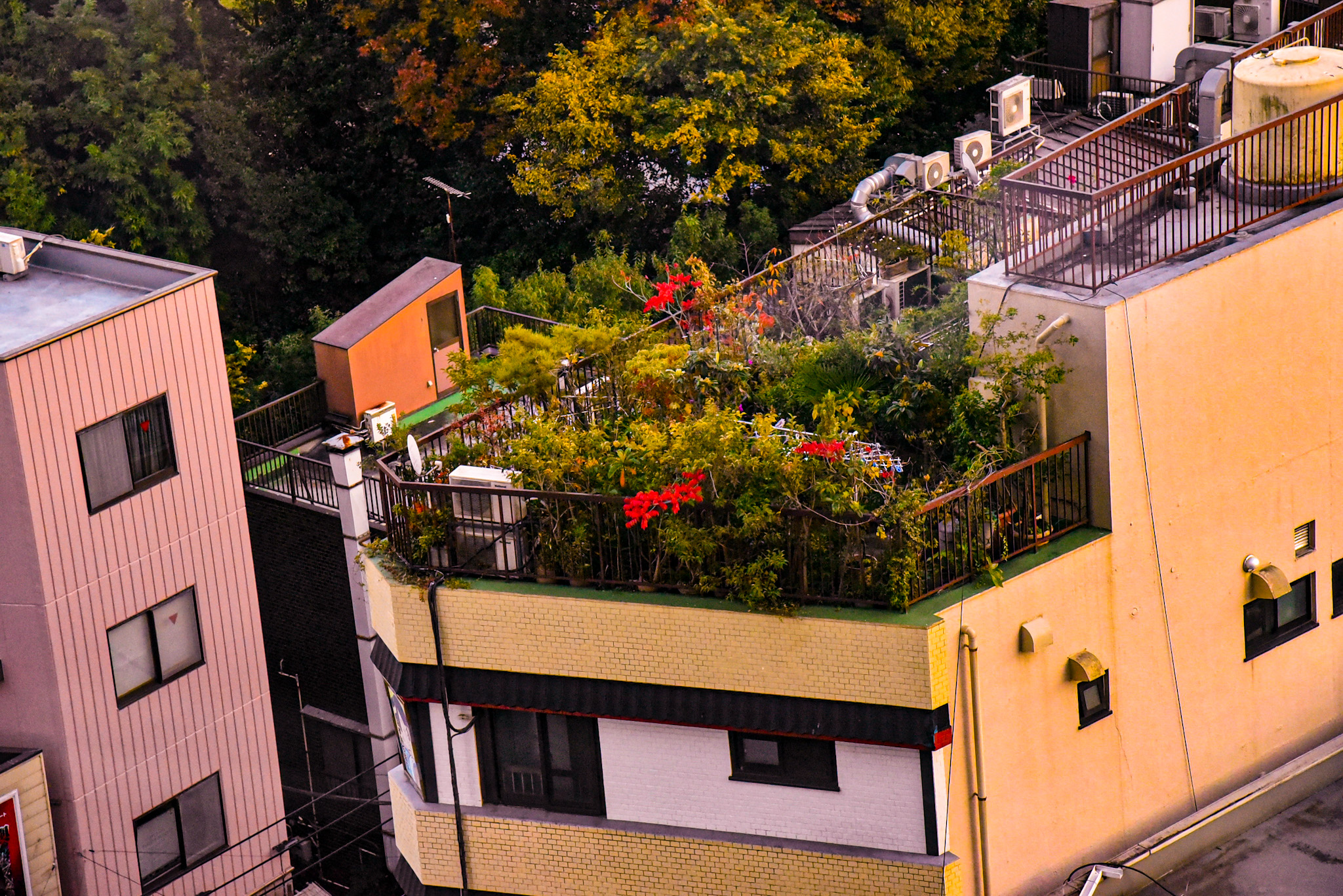
The mornings were lovely looking out onto a lush rooftop garden.
Tokyo is an enormous city with several districts or neighborhoods, each with its own defining character. We knew we had just scratched the surface but we would return in 2 weeks at the end of our tour. Kyoto would now be our next stop before joining others to hike the ancient Kumano Kodo and Nakasendo Trails.
 westwardhowithapollo
JojoVery nice pix and good narrative. Btw I could NOT figure the toilet out.IJK
Sent from Yahoo Mail for iPad