

We took a train to Yabuhara, a more modernized version of post towns. It was a beautiful, if a bit chilly, day. The weather here is very similar to home. It was a lovely hike with many switchbacks through woods with beautiful views, temples and shrines up and over the Torii Toga Pass. Not an easy hike, but not that difficult either.
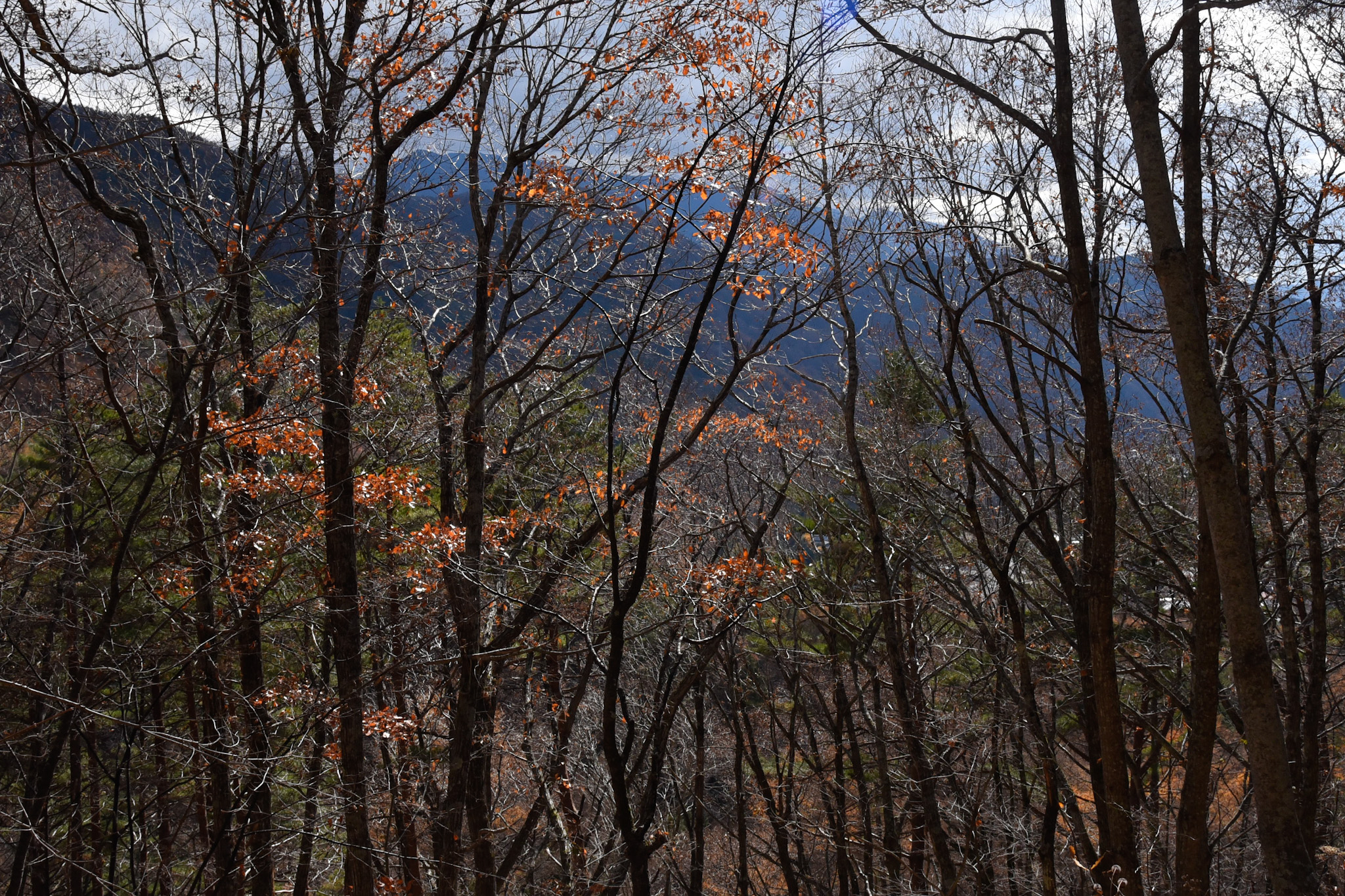
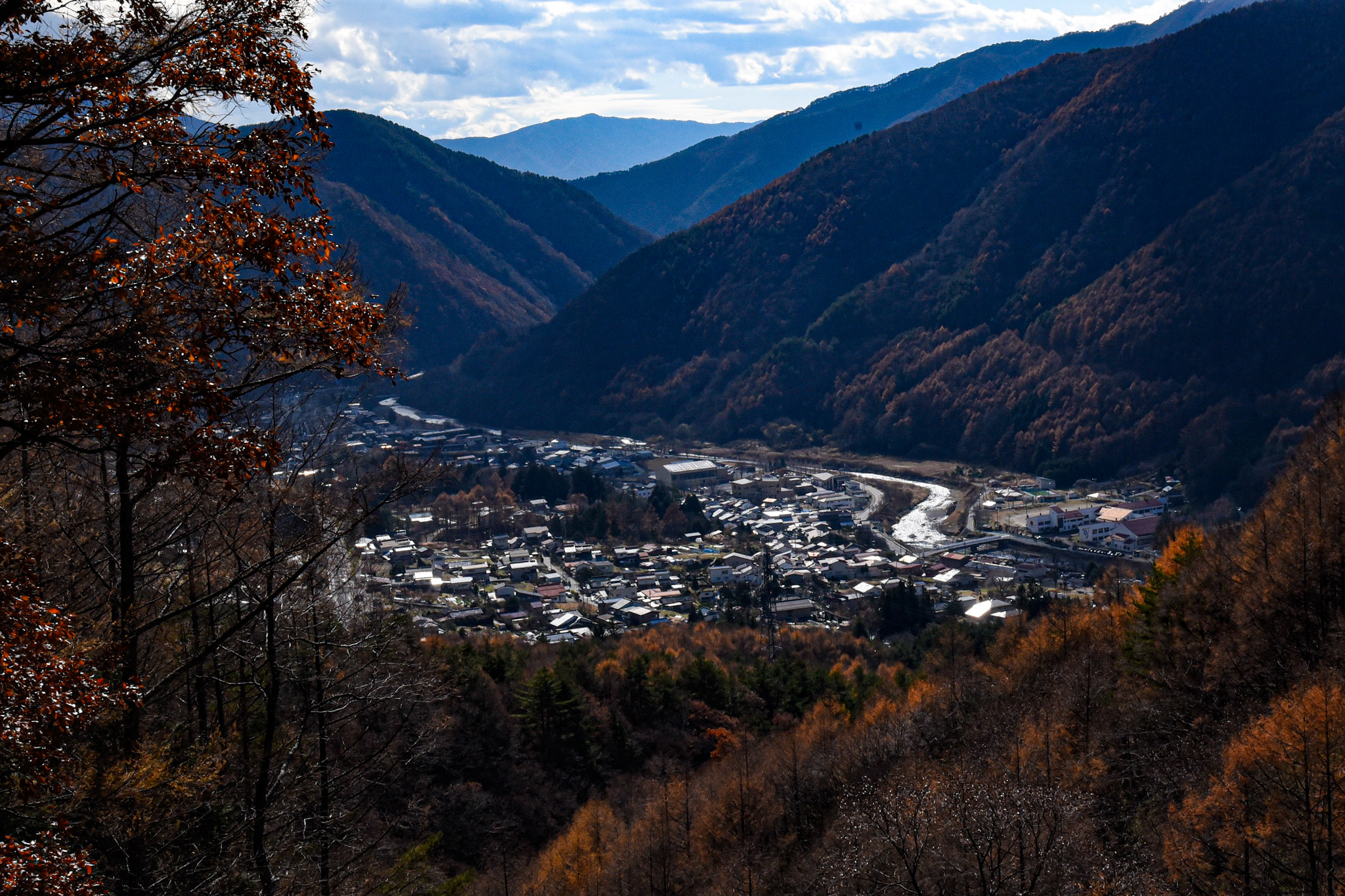
We looked down through the dense trees to the town, barely visible, below.
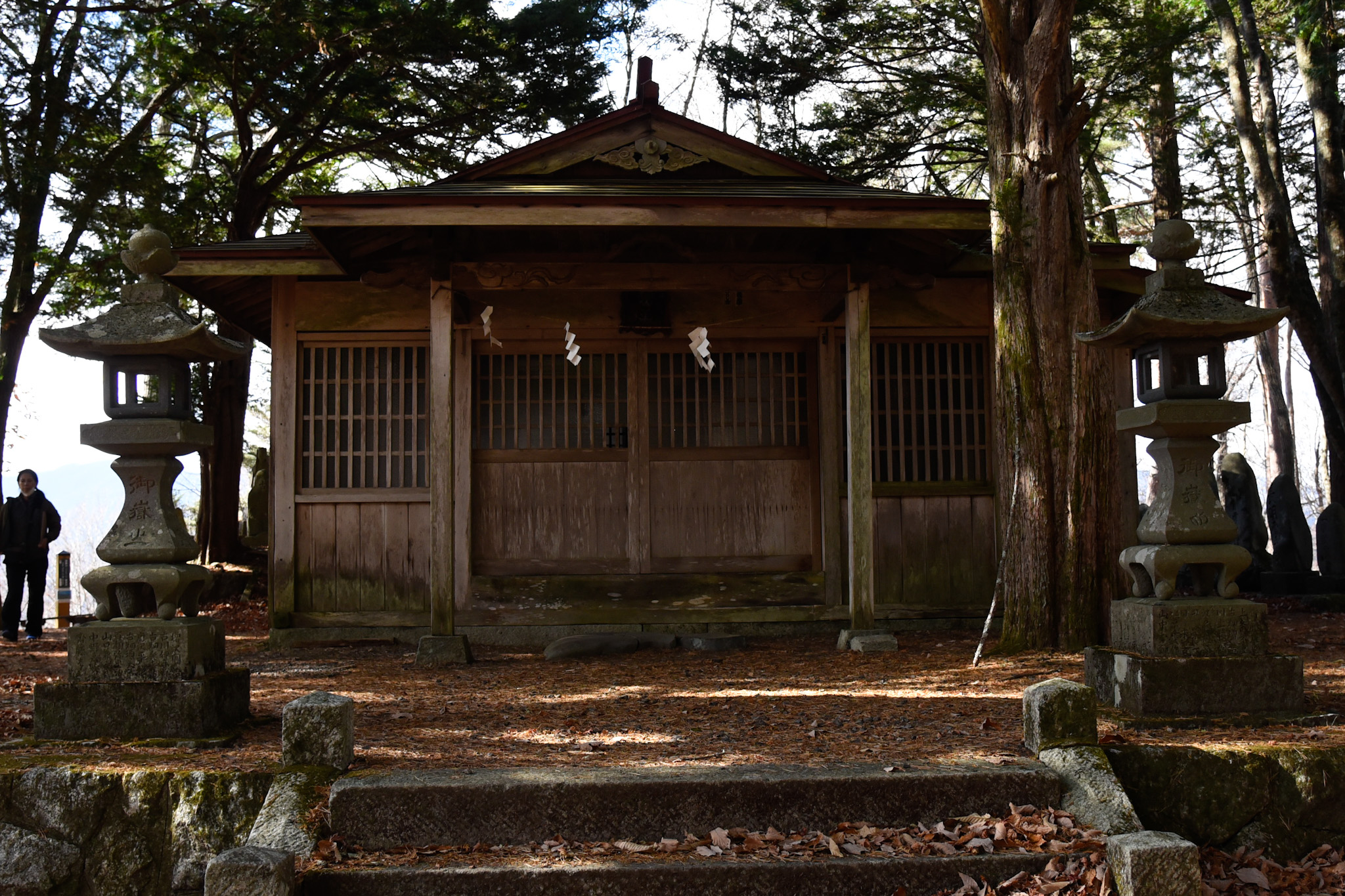
The trees parted and we could see in the distance Mount Ontake, a volcano which rises to an elevation of 10,049 feet and which erupted in 2014. Below is the Ontake Torii gate and shrine so named as this is the first glimpse of the sacred mountain while on the trail.

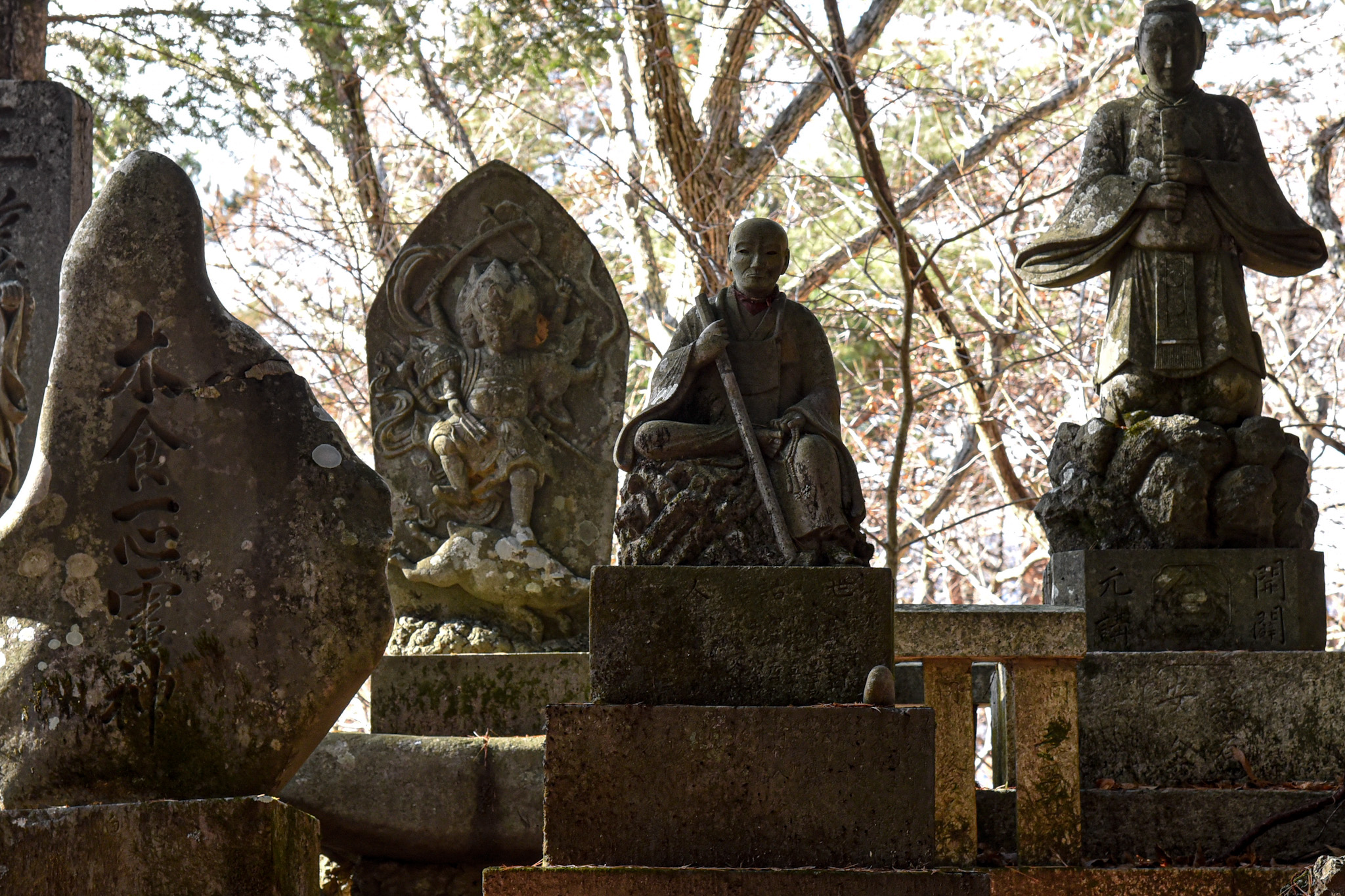
Statues of poets, including Basho, are part of the scene.
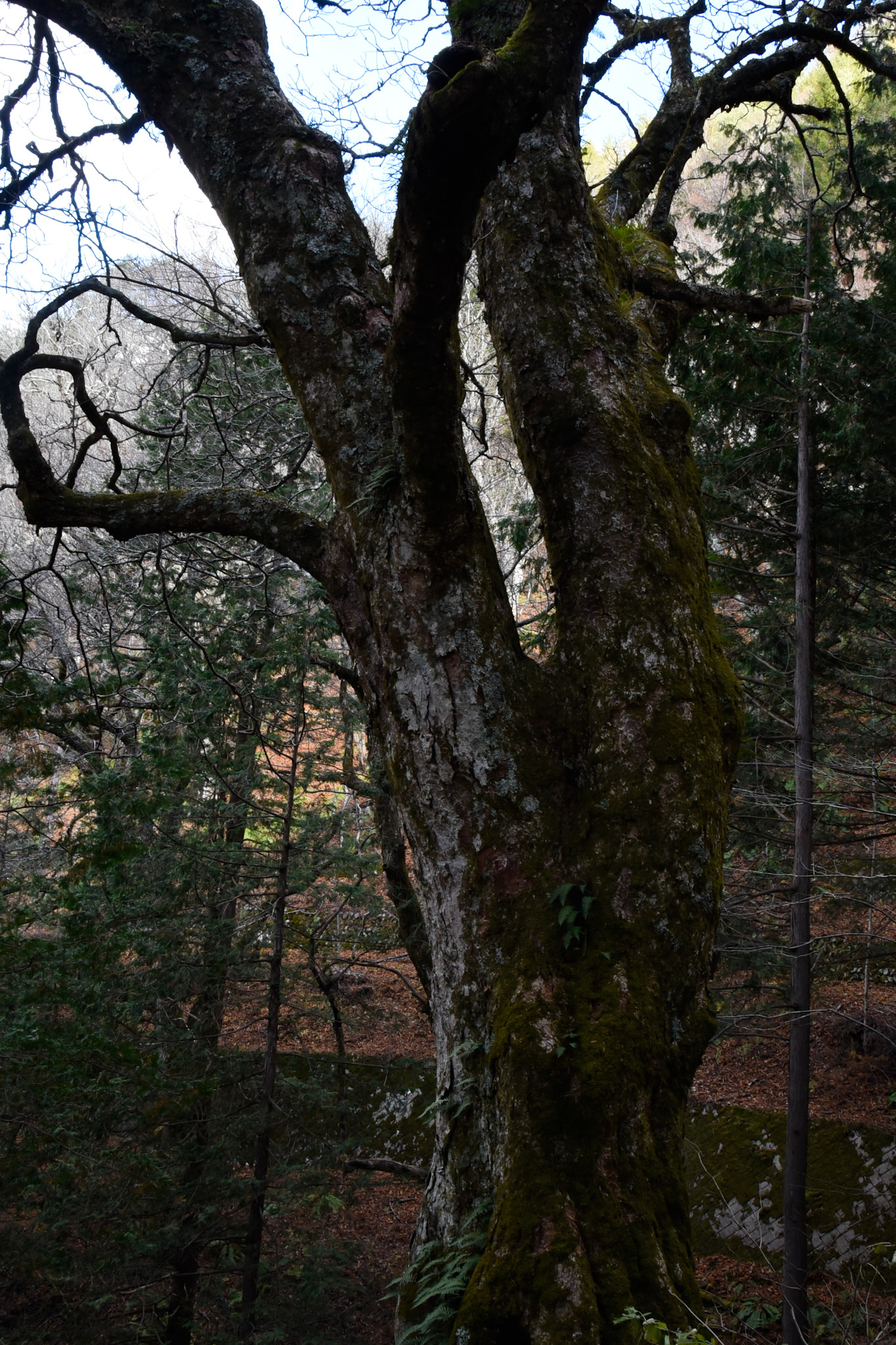
The horse chestnut tree, seen throughout the trail, is revered.

Wooden bridges help us cross some of the very steep sections of the pass.


We entered the well preserved post town of Narai. Here residents have renovated their historic houses, imposing strict rules on ownership and use. It was quiet, barely anyone was on the street and we were transported back to the 17th century.

We stayed at “Iseya” a traditional Japanese Inn established in 1818. During the Edo period it served as one of Narai’s porter-service offices.
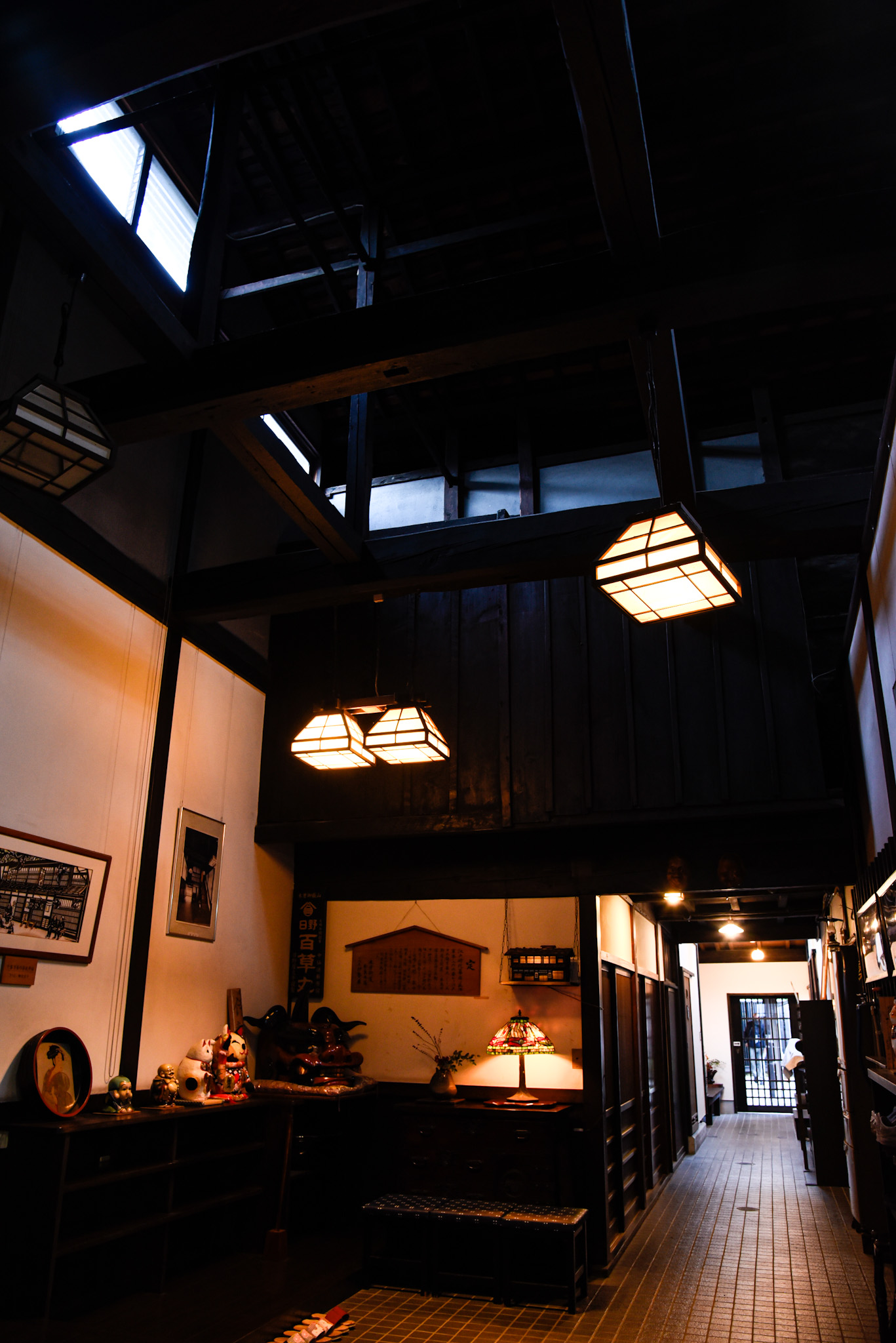
The interior was dark and quiet. The door in the back led to a garden and two small onsens for two people.The tatami-mat rooms were in a rear annex. It was serene and authentic.
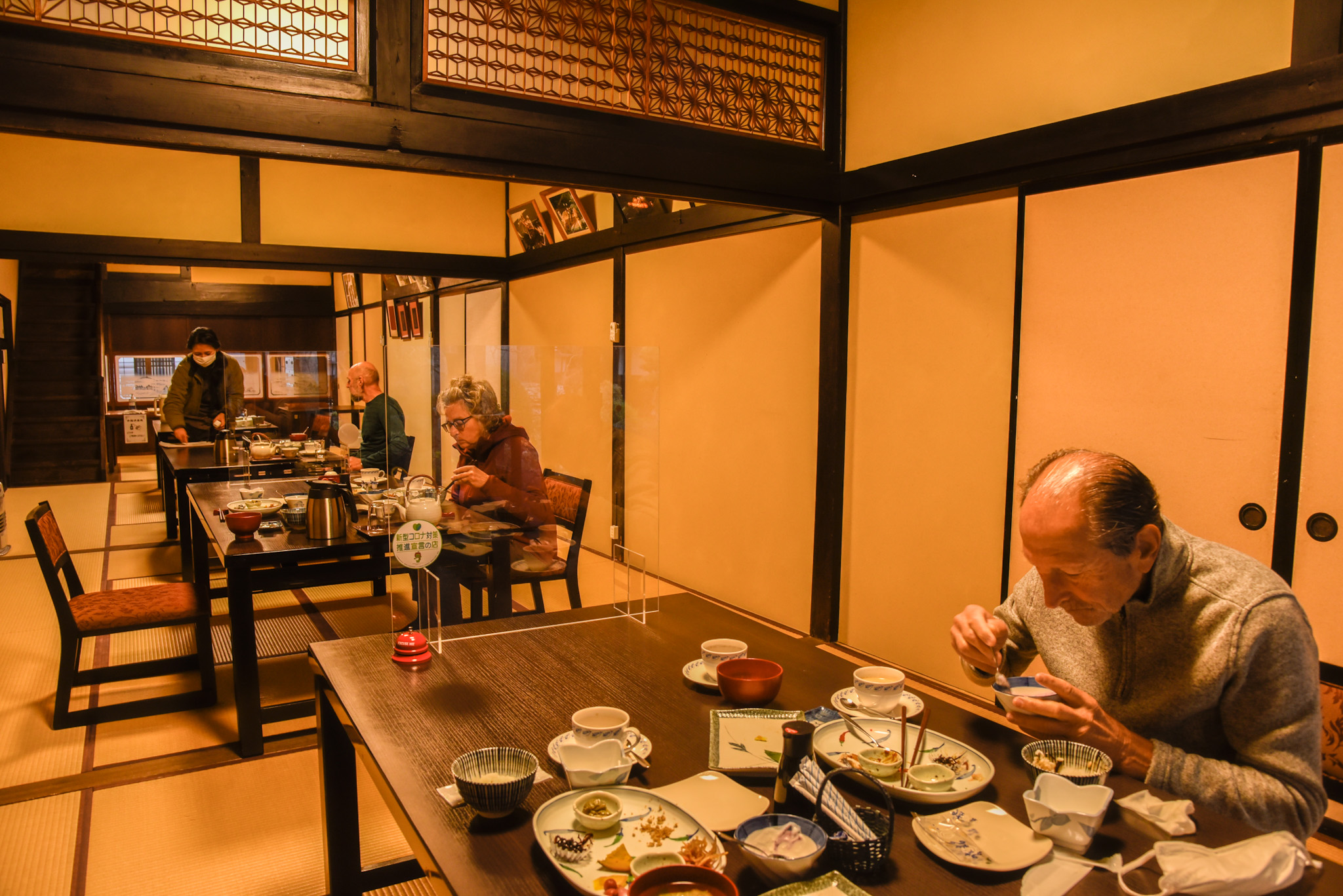

Great precautions were taken because of the Covid outbreak in our group, and we ate dinner at separate tables. The food was extraordinary, laid out before us in the traditional manner.

We left early in the morning to catch our train to Matsumoto, passing closed up shops.
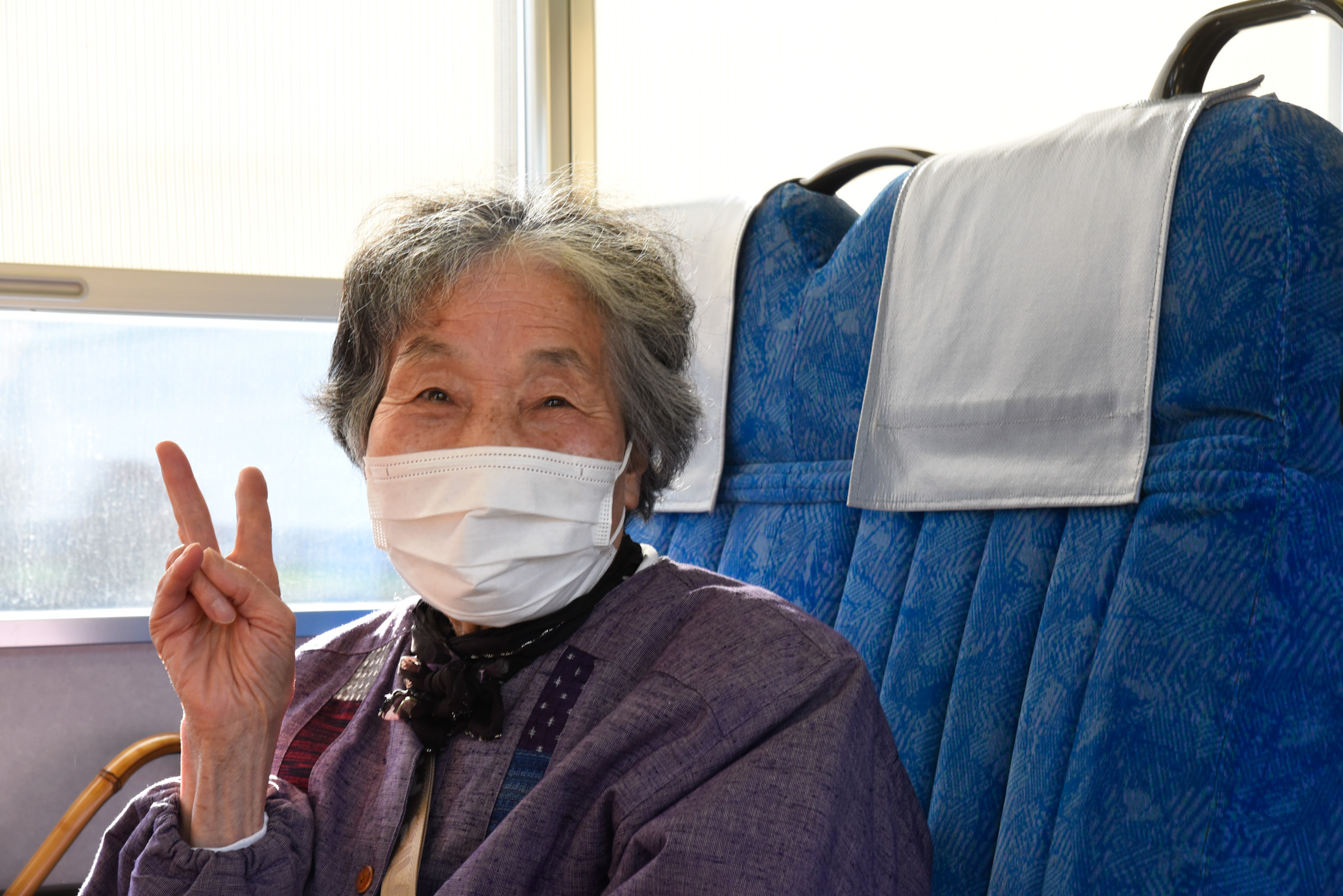
On the train we met a woman who spoke a bit of English. She was on her way to the next town to meet a friend.
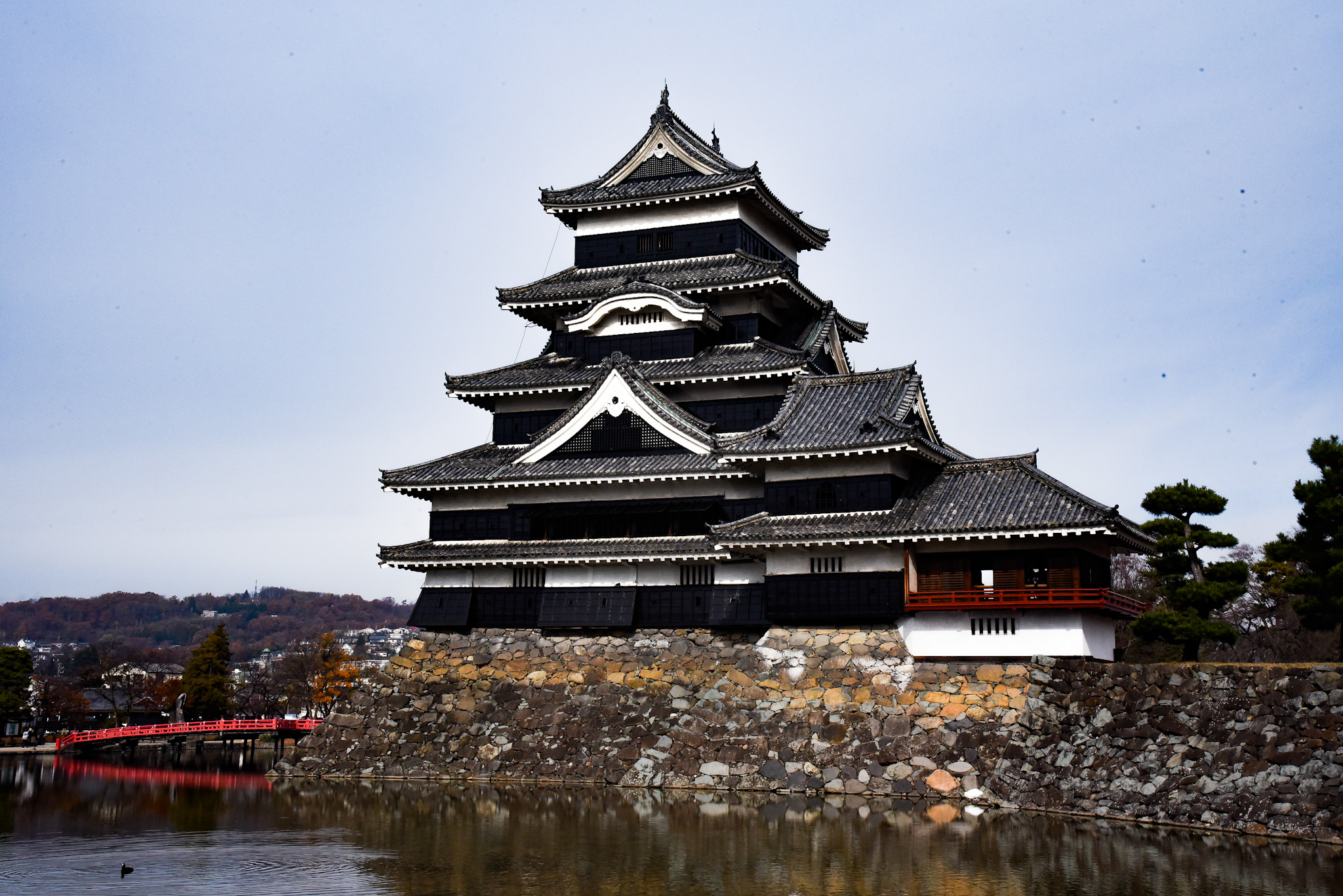
Upon arrival in Matsumoto, we walked to the famous Matsumoto Castle. Construction of the castle was begun during the Eisho period (1504-1521) and was occupied by a series of clans who provided administrative and military support for the regional rulers until the mid-19th century. The castle contained a very steep staircase that wound past the many rooms and artifacts displayed on six floors.

An example of the protective fighting gear that samurai wore during battles in defense of the castle.
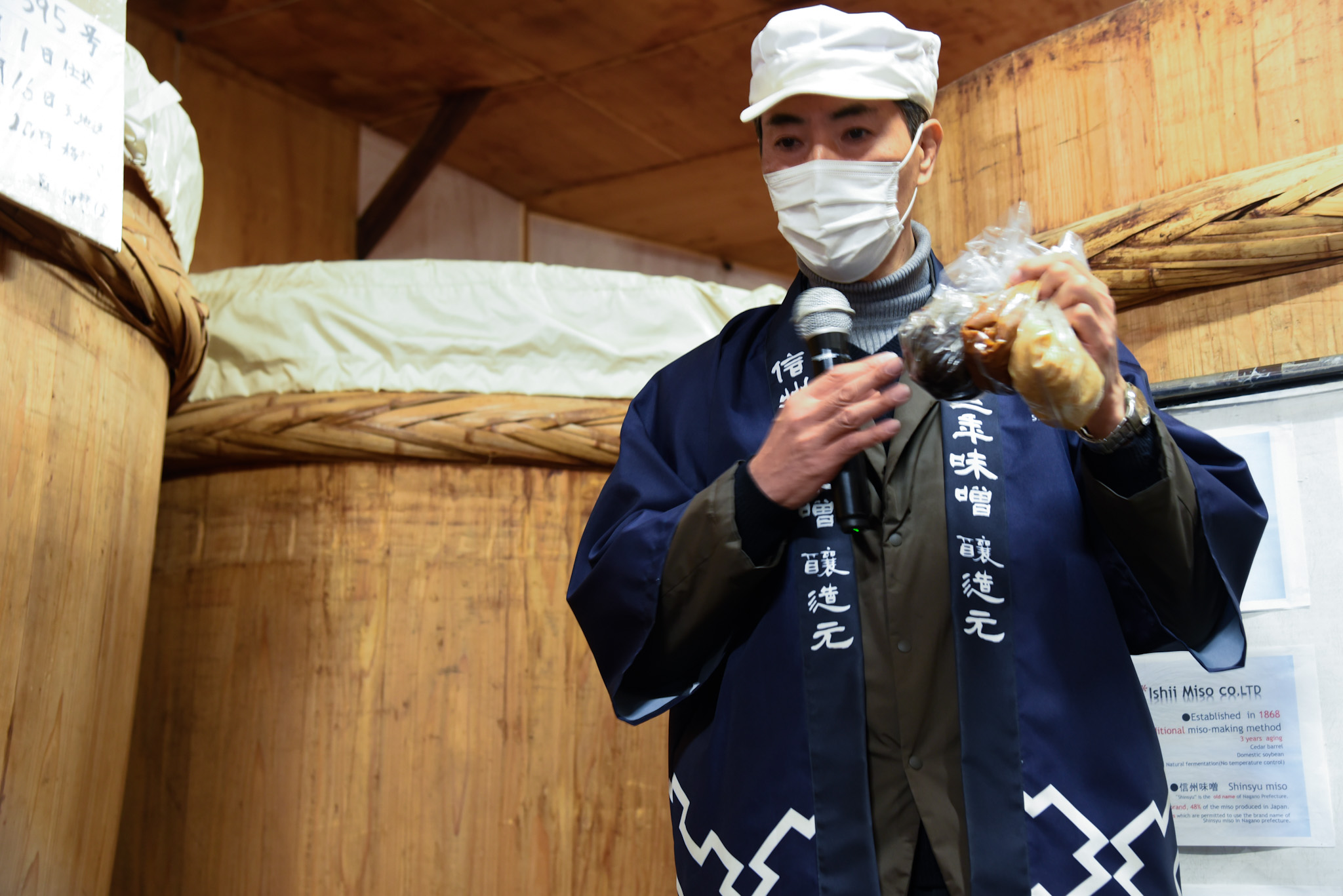
After leaving the castle we walked to the Ishii Miso Brewing Company established in 1868 by the Ishii family. It’s current President, Kosuke-Ishii San, informed us of the brewing process and the various types of miso prepared in different regions. The Ishii Company specializes in the rich dark Miso that requires a longer process.
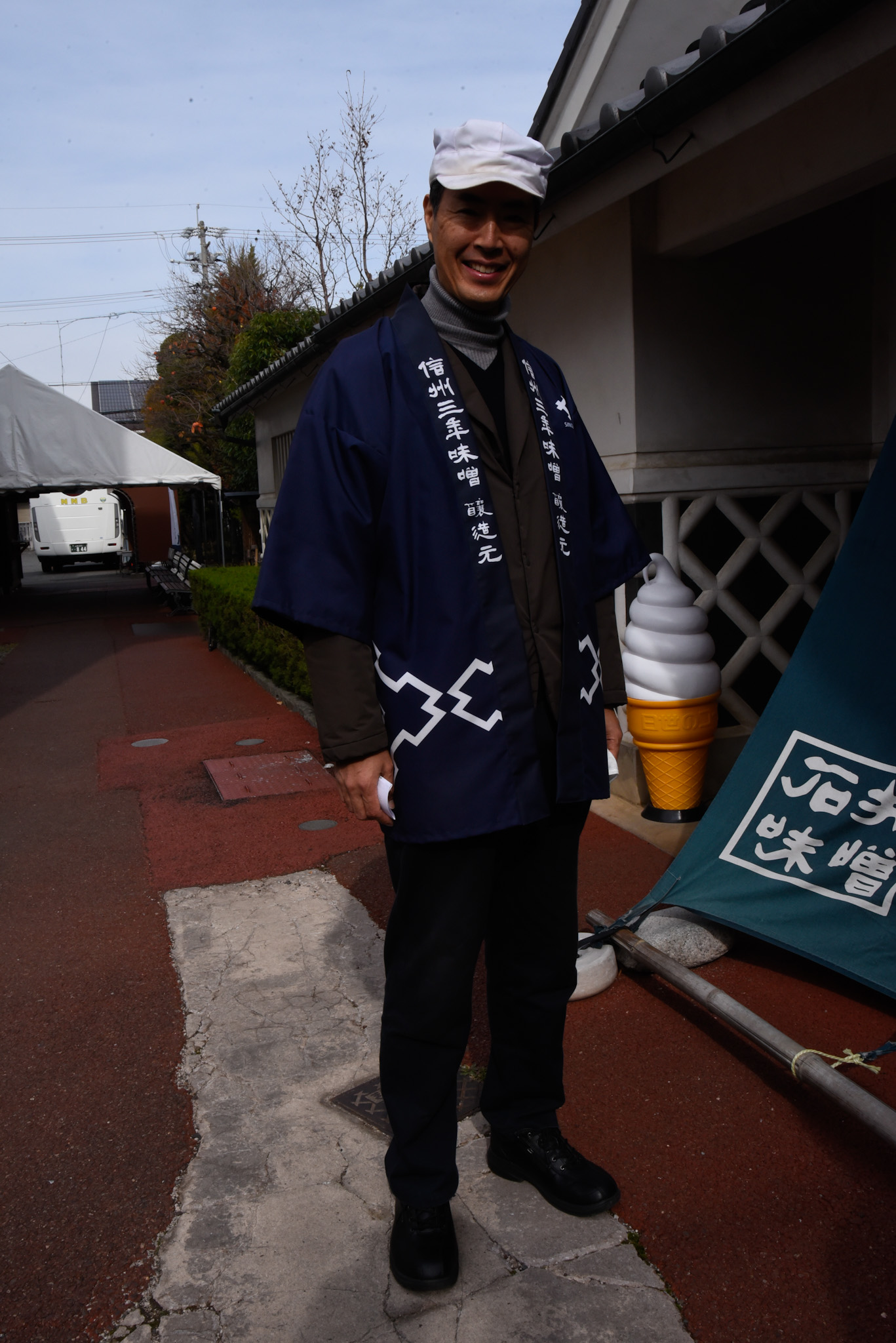
Yes, there is miso ice cream.
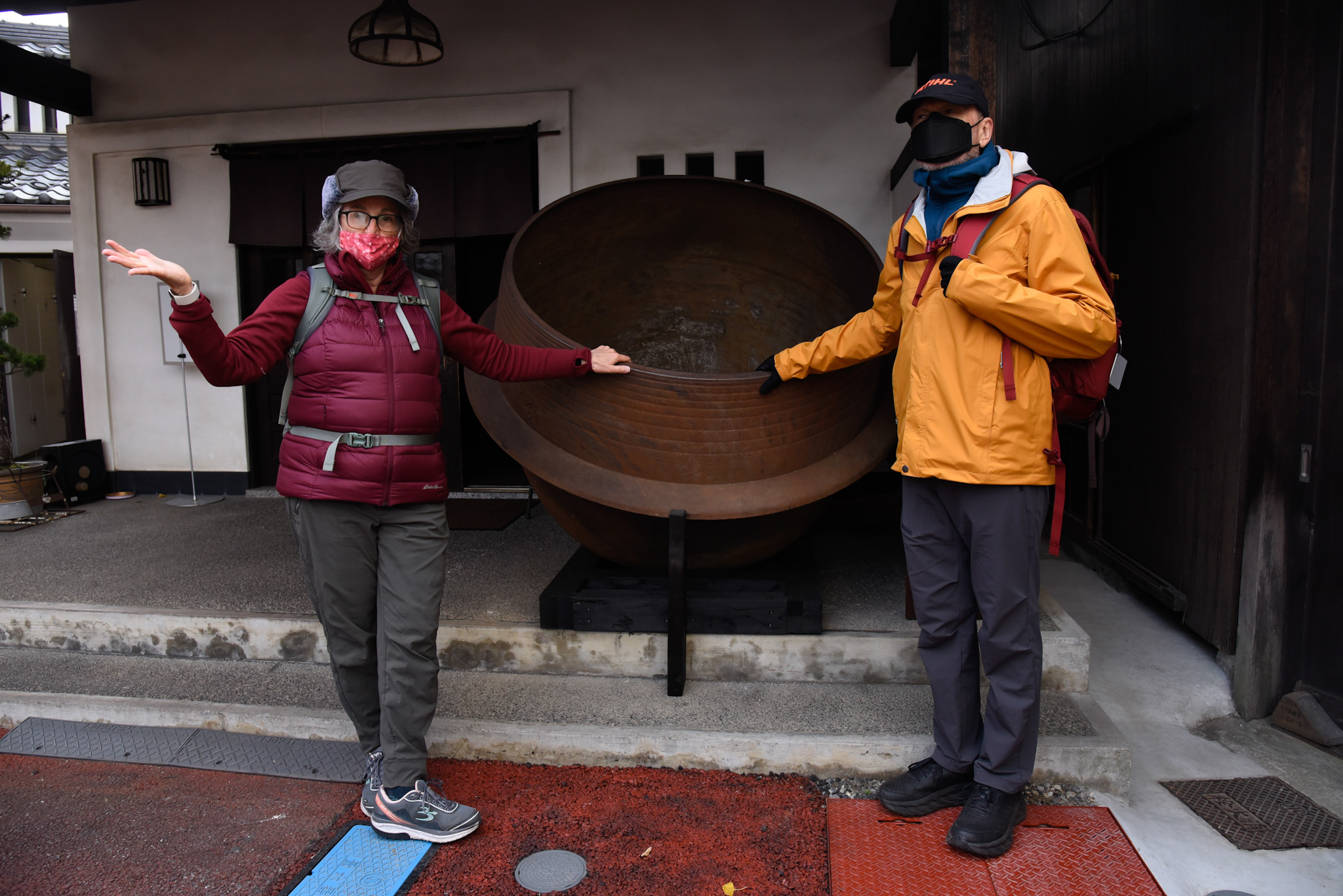
Dana and Ted at the factory
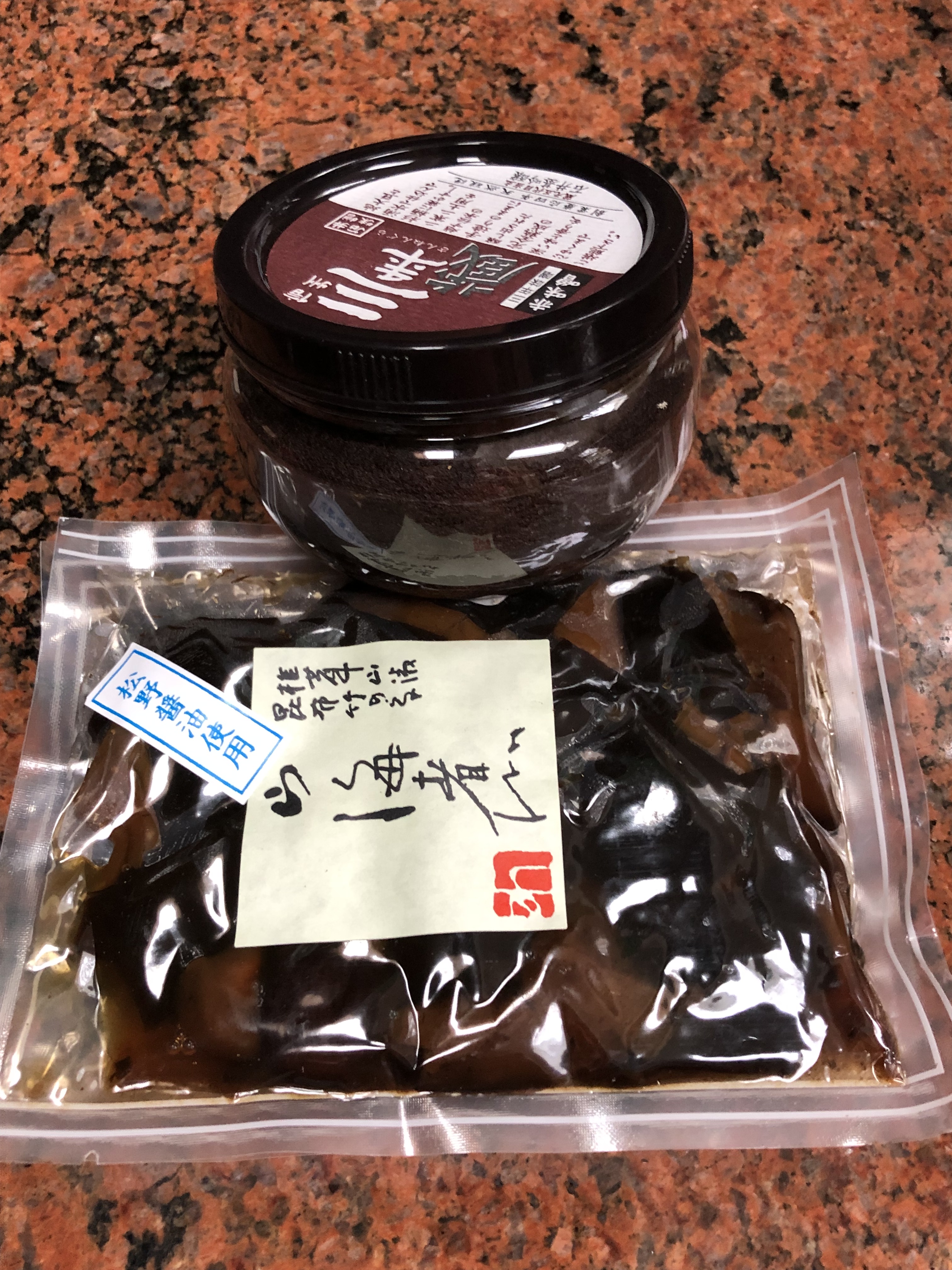
Just before leaving the miso company we had a delicious lunch prepared with this great miso. After lunch we headed for the train to Tokyo for the last leg of our journey.
 westwardhowithapollo
You must be logged in to post a comment.