
We drove along the coast from Hue to Da Nang and Hoi An. On passing through Da Nang we made a short stop on My Khe Beach, better known to American GI’s as “China Beach” where some spent their In-Country R&R .

My Khe Beach is a lovely beach but it is experiencing major development. Vietnam’s Beaches are only a short plane ride for Chinese vacationers, and Chinese investors are quickly buying up beach front property. But the South China Sea has become a flash point in Chinese-Vietnamese relations. China is building artificial islands in the South China Sea for military purposes, and it has attacked Vietnamese Fishermen who fish in the disputed waters.
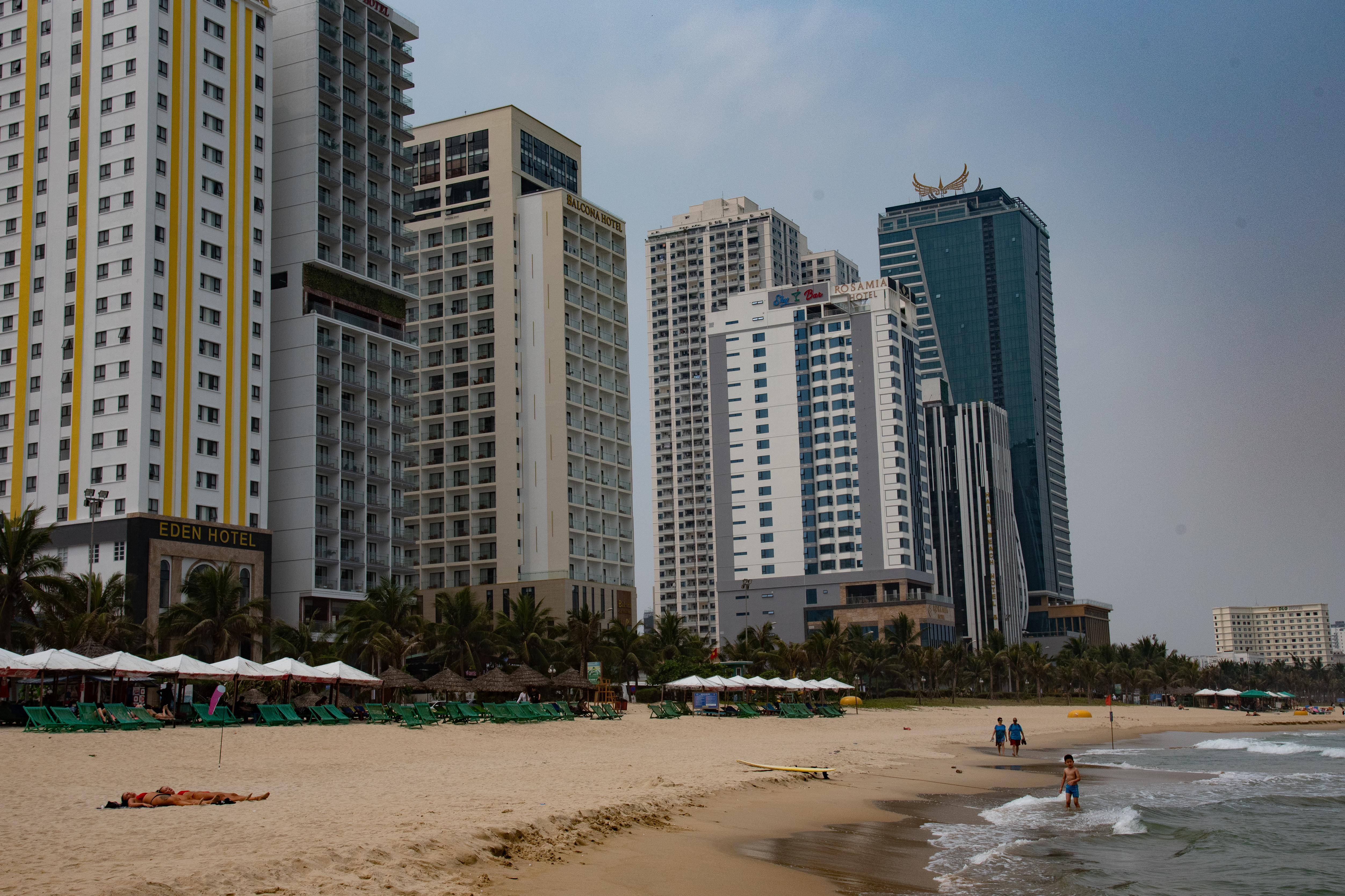
Building boom going on along the coast.
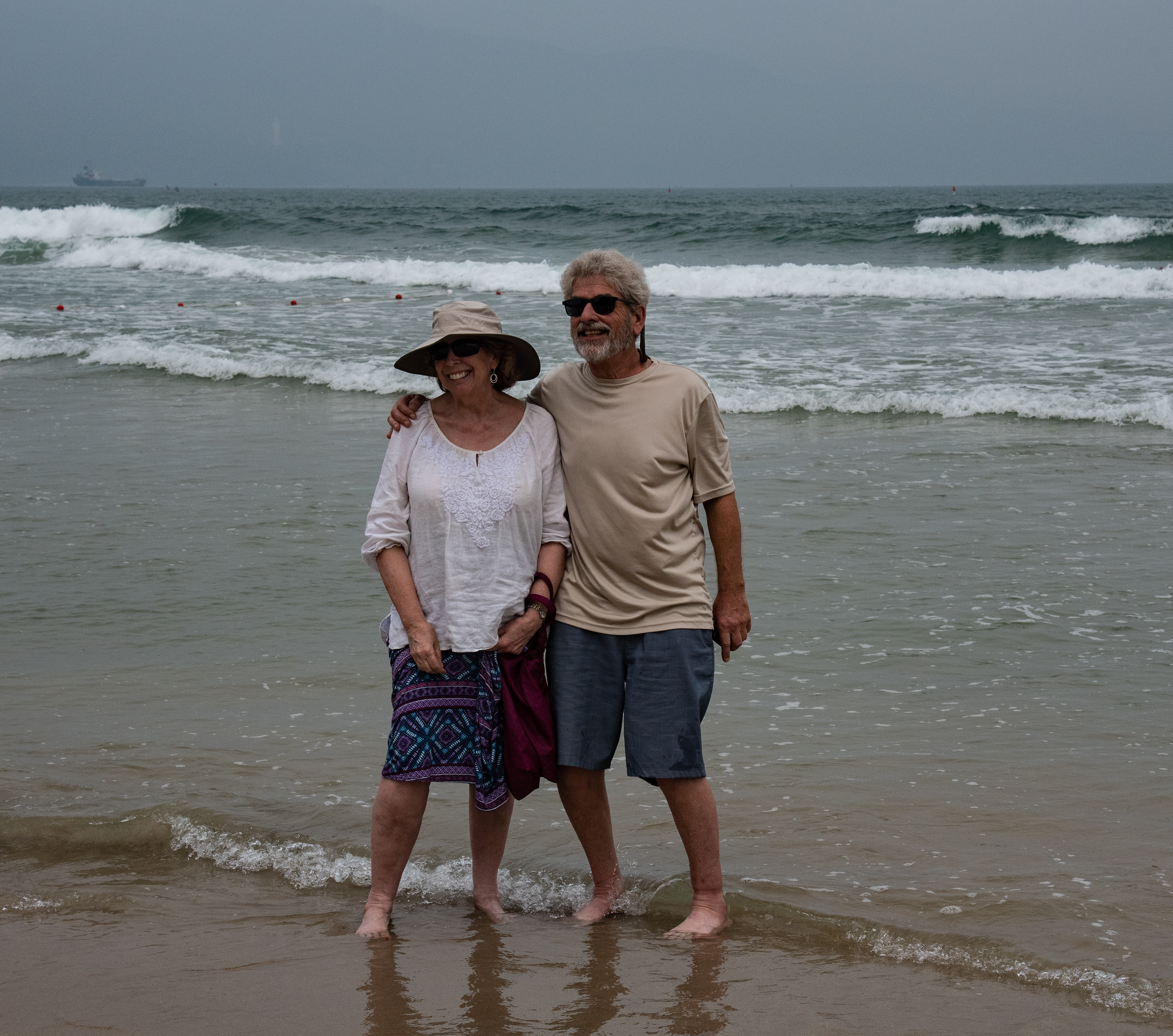
Anne and Eric were happy to finally put their feet in the South China Sea.
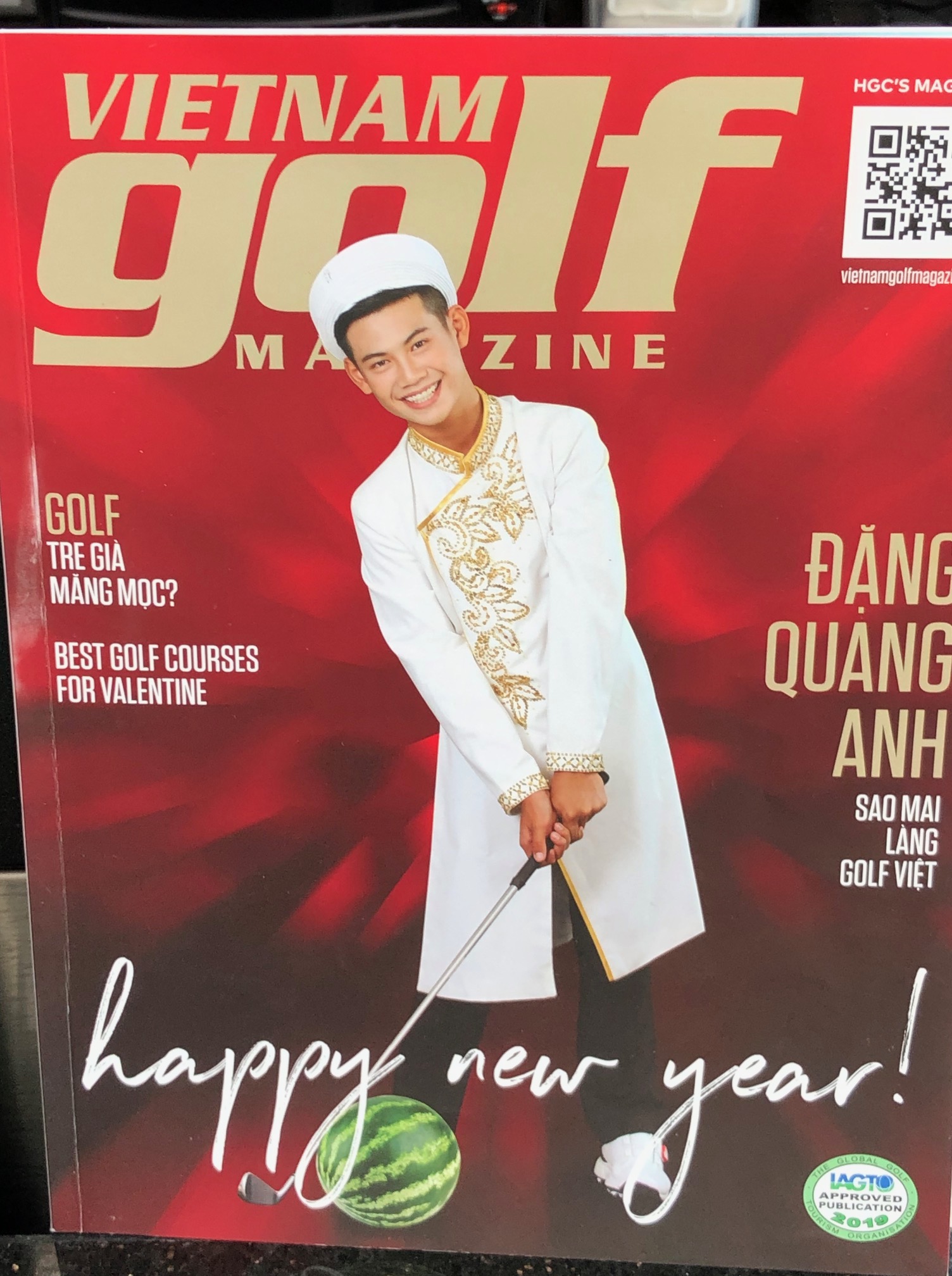
Mitch found this local golf magazine, but no, he didn’t get to play…especially with a watermelon.
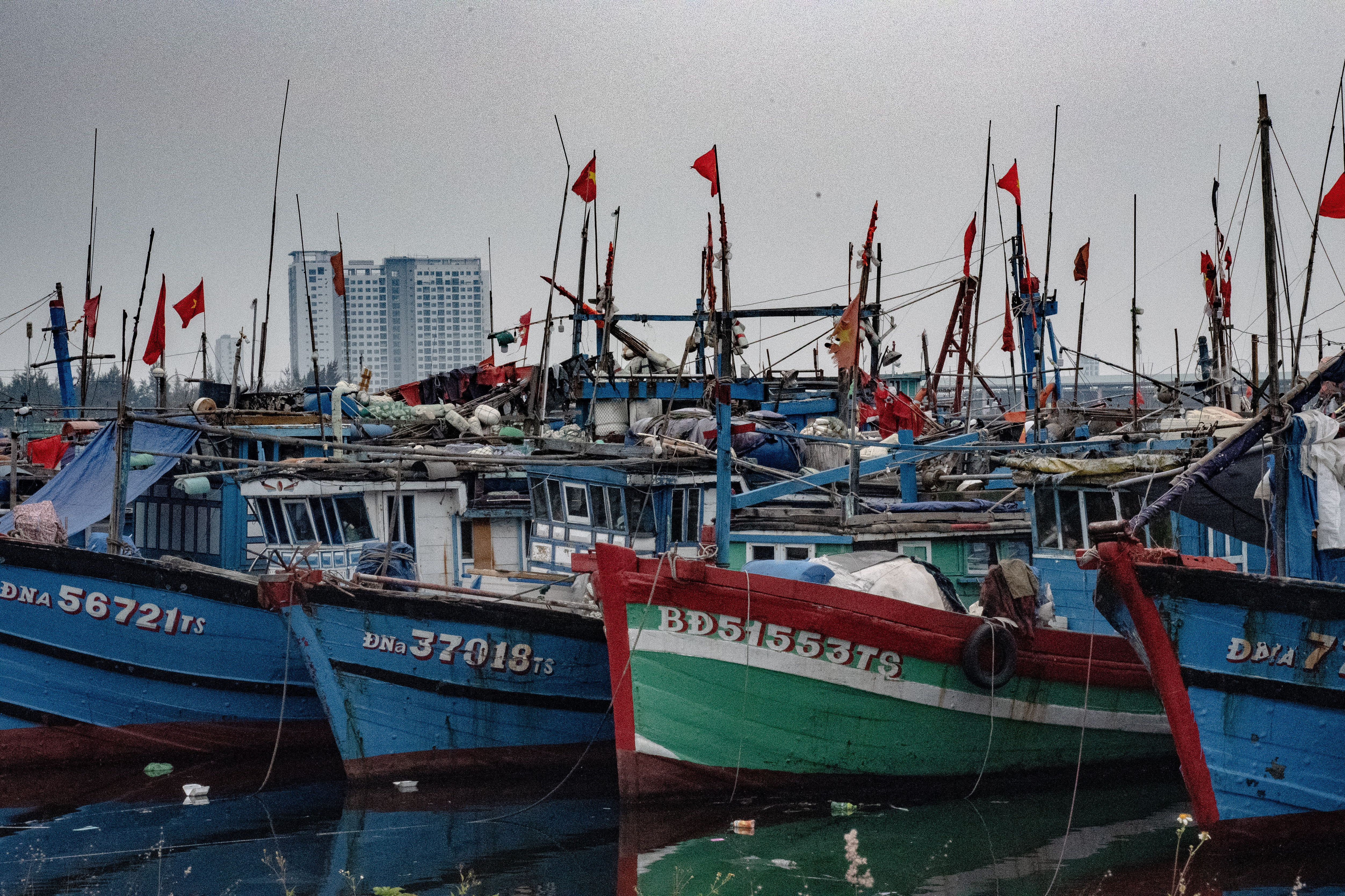
Fishing boats in Danang Harbor.
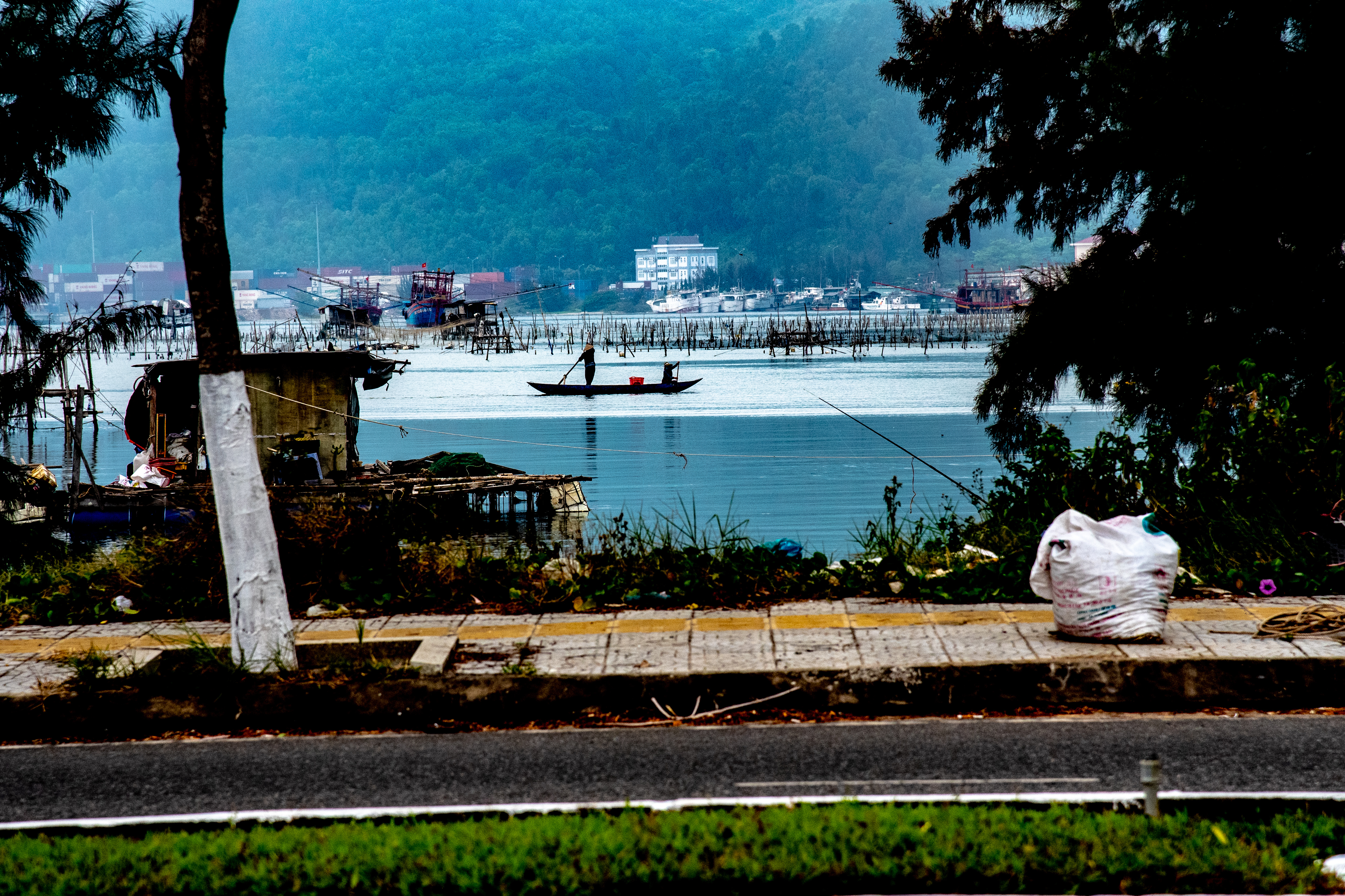
This sampan is heading out toward open waters.

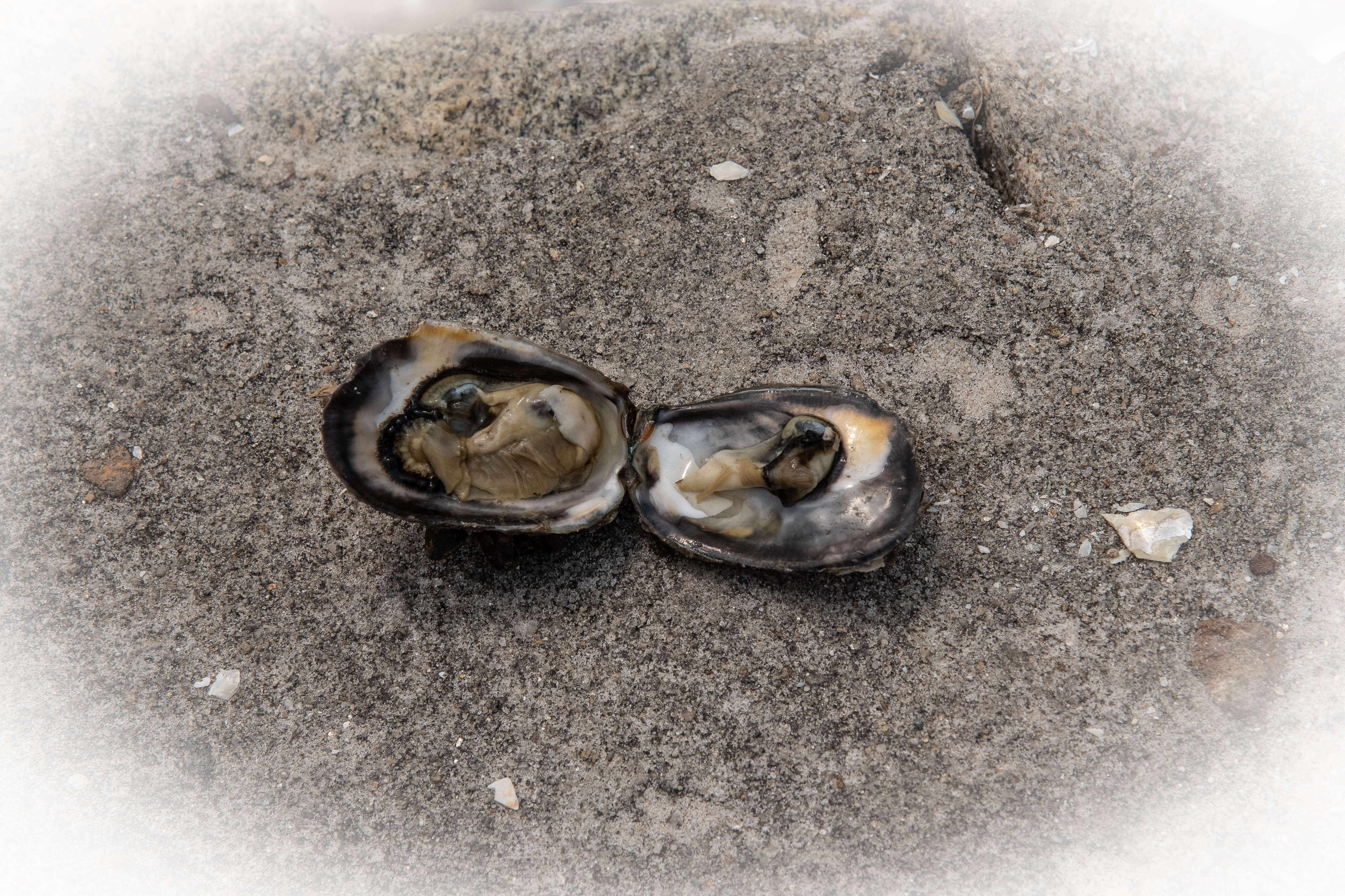
Oyster farming is a growing industry. Not only do oysters filter and clean the waters, they are also a deliciously edible product.
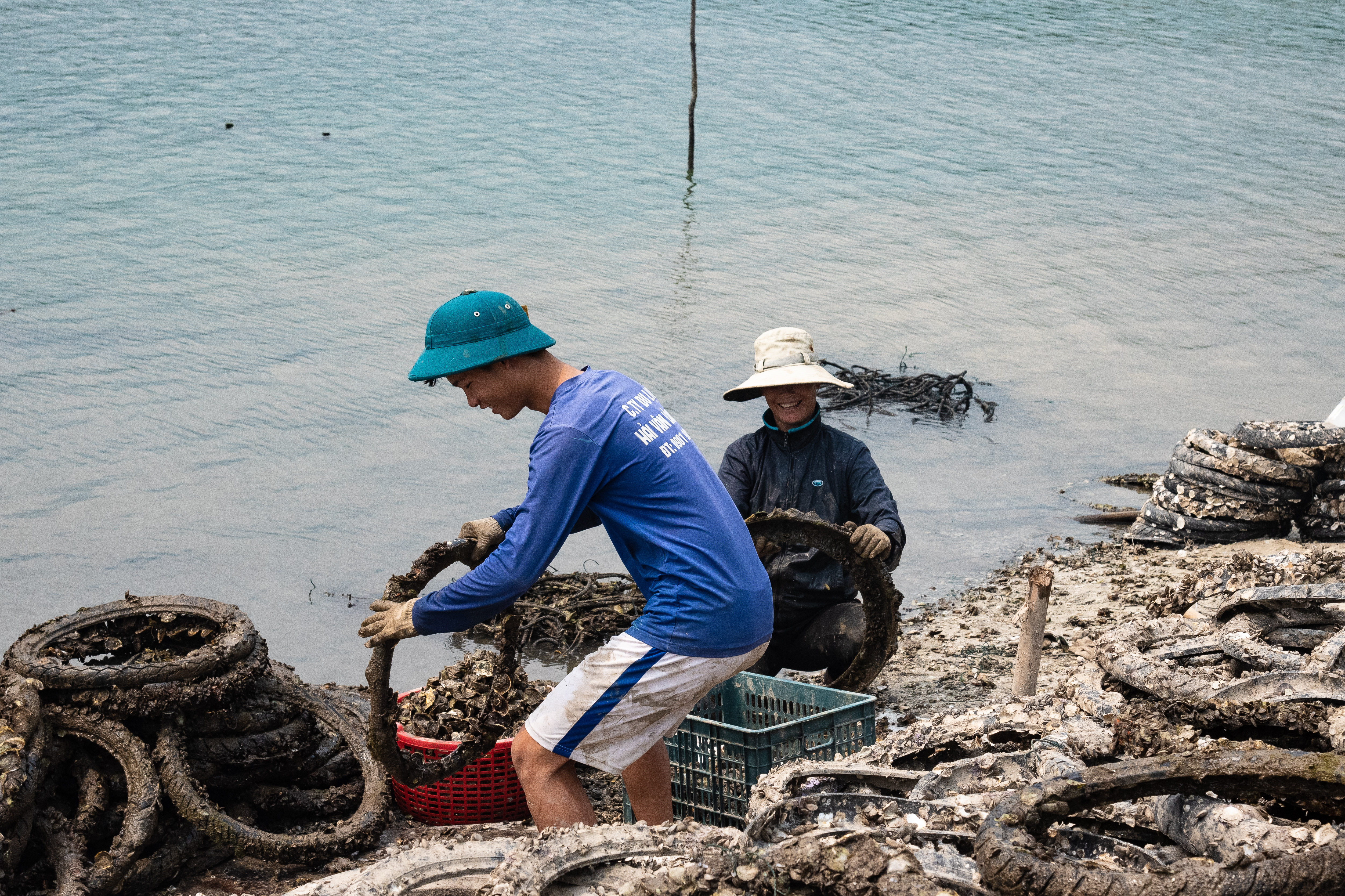
The oysters are grown on old bicycle tires.
***
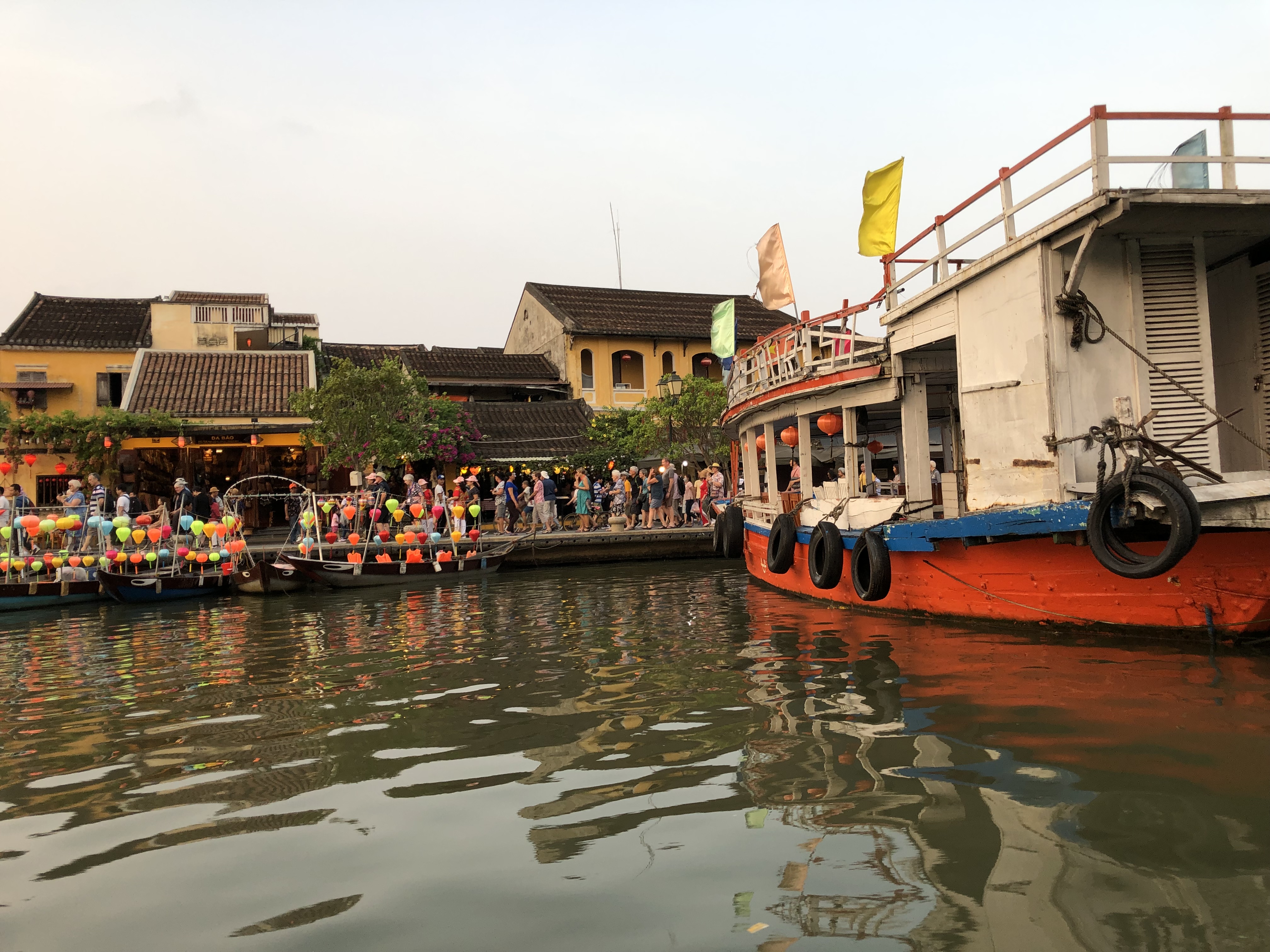
We then traveled by bus to Hoi An, an important trading port from the 16th to the 18th centuries. Hoi An’s Old Quarter, a UNESCO World Heritage Site, reflects Chinese, Japanese, and European influences as well as its own Vietnamese heritage. it is extremely picturesque and attracts throngs of tourists.
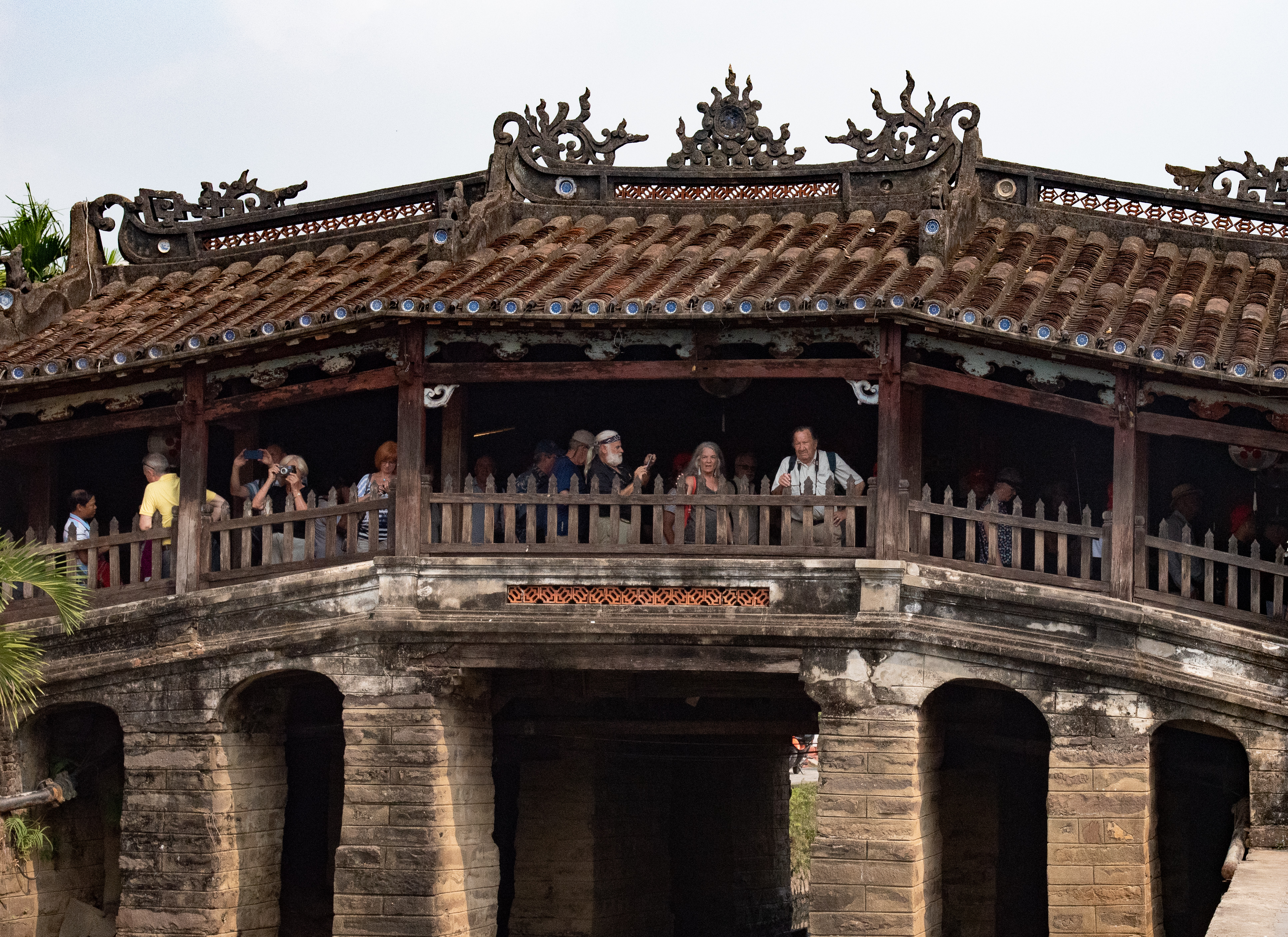
The iconic Japanese Bridge is a main attraction. It was constructed in 1593 by the Japanese community to connect the Japanese and Chinese communities.
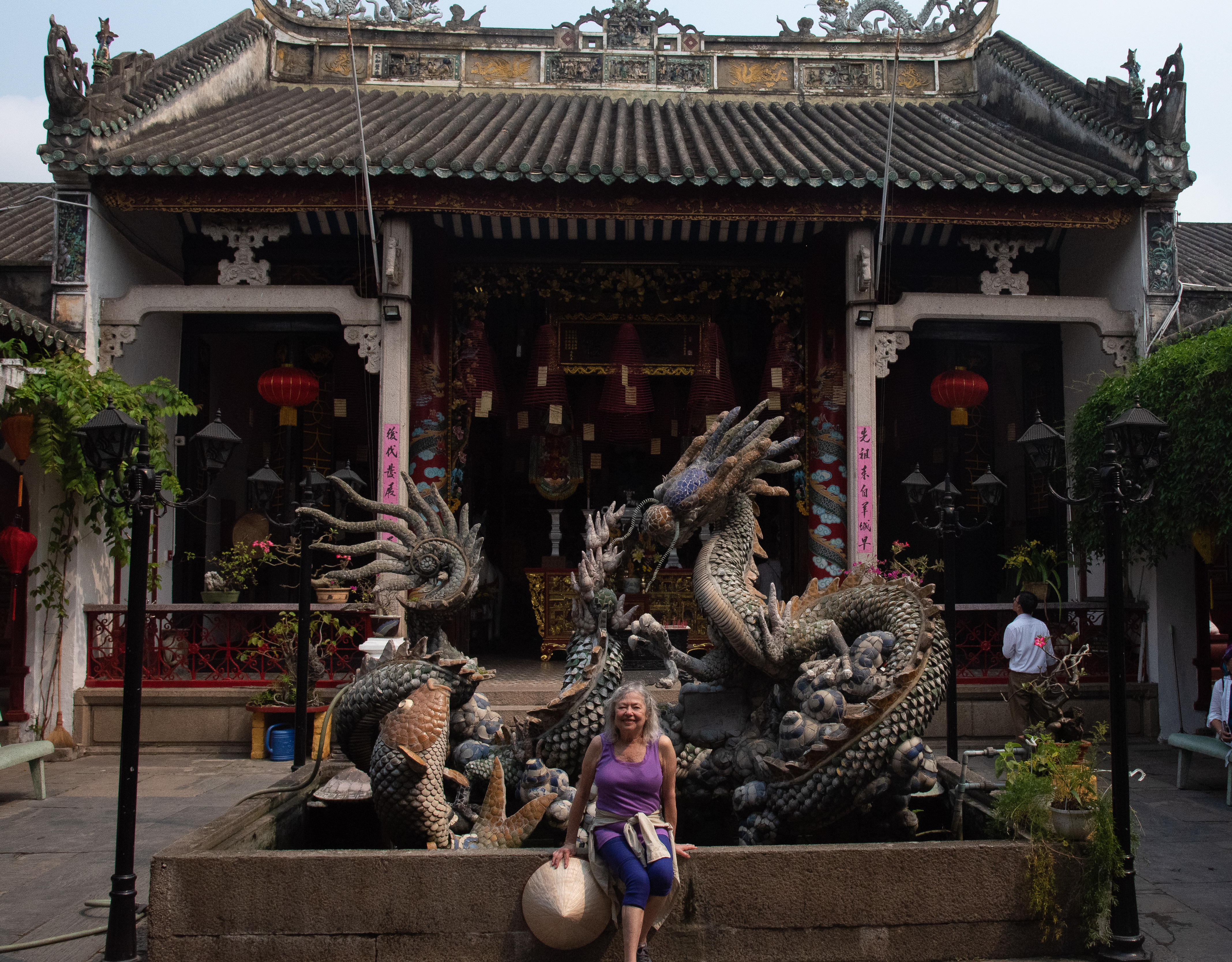
Entrance to the Quang Dong (Cantonese) Assembly Hall, built by the Chinese seafaring merchants in 1786. It is very elaborate.
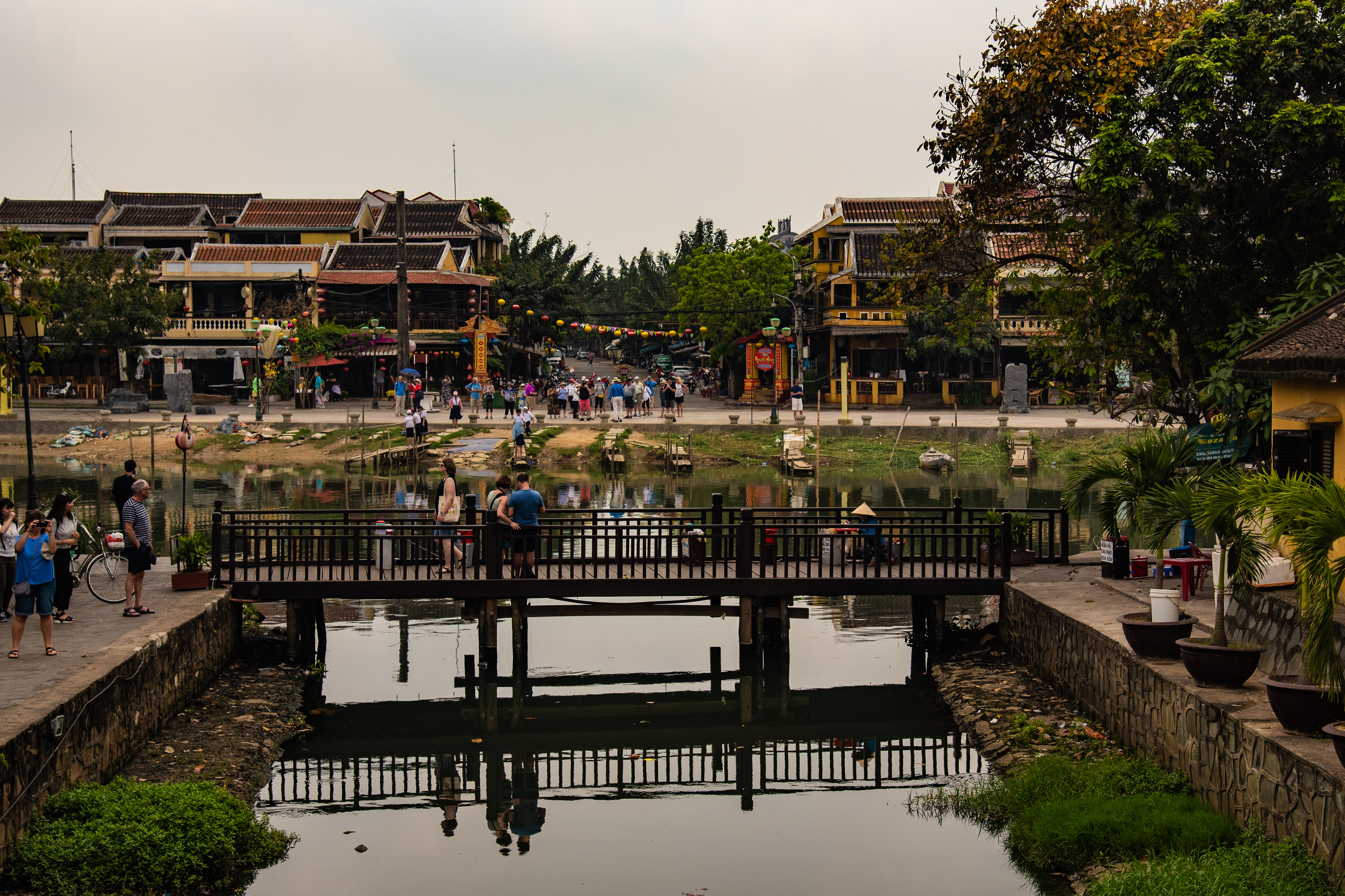
View from the Japanese Bridge. The waterway is a small tributary of the Thu Bon River.
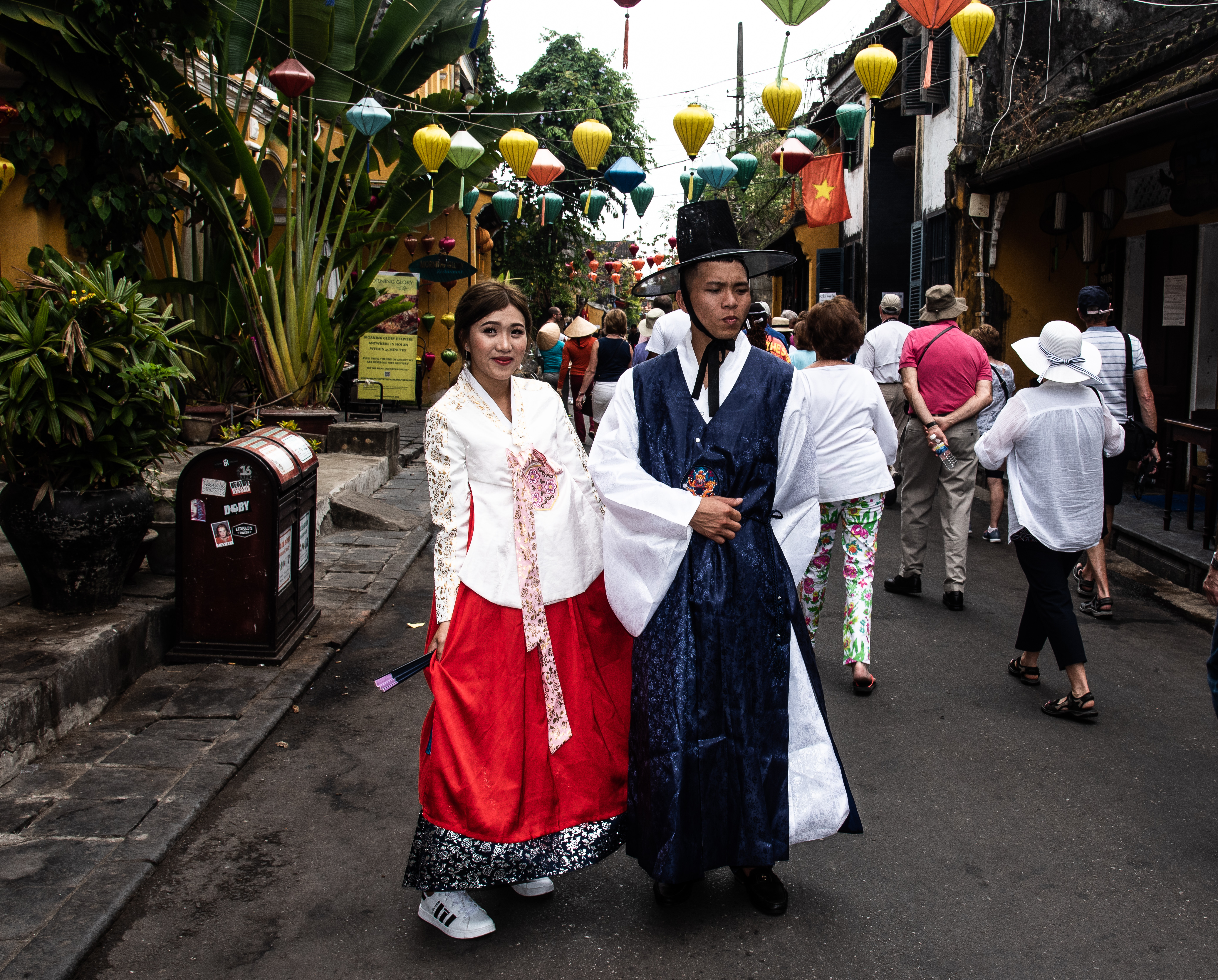
This young couple arrived in the traditional Korean wedding costume. Hoi An is a clothier center, the place to go for a bespoke silk Ao Dai or a men’s suit. What is an Ao Dai you might ask?
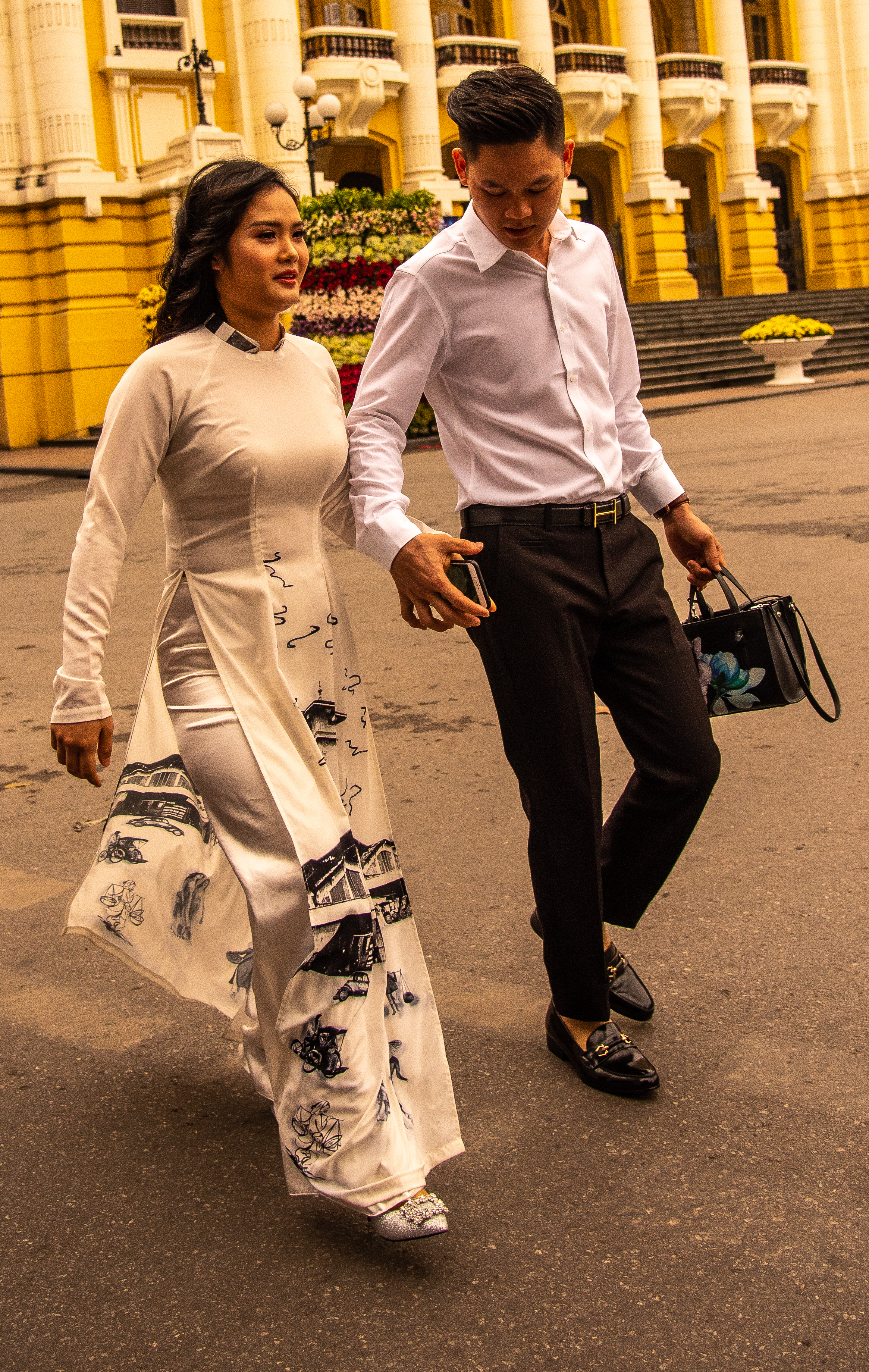
The traditional Ao Dai is a long, tight fitting tunic over pants, usually made of silk. This photograph was taken in Hanoi but is included here because it was, in Joanne’s view, the most interesting and beautiful Ao Dai we saw.
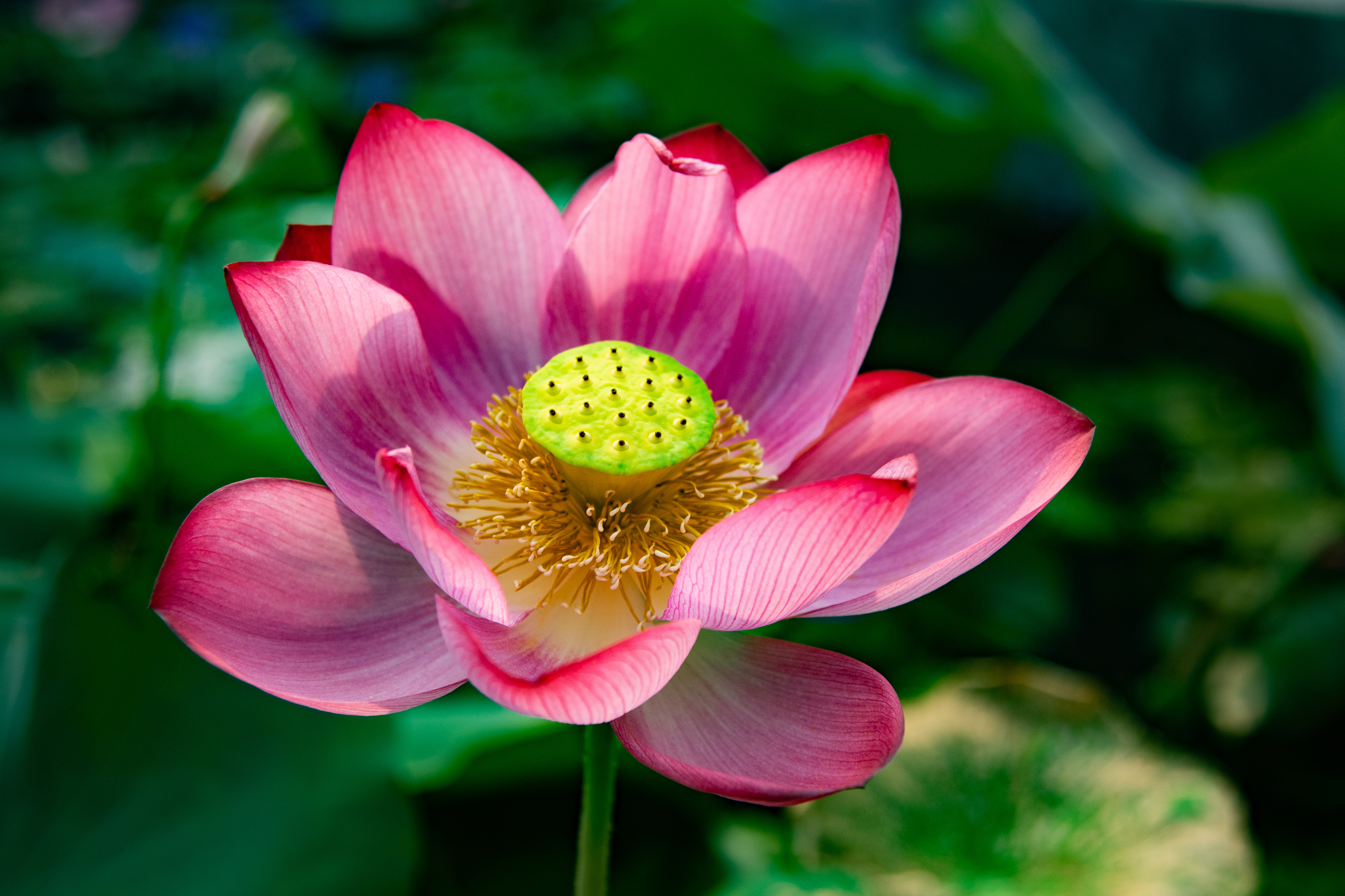
The Vietnamese love flowers and all over the country flowers are given a prime position. This flower was growing at our hotel, a lovely resort located within walking distance of Old City shopping. Joanne had a dress and pants outfit made to order and we bought fresh spices and lanterns. We also got to enjoy Joanne’s favorite Binh Ma. The Hoi An Hotel served as our base for exploration in the city and beyond.
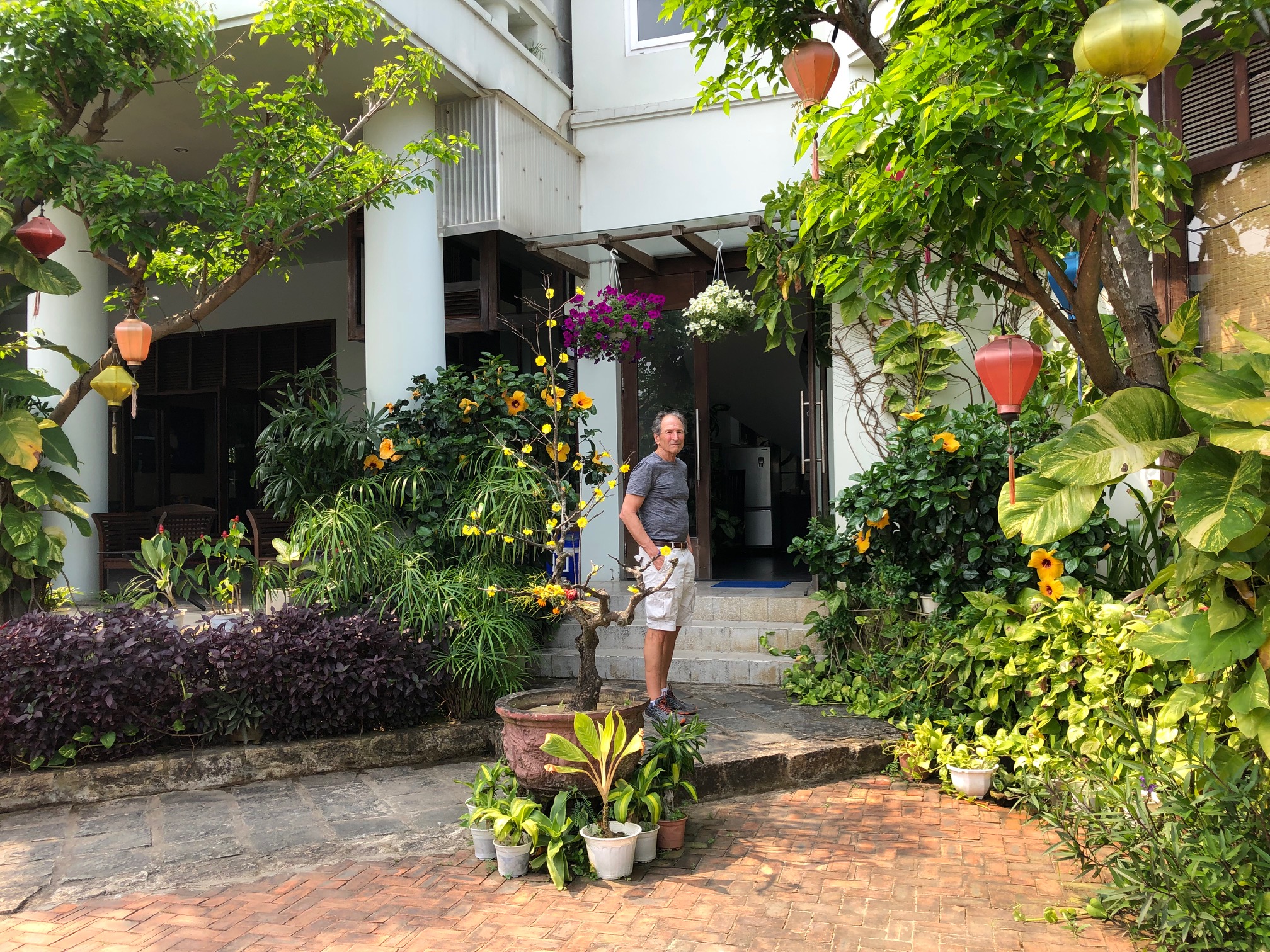
The hotel shows off the beautiful lanterns Hoi An is known for.
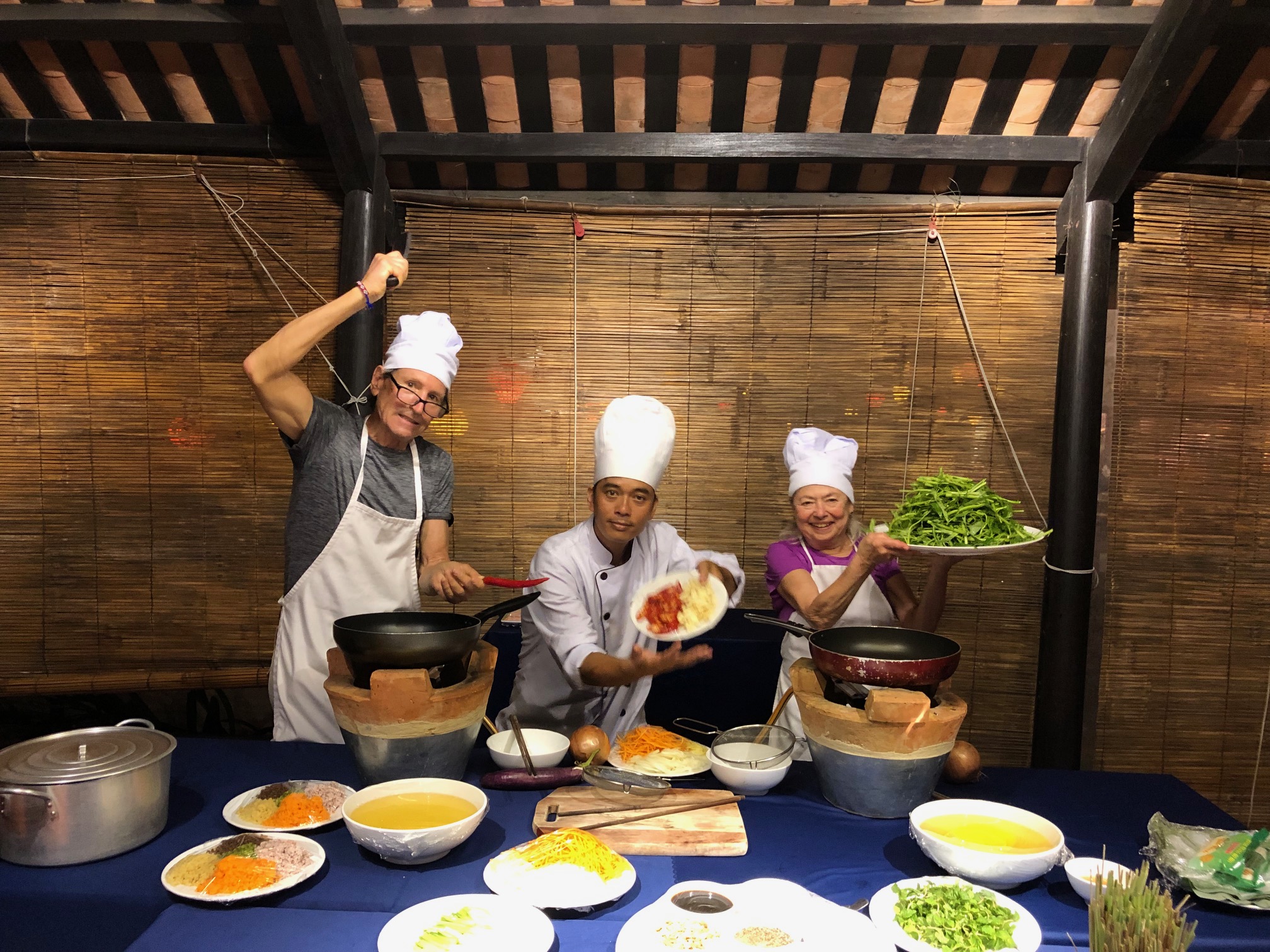
We took a Vietnamese cooking class at the Hoi An Silk Village and learned how to make Lang Lua (spring rolls), grilled fish in banana leaf, and squid salad.
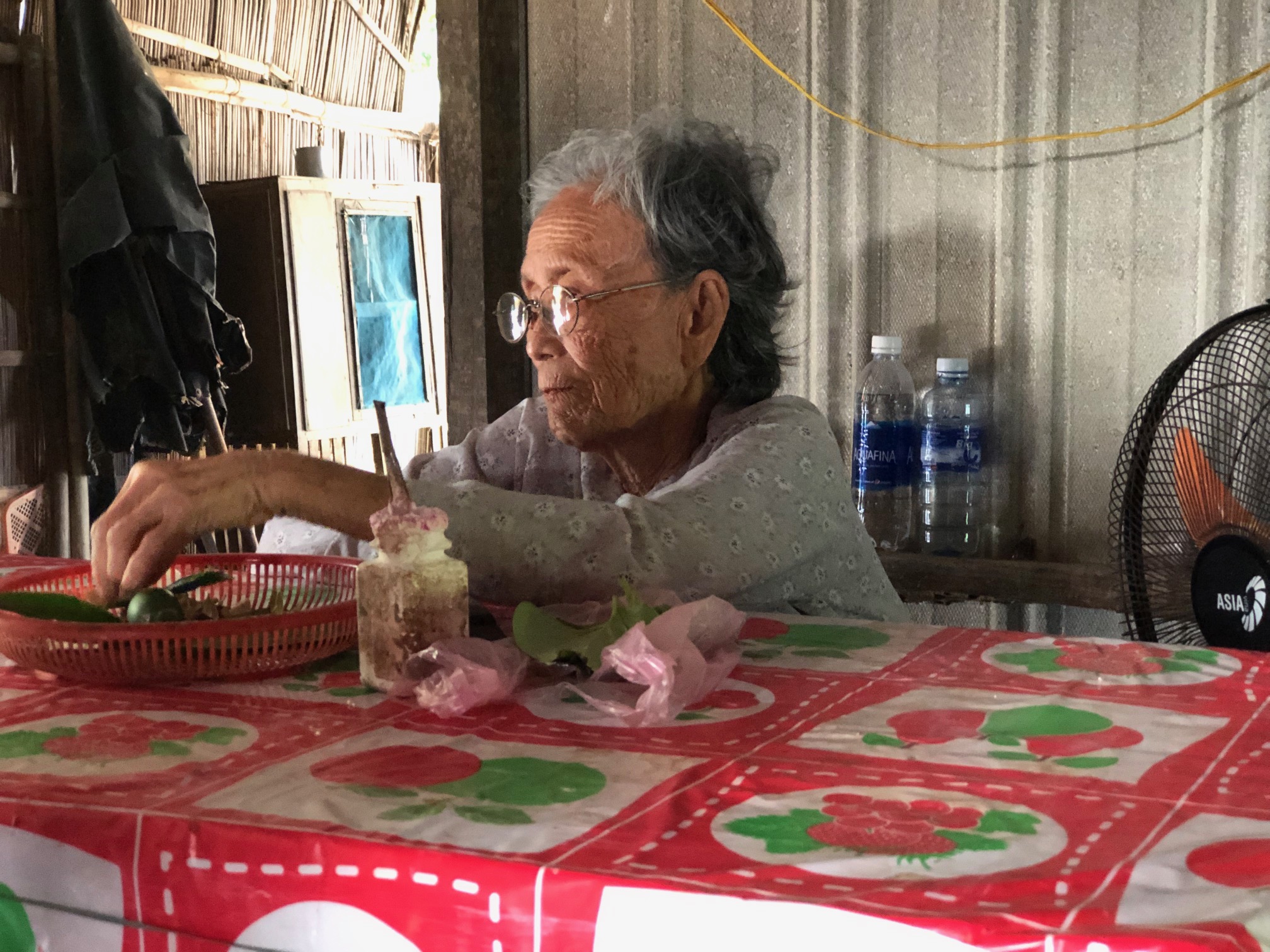
We took a cyclo-rickshaw ride to Cam Thranh Village, about five miles out of the center of Hoi An. This village was a Vietcong stronghold during the war. Those 20% of families who supported the South Vietnamese government were forced to leave. The women shown above left the village, while her son and husband were killed during the war. After the war, the woman was homeless and returned to Cam Thranh where her former neighbors gave her living quarters. She is seen doing her beetel nut preparation.
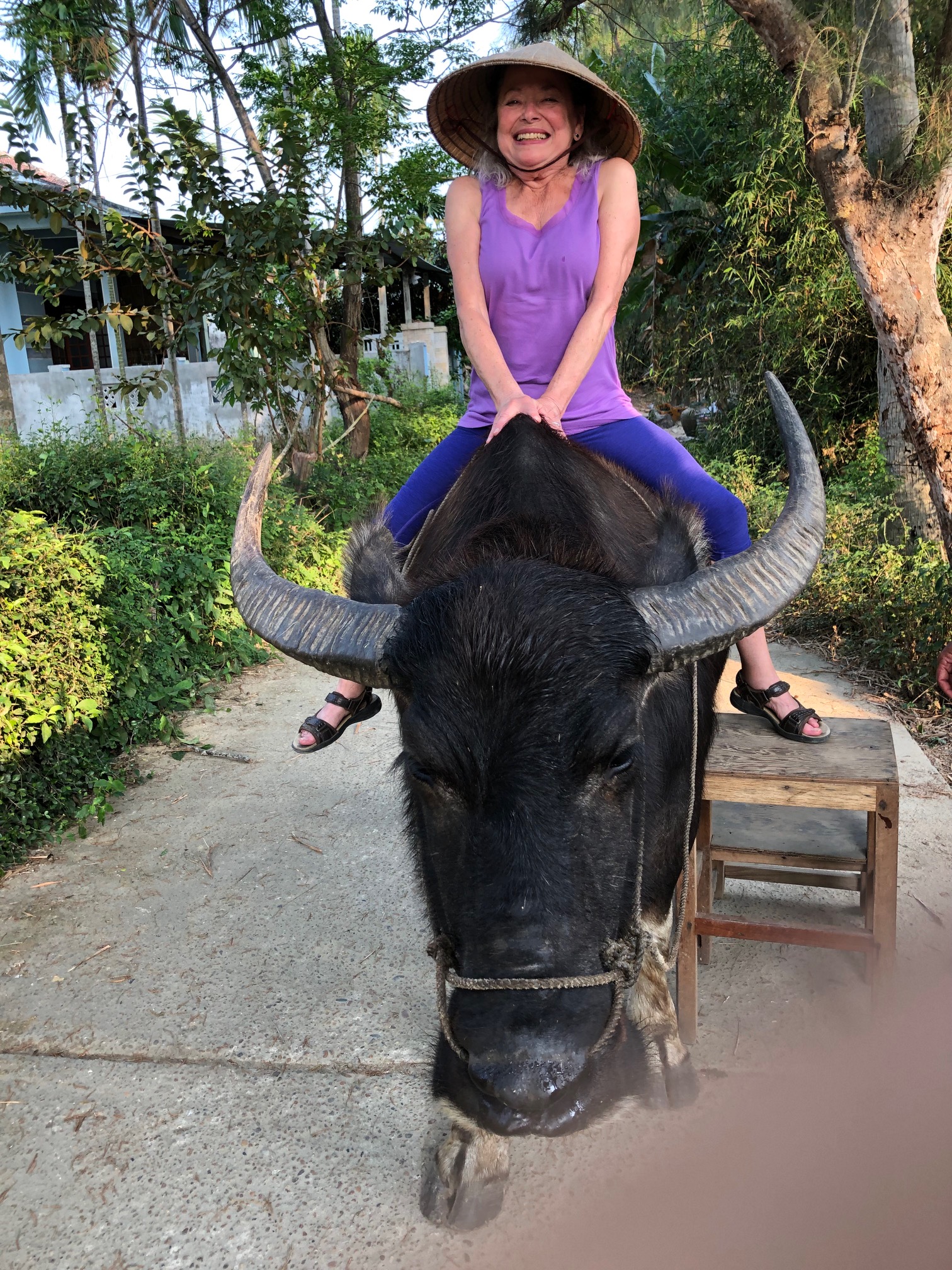
A nearby water buffalo, Bin, was just waiting for Joanne to climb on her back.
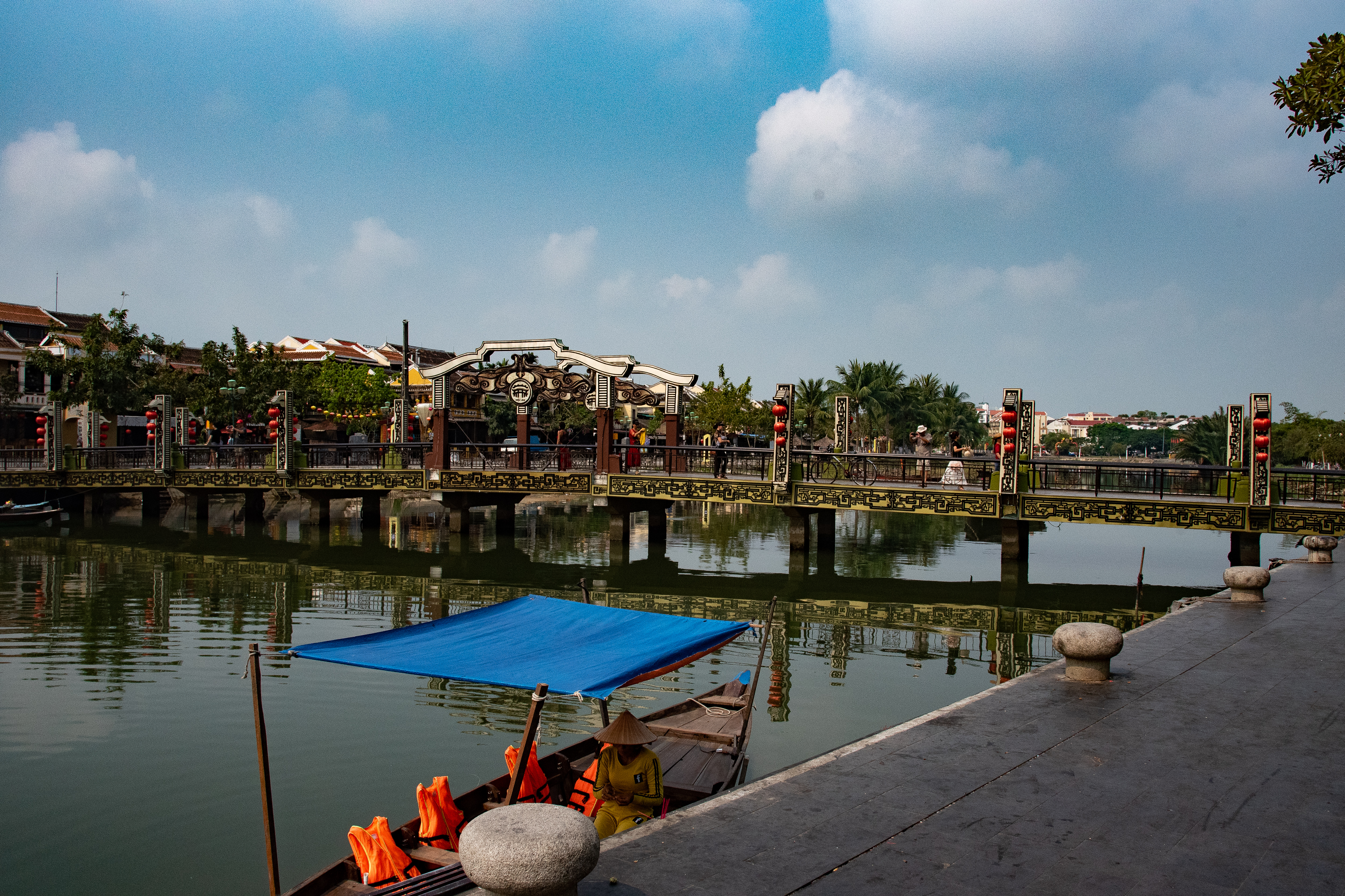
We took a cruise on the Thu Bon River.
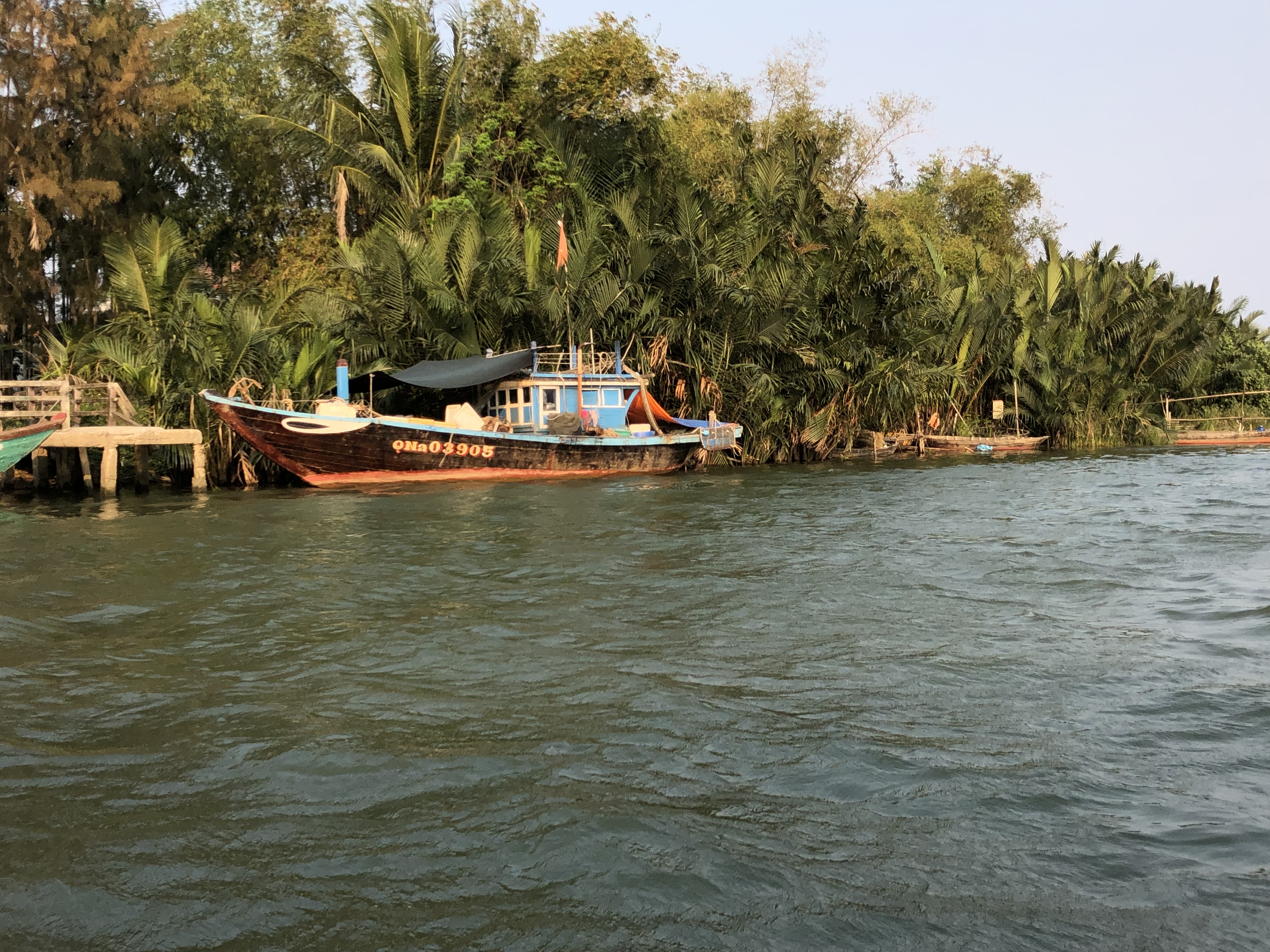
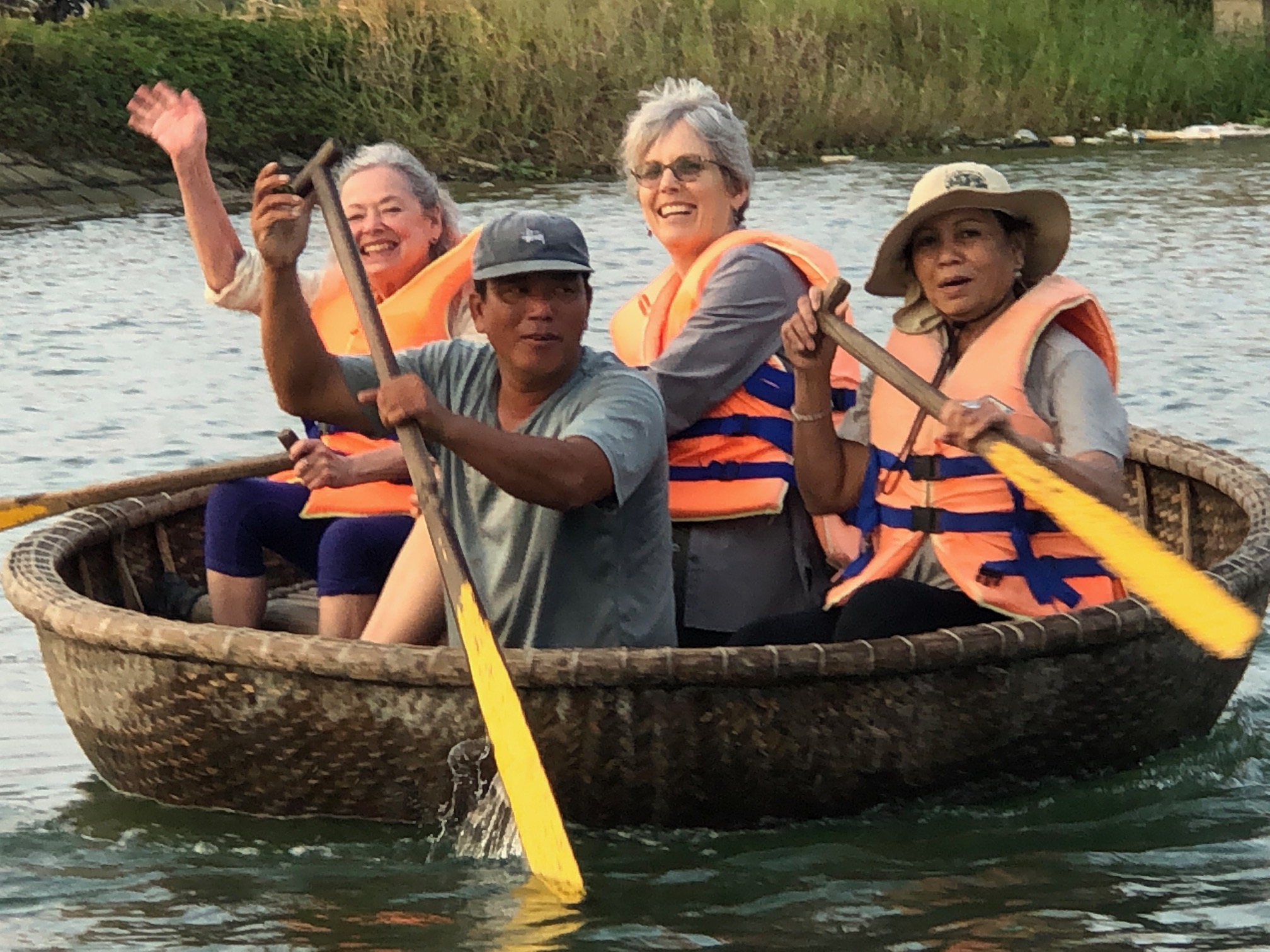
This is a basket boat, called a “thung chai.” The origin of these boats goes back to when the French levied taxes on boats in Vietnam The fishermen circumvented these taxes by designing circular woven “baskets” that just so happened to also function as boats.

We explored the surrounding rural areas on the back of a motorcycle.
***
ON TO CHAMPA and the My Son site (To be continued in next blog)
The history of Champa begins in prehistory with the migration of the ancestors of the (Indian) Cham people to mainland Southeast Asia and the founding of their Maritime kingdom based in central Vietnam ending in 1832 with their absorption into Vietnam in 1832. The vestiges of that civilization are entrancing.
 westwardhowithapollo
Amazing adventure and stunning photography
A beautiful history lesson.
Thank you
Sent from my iPhone
Thanks again
Sent from Yahoo Mail for iPad
I couldn’t go there, but this is incredible!
>